Heart Health and Inner Balance

What do you think of when you want to achieve inner balance? Do you think of calming your mind with meditation? Or, going for a run to get rid of some nervous energy? At the University of Hawaii, there is an innovative approach to improving emotional well-being called Inner Balance technology. Inner Balance analyzes and displays your heart rhythms, measured by Heart Rate Variability (HRV), which shows how emotional states are affecting your nervous system. Incoherent patterns impair inner balance with negative feelings while coherent rhythms promote inner balance with positive emotions.

“Inner Balance by HeartMath” measures how the heart reacts under anxiety, fatigue and depression vs. when the heart experiences focus, sufficient sleep and calmness. HeartMath measures whether or not the heart, mind and emotions are aligned and working together harmoniously. The term for this is “psychophysiological coherence” and it is characterized by increased order in both mental/emotional and physical processes. When aligned, the heart-rhythm patterns look wave-like and smooth, whereas when unaligned, they look spikey and show higher and lower ranges.

Scientists have long ago acknowledged that the heart sends more information to the nervous system than any other organ. When the brain receives the information, it interprets it, which can trigger calmness or anxiety, happiness or sadness. This means that learning to generate increased heart rhythm coherence with positive emotions, not only benefits the entire body, but also greatly affects how you perceive, think, feel, and perform.1

So, how can you cultivate the feelings and thoughts that make your heart function smoothly? Here are a few simple tips:

1. Don’t fear change. Try new things that resonate with you.

2. Slow down. You can’t do everything you want to do all at once—just like growth is a process, not an overnight achievement.

2. Practice self-awareness. Make a conscious effort to learn about your strengths, weaknesses, triggers and emotions—this helps you regulate your emotions effectively.2

3. Prioritize self-care, especially if you are someone who gives, gives and gives. Remember you can’t help others if you personally are not in good shape.

4. Cultivate gratitude as it helps reduce stress and therefore enhances inner balance.

5. Give yourself breathing space. Create your daily, weekly and monthly schedule with space for you to relax. This way you will not burn out.

6. Set your intentions. When you are clear about what you need and what you want, you will naturally be more balanced.

As our daylight hours shorten, take deep breaths and know that you can accomplish what you choose, as long as you don’t overdo it. Add Kenzen nutritional supplements to your daily regimen and feel the difference—your heart health and inner balance will be key to your total wellness!

1 https://hilo.hawaii.edu/studentaffairs/counseling/heartmath.php#:~:text=Using%20Inner%20Balance%20may%20help,clarity%2C%20and%20improved%20cognitive%20functioning.

2 https://esoftskills.com/discovering-inner-balance-the-key-to-a-fulfilling-life/

Keep Moving to Stay Mobile

“Use it or lose it” is no joking matter. Practicing Active Wellness requires us to keep moving in order to maintain optimum health and flexibility. Whether we have a daily exercise regimen or freestyle it from day to day, we need to consciously make an effort to exercise our bodies and minds regularly.

When the rules and regulations for social distancing change as often as they have been during the current pandemic, we need to be creative in our approach to exercise. Team sports can be difficult to participate in, and with most gyms still closed, we need to make the best of exercising at home.

There are many ways to keep moving when you are staying indoors. Just as we have become accustomed to using multiple electronic devices, we also use a variety of exercise equipment. The truth is, exercise is simply a matter of moving the body and equipment is not really necessary. Exercise is really about resolve, discipline and keeping your heart rate up for 30 minutes or more each workout session.

Walking around the house, climbing stairs if you live in two stories or more, jogging in place, doing Zumba to a recorded video, dancing to music of your own choice, practicing calisthenics and lifting weights (using real dumbbells or holding canned goods and other makeshift “weights”) can be great habit-forming ways to exercise.

You can even put together your own routine that incorporates cardio with stretches. There are so many online sources of stretches and routines ranging from beginner to advanced levels. You can even start exercising by staying seated and work up to more mobility. The point is to get moving and stay moving.

If you have multiple generations living together, you can devise routines to practice as a group. It’s an easy way to spend quality time as a family and to “play” with the kids while role modeling Active Wellness. “Monkey see monkey do” is a much easier way to help children and the elderly incorporate exercise into their daily lives. Exercise helps get them off the couch and decrease screen time.

If you have exercise equipment at home, such as a treadmill, rowing machine or elliptical, etc, make sure you use them! Exercise equipment often languishes and becomes pieces of furniture; don’t let that happen to yours!

How much exercise should you do? For heart health, the American Heart Association recommends at least 30 minutes of moderate-intensity physical activity, such as walking, on most days of the week.1

For 15 easy at-home workout moves, you can check out https://www.fatherly.com/health-science/easy-workout-quick-workout/.

If you have sensitive joints, see https://www.webmd.com/rheumatoid-arthritis/ra-biologic-17/gentle-ra-exercises

Last but not least, remember to use the KenkoTouch® to help your muscles relax after your daily exercise. It’s one more way to give yourself an indoor treat!


1 https://www.webmd.com/fitness-exercise/features/fitness-beginners-guide#1

5 Tips to Help Clear Your Mind

Let’s face it. We all have brain fog once in a while. It’s annoying at best and at worst, can be downright embarrassing. Why not do something about it? Here are 5 tips to keep your mind nimble:

  1. Aerobic exercise. Known simply as “cardio” by trainers, it’s not just good for your heart and circulation. It’s good for your brain. When you get your heart rate up, you are actually helping your synapses fire, too! Try to get in 30 minutes at least 5 times a week.
  2. Weight training. It doesn’t just tone your muscles and make you stronger, but it also keeps your mind sharp. Add resistance training to your workout at least twice a week and you’ll be extending your long-term brain health. You don’t need to join a gym: hand weights for curls and ankle weights for leg lifts will do the trick.
  3. Expand your knowledge. It doesn’t have to be intense book learning as in school or university, but it should be intellectually stimulating. Essentially you are giving your brain a workout and stimulating neurochemicals needed for forming new memories as well as retaining the old.
  4. Master a new skill. Have you ever noticed how quickly a toddler acquires language skills? After age 25, the pace of absorbing information slows, but forcing the brain to learn something new helps keep it focused. Your brain has to make a whole new set of connections in order to learn the new skill—whether it’s driving a car, dancing the tango or speaking a foreign language.
  5. Play games. Solve a crossword puzzle or fill in all the squares of Sudoku. Play checkers or chess. Roll the dice for backgammon. All these games challenge the brain to work, which in turn, might increase the levels of growth factors. These types of thinking games force the brain to focus.

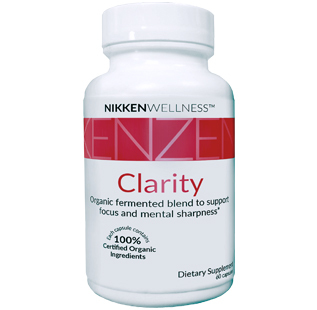
Kenzen® Clarity under the NikkenWellness line is formulated to help support your brain power. A fermented blend of 100% organic ingredients, Clarity is designed to help you stay focused and mentally sharp.

thumbnail-3

The Battle Against High Cholesterol

Cholesterol is a waxy substance that comes from two sources: our bodies and what we eat. Our bodies, and especially its liver, make all the cholesterol we need and circulate it through the blood, but it cannot be dissolved. It must be transported through the bloodstream by carriers called lipoproteins, which are composed of fat (lipid) and proteins. Cholesterol is also found in foods from animal sources, such as meat, poultry and full-fat dairy products. The liver produces more cholesterol when we eat a diet high in saturated and trans fats.

A tendency towards high cholesterol can be caused by a diet that is high in fat, but a person can also be genetically predisposed. In other words, high cholesterol can run in the family. Cholesterol is such a common topic of conversations these days because when it is too high, it is a proven risk for cardiac problems. As a result, cholesterol medication, commonly referred to as statins, are one of the highest sources of revenue for pharmaceutical companies.

Statins work by slowing the body’s production of cholesterol. The body produces all the cholesterol it needs by digesting food and producing new cells on its own. When this natural production is slowed, the body begins to draw the cholesterol it needs from the food you eat, lowering your total cholesterol.

According to the University of Maryland Medical Center (UMMC), statins also lower your body’s levels of coenzyme Q10 (“CoQ10”). As your levels go down, the side effects of statins increase. Taking CoQ10 supplements might help increase the levels in the body and reduce side effects caused by statin usage.

The most common statin side effect is muscle pain. It can be mildly uncomfortable pain or bad enough to compromise daily activities. Statins can also adversely affect the liver and kidneys. Some people may develop nausea, gas, diarrhea or constipation after taking a statin, although these side effects are relatively rare. Taking statin medication in the evening with a meal can reduce digestive side effects.

The FDA warns on statin labels that some people have developed memory loss or confusion while taking statins. These side effects reverse once you stop taking the medication. Talk to your doctor if you experience memory loss or confusion. On the other hand, there has also been evidence that statins may help with brain function — in patients with dementia or Alzheimer’s, and this continues to be studied.

If your diet is the cause of high cholesterol levels, it can be relatively easy to lower levels by making changes to daily consumption of red meat and dairy—and focusing on whole grains, fruits and vegetables.

Cholesterol can be both good and bad, so it’s important to know what your cholesterol levels are in order to manage the health of your circulatory system. If you have high overall cholesterol and it’s not genetic, you have a good chance of controlling it via diet.