In 2026, the lunar new year begins on February 17. As we approach the upcoming Year of the Fire Horse, we are met with an energy that is bold, dynamic and transformative. In Eastern philosophy,… More

with Mabel Chiu
In 2026, the lunar new year begins on February 17. As we approach the upcoming Year of the Fire Horse, we are met with an energy that is bold, dynamic and transformative. In Eastern philosophy,… More

True beauty reflects balance, vitality, and harmony within the body. At the intersection of ancient wisdom and modern innovation lies a powerful approach to self-care: the fusion of nature and technology. Nature has always been… More
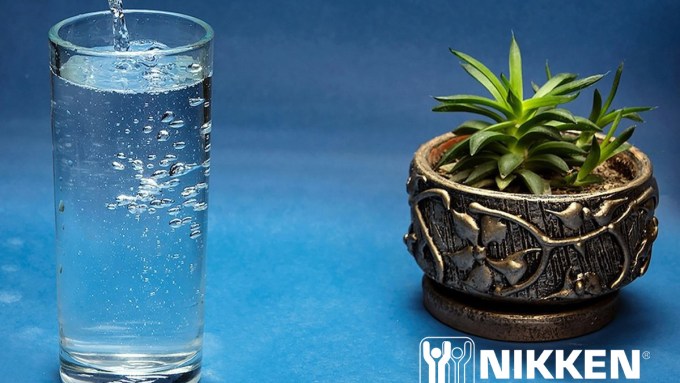
Smart hydration begins with self-awareness. Instead of waiting until thirst sets in, make hydration a consistent habit throughout the day. Starting your morning with water gently awakens your system after hours of rest, while sipping… More
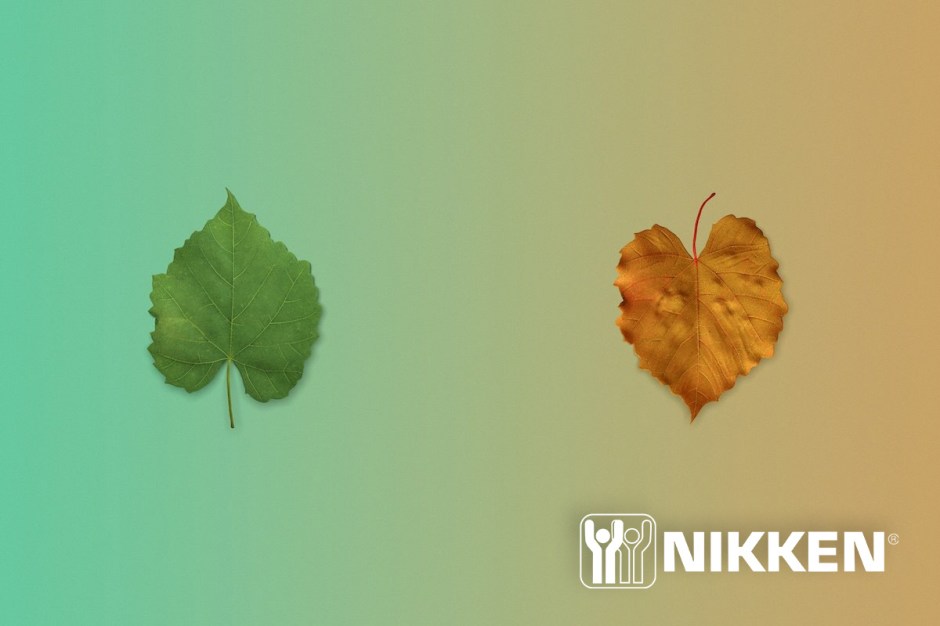
Nature follows cycles of renewal. In the spring, plants sprout, flowers bloom and you actually can smell growth in the air. In the summer, days are warmer and it’s time to harvest some of the most delicious fruits, vegetables and grains. Autumn signals the beginning of a natural withdrawal with colorful changes, and winter is nature’s time of rest to prepare for renewal once again.
If you take a look at a tree, you see the trunk, its branches and the leaves. What you don’t see are the roots, but the taller the tree, the firmer the roots. Apply this image to the human experience. Human lives follow a similar cycle of renewal. There are seasons of growth, not only physically but intellectually, culturally and in business. There are also seasons that are focused on reflection, quiet contemplation and rest.
Successful individuals appear healthy and strong, but the foundation they are built on is not visible but surely there. The roots of that invisible foundation are what allow the progression of personal development, perseverance and resilience. Regardless of which season you are in, the basics of rest, hydration, clean air and whole food nourishment are necessary components to complete a successful cycle of renewal.
Just as nature thrives in seasons, you can build your own cycles of growth, renewal and rest. Nature doesn’t rush through winter to reach spring; it patiently endures each season, drawing strength and renewal from every phase. In the same way, you can learn to respect your own seasons — both the highs that fill you with energy and the lows that call for quiet and rest. Growth isn’t about constant improvement; it’s about respecting the natural ebb and flow of life.1
To evaluate how to complete cycles of renewal in more productive ways, simply ask a few basic questions: Are you getting enough restful sleep? Are you making sure your indoor air is clean rather than full of dust, dander and allergens? Are you eating nutrient-dense foods? Are you practicing some kind of movement every day? Movement does not have to be a specific exercise. It can be as simple as climbing stairs instead of using the elevator, parking the car a little further so you can get a walk in, taking the dog for a walk, mowing the lawn and so on. Are you making private time to nurture yourself instead of always serving others?
For the entire month of January 2026, Nikken is offering 20% off replacement filters! Air and water filters need to be renewed— just like nature and just like you!
The first month of the year carries a special significance as a new beginning. It also serves as an invitation to pause, reset, and consciously choose how to move forward. While the new year is often associated with goals and resolutions, the most meaningful renewal begins with awareness—of your intentions and ikigai.
Mental energy is crucial to staying balanced, so it is important to replenish it throughout the day. Constant noise, the pressures of familial and financial responsibilities, as well as emotional overload can deplete mental energy. This January, why not consciously choose to reconnect with intention and purpose?
Renewing mental energy starts with awareness. What replenishes vs. drains you? When do you feel the calmest and most restored? Awareness helps you to recognize patterns that don’t work and consistencies do. Do you have a habit of overcommitting? Do you try to accomplish too many things at the same time and thereby get very little done? Are you reacting rather than choosing? Becoming aware of your own behavior allows you to create space and energy. January is an ideal time to ask yourself some basic questions that will serve to renew your mental energy and provide the positive movement you want:
Awareness is not just about taking action; it is also about getting enough rest. Mental renewal is not about doing more; it’s about doing what matters and leaving space for rest. Moments of stillness, reflection, movement, gratitude, and meaningful connection all help recharge the mind. Perhaps counterintuitively, slowing down is what helps to regain the focus needed to move forward with purpose.
As 2026 begins, why not try setting an intention rather than a resolution? An intention rooted in awareness evolves, whereas a resolution is static, perhaps the reason so many resolutions fail by February, because they no longer serve their original purposes. Whether your intention is clarity, balance, growth, or peace, let it help make the right choices throughout the year.
Renewing your mental energy is a practice in line with mindfulness and feeling good every day. By awakening awareness now, you practice empowered living. You choose to live with purpose. and remember, take deep breaths and hydrate every single day: two simple acts that help renew mental energy!
Happy new year of 2006! May it be your best year yet!
As we joyfully conclude the celebration of the 50th anniversary of Nikken in 2025, a new chapter begins—one that invites us to look forward with gratitude, clarity, and renewed purpose. As we approach the next 50 years, we reaffirm our roots and strengthen the very DNA that has guided us throughout our journey.
During every anniversary celebration, I witness something powerful: a unique wellness energy that unites us. What we share is the heart of Nikken—a spirit that recognizes the value of every individual and honors the contributions each person brings.
We express our deepest appreciation to Mr. Masuda, Mr. Watanabe, and all the visionary leaders whose dedication built the foundation upon which Nikken stands today. Many others joined throughout the decades, adding their trust, their dreams, and their stories to what has become a 50-year global legacy.
When we ask how Nikken has influenced the lives of those who joined our journey, their answers go far beyond product benefits. They speak of transformations in their personal and professional lifestyles. Many recall the impact of the trainings they attended; others highlight the fulfillment they felt while contributing to the well-being of others. Yet, everyone agrees on one point—they could feel the heart of Nikken.
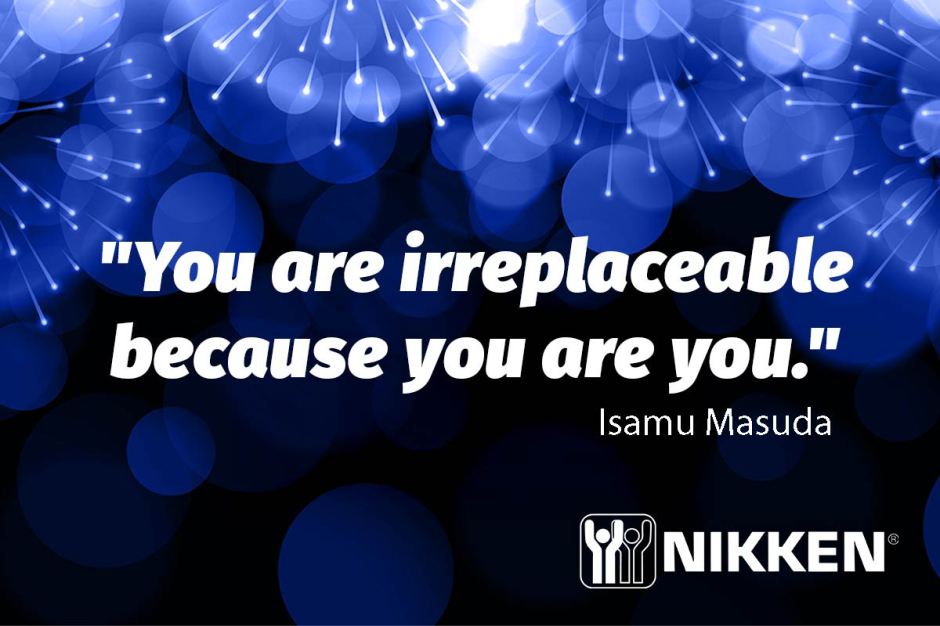
So, what is the heart of Nikken? It is not easily defined by a simple concept. Instead, it is something we experience—a collective heartbeat driven by the desire to contribute meaningfully to society. It is the joy of bringing hope to someone else through our actions, our values, and our noble gestures. This spirit is anchored in our legendary Five Pillars of Wellness and in the enduring words of our founder: “You are irreplaceable because you are you.” These words remind us of the profound importance and uniqueness of every individual in our world.
As we step into this new chapter, I invite you to reflect on your own worth—on the power you carry simply by being alive, capable, and full of potential. Envision the many possibilities that can unfold when you embrace your dreams and allow yourself to imagine a bigger, brighter future.
From that place of awareness, celebrate life deeply. Cherish the people you love. Make every moment meaningful. And in this season, more than ever, let your loved ones feel how truly special they are.
Wishing you and your family joyful celebrations and a holiday season filled with hope, love, and inspiration.
Happy Holidays.
Luis Kasuga
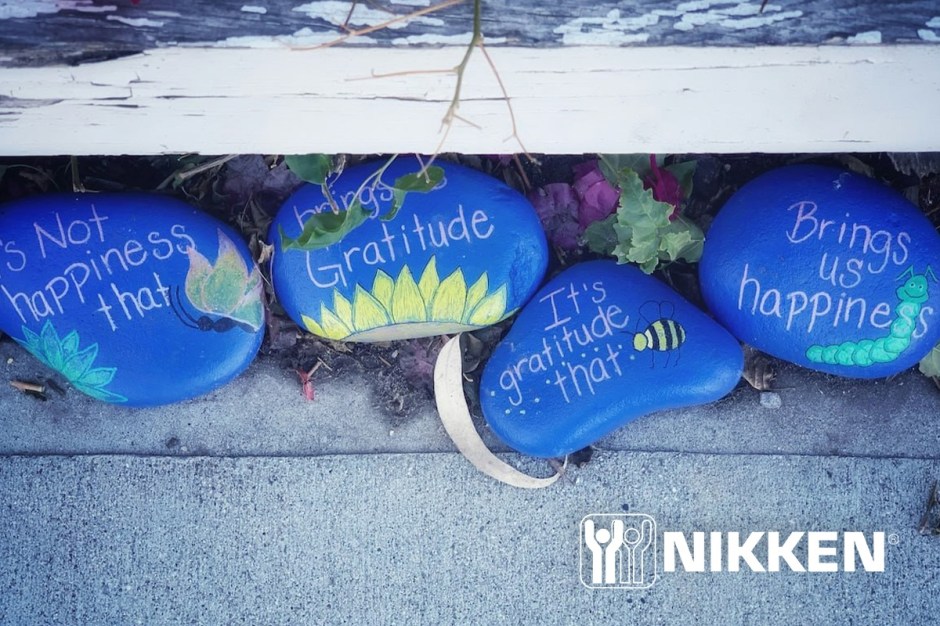
Approaching the end of the year is the ideal time to pause, reflect, and decide who you want to become next. As you step into a new chapter of your life, one of the main practices you can choose is gratitude.
Choosing gratitude is a vital aspect ofEmpowered Livingand Feeling Good Every Day. Empowered Living starts with the belief that you have the ability to make things happen and to write your own story. Gratitude reinforces that belief. When you consciously appreciate the positive aspects of your life, you’re much more likely to feel good every day—or at least most days!
Studies show that gratitude reduces stress, supports better sleep, enhances relationships, and contributes to overall emotional and physical wellness. When your mind feels lighter and your heart feels steadier, it becomes easier to take meaningful action. Gratitude creates an inner environment where you can thrive—where feeling centered, motivated, and hopeful becomes more natural.
Gratitude isn’t just a feeling. It’s a practice, a mindset, and a daily choice that can shape the way you experience your life. In other words, gratitude may shift your perspective from the bleak or negative to the bright and positive. Life is full of ups and downs, and gratitude allows you to focus on the ups while letting go of the downs. This conscious embrace of the positive does not mean ignoring the negative, but it prevents misfortunes from taking center stage.
When you take time each day to acknowledge your strengths, the people who care about you, small moments of beauty—you become grounded and develop clarity and resilience. Gratitude propels you forward with confidence and intention, to becoming a Human Being More.
Expressing gratitude strengthens relationships, deepens trust, and encourages kindness. When you acknowledge the people who support, inspire, or simply share part of your day, you create a ripple effect—your gratitude attracts others to be grateful for being connected to you. Each relationship that is forged in gratitude stands to last the longest.
Whether you have new goals or simply want to continue working on existing ones, taking small steps consistently every day will bring results. Gratitude is a great partner with patience and hope. As you head towards 2026, write your next chapter with gratitude and intention. Honor yourself and all that you have been through, regardless of whether it’s in service of others or simply surviving the unexpected ordeals in life.
You have the power to choose where you’re going and who you become.
All of us at Nikken wish you a beautiful season filled with love, joy and gratitude.

December is an ideal time to prepare for the new year. As the year winds down, there are some activities that are not only fun but also beneficial to overall health. Two such enjoyable activities are the renewal of your skin and your spirit. Rather than go to a spa or a retreat, skin and spirit can both be revived, renewed and regenerated in the comfort of your own home. Simply carve out a private area and make sure all electronic devices are off.
For skin renewal, the three basic steps are cleansing, toning and moisturizing. Be sure to choose products that are made with ingredients of the highest quality, such as the Kenzen True Elements® Marine Organic Skin Care line, which is EcoCert® COSMOS certified, an international certification renowned for its strict guidelines and guarantees the highest organic integrity.
At the heart of the True Elements® range is a synergistic blend of sustainably harvested organic seaweeds and coastline plants. These natural ingredients are a source of vitamins, minerals, amino acids, antioxidants and fatty acids.
For cleansing, regenerating and remineralizing, use Velvet Cleansing Milk and Radiance Scrub. The Velvet Cleansing Milk gently removes impurities while seaweed extracts provide trace elements and minerals that help boost the radiance of the skin and maintain its moisture content. Radiance Scrub is formulated to gently exfoliate the skin with natural perlite mineral so that its natural glow can shine through. Organic seaweed and sea fennel help to strengthen and protect, while organic aloe vera helps to renew damaged skin.
For toning, refreshing and brightening, use Refreshing Tonic Lotion and Youth Activ Serum. The tonic is perfect for the removal of makeup and grime. Seaweed extracts, spray-dried seawater, and aloe vera are combined to help soothe and tone the upper layers of the epidermis, leaving skin that looks fresh and bright. Youth Activ Serum is rich in marine extracts and hyaluronic acid to plump skin from within and supports skin’s elasticity, leaving the skin looking firmer and smoother. Organic ulva lactuta helps brighten skin and decrease the appearance of dark spots.
For moisturizing, protecting and restoring, use Moisturizing Face Cream and Revitalizing Serum. The Face Cream is smooth and light, enriched with marine extracts, shea butter and hyaluronic acid to moisturize the skin. Organic sea fennel is packed with minerals to support skin cell regeneration. Revitalizing Serum is enriched with sea fennel, hyaluronic acid and marine magnesium to moisturize intensely and help transform dry, dull-looking skin into supple, youthful-looking skin.
Your complete skin regimen can be followed with spirit renewal, or you can set aside special time just for your soul. Again, find a dedicated space that feels peaceful and serene. This can be outdoors or indoors, depending on the environment you prefer. You can choose complete quiet or select soothing, meditative music—whatever promotes calmness within you.
You may choose to sit or lie on top of the KenkoGround® to feel connected to nature. Practice deep breathing and simply rest, or do some stretches to help your physical state be in tune with your relaxed state of mind.
Another way to practice mindfulness for renewal of your spirit is to write down your feelings and thoughts. Renewing your spirit does not have to involve goals and to-dos, only if writing those down feel beneficial during this private time. You can focus instead on your inner secrets, emotions and deepest reflections.
Enjoy your private time with yourself as you head towards the end of the year, and you might decide to to schedule skin renewal and spirit renewal regularly! It’s all part of empowered living and feeling good every day, both internally and externally.
The dictionary defines a resolution as “a firm decision to do or not to do something.” As we reach the end of each year, the question of resolutions inevitably comes up, unless you are someone who has decided not to entertain the prospect of resolving and failing. According to research, about 88% of people who make New Year’s resolutions fail, despite 52% of them feeling confident they will follow through.”1
Part of the reason for this high failure rate is because the resolutions are made without a concrete goal or purpose. If a resolution is made due to previous errors, out of guilt or regret, it may well be doomed to fail. On the other hand, some resolutions are so ambitious that they are not realistic.
To heighten the possibility of success in meeting resolutions, researchers recommend having a clear purpose for change and then planning realistically how to implement it. In other words, why do you want to make the resolution, what is it precisely, and how can you make it happen? For example, many people resolve to lose weight; however, that is not a well-defined resolution. Instead, you could resolve to lose weight by going on a mile-walk five days a week and incorporating at least three salads into every 10 meals. Those are precise goals that spell out how to make the resolution happen.
Let’s take that same example and move to the planning or strategy stage. If you are going to walk a mile five days a week, decide which five days they will be. Also plan ahead what time those walks will take place and on which days of the week. A wall calendar is a great tool to use! Are you going solo or is a walk-buddy or family member included? Do you have a dog who would love to go with you? Plan it and do it!
Going back to the example of eating at least three salads out of every 10 meals, plan to have plenty of vegetables on hand. When will you go grocery shopping? What are your favorite veggies? The more you like them, the better your chances are of staying on the regimen. For example, if greens aren’t your favorite but you need to eat more of them for their chlorophyll and mineral content, be sure to have complementary veggies on hand so you can combine and adjust flavors. As your body adapts to nutrient-dense foods, you will start craving the right foods instead of those with empty calories. That’s a plan, not just a resolution.
A study found that writing down goals and sharing your progress with a friend led to a 76% goal achievement versus only 43% when unwritten.2 This shows how important it is to be clear and focused. What you see written down makes resolutions more concrete, and likewise, writing down your goals and plans give you a “cheat sheet” to refer to. Telling your results to a friend or family member is a no-brainer—we all like approval and there’s nothing more enjoyable than sharing good news. And if your confidante has similar resolutions, you can reinforce each other’s efforts and celebrate together.
In summary, make your resolutions, define them clearly, set clear-cut goals, plan the details of how to implement your goals, daily and weekly, write it all down! You have almost a month to plan and finesse your resolutions for the new year! Happy December!
What do you think of when you see the term “wellness technology”? Do apps come to mind? Meditation guidance, sleep sounds, white noise, heartbeat monitors, mood rings, step counters—gadgets galore—it seems like there’s a new one on the market every day!
Our founder started Nikken by producing Kenko Insoles. A single product that combines the wisdom of nature with magnetic technology led to the creation of many more. This year, Nikken celebrates 50 years of sharing advanced products with the world. Some notable innovations include the Kenko Sleep System, Kenko MagDuo®, KenkoTherm® wraps, the Kenko PowerChip®, Kenko PowerMini®, the Kenko Precision Set, Kenko PowerBand®, Kenko® Jewelry, the KenkoGround® and more.
As diverse as Nikken products are, they share one thing in common, just like the original insoles: They are inspired by mother nature and utilize state-of-the-art technology to produce balance, calm and relaxation, both physically and mentally. Kenko product lines fall under the categories of magnetic, ceramic reflective and grounding technologies. Each of these technologies enhance health and wellness. Every one of these Nikken products works to enhance empowered living—how often you use them is up to you, but consistency brings the best results.
Think about it: magnetic, grounding and ceramic reflective technologies are all forms of wellness technology! During a time of global turmoil, peace of mind is the one gift that everyone will welcome this season. Peace of mind will bring heightened focus, clarity, creativity and balance into a lifestyle filled with purpose and mindfulness. That is the foundation of empowered living.
A gift of wellness technology, which you can individualize to each person on your gift list, will show just how much you care. Because wellness technology can help transform daily habits, they ultimately may help your recipients live happier and healthier lives—what better way is there to show your care and consideration?
There are still a few days left to take advantage of our Black Friday specials. The more you buy, the more you save, and you may also get free ground shipping. Contact your local Nikken Consultant or call Nikken Customer Service to find out how!
The Oxford Dictionary defines “community” as “a group of people living in the same place or having a particular characteristic in common.” The secondary definition is “a feeling of fellowship with others, as a result of sharing common attitudes, interests and goals.” If John Donne was correct and “no man is an island,” then it makes sense that being part of a community supports overall well-being and the group’s business growth.
From the time you’re born, your relationships help you learn to navigate the world. You learn how to interact with others, express yourself, conduct everyday health habits, and be a part of different communities from those around you. Positive social habits can help you build support systems and stay healthier mentally and physically.1
Being an active member of a community creates a sense of belonging, which results in a positive state of mind, important to overall well-being. As the population ages, being part of a community helps deter feelings of isolation and loneliness. Being connected to others also helps prevent a nagging sense of anxiety and stress.
Communities are about giving and taking; the more you do that, the more you share with others and the more likely you are to build meaningful relationships, which can develop quickly among like-minded people who share common interests, shared goals, or experiences. By networking with other community members, you can make new friends, help others, or even find strategic partnerships, opportunities, and clients.2 Being part of a community is essential to well-being but also the key to business growth, regardless of whether you are a business owner or an employee in a school, store, corporation or service provider.
Living with uncertainty has become the norm. This has made it more important than ever to have a strong support network in place.3 One of the main lessons learned with the pandemic is that having a community, even when it is online rather than in person, can help fight feelings of hopelessness and provide a sense of security. Community benefits go two ways: you support others as they support you. Giving engenders a sense of usefulness and receiving produces gratitude.
From now until November 30th, Nikken is offering Black Friday Month specials. Contact your local Nikken Consultant or Nikken Customer Service to find out how to access free ground shipping and up to 20% in discounts.
2, 3 https://gcestrategicconsulting.com/blog/reasons-to-join-community

In general, there are two sources of stress: one is from daily living and the other is from major life events. The Lazarus-Folkman scale gives examples of daily living stresses such as lack of time, too many things to do, financial obligations, work-related problems, restless sleep, concern with appearances and aging, and even forgetfulness and misplacing or losing items.
On the other hand, the Holmes-Rahe scale gives examples of major life events that cause stress. These include death in the family, divorce, personal injury or illness, pregnancy, marriage, loss of job due to layoffs or retirement and a major change to financial status.
The tech-reliant lifestyle that many people live is both a source of relief as well as of stress. Technology enables people to work from home—this became prevalent during the pandemic and has become a permanent status for a substantial part of the global population. Working from home was and remains a boon to those who have the dual roles of bread-earner and primary childcare or eldercare person.
Without technology, you would not be able to stay connected to friends and family who live in other parts of the world on a virtually real-time basis. Gone are the days of relying solely on snail mail to receive news from loved ones.
So why does technology cause stress? Technology itself does not cause stress, but your approach and use of it, does. When you become slaves to your phones and electronic devices, you become creatures of habit who are addicted to receiving the latest news about global politics, movie idols, local gossip, the ever-changing trends and whatever is “hot” on social media. Consciously or subconsciously, these topics can affect self-esteem, self-image and self-care as you constantly compare yourselves against what is “out there.”
Many of the daily living stresses and major life events are beyond your control; however, you can take charge of how you approach technology in your lives. In other words, you can set healthy boundaries for yourselves. Here are a few things you can do to control how you use technology in your life:
To combat stress overall, center yourselves and take a break from technology. Replace scrolling on devices with more physical activities, such as taking daily walks or choosing an exercise you like and can stick to, committing to eating healthy foods and making your own food. Research from the National Library of Science in 2022 shows that people who follow a diet high in processed foods and added sugars are more likely to experience higher perceived stress levels.5
Self-care means setting boundaries not only for yourselves but for others. Say “no” when necessary and be one with nature as often as possible. Be well by sleeping well, eating well and hydrating well. You still have a couple of days to take advantage of 20% off your purchase of a PiMag Waterfall®, one easy way to stay hydrated with alkaline “living water.”
1, 2, 3, 4 https://theskillcollective.com/blog/modern-life-causes-stress
5 https://www.healthline.com/nutrition/16-ways-relieve-stress-anxiety#eat-a-balanced-diet
5 https://www.healthline.com/nutrition/16-ways-relieve-stress-anxiety#eat-a-balanced-diet

Co-founder of ERA Environmental Management Solutions Sarah Sajed has a PhD that focuses on plastic waste. Her latest paper, published in the Journal of Hazardous Materials, looks at the science around the health risks posed by single use plastic water bottles.
Sajed writes that on average, individuals ingest between 39,000 and 52,000 microplastic particles per year, and bottled water users consume 90,000 more particles than tap water consumers.1 The microplastic particles that are ingested can range between one micron—a thousandth of a millimeter—to five millimeters; nanoplastics are smaller than one micron.
Because single-use water bottles are often made from low-quality plastic, they shed tiny pieces every time they are manipulated and exposed to sunlight and temperature fluctuations, so they are ingested directly from the source.2 Other types of plastic particles enter human bodies through the food chain.
Dr. Sajed explains that these small plastics can cross biological boundaries, enter the bloodstream and reach vital organs. This can lead to chronic inflammation, oxidative stress on cells, hormonal disruption, impaired reproduction, neurological damage and various kinds of cancer. However, the long-term effects remain poorly understood due to a lack of widespread testing and standardized methods of measurement and detection.3
Researchers use multiple methods to measure nano- and microplastics, each with their own strengths and weaknesses. Some can detect very small particles but cannot identify their chemical composition. Others can provide details about their makeup but miss the smallest plastics. The best, most advanced and most reliable tools are often extremely costly and not always available. In light of these difficulties, consumers need to understand that consistently drinking from plastic water bottles can cause chronic toxicity.
During everyday use, plastic water bottles are often subjected to repeated opening and closing, and even the simple act of squeezing a bottle to drink can cause abrasion and friction between the bottle material and water. These actions may result in the shedding of nano- and microplastics particles into the water, contributing to the overall contamination level.4
In addition to being potentially harmful to human health, single-use plastic products, such as water bottles, contribute significantly to the growing problem of plastic waste in landfills, rivers, oceans, and natural habitats. This poses severe threats to biodiversity and ecosystem stability.5
Break the single use plastic water bottle habit! Use them only when absolutely necessary. Bring your own water bottle that is filled with PiMag® water whenever you can. From now through November 15, take advantage of our PiMag Waterfall® sale and receive 20% off each purchase! Drink PiMag® water to toast your health, and drink often!
4, 5 https://www.sciencedirect.com/science/article/pii/S0304389425018643
 Active Wellness Blog