Individuals who know Nikken are often familiar with Humans Being More (HBM), a foundational aspect of the company that focuses on self-development and ultimately, the betterment of the local and global communities. Many people attend Humans Being More workshops many times throughout their careers. Now Nikken is taking the philosophy even further with Entrepreneurs Being More (EBM).
Entrepreneurs Being More is focused on igniting business success rather than personal development, but the two are still related. Personal growth and business growth are both journeys taken over the long term, and intersect.
The main tenets of EBM are the power of collaboration, teamwork, leveraging strengths, fostering a culture of innovation and focusing on productivity. The cornerstone of business success is communication, and EBM provides tools to master this essential skill.
Whether you’re a seasoned entrepreneur or starting to conduct your business, there’s always something new to learn in order to communicate better. Business success may hinge on your sales pitch and how adept you are in artful persuasion. Do you come across with confidence? Are you clear and succinct? EBM addresses all of these crucial elements of business-building and more.
EBM sessions are interactive and held in a supportive environment, so participants can thrive and grow. You will sharpen your ability to articulate your ideas and to connect with others: keys to business success.
Where EBM intersects with HBM is in creating the best version of yourself. Business success is not only about profits, it is also about impacting others positively, and helping them to succeed as you yourself succeed. By developing the people skills associated with HBM and learning how to build meaningful relationships, you then can lead your business with integrity and compassion.
Chancellor of Nikken University and Director of Sales & Training Jeff Isom will be conducting EBM workshops. For details, contact Nikken Customer Service or your personal Nikken Consultant.
Who you are or your sense of identity, refers to your perception of the collection of characteristics that define you.1 Your abilities, beliefs, morals, likes and dislikes and everything that motivates or demotivates you, all contribute to your sense of who you are.
People who are clear about these many aspects of themselves generally have a strong sense of who they are, while those struggling to identify these characteristics may have a less defined sense of self.
Your identity affects your relationships, your work and your overall emotional health. When there isn’t a clear sense of self, you may find it difficult to make decisions, interact in group settings and in a nutshell, know what you want.
Sometimes groups help answer the question, “Who am I?” Membership in groups provides a sense of belonging, a social role which helps in identity. The “me” in who you are transforms into the “we” of belonging to a group. Not everyone enjoys group activities, but as the saying goes, “No man is an island.” At some point in time, you have to interact, develop relationships and bonds.
According to psychologists, groups usually outperform individuals; however, the other side of the coin is that groups tend to be underachievers. For example, a single person working on a paper will get less done in an hour than four students tackling the paper as a joint project. On the other hand, people exert less effort when working in a group than when working alone.2 Psychologists also found that people trying to generate creative new ideas in group brainstorming sessions usually put in less effort and are less productive than those creating new ideas individually.3
Whether you are a loner or more of the gregarious type, impacts your sense of who you are. Even people who choose to live separate and apart from others, may join groups to meet their psychological and social needs.4
As your sense of self evolves, ask what brings you happiness, what is your purpose in life and how do you live accordingly? Do your choices and decisions reflect your own true interests or someone else’s?
No matter how gregarious you are, alone time helps you get to know yourself better. So, be a team player, but also be independent. And if you’re interested in finding out more about who you are together with like-minded individuals, check out Humans Being More training online with Jeff Isom!
Whether we tend to be introverted or extroverted, our health, happiness and even longevity, may depend largely on our relationships. From the moment of birth, we have to interact with other people, and how we do so can impact our wellness lifestyle for the extent of our lifetime.
Relationships come in many forms—co-workers, family, inner circle of friends, wider reach of friends, acquaintances, teams both in sports and entrepreneurial endeavors, pets, co- volunteers, and so on. Each type of relationship can improve our quality of life if we approach it in a mindful way.
How relationships work often mirror the theories behind the psychology of team building. Relationships work best when the people involved have their basic and deeper needs fulfilled, just as team members function best when each person’s professional needs are fulfilled.
Maslow’s hierarchy of needs include physiological, safety, belongingness and love, esteem and self-actualization.1 Depending on the type of relationship, fulfilling some or all of these needs is key to forming, developing and keeping positive connections. For example, a parent-child relationship would require the parent to work with the child to fulfill the entire hierarchy, whereas a team leader at a job or athletic group would focus more on belongingness, esteem and self-actualization. Whether the relationship is hierarchical or between peers, the key is for both parties to work in tandem for it to be mutually beneficial.
In addition to Maslow’s hierarchy of needs, relationships may also depend on Clark’s four stages of psychological safety, which are inclusion, learner, contributor and challenger.2
1) Inclusion safety is when people feel wanted and that they matter.
2) Learner safety is when it’s okay to ask questions and to make mistakes without negative repercussions.
3) Contributor safety is when people can make a difference with their particular set of skills, so they actively participate.
4) Challenger safety is when people are allowed to disagree without fear of reprisal.
Clark’s stages of psychological safety apply to the work environment, but even in friendship or familial relationships, they can make the difference between a close loving connection vs. an adversarial or tense association. By creating a work environment or entrepreneurial team where each member feels secure enough to act true to themselves, we can lift invisible barriers and empower colleagues to experiment and reach their full potential. By the same token, children, relatives and friends who feel empowered to ask questions, make mistakes, contribute differing opinions and know they’ll be loved no matter what, naturally develop into Humans Being More.
What if a professional or personal relationship runs into obstacles that manifest in problems or dissent? A handy way to determine why the relationship is not flowing smoothly is Beckhard’s GRPI Model. This diagnostic tool developed by organizational theorist Dick Beckhard is based on goals, roles, processes and interpersonal relationships.3 When issues arise, the three questions to ask are:
1)Are goals clearly defined and is everyone committed to finishing them?
2)Is each member’s role and responsibilities clear in every aspect of a project?
3)Does everyone involved understand the processes involved through completion?
4)Are team members communicating with each other in a mutually agreeable and trusting way?
Although Beckhard’s model was created for a work environment, it certainly works on a personal level as well. Friends and family need to be committed to their relationships, clear in what their roles are and honestly communicating with each for their connections to be strengthened and lasting.
In a nutshell, good relationships matter a great deal. Proven links include lower rates of anxiety and depression, higher self-esteem, greater empathy and a stronger immune system. We can also recover more quickly from illness and even live longer, more productive lives when we develop ongoing solid relationships.4 It’s always the perfect time to reach out from your heart to a long-lost friend, a geographically distant relative or a professional mentor from years long gone!
As I look back at 2022, I see how much we have accomplished. I also see clearly that there is so much more to do. According to analysts, 2023 is expected to be a challenging year. Yet, I remain optimistic. I would like to share with you, why.
At Nikken, the spirit of Humans Being More is how we can improve our own foundations and the key to growth during difficult times. This spirit serves as the solution to many conflicts and relates to our responsibility as a community to bring the message of well-being to one and all. This message of wellness is needed even more during difficult times and it is our mission to deliver it.
We can choose to be proactive and responsive rather than reactive and combative. We can choose to be kind rather than judgmental, and we can consciously make the best of the worst situations. Do you know the Austrian psychiatrist Viktor Frankl? He was an Auschwitz survivor who wrote and lectured about the search for life’s meaning as the primary human motivational force. In Dr. Frankl’s Man’s Search for Meaning, life’s meaning comes from three sources: purposeful work, love, and courage when facing adversity. He explains that the discovery of life’s meaning can come about in three ways: by creating a work or doing a deed, by experiencing or encountering someone, and by facing unavoidable suffering with a positive and forgiving attitude.
In my 28 years with Nikken, I have found purposeful work, love and the courage to navigate the many ups and downs we have faced as a company. Together with our Nikken Team and leaders in the field, we have experienced many changes. It has not always been easy, and we have transparently aired our differences. Ultimately, we pledge to continue as a united front, moving forward with humility, compassion and forgiveness.
The idea of forgiveness is an integral part of this season of family celebrations and renewal of friendships. Forgiveness does not come naturally to everyone, but it can be a conscious choice. The reality is, when we don’t forgive others and stay angry or resentful, we are punishing ourselves. It’s not anyone’s responsibility to change to please someone else, and misplaced expectations may cause negative emotions that don’t work. For example, we have losses and gains in relationships, so we need to let go and forgive what didn’t work and hold on and be grateful for what does.
We need to start with ourselves. What I mean by this is that we need to forgive ourselves. We often are harshest with ourselves. So, let’s be kind to ourselves! We are humans and imperfect, so we are better off forgiving ourselves and trying to improve. And, hand-in-hand with forgiving ourselves is being grateful for what we have in every aspect of our lives. Humans Being More training teaches us to forgive through learning about ourselves and transforming into better versions of ourselves. This is an ongoing process for as long as we live.
What I wish for you during this celebratory time of year is peace in your heart as you approach 2023 and love and health for your entire family! Enjoy the new year, reflect on what you really want for yourself and others and go for it!
As we near the beginning of a new year, we tend to think of what we’ve accomplished in the past year and what we want to achieve next. One key factor that can make the difference between personal success or defeat is our mindset.
The dictionary defines mindset as “the established set of attitudes held by someone.” Putting this into a personal perspective, a mindset is composed of beliefs about oneself, which create one’s self-perception. This self-perception can be fixed or flexible. Another term for a flexible mindset is growth mindset. Each one of us has our personal mindset that is a composite of a fixed and a growth mindset, but whichever one is more dominant makes a difference in how we plan, act and move forward.
A fixed mindset comes from the belief that who we are and what we are capable of, is a direct result of our birth. In other words, our capabilities are innate, we are born a certain way and that dictates what we do and can do. Those with a fixed mindset believe that each person inherits qualities such as intelligence, talents, and personality characteristics. Those who feel that their qualities are unique to their genetics believe these characteristics generally remain stable throughout their lives.
Growth mindset is a term that was coined by Carol Dweck, an American psychologist and professor who authored Mindset: The New Psychology of Success. She posited that with a growth mindset, a person could develop skills and talents through hard work, by learning from others and by using specific strategies to improve. In a way, she positioned the debate of nature vs. nurture as fixed mindset vs. growth mindset. Just as we are a product of our genes as well as our environment and upbringing, so are we composed of both types of mindsets—what we inherited genetically and how we are educated and brought up. Whichever mindset dominates our thinking is the one that dictates what we ultimately believe about ourselves.
Professor Dwek found in her research that those with a growth mindset see opportunities instead of obstacles, choosing to challenge themselves to learn more rather than sticking in their comfort zones. Put another way, those with a growth mindset are more likely to step out of their boxes.
You may ask yourself, “Am I someone who is comfortable risking an unknown outcome or do I need to have a guarantee of sorts before undertaking something new or different?” There really is no right answer, because it takes so many different types of people to make things work. What Professor Dwek advocates for is a way to teach children to be openminded and receptive to the myriad possibilities they have in life. In one of her YouTube presentations, she speaks about elementary aged children who already seem to have developed their mindsets. Some were naturally open to problem-solving and even were excited by challenges, while others were worried and nervous. Correlatively, those who were excited by problem-solving were not defeated when they made mistakes and naturally seemed to be upbeat about having learned something new, while the tentative and tense children were visibly upset by their self-perceived “failures” and fearful of trying again.
Children’s mindsets have a lot to do with how they are parented and the type of lifestyles they live among. This self-perception tends to carry into adulthood, so if it’s a fixed mindset, it may be somewhat limiting. That’s why self-development and self-awareness as we mature is so important. It helps us grow and cultivate a mindset that allows us to do more. This is exactly the foundation on which Humans Being More is built, and why Nikken urges one an all to participate in the continuing evolution of self.
The phrase that helps each of us look forward to something better or someone better (namely a better version of ourself) is “not yet.” When we feel less than adequate or at least not completely successful, rather than perceive our shortcomings as negative, Professor Dweck urges us to think of being in the space of “not yet.” In other words, we may not be exactly where we want, we may not have achieved what we specifically set out to do, we may even have totally bombed, but rather than think of it as a failure and berate ourself, we can perceive the task as “not yet” accomplished. This slight shift in thinking makes way for endless possibilities and hopeful probabilities.
As Professor Dweck explains it, “This growth mindset is based on the belief that your basic qualities are things you can cultivate through your efforts. Although people may differ in every which way—in their initial talents and aptitudes, interests, or temperaments—everyone can change and grow through application and experience.”
Although a fixed mindset has its own advantages—for example, those who play it safe in the stock market rarely lose their fortunes—they also are not the ones who make the “killing.” People with a fixed mindset can miss out on opportunities and chances to learn and grow. Acknowledging this might be half the battle.
Just because someone has a growth mindset does not guarantee success. Not everyone is capable of doing great things, but everyone is capable of doing better things—and that incremental improvement or change is what matters personally, as we are our own worst critics.
How can we develop more of a growth mindset?
1. Try to see challenges as opportunities rather than obstacles. This does not come naturally to everyone, and is a thought pattern that may require practice. It is a process.
2. Take time to review the day once you have a moment to be still. What went well and what didn’t? What is the overall takeaway and what are the smaller details to learn from?
3. Be kind to yourself and do not judge or label anything a failure. Every successful person says the same thing, “Mistakes are the stepping stones to success.”
4. Recognize why you are tackling a goal. Is it a step toward a further achievement? Is it simply something you’ve always wanted to do? Is it part of a big lesson? Whatever it is, do it for yourself, not to gain someone else’s approval. When we involve someone else in our mindset, it is no longer our mindset.
5. Surround yourself whenever possible with people who are positive-minded and successful. Ask them how they accomplished what they did or how they got to where they are. If lucky, your sincere interest may land you a mentor!
6. Train yourself to separate your actions from your talents. In other words, when you reach a goal, think about what you did to reach it, not how your personality or intelligence helped you along. Did something in your Active Wellness lifestyle propel you onward?
7. As stated previously, add “yet” into your stream of consciousness so that anything not reached is simply difficult, challenging and yet to be reached, but you’re getting there.
8. Pat yourself on the back. As Chancellor of Nikken University Jeff Isom says, “Compliments make connections.” So, compliment yourself and connect with your growth mindset.
9. Be realistic. Set small, reachable goals as you head to larger, harder ones.
10. The growth mindset has no end. It’s a lifelong process, so let’s make it fun!
The year 2022 marks the 75th Anniversary of the Universal Declaration of Human Rights, and the theme is “Dignity, Freedom and Justice for all.” This theme recognizes the inherent dignity and the right of all members of the family of human beings to the foundation of freedom, justice and peace in the world.
Human Rights Day is observed by the international community every year on December 10th. It commemorates the day in 1948 the United Nations General Assembly adopted the Universal Declaration of Human Rights.
The Universal Declaration of Human Rights sets out a broad range of fundamental rights and freedoms to which all of us are entitled. It guarantees the rights of every individual everywhere, without distinction based on nationality, place of residence, gender, national or ethnic origin, religion, language, or any other status.
Although this Universal Declaration is not a binding document, it inspired more than 60 human rights instruments to be created. Together, they make up an international standard of human rights.
Intentionally or not, December is certainly an apt month to celebrate or aspire to human rights for one and all as it’s a time of gifting and the holiday spirit for many. At Nikken, we join this celebration by congratulating all the members of our community who, year after year, contribute to different causes to make this world a better place for thousands of people. We join this celebration carrying a message of being better human beings, ceasing to see our differences, to strengthen ourselves in our circumstances.
It is the right time to reinforce and reflect on our Society Pillar, which is all about contributions. Let’s make this world a better place by practicing Humans Being More.
We have the right to become Humans Being More. At Nikken, Human Rights are more than basic rights. We are about evolving into better versions of ourselves. We are about the greater good, the right to help others less fortunate and the right to share what we have and what we know. We have the right to give and receive, the right to live our personal truths.
Nikken held its annual Leadership Summit on December 10 and 11 this year. Guest speaker Antoine Zervudacki, CEO of Letsmake Innovation and a Nikken collaborator, spoke about the need for change and sustainable growth in management. He described four archetypes for transformative leadership; in reality, these archetypes may pertain to anyone in pursuit of self-development. We may see ourselves in each archetype or in one specifically.
The Visionary is always looking to the future. This archetype specializes in defining strategic vision, guiding teams and inspiring colleagues to action. The Visionary transforms with special powers of communication. Areas to work on include staying connected to day-to-day realities, teamwork skills and focusing on details.
The Insighter has ears and eyes open to opportunity. This archetype focuses on the client and specializes in research, trends, market expectations, data, deep analysis and nurturing intelligence in teams. The Insighter is gifted in understanding complex situations and turning them into opportunities but may need to learn how to be flexible when change is needed and to pay more attention to teamwork.
The Maker embodies hands-on energy and focuses on generating results through effective processes. This archetype specializes in managing projects, improving procedures and meeting collective objectives on time. The Maker knows how to solve problems in a timely manner and to create success out of failures. Due to a passion for achievement, the Maker needs to balance personal and professional lives as well as those of the team and try not to deviate from long-term strategies.
The Humanizer has a heart that beats for people. This archetype specializes in building trust, empowering team members, communicating transparently and transforming strengths into a winning advantage. Conflict resolution is a major strength while strategic dimensions and solid use of data are areas for growth.
We are constantly transforming as we practice Active Wellness, develop into Humans Being More and share the benefits with the Global Wellness Community. It’s definitely an adventure to explore the archetypes we embody in our changing roles as students, teachers, parents, children, artists, entrepreneurs, inventors, engineers and so much more. Let’s tap into our super powers and make 2022 the best year it can be!
We often hear advice such as, “Be thankful.” Or, “You should think of all the things to be grateful for.” “Just think how lucky you are.” The truth is, feeling thankful and thinking about it are two separate activities. We can be asked to think about it and we can choose to do so, but feeling grateful just comes over us.
Thinking about gratitude is intellectual—a mental exercise that is important to practice. It can help get us out of a bad mood and elevate our attitudes. When we think about gratitude, we choose to be grateful. When we choose to be grateful, we take a positive approach to living.
On the other hand, feeling thankful comes from the heart. It’s not something we do by choice. We simply give in to that warm, wonderful feeling. We may even shed a tear of joy or relief. Feeling thankful is a state of being that comes from within. External forces may enhance it or decrease it, but the source is in our hearts, or in some cases, our stomachs. We talk about the flutter in our hearts when in love and the knot in our stomachs when in fear. Neither is something we choose; they are feelings that overwhelm us. That is how feeling thankful works, too.
During the Thanksgiving season, we consciously gather with friends and family to share our communal gratitude. We feel thankful for friends and family year-round, but the holidays seem to be designated times for verbalizing or showing our gratitude by actions. Not everyone celebrates in November and the timing really doesn’t matter. What matters is to set time aside to show those we are thankful for that we are grateful to have them in our lives.
At Nikken, this Thanksgiving we want to express how thankful we are to the members of our Global Wellness Community. We are thankful for your community spirit, your steadfastness, your loyalty and trust. At Nikken, we feel gratitude daily, weekly, monthly and as the years go by, we are humbled and awed that together we continue on our adventurous journey as Humans Being More. We continue pursuing Active Wellness and sharing an energetic lifestyle. We share how to build a Wellness Home with everyone we care about. From the heart, we thank you for being part of our community and helping it to grow. On Thanksgiving and every day, we give thanks to you.
The age-old question on the meaning of life may never be fully answered, but individually, each of us can find a purpose. Our purpose or where we find our meaning in life and living does not have to be earth-shattering. In other words, our life purpose doesn’t have to be heavy and burdensome. It can be in finding small pleasures. It can be in performing services and kindnesses, intentionally or whenever the opportunity arises. And, it is ongoing and changes as we inevitably transform through the various stages of life.
The search for meaning and purpose is tied to the quest for happiness. Every culture has its own path for this lifelong journey. The Japanese have clearly defined this journey as ikigai—a way to find purpose, joy and fulfillment in daily living.
Hector Garcia, co-author of Ikigai: The Japanese Secret to a Long and Happy Life, explains ikigai as “the intersection of what you are good at and what you love doing.”1 Ikigai is seen as the convergence of four primary elements: your passion, your mission, your vocation, and your profession. Put another way, the four elements are what you love, what the world needs, what you are good at, and what you can get paid for. When these four elements are in balance, life is believed to have meaning, purpose and joy.2
Okinawans have the highest number of centenarians in the world, and their interpretation of ikigai translates to “the happiness of always being busy.”3 Their meaning of life is discovered through daily actions and to choose one’s attitude in any given set of circumstances—to choose one’s own way.4
It also is rooted in the principle of ichariba chode, a local expression that translates to “treat everyone like a brother, even if you’ve never met them before.”5 This behavior of kindness toward one and all is found also in the Golden Rule as quoted by Jesus in the Sermon on the Mount.
Living with Active Wellness certainly is one facet of pursuing ikigai. Staying active keeps us busy and helps keep stress at bay. Eating healthy foods in moderation and getting restful sleep are behaviors that help us to live well. Caring for ourselves and being strong enough to care for others is living to serve. We may do these things unconsciously, but when we become conscious of what we do on a daily basis, purpose and meaning unfold more clearly.
At Nikken, Humans Being More training teaches that meaning is often found in our mission in life, in what we do to develop ourselves and to serve others. Humans Being More posits that our purpose in life is to be and become the very best version of ourselves. Purpose and meaning is thus found through doing and being.
The next Humans Being More training is on January 30, 2021 at 10 AM Eastern to 2 PM Eastern. Your host will be Barb Satterwhite and the online class will be led by Jeff Isom, Chancellor of Nikken University. Simply go to the Nikken shopping cart and look under Training and Development to register.
Recently I had the privilege of attending a Nikken leadership summit that was conducted by our sales and marketing team, led by President Luis Kasuga. Our CEO, Mr. Fulle, was also in attendance. I came away with various nuggets of information and inspiration to work with in the coming year. Perhaps you can make use of them, too.
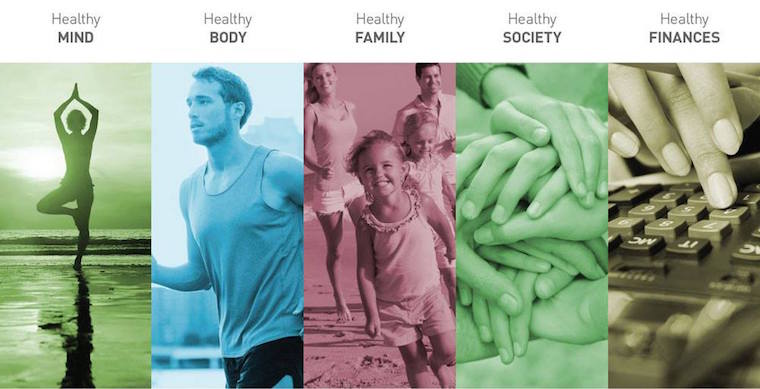
The original 5 Pillars of Health, when literally translated from the Japanese, really should be the 5 Pillars of “Wellness.” Wellness inherently connotes well-being, whereas health involves potential illness and therefore, possible cure. At Nikken, we help people with Active Wellness, achieving and maintaining well-being, never in curing or healing illness. Living with Active Wellness is an ongoing process that can always be improved upon.
The Family Pillar translated literally from the Japanese, really should be the “Relationship” Pillar. Families are doubtless the most important segment of all the relationships we choose to build or maintain over the years. Relationships are more far-reaching, so do not limit yourself to your family when building this pillar.
In Japanese, the literal translation for what we call the Society Pillar is actually “contributions.” There are people everywhere who need your help, which means there are infinite opportunities to serve. Using Nikken as a vehicle to serve does not mean just sharing the beneficial products. It means sharing yourself, as you are the actual contributor to the people you interact with. In the words of the original Nikken founder, “You are irreplaceable because you are you.”
We need Nature. Nature doesn’t need us. We need to be good to Nature and help preserve her, because we need her. In other words, the environment doesn’t need saving—it has been around for ages and will survive with or without humans. We, however, need the environment to support our well-being, so we are responsible for keeping it clean. We are responsible for being respectful of Nature for our own survival.
What is your legacy? What do you want your legacy to be? At Nikken, we share the ideal of Humans Being More. We share it but we don’t supply it. In other words, each individual has to commit to being more. It is a personal choice proven by positive behavior and service. We can role model it—that is a worthy legacy. What else can you add to your legacy?
I hope you had a wonderful 2019 and wish for you and yours an even better and more empowering new year of 2020. Remember, “Our past doesn’t define us. It provides lessons for the future.”





 Active Wellness Blog