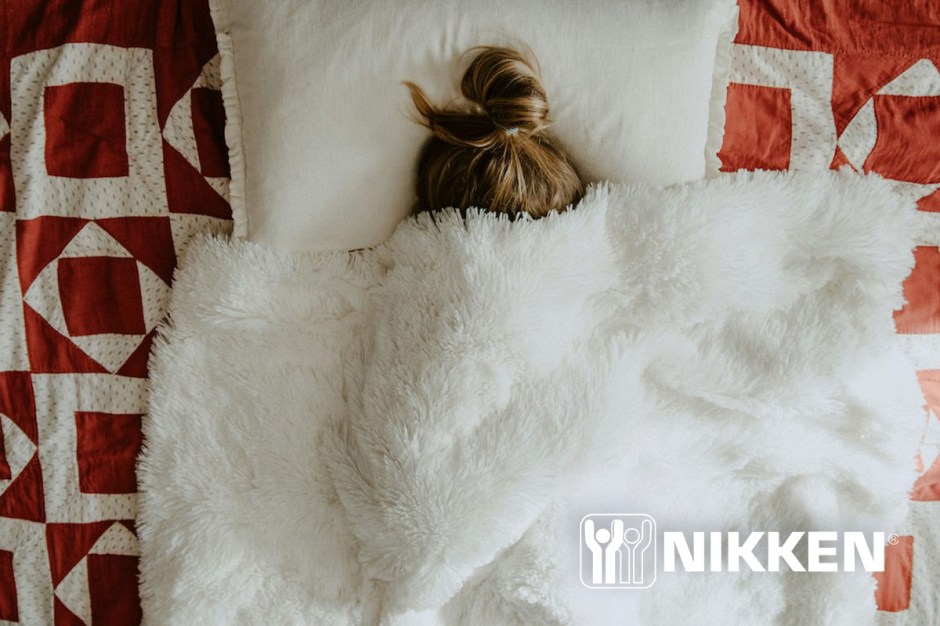
You Can Create a Sleep Sanctuary

Sleeping well is a challenge for many people. Often, it’s because keeping up with the demands of family, friends and work can cause a huge amount of stress. The result is that neither body nor mind can decompress enough to get a good night’s sleep.

Fortunately, there are actual steps you can take to create a “sleep sanctuary,” some place pleasant and cozy, relaxing and soothing:

1. Perhaps the most important item in a sleep sanctuary is the bed. Regardless of the type of frame you choose for your bed, the mattress is important and should suit your personal needs. Do you like firm, medium or soft? More importantly, what type of mattress suits your spine? For example, even if you prefer a soft, cushy mattress, if your spine is weak, you would probably be better off with a firm mattress, because it affords more support.

Solution: No matter what type of mattress you currently have, the Kenko Naturest® Fit is a topper that sits right under your fitted sheet, in twin, full, queen or king sizes. The Fit is made with sculptured rubberthane latex, which provides massaging effects while allowing for air circulation and ceramic reflective fibers that help regulate body temperatures. 800 gauss magnets create a magnetic field which cocoons the body for relaxation to help improve sleep. Tourmaline gives off electrons that help create calming effects when exposed to pressure, heat or motion, which is provided by your own body as it lays on top of the Fit.

2. Just as the Kenko Naturest® Fit supports your comfort, what your skin actually touches also can make a difference in how well you sleep. Choose linen that feels the most comfortable for you. Invest in natural fabrics, such as cotton, flannel, flax or even silk. Manmade fabrics do not allow air to circulate as freely and may even cause itchy or sweaty skin. Natural fabrics help regular temperatures—cools in hot months and warms in cold ones.

3. Do the breath test of your bedroom or wherever you want your sleep sanctuary to be. Inhale in and out slowly. What do you smell? Since you will be spending all night in the sleep sanctuary, you need to make sure the air is fresh. Stale or unpleasant odors are not conducive to restful sleep. If there is a window, make sure to keep it open at least for a few hours every day so the room has outside air flowing through. Indoor air often contains more contaminants than outdoor air! Dust, pet dander, pollen and odors are typically in household air. Mold, mildew and dust mites may be present. Even gases such as radon and carbon monoxide are found in measurable quantities in many homes.

Solution: Whether you have a window or not, the KenkoAir Purifier®provides multiple-stage HEPA filtration, is energy efficient and includes a deodorizing filter. It operates quietly, is ozone-free and has a negative-ion generator.

4. Many people enjoy the aroma of essential oils. Lavender and cedarwood are examples of essential oils that people choose to de-stress and relax for better sleep.

5. Is your sleep sanctuary dark? Sleep scientists agree that a cool, dark environment is ideal for sleep. You can use black out curtains or wear a sleep mask.

Solution: The Kenko Power Sleep Mask not only helps block out light like a typical eye mask. It also helps relax the entire eye area, using similar technologies to those found in the Kenko Naturest® Fit. The Power Sleep Mask is made with patented Dynaflux® magnetic technology, ceramic reflective fibers and tourmaline technology which helps produce a calming effect. When your eyes are relaxed, you have a much better chance at sleeping through the night.

6. A sleep sanctuary is for rest. Your best bet is to create an environment that is natural—you might want a few green plants, but try to limit the clutter. For example, you don’t need to keep piles of books or clothes in a sleep sanctuary. Instead, hang simple photos or art on the walls and limit the amount of unnecessary furniture or accessories. In other words, create a space that you look forward to retiring in every night!

From now through October 31st, take advantage of free ground shipping on any size Makura Sleep Pack and other select Kenko Sleep products!


Still Tired After Eight Hours of Sleep?

During sleep, the body’s major organs are doing self-repair—the heart and the brain, the lungs, the digestive and circulatory systems all depend on rest to recover energy levels, maintain weight, bolster immunity and keep you at optimum health. The rule of thumb is to get eight hours of sleep, more or less, depending on your individual needs, but what does it mean when you sleep but still feel tired?

There’s a difference between restful sleep and sleeping. Restful sleep can help improve heart and brain health, support steady mood, boost energy, reduce stress and even lower your risk of chronic diseases.1 On the other hand, if you’re sleeping but fitfully with multiple wakeups, or have a hard time falling asleep to begin with, you’re not getting the quality sleep your body needs to function at full capacity.

Here are some tips for obtaining restful sleep, that is, falling asleep and staying asleep until it’s the right time to rise:

•          Give yourself time to wind down at day’s end. Don’t do anything strenuous close to bedtime, and try for calming activities, such as reading, meditating, drinking chamomile tea, and simply relaxing.

•          Create a good sleep environment. What this may include is a room temperature that is on the cool side, since sleep studies find that cool temperatures (about 65º F or 18 Cº) are more conducive to deep sleep.

•          Try for complete darkness. The body reacts to light, equating it with action, not rest. Black out curtains work to help your body reach a state of rest.

 •         Listen to quiet or soothing sounds. Many parents turn on a sound machine to drown out “active sounds” so their babies can sleep, and this trick actually works on adults as well.

•          Practice slow, deep breathing to help you fall asleep. If you awaken during your sleep hours, repeat the same slow breathing.

•          Cold water tends to be something that wakes you up, so opt for a hot bath or shower before sleep. The warm water initially raises your body temperature, and then as it cools down, this helps you fall asleep.

Still feeling fatigued even after setting yourself up for restful sleep? Fatigue is more than just feeling sleepy. It’s a deep-rooted exhaustion that leaves you with a lack of energy and motivation, making daily tasks much more challenging.2 There could be a medical issue causing your fatigue, including low iron levels, thyroid disorders, infections and autoimmune disorders. Or, you may not be getting enough whole foods and therefore lacking nutrients. Dehydration also causes fatigue, as does high stress levels or not enough exercise.3

The quality of sleep is as important as the quantity of sleep you get. Sleep disorders specialist Marri Horvat, MD, explains that if you’re feeling foggy and tired during the day, it could be a sign of an underlying sleep disorder. These include sleep apnea, restless legs syndrome, insomnia, narcolepsy and hypersomnia.4 If you experience fever, unexplained weight loss or gain, repeated headaches, shortness of breath or chest pain together with fatigue, be sure to check in with your physician.5

Since sleep affects your health in so many profound ways, empower yourself by eating right, exercising regularly, spending time in nature and breathing clean air during your waking hours! During autumn, warm weather transitions into cooler climes, making it some of the best conditions for getting restful sleep.

1 https://apple.news/AI5JBnwq3ROWnQQ9MiCsxGQ

2,3 https://newhealthjournal.org/tiredness/tired-quiz/

4, 5 https://health.clevelandclinic.org/why-you-wake-up-tired-after-8-hours-of-sleep

Sleep the Way Nature Intended

The closer you replicate the natural environment, the more conducive it is for sleeping well. When you sleep under the stars, you are sleeping directly under the earth’s electromagnetic field, soothed by the ground and all the elements it contains. Negative ions abound from the growth surrounding you. Nesting creatures add leaves, twigs and feathers—did you know if you leave out the fur your dog sheds, birds will come and take it to cushion their nests just as they would gather the fur fallen off a wild creature in the woods?

Since people tend to sleep indoors, creating a good sleep environment entails other basic aspects: Noise can be an impediment to sleep, but it depends on the type of noise. The trend now is for babies to sleep with a white noise machine, sometimes replicating the sounds heard in a mother’s womb. Grown people might benefit from a sound machine which plays the notes of a trickling stream, gentle ocean waves, leaves rustling in the breeze or soft music. There are always those who appreciate silence, so that can be part of their sleep environment.

Everyone has a preference when it comes to room temperature. Generally speaking, sleep experts have found that people sleep more soundly in a sightly cool environment. This again replicates what is found in nature: The air temperature cools down at night. Similarly, our body temperature dips around 4 a.m., which helps to preserve our energy.1

The Kenko Dream Comforter and its lighter partner, the Kenko Dream Light Comforter offer a cozy effect with a magnetic layer as well as ceramic-reflective fibers that help release heat to keep a comfy temperature. Innovative chitocotton contains chitosan for a breathable cover that helps with ventilation.  

When sleeping under the stars, there is darkness and possibly moonlight and starlight. The human body’s natural circadian rhythm follows the dark-light cycle, with restful sleep taking place during darkness. So, sleep experts recommend keeping your bedroom dark, with a night light peeking out if necessary. The light from a TV or any mobile device is a deterrent to restful sleep—nature does not supply electronics.

The firmness of your mattress can make a difference in your sleep. Some people prefer a soft cushion while others require the support of a stiffer mattress. When camping out, a sleeping bag provides some cushion, but the real support is the ground itself, which flexes a little but is quite firm. Find the bedding that supports your needs.

Kenko Sleep Technology provides the perfect solution to convert any mattress into one with the ideal support. The Kenko Naturest® Fit is made to fit twin, full, queen and king mattresses. Placing the Fit over your mattress will transform your sleep environment so that it replicates different parts of nature that are conducive for restful sleep. When exposed to pressure, heat or motion, tourmaline gives off electrons which can help create a calming effect; 800 gauss magnets create a magnetic field that cocoons the body for a relaxing effect; reflective and breathable fibers help regulate body temperature; and rubberthane with natural latex nodules provide massaging effects! The Fit brings nature right into your bedroom!

Throughout the month of October, Nikken is offering 20% off our sleep products (except for the Kenko PowerSleep Mask) plus free ground shipping. The Makura Sleep Packs are already priced with a 10% discount, but we’re adding another 10%, so you still get 20% off plus free ground shipping. Take advantage of this sale to transform every bedroom into a sleep environment the way nature intended!

1 https://wellnesscenter.gatech.edu/sleep/bedroom-environment#:~:text=Silence%20or%20low%20levels%20of,deep%20sleep%20will%20be%20compromised.