Celebrating 25 Years of PiMag® Water Technology

PiMag® water technology is based on the discovery of Japanese scientists in the 1970s. They found that water from an isolated hillside had a remarkable effect on plant life in that area. Searching for the cause of such abundant growth, they unearthed magnetite and calcium in the hillside. Moreover, the water flowed over silicates, the same material that naturally forms crystals. This clean, naturally alkaline water contains beneficial minerals.

PiMag® water products are designed to convert tap water into spring-like naturally-sourced water that is ionized and alkaline. That means PiMag® water is in the pH range of 8.5-9.5, which helps reduce excess acidity in the body. Ionized water has antioxidant properties, which may help offset the oxidizing effect of some negative elements in the contemporary diet and polluted environment. The decreased oxidation-reduction potential (ORP) helps to slow down cellular damage. In addition, the use of magnetic technology in the PiMag® filtration process helps to improve hydration and absorption.

Multi-stage filtration in the PiMag Waterfall® helps to reduce bacteria and contaminants. The four processes are: 1. Prefiltering for sediments 2. Filtering for heavy metals 3. Adding trace minerals via the mineral stones and 4. Declustering by magnets in the tap to prevent molecular clumping, making the water more absorbable.

In a natural environment, spring water is filtered, purified and filled with minerals that are essential for maintaining optimal functions in our body. Mimicking this natural composition generates an exceptional source of the ideal water that every cell in our body needs for smart hydration. The PiMag® water systems exemplify biomimicry, from its magnetic filtration to its alkalinity and the mineral stones that are added to the PiMag Waterfall® system. Advanced ionic filtration is achieved by embedding nanoparticles of copper metal into the activated charcoal in the filter column. When harmful microbes interact with the copper metal, it triggers the production of copper ions, which are doubly charged positive ions that are effective at destroying the unwanted bacteria.

We generally think of exposure to toxins in water by drinking from impure sources; however, we also absorb contaminants through the pores of our skin. Each time we bathe or shower, our skin is absorbing both the cleansing parts of water as well as the impurities. The PiMag® Shower Filter addresses this by helping to reduce chlorine exposure, odors, iron oxide, dirt and sediments. The shower filter contains copper and zinc to neutralize chlorine—when free chlorine comes in contact with the filtration media, it is changed into water-soluble chloride, which is not only harmless but also helps prevent drying out of hair and skin.

PiMag® water technology is designed for smart hydration. In addition, PiMag® water systems are made with recyclable and biodegradable materials to help reduce plastic waste. Plastic takes 400 years to degrade and about eight million metric tons ends up in the oceans each year!1 Due to the pandemic years, more single-use packaging was used than ever, adding to the plastic waste.2

PiMag® water technology is a great way to obtain smart hydration and smart cleansing, but it is also a helpful way to help decrease plastic waste on planet Earth. Nikken proudly celebrates 25 years of PiMag® water technology!

1 https://www.dw.com/en/there-are-83-billion-tons-of-plastic-in-the-world/a-39765670

2 https://www.forbes.com/sites/larrylight/2021/01/04/2021-the-year-of-the-package/?sh=2198c4654cd1

The Water-Gut Connection

Water is critical for the smooth operations of various bodily functions. These functions include temperature regulation, the transport and distribution of nutrients and the elimination of waste and toxins. Water is also one of the primary ingredients for healthy digestion. In other words, hydration and efficient digestion make perfect partners.

Water is required for digestion, acting as a lubricant that facilitates the movement of food along the digestive tract. From the moment food enters the mouth, saliva, which is primarily water, begins to break down complex carbohydrates. As the food travels through the digestive system, it needs adequate water to maintain the right consistency for smooth movement. In the stomach, water combines with stomach acids to help break down proteins and aid in the digestive process. Water helps prevent constipation and promotes regular bowel movements.In a nutshell, the digestive processes that require water include the following2:

• Saliva production—Saliva is primarily water and contains enzymes that begin the digestion of carbohydrates in the mouth.

• Gastric juices—Water is the main component of the gastric juices that in the stomach that help break down food.

• Enzyme function–Many digestive enzymes require a watery environment to efficiently break down food.

Proper hydration is essential for optimal nutrient absorption in the digestive system, since water moves the nutrients from the digestive tract into the bloodstream. When well hydrated, the body can efficiently absorb vitamins, minerals, and other essential nutrients.3

Digestive disorders occur when the body is dehydrated. This is because when the body doesn’t have enough water, it takes whatever water is available for critical functions such as maintaining blood pressure and supporting vital organs.4 When this happens, the digestive system may not receive enough water, leading to constipation and other discomforts.

To keep your gut healthy, remember to drink water throughout the day. The more active you are, the more water you will need to stay adequately hydrated. Caffeine and alcohol act as diuretics, so be mindful of fluid loss and dehydration and increase the volume of water you drink to help compensate. Since many fruits and vegetables are full of water, incorporate them into your daily regimen and obtain not only the benefits of hydration but also essential vitamins and minerals. Watermelon, cucumbers, oranges and berries are examples of produce abundant in water and vitamins.

Some simple daily habits for healthy digestion are:

• Starting your day with a glass of water. This helps kickstart your metabolism and the digestive system first thing in the morning,
• Drink water consistently throughout the day. Don’t wait until you’re thirsty, because by then you are probably already somewhat dehydrated. Keep a water bottle with you as a reminder to drink!

• Drink water before, during and after exercise. Physical activity of any sort can lead to fluid loss, and staying hydrated helps support your muscles and digestive system.

Remember, for the entire month of this July, you receive 20% off select filter replacements. That includes filters for our PiMag Waterfall® that helps you hydrate with alkaline water inspired by nature.

1 https://bgapc.com/hydration-and-digestion-gut-health/

2, 3, 4 https://patialaheart.com/blog/the-link-between-dehydration-and-digestion-how-water-affects-your-gut-health/

Are You Hydrated?

Did you know that the 60% of the human body’s overall weight is from water?1 That’s one of the reasons it’s so important to stay hydrated in order to function well. Even the act of breathing throughout the day causes the body to lose water bit by bit. When fully active and perspiring, such as during strenuous exercise, the body loses a lot more water and needs to be continually replenished to keep the overall system in balance with adequate electrolytes.

As people age, their hydration needs change. For example, the elderly are more apt to become dehydrated.2 This is in part due to changes in body composition. Older people tend to eat and drink less. The mechanism that tells the body “I am thirsty” is slower to kick in, leading to a higher risk of dehydration. Since people require sodium and potassium levels to be in balance to keep the body’s cells working optimally, drinking enough water before feeling critically thirsty is key to staying hydrated.

Healthy hydration helps you maintain overall health by:

•          Helping to regulate body temperature.

•          Keeping joints lubricated for smooth movement.

•          Transporting nutrients.

•          Supporting digestion.

•          Removing waste from the body.

•          Promoting cognitive function.

•          Improving memory and mood.

•          Preventing urinary tract infections.

•          Supporting renal functions.

•          Reinforcing blood circulation for cardiovascular health.

•          Preventing low blood pressure and dizziness.

Staying hydrated is essential to good health, but how do you know whether you’re drinking enough water for your personal needs? The fastest way to take measure of your state of hydration is to check the color of your urine. If it’s pale yellow or even clear, you’re doing well. If it’s dark yellow or a dark honey color, you’re either dehydrated or need to hydrate soon. Other signs of dehydration include confusion, crankiness, anxiety, muscle cramps, fatigue or weakness, dizziness, dry mouth, lips and eyes, chills, flushed or dry skin, loss of coordination, headache, difficulty urinating, and lacking the ability to focus or concentrate.3

Staying hydrated is easier than having to drink water non-stop. Many nutritious fruit and vegetables are composed of high-water content, so when you eat them, you’re hydrating. These include vegetables such as cucumbers, lettuce, celery and radishes. High-water content fruit include watermelon, tomatoes, berries, assorted citrus (oranges, lemons, limes, grapefruit, pomelos, etc.), and all types of melons (honeydew, casaba, cantaloupe, canary, crenshaw, hami and more). In fact, you can obtain about 20% of your daily fluid intake from food rather than beverages.

Not all beverages are equal, and water is ideal for hydration. Beverages such as coffee, tea and soda are being studied to determine whether they contribute to excessive urine output. So far, researchers have found that drinking them in moderation is not harmful but once you get to six cups or more, the dehydrating effects become noticeable.

Because caffeine and alcohol tend to increase urine output, energy drinks, beer, wine and other liquors are all known to increase the risk of dehydration. Taurine, a compound with diuretic effects, is commonly added to energy drinks. 4

Drinking water consistently throughout the day can help you stay hydrated. Drinking alkaline PiMag® water will help you reduce acidity and increase absorption. The PiMag Waterfall® is now imbued with copper particles in the filtration column as well as in the mineral stones, which turn into ions that effectively combat microbes and other contaminants upon contact. You can taste the PiMag® difference!

1, 2, 3 https://www.kendal-crosslands.org/blog/the-importance-of-hydration/gad_source=1&gclid=CjwKCAiAtYy9BhBcEiwANWQQL1TODUw

4 https://www.healthline.com/nutrition/dehydrating-drinks#bottom-line

Why Filter Potable Tap Water?

We often take water for granted, especially when we live in areas with free-running tap water 24/7. Then the unthinkable happens and we become more aware. For example, in 2014, there was a water crisis in Flint, Michigan, due to lead contamination. It’s been nine years and the people who live there are still dealing with the after effects. And, as recently as last year, the residents of Jackson, Mississippi, were left without potable water and that problem is ongoing. Even in Canada, a country that has multitudes of lakes, is home to First Nations people who continue to have to boil water to decontaminate it.

What’s going on? Why is potable tap water not the “safe” and convenient choice even in North America and parts of Europe? We’ve long known not to drink tap water in many countries when we travel, and that has added to the rampant use of single-use bottled water.

In the United States, the Environmental Protection Agency (EPA) regulates public tap water used for drinking. The EPA sets limits on how much of an element that may be harmful to human health is allowed in the water supply. Limits are based on the amount deemed safe for human consumption and how much the water treatment facilities are capable of removing.

According to Sarah Grady, a science analyst at the Environmental Working Group (EWG), “There’s a gap between what is legal and what is safe.”1 She explains that many regulations are based on “old science” and therefore are insufficient to keep current water supplies safe. In other words, even when tap water is considered potable, it might not be completely safe. The EWG therefore maintains their own tap water database with stricter limits determined by peer-reviewed studies, research from state agencies and their own scientists.

Drinking tap water can be risky, not just when traveling to so-called third-world countries.

•          In the United States, about 90% of the population obtain tap water from a public water system. This water comes from a lake, reservoir, river or aquifer, which is piped into a water treatment facility. The “treatment” involves adding chemicals that bind to pollutants that may be in the natural water, so that they can be sifted out.2 This process makes it drinkable, but  the water contains chemicals.

•          The chemicals added to the water are disinfectants such as chlorine and chloramine. These chemicals are known to help kill pathogens in the water as well as any that might be contained in the water pipes themselves.3

•          Water treatment facilities vary in their capabilities, depending on location and funding. A study published in 2018 cites that 21 million people were exposed to tap water that violated federal guidelines in 2015. According to Maura Allaire, a water quality expert at the University of California in Irvine, the most common sources of the violations stemmed from unsafe levels of bacteria and viruses, nitrates, arsenic and harmful byproducts from the disinfectants themselves.4 It’s a catch-22 in that disinfectants are added to address contaminants but they create a whole different set of potentially harmful aspects.

•          Studies conducted on drinking water have shown that PFAS (per-and polyfluoroalkyl substances) are commonly found throughout the U.S. These chemicals have been found in our blood and are linked to serious health issues, including cancer. PFAS are pollutants that are sometimes called “forever chemicals” because they last in the environment for so many years. The EPA just this year has proposed rules to address PFAS at the federal level in order to try and remove these toxins. Meanwhile, PFAS have been contaminating water supplies for decades.4

•          The EPA has identified and regulates 90 water contaminants. There are many more that are identified and not yet regulated. They include 66 chemicals, 12 microbes and all PFAS, six of which were recently named as specific ones to limit.5 The gap between identifying toxins, providing substantiated proof of harm, proposing regulations, and finding funding to enact the rules is unfortunately huge. Meanwhile, people continue drinking the so-called potable tap water.

Nikken has been a vocal champion of hydration and clean drinking water for decades and now more than ever, our Global Wellness Community is at the forefront of the movement to filter potable tap water for our health and that of our children. The PiMag Waterfall® and PiMag® Sport Bottle are simple to use and help make potable tap water cleaner and better tasting. They provide convenience at home and when traveling.

Now through the end of the month, get PiMag® replacement filters at 20% off!  The PiMag Waterfall filters 900 liters or 238 gallons before replacement is needed, and the PiMag Sport Bottle filters 40 gallons or 151 liters per cartridge. You benefit from clean alkaline water, and help decrease plastic waste!

1, 2, 3, 4, 5 National Geographic, Is tap wate rsafe to drink?, Sarah Gibbens, March 20, 2023.

Embracing Spring Cleaning and Warmer Weather

Spring is here and that usually means warmer weather, more sunshine and frequent but short showers—all helping flowers to bloom and foliage to grow. That adds up to more outdoor activities, such as hiking, running, swimming, yard work and picnics. While outdoors, we’re breathing in a mixture of pollen, clean and polluted air, and depending on the location, possibly industrial waste.

Spring is also a time of renewal and part of that is the universal embrace of spring cleaning. In fact, in many parts of Asia, spring cleaning involves not only one’s house but also the gravesites of ancestors. It’s a way to celebrate the gifts that the spring season brings to the living and remembrance and honor to those who have gone by keeping their resting places swept and clean.

The average American spends 80% of their lives indoors, where the air quality may actually be worse than the air quality outdoors! Depending on where we live, clean air and potable water can be valuable commodities rather than the norm. The rite of spring cleaning addresses indoor air pollutants and the need to hydrate more as the climate changes.

Even when outdoor air is breathable and water is potable, we run the risk of bad indoor air quality that can cause respiratory issues or other ailments. Air pollutants can range from contaminants brought in by pets, dust mites, spores, mold and mildew, or even harmful gases like carbon monoxide and radon, or volatile chemicals emitted from conventional cleaners and cooking.1

These air pollutants and allergens can cause respiratory problems and flare-ups in people who already have breathing issues. Children, people with asthma and the elderly may be especially sensitive to indoor pollution. These same people often do not stay well hydrated and other health issues can arise.This is why it’s so important to use water and air filtration units.

Nikken is committed to creating environmentally-friendly products that are in harmony with nature. They help us to breathe clean air, to live a a wellness lifestyle and to keep hydrated with alkaline water. When we’re spring cleaning, it’s the perfect time to make sure all our water and air filters are changed in a timely way!

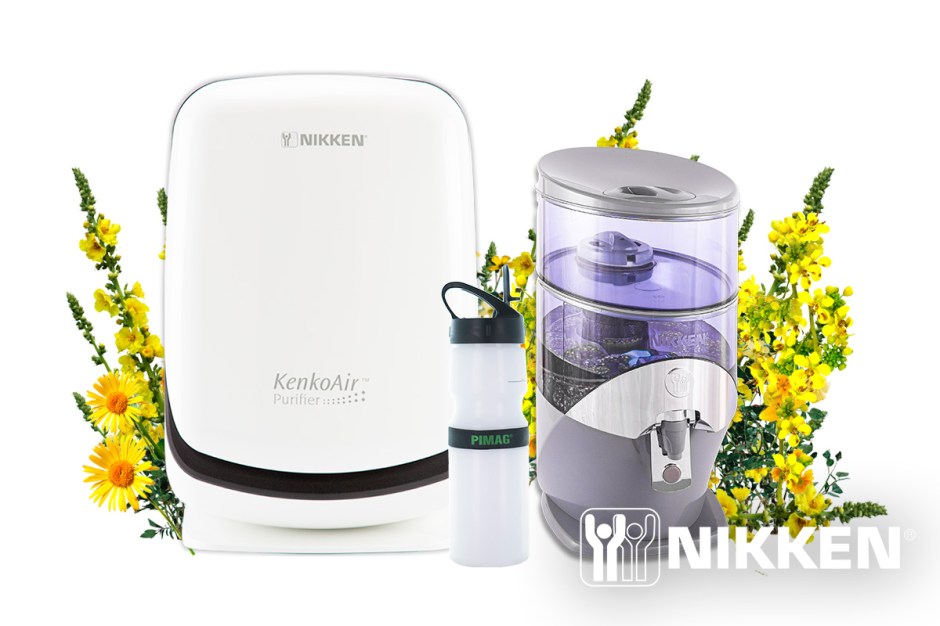
  • The KenkoAir Purifier® exceeds the measured efficiency of capturing up to 99.95% of 0.3 micron particles in the air. It’s 35% more efficient than standard models and saves a minimum of 215 kilowatt-hours per year. Unlike typical air filters, this advanced system helps generate negative-ions similar to those found in natural environments.

Nikken recommends changing the filters every six months. Be sure to clean the reusable prefilter when the other filters are replaced. Choose Item #1444.

  • The PiMag® Sport Bottle uses state-of-the-art filtration technology that exceeds NSF standards for reducing particulates, chlorine, chloramine, taste and odor, cysts, lead, bacteria, VOCs, MTBE and more.

Nikken recommends changing the filter approximately every 40 gallons or three months of average use or up to an estimated 250 refills per filter. Choose item #13503 for the Replacement Filter Pack.

  • The PiMag Waterfall® is the eco-friendly Sport Bottle’s counterpart for the home and office. It also exceeds NSF standards as mentioned above.

Nikken recommends changing the filter every 3- 6 months or 900 liters/238 gallons, whichever comes first. Choose item 13845. Mineral stones should be changed annually. Choose item #13846.

  • The PiMag MicroJet® Shower System has also been tested according to NSF standards and been proven to effectively reduce chlorine exposure. While most chlorine-reduction systems in shower filters merely trap chlorine or add other chemicals to counteract it, the PiMag MicroJet uses a reduction/oxidation process to neutralize chlorine ions. The MicroJet injects air into the shower stream to increase the electronegative potential of the water for more effective filtration. Micro-bubbles are released through the nozzle to provide an exceptional cleansing action.

Nikken recommends changing the filter for the hand held model every 5,000 gallons or three months, based on average use. Choose Item #14661.

Nikken recommends changing the filter for the wall mount model every 10,000 gallons or six months, based on average use. Choose Item #13831.