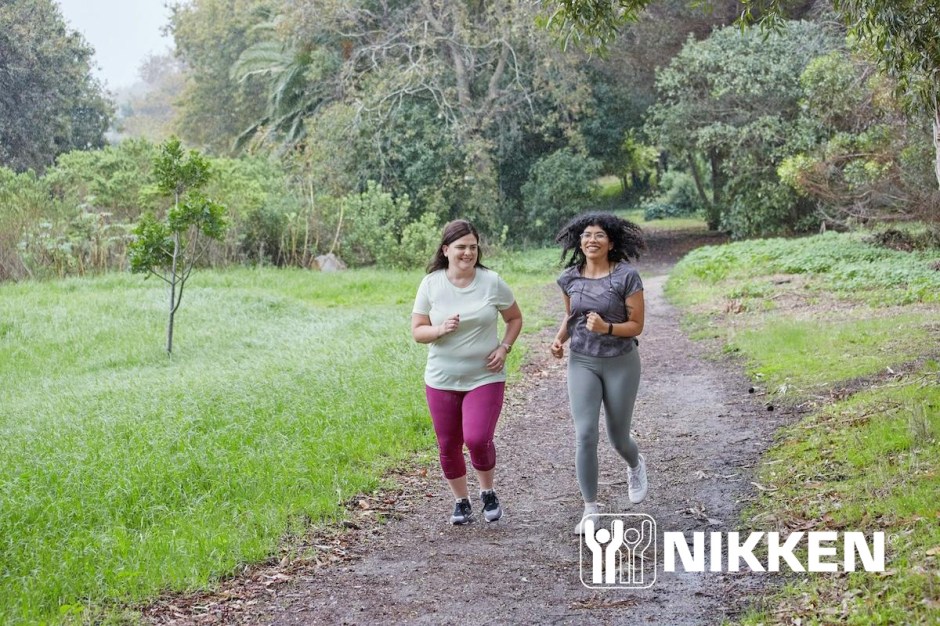
How Does Exercise Enhance Gut Health?

We know that eating a healthy diet contributes to optimal gut health. Now clinical nutritionists and gastroenterologists are finding definitive proof that exercise can support gut health, too. The combination of healthy diet and exercise reigns supreme, but the discovery that exercise plays such a big role in gut physiology may help many couch potatoes to get moving!

“Exercise is one of the most powerful ways you can boost your gut microbiome. Your digestive tract is a muscle, and moving your body is good for all muscles, gut included. When we are physically inactive, the muscles in our gut also become less active. Over time, they lose their natural coordination and strength,” explains gastroenterologist Christine Lee, MD.1

Regular exercise helps the gut find its ideal digestive pace. Each gut has its natural rhythm that keeps things moving. If it’s too fast, you might get the runs. If it’s too slow, you might be constipated, bloated or nauseated. Exercise helps the gut stay “just right” in terms of gut motility, that is, the movement within the gut.

During movement, especially exercise of a cardiovascular nature, the heart pumps harder in order to deliver blood and oxygen to the muscles. Part of that extra blood and oxygen goes straight to the gut. In other words, exercise improves circulation in the whole body, and that includes the gut, which helps the digestive tract work better to maintain the right balance of healthy bacteria.2

Gut muscles react to exercise the same way our visible outer muscles do. Biceps, quadriceps and abdominals visibly get more toned with regular exercise. What you don’t see are the internal gut muscles getting more toned. Even though not visibly more toned, improved regularity is proof that your exercise is paying off by helping waste process out of the body more effectively so your gut simply feels good every day.

Different types of exercise are being researched for their impact on the gut microbiome. There is evidence that low intensity exercise can help reduce the amount of time it takes food to travel through the digestive tract and be successfully pushed out as waste. This is important because this allows the gut microbiome to perform multiple functions effectively, including converting non-digestive parts of food into energy.3

In contrast, higher intensity exercise allows more oxygen to reach the brain and bloodstream. The brain and the gut are connected by the vagus nerve, as well as through molecules secreted into the bloodstream from the gut microbes and immune cells that travel from the gut to the rest of the body.4 The brain and gut are therefore in constant communication and regular periods of high intensity exercise enhance that interaction.

There’s no better time than the summer months to start or add to your exercise regimen. And, regular exercise helps the body crave healthy foods; healthy foods fuel your body for better performance during exercise!

Nikken launched Golden Gut Formula, loaded with both pre- and probiotics, so you not only help increase your beneficial bacteria but you’re nourishing them so they can multiply more rapidly. Adding Golden Gut Formula to a healthy diet and exercising daily may help accelerate your ongoing quest for empowered living! 

1, 2 https://health.clevelandclinic.org/gut-health-workout#:~:text=Your%20metabolism%20is%20your%20body’s,%2C%E2%80%9D%20explains%20Dr.%20Lee.

3 https://www.uclahealth.org/news/article/new-microbiome-research-reveals-exercise-may-impact-gut

4 https://med.stanford.edu/news/insights/2025/03/gut-brain-connection-long-covid-anxiety-parkinsons.html#:~:text=Through%20direct%20signals%20from%20the,tracts%20are%20in%20constant%20communication.

How Important is Movement for Physical Well-Being?

Most of us acknowledge that staying mobile is a necessary part of an active and empowered lifestyle. But can movement also improve overall physical well-being? In reality, movement can help us feel good every day. And best of all, it doesn’t take a gym membership or strenuous exercise—small daily movements, as long as they’re done consistently, may increase mobility and contribute to overall health.

Here’s how movement can positively impact six crucial parts of the body:

•          Muscles: More than 600 muscles in the body make up 40% of the human body’s weight. Movement helps strengthen those muscles, which help the body to maintain stability, balance and coordination.1

•          Bones: Movement helps build more durable, denser bones. Whether you choose resistance training, jogging, walking, hiking or balance training, such as Pilates and yoga, movement supports bone density.2 Movement and exercise may offer protection against osteoporosis and age-related loss of muscle mass, strength, and function, also known as sarcopenia. Improved physical function can reduce the risk of falls and likelihood of serious injury if there is a fall.3

•          Joints: Flexibility and range-of-motion are important to keep the joints functioning smoothly. Stretching and being mindful of posture and how daily tasks are performed can help increase coordination and balance.

•          Brain: Researchers have made the connection between brain power and movement. As some people age and lose mobility, their cognitive functions deteriorate as well. Daily movement helps rejuvenate the structures within the brain that are linked to cognition. In rehab facilities, even those who are wheelchair bound are provided ways to “cycle” their arms, because movement is not limited to the legs!

•          Heart: Keep the heart pumping at optimal levels by moving every day. It used to be called aerobics and now it’s cardio. Increasing your heartrate through any form of cardiovascular activity done daily can help lower blood pressure, boost levels of good cholesterol and improve blood flow (circulation).4

•          Lungs: To breathe is to live, so keeping the lungs healthy is critical to physical well-being. Movement helps the lungs to improve cardiorespiratory endurance. Walking at a brisk pace is an easy way to help the lungs. And, mindfully inhaling and exhaling deeply is a small but healthy movement in and of itself!

Movement can help you feel better, look better and live better—it’s a natural way to lift your mood and spirits, to sleep better and to connect with nature and the people around you!

1, 2 https://medschool.cuanschutz.edu/fitness/blog/blogs-just-move–the-six-benefits-of-everyday-movement

3 https://www.nia.nih.gov/health/exercise-and-physical-activity/health-benefits-exercise-and-physical-activity

4 https://www.heart.org/en/healthy-living/fitness/fitness-basics/why-is-physical-activity-so-important-for-health-and-wellbeing

Can Magnets Support Mental Health?

Overall well-being includes mental health, not just physical health. When it comes to physical health, much of the science is black and white; whereas with mental health, there are more gray areas. While medication and psychotherapy are often seen as the end-all-be-all treatments for depression and other mental health conditions, magnets can serve as alternative ways to regulate neural activity: Transcranial magnetic stimulation (TMS) is an advanced method of relieving erratic brain activity that can cause poor mental health.1

Approved by the U.S. Food and Drug Administration (FDA), TMS usually is used only when other depression treatments haven’t been effective. The FDA also approved TMS for obsessive-compulsive disorder (OCD), migraines and to help people stop smoking when standard treatments haven’t worked well. Research continues into other potential uses for TMS, including epilepsy.2

When used for depression, OCD and to stop smoking, this treatment involves delivering repeated magnetic pulses, so it’s called repetitive TMS or rTMS. During an rTMS session for depression, an electromagnetic coil is placed against the scalp of the head. This coil delivers magnetic pulses that stimulate nerve cells in the region of the brain involved in mood control and depression. It’s thought to activate regions of the brain that have decreased activity during depression.3

The difference between rTMS and deep TMS has to do with the type of coil used. The deep TMS coil stimulates deeper and wider areas of the brain, compared with rTMS. Deep TMS coils have been FDA-approved for OCD and to stop smoking. Although the biology of why TMS works isn’t completely understood, the stimulation appears to affect how the brain is working. It seems to ease depression symptoms and improve mood.4

According to the Cleveland Clinic, the recipient of TMS is fully aware of what’s happening during the entire treatment and can talk, read or nap. The coil delivers stimulation for approximately four seconds, then stops for 15 seconds and then resumes. This is repeated about 75 times per session. During the stimulation, the patient may hear a tapping sound as well as feel the sensation of being tapped on the scalp. Phase one can be time-consuming, with 30 treatments being recommended over a six-week period of time. During the second or maintenance phase, the frequency decreases according to each case, varying from once every other week to once a month or every two months.5

Magnets and magnetic fields are part of nature, and nature continues to be a primary source of solutions for overall well-being. The more we learn, the more we can practice empowered living.

1 https://www.brainsway.com/knowledge-center/the-truth-about-magnet-therapy-aka-tms-therapy/

2, 3, 4 https://www.mayoclinic.org/tests-procedures/transcranial-magnetic-stimulation/about/pac-20384625 5 https://health.clevelandclinic.org/cant-conquer-depression-how-magnets-can-help

Do You Practice Empowered Living?

At Nikken, our mission is to empower individuals with the means to create a naturally healthy life while reaching financial stability. We believe the key to physical, mental and financial well-being is “empowered living.”

Empowered living entails making good choices and decisions and then taking action. Doing so consistently and mindfully leads to personal growth and prosperity. The next step is to contribute positively to local communities, then to society at large. Empowered living is a pathway for individuals to connect not only to their immediate environments but also to the world.

Achieve a balanced lifestyle that is full of vitality with empowered living. Put in the simplest terms, our ongoing goal is to feel good every day. We believe feeling good every day is attainable with these five key principles:

•          Enhance your mindset.

•          Boost your vitality.

•          Strengthen your relationships.

•          Make a contribution and serve others.

•          Diversify your sources of income.

These principles are akin to living with purpose. In Japanese, “ikigai” actually means living with purpose. To know our purpose in order to be of value to families and communities, we must know what fulfills us and gives us joy, and then to pursue it.

Here are 10 behaviors to put into motion for ikigai or empowered living:

1.         Awaken your consciousness. Increase your level of awareness to improve your lifestyle. Be open to learning new things.

2.         Connect with your purpose: Understand and pursue the meaning and value you bring to your life.

3.         Choose joy: Choose to be happy and savor each moment. Be grateful.

4.         Move your body: Incorporate activities that motivate you to move naturally, every day. Stay active in one way or another. Get in shape and stay in shape.

5.         Recharge your batteries: Increase energy levels by ensuring restful sleep, connecting with nature and breathing consciously. When you increase your vital energy, you naturally decrease stress.

6.         Practice smart hydration: Consume pure, high-quality water.

7.         Practice smart nutrition: Eat natural, organic and nutritious foods. Don’t eat too much, leave a little room for optimal digestion!

8          Nurture your relationships: Foster love, shared goals, mutual support and connection. Surround yourself with friends and positive thinkers.

9.         Transform your environment: Connect with communities, understand their needs and offer help.

10.       Diversify your finances: Explore various income sources and manage your finances wisely.

Empowered living means consciously living your best life, one day at a time, resulting in not just a long life, but a well-lived life of purpose and meaning.

Do You Know About Magnets and Acupressure Points?

Our bodies have naturally-occurring magnetic and electric fields, that is, all of the molecules in our bodies that make up cells have a small amount of magnetic energy in them. Ions such as calcium and potassium help the cells communicate with each other by creating and sending electrical signals. When we feel spasms or muscle contractions, we are experiencing our nerves sending signals! Therefore, when the body’s magnetic and electric fields are out of balance, a host of issues can arise.

Those who study magnetic field therapy believe that these imbalances can be normalized when the body is exposed to a magnetic field. How is this done? In general, different types of magnets may be applied to specific acupuncture/acupressure points.1 These areas are called energy pathways or channels. Traditional Chinese Medicine (TCM) also describes these special acupressure points as “meridians” in the body.

Used for thousands of years in China to promote relaxation and wellness, the goal of acupressure and acupuncture is to restore health and balance to the body’s energy channels by regulating the opposing forces of negative and positive energies. TCM posits that a vital life force known as qi (ch’i) flows through these invisible channels where 12 major meridians connect a specific network of organs that operates a communication system throughout the body. The meridians begin at the fingertips, connect to the brain, and then connect to an organ associated with a certain meridian. According to this theory, when one of these meridians is blocked or out of balance, physical challenges can occur.2

Magnetic field therapy takes TCM’s theory of energy channels and partners it with magnets. When magnets are placed on the acupressure points within the energy channels, the affect is similar to acupuncture, but without needles. The magnets create a magnetic field, which promotes more optimal functioning of the circulatory system, while enhancing the nervous system’s innate abilities to refresh and restore balance.3

Alternative modalities may help you experience Empowered Living the Nikken way! They can help us take control of our lives in order to feel good every day by practicing health and wellness through mindful intention.

1, 2, 3 https://www.webmd.com/balance/acupressure-points-and-massage-treatment

Daily Habits Can Influence Overall Mental Well-Being

Many factors play a part in mental health, some of which we can’t control, such as genetics, life experiences, and family history. Nonetheless, there are many things we can consciously do every day to create overall well-being.

What we think about and how we we approach our thoughts can impact everything in our lives. Our ability to handle the twists and turns of life affect our mental health, and building good habits can make a difference. Common sense dictates many of these positive behaviors, but staying consistent is both the key and the challenge to making them work.

Sleep is necessary to maintain good physical health, but it also is crucial for mental health. One study from 2021 included 273,695 adults in the United States. The researchers found that people who averaged six hours of sleep or less per night were about 2.5 times more likely to report frequent mental distress than those who averaged more than six hours of sleep.1 The researchers also found that the quality of sleep matters, as disrupted sleep can add to mental health issues. So, maintain a consistent sleep schedule by going to bed and getting up at the same time daily and reap the benefits.

Another area that impacts mental health is “keeping up with the Joneses.” No matter how well you are doing, there will always be others doing better. This constant comparison with others can produce feelings of inadequacy. The advent of social media has multiplied these comparisons a hundred-fold, and psychologists report that feelings of low self-worth are an inevitable byproduct of constantly consuming information about other people’s lives. The solution is to cut back on social media. Stop scrolling on the phone, day and night, keep your phone out of reach during sleep hours, turn off notifications and only keep social apps that are absolutely necessary.2 Hit delete, delete, delete.

Staying out of the business of people we don’t know can be a relief, but staying in touch with people we do know, can be truly transformative. In other words, friends and family deserve attention and even when the effort to strengthen these relationships can be taxing, they’re worth it. These are the people who ultimately lend meaning to our lives. Instead of keeping up with the latest gossip about so-and-so, why not take the time to call mom, son, cousin, old friend, new friend, etc.? Better yet, make it a point to catch up by actually meeting for walks, tea, or a laugh-together session!

Exercise isn’t a magic bullet for physical and mental health, but it comes close. Next time you’re feeling down, go outside and move around. Walk, jog, stretch, do some head rolls—it doesn’t matter what you do as long as you do it regularly. For mental well-being, it doesn’t have to be vigorous or strenuous. In fact, it should be whatever you are comfortable with, even if it’s chair exercises. Again, be consistent—start slowly and build up stamina.

What we eat and drink also affects our state of mind. Certain foods are known as “mood-boosters.” These include berries, bananas, salmon, beans, salmon and whole grains. Staying hydrated by drinking water throughout the day can be beneficial. According to nutritionists, dehydration denies the brain and body the nutrients required to operate at optimal levels. Certain foods and drinks, including alcohol, caffeinated beverages, refined carbs and foods with added sugars, may actually increase anxiety. A nutrient-dense diet is something to stay on for a lifetime, so developing good eating habits is essential for healthy longevity.

Good habits take time to create, so start gradually and empower yourself. May is mental health awareness month, the perfect time to start or add to your daily regimen of empowered living! Develop one good habit at a time, and build on it. You may be surprised how much better you feel both mentally and physically!

1, 2 https://www.healthline.com/health/mental-health/habits-to-improve-mental-health

What is Empowered Living?

At Nikken, we strive to be catalysts for positive change. We want to inspire individuals to transform their lives and create a ripple effect throughout society. We foster a global wellness community that empowers people to make a difference, where everyone has a purpose to positively impact the lives of others.

Empowered living involves actively taking charge of your choices, decisions and actions. Positive choices lead to positive outcomes, and in turn, to personal growth, prosperity and a sense of balance, vitality and connection to the world.

The 5 Pillars of Wellness are pathways to empowered living:

•The Mind cultivates a fulfilling purpose and pursues continuous growth to find peace through life’s challenges.

•The Body embraces natural movement and nourishes your body with wholesome foods and adequate hydration.

•The Family nurtures loving connections and shares the joy of empowered living with loved ones.

• Society fosters a supportive and inclusive community, where individuals feel a deep sense of belonging and a shared sense of purpose and identity.

• Finances flourish from purposeful action. It’s not just about having a purpose but requires actively working for it and managing resources wisely.

Empowered living is not about being perfect or seeking perfection. It is about finding ways to feel and be well every day. It is about maintaining a state of well-being where there are consistently positive emotions, the ability to function both physically and mentally at optimal or near-optimal levels, and a sense of balance within oneself and with the environment. When we experience empowered living, we feel energized, focused and capable of achieving our goals.

Nature provides us with the sources for empowered living — clean air and water, soil to grow food, earth to ground us, conditions for restful sleep. Nikken technologies are inspired by nature: negative ions, ceramic reflective fibers, minerals from the earth, natural water filtration systems, sustainable marine plant life, magnetics, and more, are combined to produce Kenzen® nutrition, PiMag® water, Kenko Balance, Sleep & Support and True Elements® skin care. Nature serves as the source of smart nutrition, smart hydration, restful sleep, vital energy, fresh air and nourished skin.

This year and every year, practice empowered living and experience hope, happiness, joy and prosperity!