When do you eat your biggest meal of the day?

In North America, there’s a good chance you eat your biggest meal at dinner. This habit is based on tradition where the family convenes after school and work to enjoy a hearty meal together. Unfortunately, this is not the healthiest way to eat. Here’s why. 

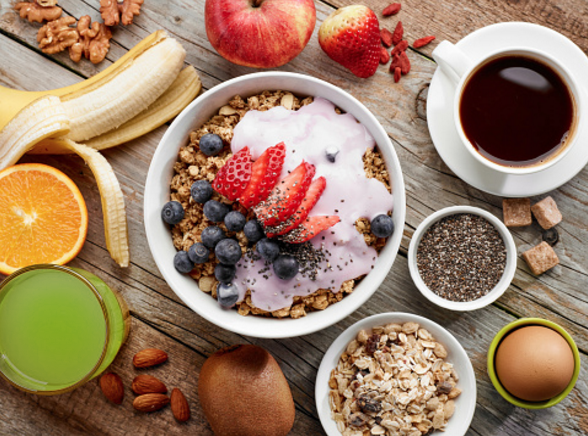
Katherine Tallmade, Registered Dietician and author of Diet Simple: 195 Mental Tricks, Substitutions, Habits & Inspirations, comments that “more and more research is confirming the importance of eating lighter at night and heavier during the day — for health, not just weight.”1 She goes on to explain that various studies have shown that even when the same number of calories are consumed, weight loss (or gain) may vary according to the time food is eaten. When more food is eaten during breakfast or lunch rather than at dinner, more weight is lost or a healthy weight is maintained.

Ms. Tallmade’s opinion is congruent with studies being presented by researchers in the field of nutrition as well as weight management/obesity. For example, a study published in the American Journal of Clinical Nutrition contends that a body at rest overnight doesn’t need as many calories. Therefore, eating a big meal in the evening will result in fat storage. The researchers recommend eating a big breakfast and a medium lunch when a person is most active during the day so calories eaten will be used for energy. They also found that eating a substantial breakfast helped minimize impulsive snacking, helping to sustain a weight reduction program.2

John De Castro, psychology professor and researcher of eating habits, suggests that “intake in the morning of low-density foods is satiating and can reduce the amount ingested over the rest of the day to such an extent that the total amount ingested for the day is less overall. It appears that people who eat at least two thirds of their calories before dinner will consume less calories for the whole day than people who eat the majority of their calories at night.” 3

At Nikken, we help you embrace Active Wellness with organic nutritional supplements that enable you to stay on a healthy eating regimen over the long term. Isn’t your health worth it?

  1. http://katherinetallmadge.com
  2. Schlundt DG, Hill JO, Sbrocco JP, et al. The role of breakfast in the treatment of obesity: a randomized clinical trial. Am J Clin Nutr. 1992;55(3):645-651.
  3. De Castro JM. The time of day of food intake influences overall intake in humans. J Nutr. 2004;134(1):104-111.

 

The Healthiest Natural Sweetener

With obesity at an all-time high, finding healthier alternatives to sugar has become an increasingly important priority for many people. The main concern is that sugar substitutes and artificial sweeteners tend to be filled with harmful chemicals and ingredients, and some still contain calories.

According to famed nutritionist and chiropractor Dr. Josh Axe, “Monk fruit has been celebrated as a revolutionary way to sweeten foods and drinks without the harmful effects of traditional sugar and sugar substitutes.” 1

Here’s why: Monk fruit contains powerful antioxidants called mogrosides, which are metabolized differently by the body than natural sugars. In effect, monk fruit extract provides the sweet taste people crave but none of the typical side effects. That means no spike in blood sugar levels and therefore, no crash. For this reason, monk fruit is considered a zero-calorie fruit. This unusual characteristic makes monk fruit an ideal sugar replacement, especially since its compounds, when extracted, are 300 to 400 times sweeter than cane sugar. It’s practically a no-brainer that using monk fruit as a sweetener can help those already suffering from obesity and/or diabetes.

So why isn’t this healthy natural sweetener more commonly used in weight-management and diabetic-friendly products? Extraction of mogrosides is complicated, making it an expensive ingredient. In addition, monk fruit spoils very quickly after harvesting and is grown primarily in southern China. You won’t find it in supermarkets any time soon; however, you can find dried monk fruit for purchase in ethnic markets. The western world only discovered monk fruit in the 20th century, and it has only been in the last 20 years that major international attention has been drawn to it.

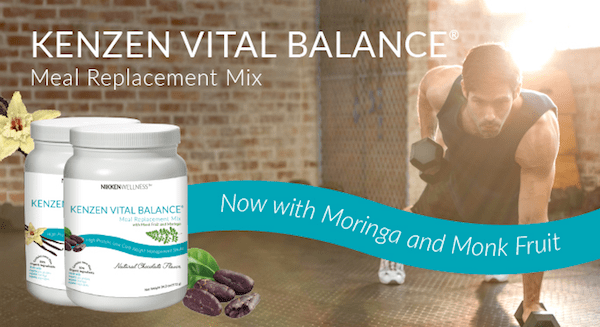
Where you will find monk fruit as a main ingredient is in the newly formulated Kenzen Vital Balance® Meal Replacement Mix in both vanilla and chocolate flavors. Nikken remains a pioneer in the industry and dedicated to using only the healthiest ingredients in our nutritional supplements designed for Active Wellness.

1          https://draxe.com/monk-fruit/

A Better Source of Protein for Long-term Health

The western world tends to associate protein with animal sources: meat, poultry and seafood. In the eastern world, legumes have long been key sources of protein: soy, garbanzo, lentil, bean sprouts, pea sprouts, adzuki bean and so on. The largest study to ever look at the effects of different sources of protein has found that eating plenty of plant protein was associated with a lower risk of premature death.

Mingyang Song, MD, ScD, the study’s author, says, “Overall, our findings support the importance of the sources of dietary protein for long-term health outcomes.” A research fellow at Massachusetts General Hospital, she explains, “While previous studies have primarily focused on the overall amount of protein intake—which is important—from a broad dietary perspective, the particular foods that people consume to get protein are equally important. Our findings also have public health implications and can help refine current dietary recommendations about protein intake, in light of the fact that it is not only the amount of protein but the specific food source that is critical for long-term health.”

The study was published in August 2016 in JAMA Internal Medicine and analyzed comprehensive health data on more than 170,000 participants since the 1980s. Participants completed overall health questionnaires every two years and provided information on their dietary intake every four years. The researchers found that a high consumption of protein from animal sources combined with at least one factor associated with an unhealthy lifestyle, increased the risk of mortality. Unhealthy lifestyle factors included being obese or underweight, as well as behaviors such as heavy drinking, smoking, or not being physically active. In contrast, high consumption of protein from plant sources was associated with a lower mortality rate.

Kenzen Vital Balance® Meal Replacement Mix in Vanilla or Chocolate flavors is formulated with naturally-sourced protein from organic pea, organic rice and organic chlorella—no saturated fat and calories associated with animal protein. Whether you’re vegan, vegetarian or just health-conscious, KVB helps you put plant protein into your diet for health and Active Wellness.

The Secret to Health and Longevity: “hara hachi bu”

According to recent estimates by the U.S. Census Bureau, there are approximately 80,000 centenarians in the United States, which equates to about 25 persons who are 100 years or older per 100,000 population. On the small island of Okinawa, centenarian ratios are considered to be most likely the world’s highest with 50 plus per 100,000. So what’s their secret?

Longevity is complex, but in a nutshell, good genes and healthy living are the prerequisites. Researchers who participated in the Okinawa Centenarian Study were able to identify so called “human longevity genes” but also isolated non-genetic advantages for the ideal combination. Non-genetic advantages include the traditional Okinawan dietary habits, physical activity, psychological and social aspects. Their study was not widely translated but in recent years, an increasing number of western scientists have taken an interest in the phenomenal longevity of the islanders, most specifically Dr. Bradley Willcox and Dr. Craig Willcox, co-principal investigators. Led by Dr. Makoto Suzuki, principal investigator, the Okinawa Centenarian Study is now in its 28th year, one of the longest running centenarian studies in the world.

We can’t change our genes but we can certainly emulate the Okinawan diet and lifestyle. The traditional Okinawan diet emphasizes vegetables, whole grains, fruits, legumes (soy) and fish, with limited amounts of lean meats and monounsaturated fats and omega 3s. There is a notable lack of processed or fast food and desserts.

Okinawans take this healthy eating a step further with the cultural habit of “hara hachi bu.” This means “eat until you are 80 percent full.” When you think about it, it is another way of implementing portion control. Since it takes about 20-30 minutes for the stomach to register that it’s full, if we eat to 100 percent fullness, we’ve actually overdone it. Many of us are too familiar with that uncomfortable feeling of being stuffed. This is the result of eating until the stomach is stretched to capacity. If we practice “hara hachi bu,” we would be giving our stomachs time to feel full.

Most of us want to live long lives, but how many of us are willing to exercise not only our bodies but our will power as well? It seems such a small price to pay for a long and healthy life of Active Wellness.

Is Sugar as Deadly as Cigarettes?

We don’t have to go looking for added sugar. It’s practically everywhere and comes in many forms, such as sucrose, maple syrup, fructose, molasses, brown sugar, cane sugar, honey and high fructose corn syrup.  You can and will find added sugar in desserts, candy, sodas, and covertly in processed foods such as ketchup, canned sauces, cereals, energy bars, energy drinks, bread and so much more. If you read Gary Taube’s latest book, “The Case Against Sugar,” you’ll see why a sugar habit can easily be compared to a nicotine habit.

Gary Taube is the co-founder of the Nutrition Science Initiative. In his 2010 best seller, “Why We Get Fat,” he argued that carbohydrates like grains and starchy vegetables were the true culprits behind the obesity epidemic. His new book, “The Case Against Sugar” takes this argument a step further by zeroing in on the harmful effects of sugar.

In a recent article he wrote for the Los Angeles Times, Mr. Taube posited, “How often can we smoke cigarettes without doing at least some harm to our health? Doctors these days answer ‘never,’ thus redefining the concept of moderation. We don’t say smoking too much causes lung cancer, although that’s surely true. We say smoking does. The same hard line may also make sense for sugar. If it takes 20 years of either smoking cigarettes or consuming sugar for the consequences to appear, how can we know whether we’ve smoked or consumed too much before it’s too late? Isn’t it more reasonable to decide early in Iife (or early in parenting) that not too much is as little as possible?”

Research continues to grow with regard to the evils of sugar. Evidence is being amassed that may soon prove that sugar is the cause of metabolic syndrome, a disorder that afflicts 75 million Americans, as cited by the Centers for Disease Control and Prevention. Metabolic syndrome is the group of risk factors that raises the risk for heart disease, diabetes and stroke.

Risk factors include traits, conditions and habits that increase the chances of developing a disease. One major habit contributing to metabolic syndrome is the consumption of sugar that results in insulin resistance. This occurs when the pancreas responds to high volumes of sugar by producing more insulin and the cells that normally use glucose for power, fail to respond. The vicious cycle often ends up in type 2 diabetes.

If we understand why not smoking is important to good health, we can see why not consuming added sugar may similarly decrease our risk factors. At Nikken, we push for the Active Wellness lifestyle and pledge to improve our NikkenWellness products as evolving science informs us. That’s why Kenzen Ten4® Energy Drink Mix has no added sugar. Consumers can add their own sweetener, if they please, but our commitment is to promote Active Wellness through healthy eating, drinking and sleeping.

Have a Happy & Prosperous New Year

As I reflect back on 2016, I am heartened by the successful transformation that continues to take place with Nikken. It is not by luck that our company has weathered the many global changes—economic, political and regulatory—since its humble beginnings in 1975. As we move forward into 2017, we will focus on two main aspects of our business:

  • A product line that is unique, wonderful and organic.
  • The direct sales industry‘s simplest compensation plan.

Our product line has evolved over the years, not only to fulfill the needs and preferences of our Nikken Consultants and Customers, but also to reveal the latest developments in organic food science and our own patented DynaFlux® magnetic technology. These include NikkenWellness norganic nutritional supplements, True Elements® Marine Organic Skin Care and products with sleep and magnetic technology.

In 2017, we will continue developing our consumables—they will contain the highest quality organic ingredients and be stripped of anything that may be detrimental to the pursuit of Active Wellness. We will be the standard bearers for Active Wellness and healthy weight management.

Our compensation plan will be even simpler to understand and execute. Our Nikken Consultants will find it easier to reap the rewards of a home-based part-time income with flexible hours, extra cash and a business opportunity that may lead to a second career. Anyone who makes the commitment to retail product and sponsor business builders will succeed as a Nikken entrepreneur.

Choosing Nikken is the smart move to improve health and earn money. I look forward to a prosperous 2017 and wish you all the best in each of the 5 Pillars of Health®.

Kurt H. Fulle                                                                                                                                                       CEO & Chairman of the Board

Kurt_profile.jpg

What’s the big deal about being overweight?

Aside from simply not wanting to be described as obese or fat, most of us are somewhat aware of the health risks associated with carrying around a few pounds too many. In general, “when men put on a few pounds, they don’t tend to become emotionally tortured about it. Studies have shown that women and girls who are overweight tend to blame themselves, while men and boys blame outside factors.1

Overweight is defined by the dictionary as “above a weight considered normal or desirable.” Synonyms for overweight are fat, obese, stout, corpulent, fleshy, portly, rotund and many more. But different people have different opinions on what is considered overweight, so researchers depend on measurement tools such as the Body Mass Index (BMI) to make a general assessment.

Obesity is complicated. It can be hereditary, but genetics are not completely responsible. Some obese people remain healthy while others do not. But what are some of the serious health consequences of obesity for adults? People who are obese are at increased risk for many diseases and health conditions, including the following: 2, 3,4

According to the World Health Organization, obesity is an international epidemic of escalating proportions and the “most significant contributor to ill health.”6 But the battle against obesity can be dangerous—overexercising, starving and taking over-the-counter diet pills can cause dehydration, cardiac arrest and an overall imbalance between body, mind and spirit—and in dire situations, even death.

When trying to lose weight, we need to remember that the excess baggage we carry on our bodies didn’t get there overnight, and it’s not going to disappear right away. Having a Nikken exercise buddy and being on a well-thought out regimen is the key to successful weight management. Maintaining a healthy weight can even help us save money by eliminating frequent medical appointments and filling expensive prescriptions!

It takes patience, discipline and mindfulness to eat sensibly, exercise moderately and consistently, drink lots of water and believe in Active Wellness—belief that we can do it is the first step!

1 Emily Senay, M.D. and Rob Waters, From Boys to Men: A Woman’s Guide, Simon & Schuster, New York, New York, 2004, p. 400.

2,3 NHLBI.2013. “Managing Overweight and Obesity in Adults: Systematic Evidence Review from the Obesity Expert Panel.” “Clinical Guidelines on the Identification, Evaluation and Treatment of Overweight and Obesity in Adults

4 Bhaskaran K, Douglas I, Forbes H, dos-Santos-Silva I, Leon DA, Smeeth L. “Body-mass index and risk of 22 specific cancers: a population-based cohort study of 5•24 million UK adults.” Lancet. 2014 Aug 30;384(9945):755-65. doi: 10.1016/S0140-6736(14)60892-8. Epub 2014 Aug 13.

5 Luppino, Floriana S., et al. “Overweight, obesity, and depression: a systematic review and meta-analysis of longitudinal studies.” Archives of general psychiatry3 (2010): 220-229.

6 Caballero, B., “A nutrition paradox—underweight and obesity in developing countries,” Engl.J.Med. 2005

What are MCTs?

MCTs are medium chain triglycerides. That’s the scientific name for a group of partially man-made fats. These fats deserve attention because they’re good for us and as more research continues to be conducted, MCTs are being used more frequently for their therapeutic value.1

MCTs are most commonly derived from either coconut or palm kernel oil that is extracted in the laboratory. Researchers at the Cleveland Clinic contend that they have been shown to lower weight and decrease metabolic syndrome, abdominal obesity and inflammatory markers. Their value in weight management is attributed to their unusual chemical structure that allows the body to digest them easily. Absorbed intact, MCTs are taken straight to the liver and used directly for energy. In this way, they are processed more like carbohydrates than like other fats. 2 The result is that instead of being stored as fat, the calories contained in MCTs are efficiently converted into fuel for immediate use by organs and muscles.3

MCTs have also been shown to suppress appetite. In one 14-day study, six healthy male volunteers were allowed unlimited access to one of three diets: a low MCT diet, a medium MCT and a high MCT diet. Caloric consumption was significantly lower on the high MCT diet. The researchers noted that substituting MCTs for other fats in a high-fat diet “can limit the excess energy intakes and weight gain produced by high-fat, energy-dense diets.”4 

These findings are of particular interest to nutritionists and dieticians who work with clients in need of weight loss. Calorie-restricted diets are often associated with lethargy or a decline in energy. Studies support the benefits of using MCTs in weight loss programs to boost energy levels and increase fatty acid metabolism to help in reducing fat deposits. In one eastern European study, researchers had 60 obese patients consume MCT oil. They concluded that MCTs offered benefits that “improve the long-term success of diet therapy of obese patients.”5

In recent years MCTs have gained in popularity with athletes who want to increase energy levels and enhance endurance during high-intensity exercise. These athletes are generally on a high-protein, low-carbohydrate diet. According to webMD, athletes sometimes use MCTs for nutritional support during training, as well as for decreasing body fat and increasing lean muscle mass.1

Another promising use for MCTs is in support of cognitive function. Here’s how: When brain cells lose their ability to process glucose, the main source of energy, those brain cells die. PET scans show that areas of the brain that are weak in breaking down glucose, are able to use ketones (what the body produces when it breaks down fats for energy) as an alternative source of energy. Ketones easily cross the blood-brain barrier to provide instant energy to the brain. MCTs conveniently raise blood levels of ketones!6

MCTs are fats that are our friends. And we’ve made it easy to access these valuable fats by making it our second ingredient in the high-protein, low-carb Kenzen® Vital Balance Meal Replacement Mix. MCTs are usually high in calories, but in our nutritional shake, they’re part of a 125-calorie serving, so you reap big benefits with a great low-calorie formula and enjoy the Nikken Active Wellness lifestyle.

http://www.webmd.com/vitamins-supplements/ingredientmono-915-medium+chain+triglycerides.aspx

2http://www.clevelandclinicwellness.com/Features/Pages/MediumChainTriglycerides.aspx

3 Kaunitz, H. ,Dietary use of MCT in “Bilanzierte Ernaehrung in der Therapie,” K. Lang, W. Fekl, and G. Berg, eds. George Thieme Verlag, Stuttgart, 1971.

4 Stubbs RJ, Harbron CG. ,“Covert manipulation of the ratio of medium- to long-chain triglycerides in isoenergetically dense diets: effect on food intake in ad libitum feeding men,” Int J Obes Relat Metab Disord 1996 May;20(5):435-44.

5 Hainer V, Kunesova M, Stich V, Zak A, Parizkova J. ,“The role of oils containing triacylglycerols and medium-chain fatty acids in the dietary treatment of obesity,” “The effect on resting energy expenditure and serum lipids,” Cas Lek Cesk 1994 Jun 13;133(12):373-5.

6 Constantini, Lauren C, Barr, Linda J, Vogel, Janet L, Henderson, Samuel T, “Hypometabolism as a therapeutic target I Alzheimer’s disease,” BMC Neurosci., 2008; 9(suppl 2): S16.

Turmeric: Hot Topic of the Year!

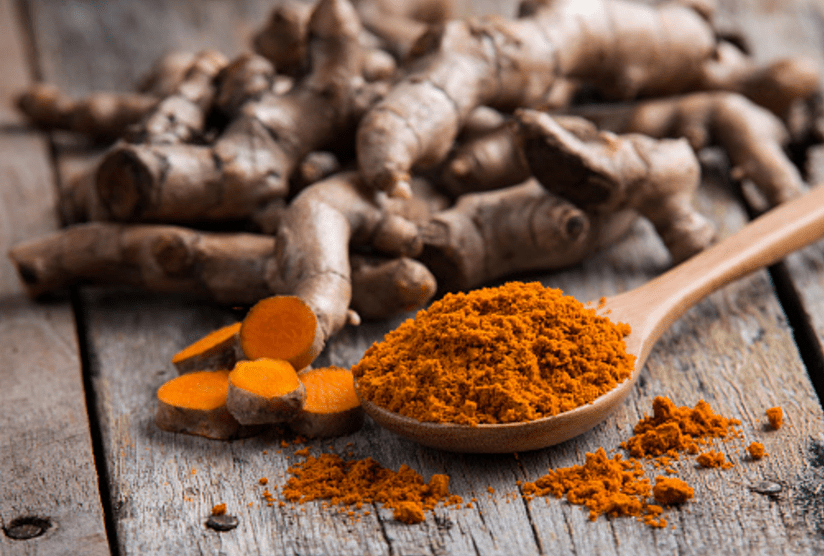
If you like yellow curry, you’ve probably tasted turmeric. It’s commonly found in Indian, Malaysian, Indonesian, Chinese, Thai and other Asian cuisines, because it’s the primary spice in curry. In food and manufacturing, turmeric essential oil is used in perfumes and cosmetics, and its resin is used as a flavor enhancer and color component in foods. Its bright yellow color has been a source of natural dyes for centuries, and its root is widely used to make medicine. That’s just for starters.

What all the talk centers around is the more than 600 purported health benefits. Since 1900 B.C. (the time of Ayurveda) turmeric in various forms (sliced, ground, powdered, tinctured, etc.) has been used to address a wide range of conditions. It’s touted to help the skin, pulmonary and gastrointestinal systems as well as the joints. It’s been shown to exhibit antioxidant, anti-inflammatory, antiviral, antibacterial and anticancer activities.1

What is of particular interest to us is that turmeric is known to protect the brain in a variety of ways, because it is “a potent antioxidant that readily crosses the blood-brain barrier.” 2 Some specific brain boosting abilities are attributed to the natural chemical in turmeric called curcumin.

  • It is believed to improve memory and concentration by increasing blood flow and neurotransmitter formation.3
  • It increases the production of serotonin and dopamine, two of the brain chemicals that produce a feeling of contentment or happiness.4
  • It helps increase levels of brain-derived neurotrophic factor (BDNF).5 BDNF is a protein that stimulates brain cell production.
  • The omega-3 fatty acid known as DHA is a major building block of the brain. Its deficiency is believed to be the cause of various neurological disorders. Curcumin enhances DHA synthesis and increases its levels in the brain.6

Although curcumin is known as an active component, the entire root or the whole turmeric plant serves a variety of purposes. For example, there is turmerone, a beneficial compound found in turmeric root. Studies and research have been conducted to show how turmerone stimulates the production of new neurons which can be useful for degenerative brain diseases, traumatic brain injury and stroke.7 Research in these areas with relation to the use of stem cells in the treatment of certain neurological conditions is fairly new, but scientists are making headway with the effects of turmerone on brain disorders.8

Turmeric (root) is the third ingredient in the organic fermented brain support blend that makes up the NikkenWellness Clarity formula.

1 Aggarwal BB, Sundaram C, Malani N, Ichikawa H., Curcumin: the Indian solid gold, Adv Exp Med Biol. 2007;595:1-75. (PubMed ID 17569205) 

2 Orlando RA, Gonzales AM, Royer RE, Deck LM, Vander Jagt DL, A Chemical Analog of Curcumin as an Improved Inhibitor of Amyloid Abeta Oligomerization. 2012, PLoS ONE 7(3): e31869. doi:10.1371/journal.pone.0031869

3 Awad, AS, Cerebrovasc Dis., J Stroke, 2011 Nov 20(6):541-8. Epub 2010 Aug 17.

4 Kulkarni, S.K., Bhutani, M.K. & Bishnoi, M., Antidepressant activity of curcumin: involvement of serotonin and dopamine system, Psychopharmacology (2008) 201:435.

5 Ying Su, Baoshan Ku, Lu Tie, Haiyan Yao, Wengao Jiang, Xing Ma, Xuejun Li, Curcumin reverses the effects of chronic stress on behavior, the HPA axis, BDNF expression and phosphorylation of CREB, Brain Research Vol. 1122, Issue 1, 2006, pages 56 -64.

6 Wu, A, Noble, EE, Tyagi, E, Ying, Z, Zhuang, Y, Gomez-Pinilla, F, Curcumin boosts DHA in the brain: implications for the prevention of anxiety disorders, Biochim Biophys Acta, 2015 May: 1852(5): 951-61. Epub 2014 Dec 27.

7 Hucklenbroich, J. etal, Aromatic-turmerone induces neural stem cell proliferation in vitro and in vivo, Stem Cell Res Ther. 2014; 5(4):100.

8 Sun Young Park, Mei Ling Jin, Young Hun Kim, YoungHee Kim, San Joon Lee, Anti-inflammatory effects of aromatic-turmerone through blocking of NF-kB , JNK, and p38 MAPK signaling pathways in amyloid β-stimulated microglia, Intl Immunopharmacology, Vol 14, Issue 1, September 2012, Pages 13-20.

What is BMI?

Have you heard body builders at the gym comparing their BMIs? Or do you know someone who is body-obsessed and talks about BMI in every conversation? Here’s why knowing your BMI can be useful to you.

BMI stands for Body Mass Index and is the ratio of a person’s weight to height squared. BMI can be used as a screening tool for body fatness but is not diagnostic. Because the calculation requires only height and weight, it is inexpensive and easy to use for clinicians as well as the general public.

BMI is not a perfect measure because it doesn’t assess body fat directly. Muscle and bone are denser than fat, so an athlete or muscular person might have a high BMI but not have too much fat. For the majority of the adult population, measuring BMI is considered by researchers to be a reliable way to determine whether a person has too much body fat.1

The most basic definition of overweight and obesity is having so much body fat that that it “presents a risk to health.”2 Measuring BMI is a widely used method for clinicians to determine who is overweight or obese. BMI is strongly correlated with metabolism rates and disease risks, which are more direct measures of body fatness.3

The National Heart, Lung and Blood Institute (NHLBI) provides a body mass index calculator on their website. 4  

According to the NHLBI, here are the BMI categories:

Underweight = <18.5

Normal weight = 18.5-24.9

Overweight = 25-29.9

Obesity= 30 or >

Whether your BMI shows you to be underweight, normal weight, overweight or obese, check with your physician before undertaking any drastic changes to your diet.

Maintaining an Active Wellness lifestyle that incorporates exercise and organic nutritional supplements is the natural way to support fitness, boost energy levels and ignite your metabolism.

Support your overall goals for a healthy body and healthy mind with an assortment of Nikken Wellness products. Kenzen® Vital Balance Meal Replacement Mix and Kenzen Ten4® Energy Drink Mix are just a couple!

1 Gallagher D, Visser M, Sepulveda D, Pierson RN, Harris T, Heymsfield SB. How useful is body mass index for comparison of body fatness across age, sex, and ethnic groups? Am J Epidemiol. 1996; 143:228-39.

2 World Health Organization. Obesity and overweight. Fact sheet Number 311. September 2006. Accessed January 25, 2012.

3 Flegal, K.M. & Graubard, B.I., 2009. Estimates of excess deaths associated with body mass index and other anthropometric variables. Am. J. Clin. Nutr., 89(4), pp.1213–1219.

4 The National Heart, Lung and Blood Institute