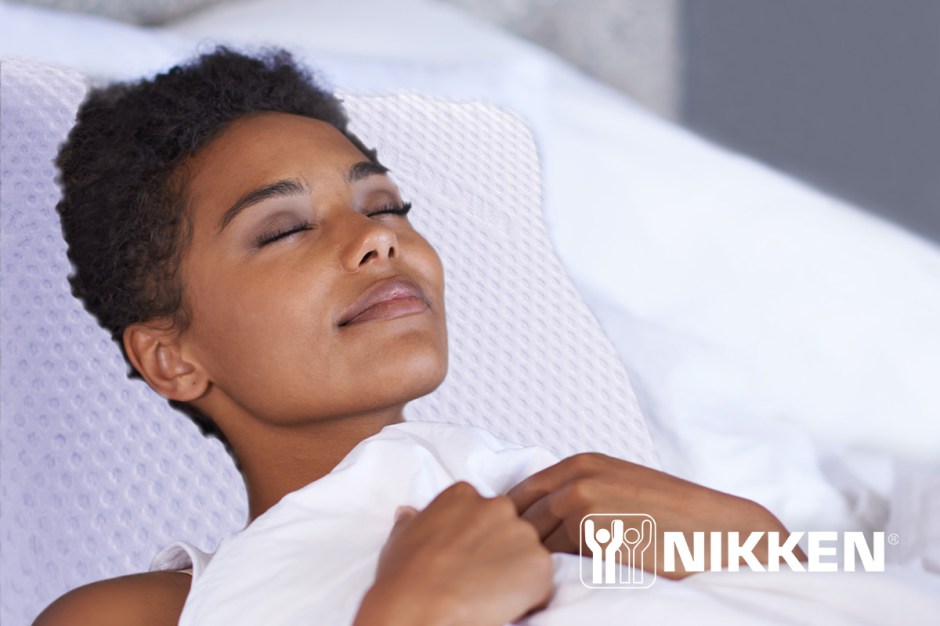
Pinched Neck Be Gone!

Your neck holds up your head, one of the heaviest parts of the body. Approximately 10-11 pounds (4.5-5 kg) for an average adult, this weight is from the skull and the brain, and relies on the neck muscles for support.

The neck is clinically known as the cervical spine, made up of seven flexible vertebrae. Not only does it support the heavy head, but it also protects the nerves that start from the brain and fan out to the rest of the body. Since the neck plays such a critical role in the overall function of the body, it is of utmost importance to provide it with ample support to decrease the risk of aches and pains from poor positioning during sleep. Any misalignment can strain the neck muscles, resulting in stiffness and achiness once you’re awake. It can also produce more serious issues, including nerve compression and decreased blood flow to the brain.1

How you sleep plays a role in what type of pillow is more beneficial to you. If you are a side sleeper, a firm pillow helps to keep your neck aligned with your spine. If you’re a back sleeper, a medium-firm pillow is more supportive of the natural curve of your neck. If you sleep on your stomach, you will do better with a soft, thin pillow to reduce strain on the neck.2 Most sleep experts advise against sleeping on your stomach, as it is believed to cause the most neck strain.

To keep your neck aligned with your spine, the pillow most beneficial for your sleeping position will be neither tilted upwards nor downwards. In other words, the pillow will be high enough to support your neck without angling your head up or down.3

Nikken is a pioneer in sleep technology and continues to innovate. In 2022, Nikken launched the Kenko Naturest® Makura, a partner product to the Kenko Naturest® Fit. The Fit is a topper that comes in different sizes to fit snugly on virtually any mattress, to help provide luxuriously deep sleep.

Made with the same technologies as the Fit—magnetic cocooning, soothing, calming tourmaline, and temperature-regulating Rubberthane nodules—the Kenko Naturest® Makura is unlike any other pillow. Here’s why:

The Makura (Japanese for “pillow”) is made with three removable layers. This means you can customize it to your personal needs. No matter if you’re a side, back or stomach sleeper, you can tailor the Makura to the height that provides the ergonomic support you personally need to keep your neck and spine aligned.

            1. One outer foam layer contains the Rubberthane nodules of natural latex, magnets and tourmaline. This side provides you with a firm pillow and a massaging sensation.

            2. The middle layer acts like a thin traditional pillow.

            3. The other outer layer has smooth Rubberthane without the latex nodules. It holds the magnets and tourmaline. By removing the latex nodules, this side provides a softer, cushioned pillow that still supports your head.

With the Makura, you get three pillows in one. In a household with people who sleep in different positions, the Makura can even be shared! For example, a side sleeper could use the firm side while the stomach sleeper could use the middle layer, and a back sleeper could use the medium-firm side! You won’t find anything like it elsewhere, because the Makura is exclusive to Nikken.

From now through the end of October 31, receive free ground shipping on any Makura Sleep Pack and select Kenko Sleep Products, including the Kenko Naturest® Makura—once you try this pillow, you’ll never sleep on another one again!

1,3 https://synergyrehabinc.com/neck-support-while-sleeping/

2 https://pillow.app/article/the-importance-of-pillow-support-for-neck-health-and-sleep-quality
You Can Create a Sleep Sanctuary

Sleeping well is a challenge for many people. Often, it’s because keeping up with the demands of family, friends and work can cause a huge amount of stress. The result is that neither body nor mind can decompress enough to get a good night’s sleep.

Fortunately, there are actual steps you can take to create a “sleep sanctuary,” some place pleasant and cozy, relaxing and soothing:

1. Perhaps the most important item in a sleep sanctuary is the bed. Regardless of the type of frame you choose for your bed, the mattress is important and should suit your personal needs. Do you like firm, medium or soft? More importantly, what type of mattress suits your spine? For example, even if you prefer a soft, cushy mattress, if your spine is weak, you would probably be better off with a firm mattress, because it affords more support.

Solution: No matter what type of mattress you currently have, the Kenko Naturest® Fit is a topper that sits right under your fitted sheet, in twin, full, queen or king sizes. The Fit is made with sculptured rubberthane latex, which provides massaging effects while allowing for air circulation and ceramic reflective fibers that help regulate body temperatures. 800 gauss magnets create a magnetic field which cocoons the body for relaxation to help improve sleep. Tourmaline gives off electrons that help create calming effects when exposed to pressure, heat or motion, which is provided by your own body as it lays on top of the Fit.

2. Just as the Kenko Naturest® Fit supports your comfort, what your skin actually touches also can make a difference in how well you sleep. Choose linen that feels the most comfortable for you. Invest in natural fabrics, such as cotton, flannel, flax or even silk. Manmade fabrics do not allow air to circulate as freely and may even cause itchy or sweaty skin. Natural fabrics help regular temperatures—cools in hot months and warms in cold ones.

3. Do the breath test of your bedroom or wherever you want your sleep sanctuary to be. Inhale in and out slowly. What do you smell? Since you will be spending all night in the sleep sanctuary, you need to make sure the air is fresh. Stale or unpleasant odors are not conducive to restful sleep. If there is a window, make sure to keep it open at least for a few hours every day so the room has outside air flowing through. Indoor air often contains more contaminants than outdoor air! Dust, pet dander, pollen and odors are typically in household air. Mold, mildew and dust mites may be present. Even gases such as radon and carbon monoxide are found in measurable quantities in many homes.

Solution: Whether you have a window or not, the KenkoAir Purifier®provides multiple-stage HEPA filtration, is energy efficient and includes a deodorizing filter. It operates quietly, is ozone-free and has a negative-ion generator.

4. Many people enjoy the aroma of essential oils. Lavender and cedarwood are examples of essential oils that people choose to de-stress and relax for better sleep.

5. Is your sleep sanctuary dark? Sleep scientists agree that a cool, dark environment is ideal for sleep. You can use black out curtains or wear a sleep mask.

Solution: The Kenko Power Sleep Mask not only helps block out light like a typical eye mask. It also helps relax the entire eye area, using similar technologies to those found in the Kenko Naturest® Fit. The Power Sleep Mask is made with patented Dynaflux® magnetic technology, ceramic reflective fibers and tourmaline technology which helps produce a calming effect. When your eyes are relaxed, you have a much better chance at sleeping through the night.

6. A sleep sanctuary is for rest. Your best bet is to create an environment that is natural—you might want a few green plants, but try to limit the clutter. For example, you don’t need to keep piles of books or clothes in a sleep sanctuary. Instead, hang simple photos or art on the walls and limit the amount of unnecessary furniture or accessories. In other words, create a space that you look forward to retiring in every night!

From now through October 31st, take advantage of free ground shipping on any size Makura Sleep Pack and other select Kenko Sleep products!

How Do You Manage Your Stress?

How Do You Manage Your Stress?

Stress has become the reason people cite for just about every negative occurrence in contemporary lifestyles. In reality, some stress is necessary for people to function productively. Getting rid of stress often involves doing good work in a timely way, obtaining positive results and moving on. Nonetheless, too much stress is proven to be detrimental to your health, so how do you manage when it seems overwhelming?

Everyone is different, so each person copes with stress in diverse ways, but pinpointing your triggers is essential—if you don’t know what makes you stressed out, you won’t be able to avoid or conquer it! Ask yourself, what makes you nervous, anxious, queasy or upset? Make a list, write it down, study it and be honest with yourself. Take baby steps in your daily life to overcome those feelings and see how your stress levels lessen.

Here are a few ways to help minimize the effects of stress in your life:

•          Don’t use not having enough time to relax as an excuse. Make the time to de-stress from work, family duties, self-imposed criticisms and whatever triggers your anxiety. Making time can simply be small breaks throughout the day, as even 15 minutes of emptying your mind, deep breathing, stretching or a brief walk can do wonders to lower stress levels.

•          Talk to someone you feel close to. Talk to a new acquaintance. Talk to your dog or cat! The key is to create and feel a connection. Even talking to yourself can be helpful, but make sure to keep it upbeat. Too often people judge themselves too harshly. In a nutshell, don’t be a recluse.

•          Quit smoking or vaping—tobacco or anything else. It does more harm to your body than you feel on a daily basis, and by the time you actually feel the detrimental effects, you could have done irreversible damage. Try chewing gum or keeping your hands busy with worry-beads.

•          Drink alcohol only sparingly. It’s estimated that, on average, one alcohol-impaired-driving death occurred every 39 minutes in 2022.1 The Centers for Disease Control consider two drinks or fewer for men and one drink or fewer for women per day to be “moderate.”2

•          Do you have expired medications/prescriptions? Resist the temptation to take them. Also, do not take medications prescribed to friends and family members. Take the time to ask your physician if you feel the need for any kind of medication, and stay true to regular appointments with physicians and screenings/tests.

•          Get enough sleep. Going to bed on a consistent schedule and waking at the same time daily is believed to help you sleep better. Having a comfortable sleep environment is crucial, so try the Kenko Sleep System with magnetic and ceramic reflective technologies. Take advantage of 30% off the Kenko Naturest® Fit mattress topper and Kenko Naturest® Cozy Throw today and tomorrow!

•          Eat healthy food that is nutrient-dense—all kinds of colorful fruits and veggies, lean proteins and beneficial fats. If you feel a lack in any area, be sure to supplement with Kenzen® nutritional supplements.

Stress is largely about your state of mind, so remind yourself to focus on the abundance in your life rather than what is lacking. Cultivate a positive attitude, and spread a little sunshine to those around you. Their pleasure will have the effect of easing your stress!

1, 2 https://www.cdc.gov/drink-less-be-your-best/drinking-less-matters/index.html

Sleep the Way Nature Intended

The closer you replicate the natural environment, the more conducive it is for sleeping well. When you sleep under the stars, you are sleeping directly under the earth’s electromagnetic field, soothed by the ground and all the elements it contains. Negative ions abound from the growth surrounding you. Nesting creatures add leaves, twigs and feathers—did you know if you leave out the fur your dog sheds, birds will come and take it to cushion their nests just as they would gather the fur fallen off a wild creature in the woods?

Since people tend to sleep indoors, creating a good sleep environment entails other basic aspects: Noise can be an impediment to sleep, but it depends on the type of noise. The trend now is for babies to sleep with a white noise machine, sometimes replicating the sounds heard in a mother’s womb. Grown people might benefit from a sound machine which plays the notes of a trickling stream, gentle ocean waves, leaves rustling in the breeze or soft music. There are always those who appreciate silence, so that can be part of their sleep environment.

Everyone has a preference when it comes to room temperature. Generally speaking, sleep experts have found that people sleep more soundly in a sightly cool environment. This again replicates what is found in nature: The air temperature cools down at night. Similarly, our body temperature dips around 4 a.m., which helps to preserve our energy.1

The Kenko Dream Comforter and its lighter partner, the Kenko Dream Light Comforter offer a cozy effect with a magnetic layer as well as ceramic-reflective fibers that help release heat to keep a comfy temperature. Innovative chitocotton contains chitosan for a breathable cover that helps with ventilation.  

When sleeping under the stars, there is darkness and possibly moonlight and starlight. The human body’s natural circadian rhythm follows the dark-light cycle, with restful sleep taking place during darkness. So, sleep experts recommend keeping your bedroom dark, with a night light peeking out if necessary. The light from a TV or any mobile device is a deterrent to restful sleep—nature does not supply electronics.

The firmness of your mattress can make a difference in your sleep. Some people prefer a soft cushion while others require the support of a stiffer mattress. When camping out, a sleeping bag provides some cushion, but the real support is the ground itself, which flexes a little but is quite firm. Find the bedding that supports your needs.

Kenko Sleep Technology provides the perfect solution to convert any mattress into one with the ideal support. The Kenko Naturest® Fit is made to fit twin, full, queen and king mattresses. Placing the Fit over your mattress will transform your sleep environment so that it replicates different parts of nature that are conducive for restful sleep. When exposed to pressure, heat or motion, tourmaline gives off electrons which can help create a calming effect; 800 gauss magnets create a magnetic field that cocoons the body for a relaxing effect; reflective and breathable fibers help regulate body temperature; and rubberthane with natural latex nodules provide massaging effects! The Fit brings nature right into your bedroom!

Throughout the month of October, Nikken is offering 20% off our sleep products (except for the Kenko PowerSleep Mask) plus free ground shipping. The Makura Sleep Packs are already priced with a 10% discount, but we’re adding another 10%, so you still get 20% off plus free ground shipping. Take advantage of this sale to transform every bedroom into a sleep environment the way nature intended!

1 https://wellnesscenter.gatech.edu/sleep/bedroom-environment#:~:text=Silence%20or%20low%20levels%20of,deep%20sleep%20will%20be%20compromised.

Do You Like Winter Weather?

There are lots of people who prefer cold to hot, and that includes their preferences for weather! Do you tend to think of vacations being time spent at the beach, in the balmy tropical weather, sunshine and swimming, or do you prefer holidays spent in the snow—skiing, snowboarding, sledding, making snowmen and having snowball fights?

Psychologists have looked into seasonal preferences to better understand the mood and behavioral changes that temperature and light variations have on people. Personal preferences seem to reveal specific personality traits. For example, your cognitive performance, your preference for certain colors and different types of music, and the kind of foods you tend to eat all vary over the course of the year.One study conducted in Belgium found that people had the hardest time keeping their focus in the summer and the easiest time doing so in the winter.1

The seasons also appear to influence how kind you are to others. For example, charitable contributions in countries with Christian traditions increase dramatically around Christmas. People in these societies are also more likely to tip their waiters generously during the holiday season. Aggressive behavior, from horn honking to violent crime tends to peak in the summer months in the Northern Hemisphere.2

Who likes winter? If you count the chilly months of winter as your favorite season, it might mean that you tend to be a bit of an introverted homebody.3 Does a warm sweater and curling up on the couch with hot cocoa on a cold night sound like your ideal afternoon? Here are some other types of people who enjoy winter:

•          Thermophobes. In Latin, therm means heat and phobe means fear.

•          Winter sport fans. As mentioned above, skiers, snowboarders, sledders, etc.

•          Those sensitive to the sun. If you sunburn easily and are always applying sunblock or searching for an appropriate sun hat, overcast or snowy winter days provide some relief.

•          Those sensitive to bug bites. One winter blessing is the decrease of mosquitoes and other “biting” insects.

Whether or not you’re a fan of winter, Nikken has the perfect products to make your cold weather days the coziest ever. From the Kenko Dream Comforter of your choice to the KenkoTherm support products, Nikken takes its lead from nature and weaves in ceramic reflective fibers to help keep you toasty. And, when you purchase a Kenko Naturest® Fit mattress topper now through year end, you receive a complimentary Kenko PowerSleep Mask!

1, 2 https://www.psychologytoday.com/us/blog/unserious-psychology/202306/how-the-seasons-affect-our-psychology

3 verywellmind.com/what-your-favorite-season-say-about-personality

Let’s Have Some Fall Fun!

Fall is a wonderful season to tap into the child within you! You can delight in the cool weather with the changing colors of the leaves, and watch the beauty of nature transform all around you. Let’s make sure to participate in autumn’s seasonal pleasures!

•          Depending on where you live, fall is a great time to visit an apple orchard. Many will allow you to pick your own, and it comes out to be less costly than apples at a grocery store. This is an activity the whole family can enjoy together, and there’s a special joy to crunching down on a freshly picked apple.

•          October and November are pumpkin months. Pumpkins are not only nutritious and delicious, they make for some messy fun. When you dig the seeds out, save them for roasting!

Pumpkin-carving can be loads of fun, even amid the mess and slime! If you live where there are pumpkin carving contests, you’re probably already a pro! Now’s the time to indoctrinate the little ones. Don’t forget to make pumpkin pie and pumpkin stew.

•          Even if you live in the heart of a city and now anywhere near the countryside, autumn is a great time to try your hand at making a bird house. You can buy pre-made ones in many sizes and shapes and paint them, or if you’re handy at carpentry, start one from scratch. You’ll be amazed and happy when you hang it up and the birds come around—even outside an apartment building!

•          Visit an autumn harvest festival. If you live near any kind of agricultural center, there’s bound to be an autumn festival for you to attend. There will be lots of activities, possibly costumes, petting zoos, baking contests and more.

•          Make a fall wreath. Collect fallen leaves of a variety of hues, find acorns, pine cones, twigs, add seeds. Add dried flower petals and anything else your creative mind suggests. A wreath made from the gifts of nature is the most beautiful wreath of all.

•          Make it a point to take a nature walk as often as possible during the autumn months, if not for the visual delight, then for the sheer exhilaration of a brisk walk on a windy day.

•          Fall weather is soup weather. Make use of the abundance of squash (pumpkins are great in soup!) and add all your other favorite veggies. Spice it up and the whole family will love it.

•          Most people love cookies, but again, the cool autumn weather is great for being in a warm kitchen and creating the smell of freshly baked cookies! Even toddlers like to help out.

•          Do you have a farmer’s market in your area? Even if you don’t go to one regularly, go during the autumn months. You won’t be disappointed at the many varieties of fruit and vegetables. This is also the time of year where artisans come out with their crafts and rent stalls along with the farmers.

As you get cozy with autumn, remember that until year end, whenever you purchase a Kenko Naturest® Fit mattress topper you’ll receive a complimentary Kenko PowerSleep Mask. And, whenever you purchase a PiMag Waterfall®, you’ll get a box of 30 packets of delicious Kenzen Jade GreenZymes® Citrus as our treat!

Getting Restful Sleep During Autumn Weather

Did you know that the seasons can affect your sleep? When the cooler months come around, sleep may be disrupted. That’s because your body naturally makes more melatonin—the hormone responsible for sleepiness—when there’s more sunlight. During the cooler months, when days are shorter and darker, less melatonin is manufactured by your body.

One of the biggest culprits of disrupted sleep schedules is the use of electronic devices. This is due to the blue light emitted from electronic devices. The blue light suppresses the natural production of melatonin by the body, so you may not be able to fall asleep easily when you barely went off your cell phone, tablet or computer. You might want to try shutting down electronic devices an hour before your bedtime.

Developing a sleep routine, the same way parents sleep-train children, can help you reach restful sleep faster. By doing the same relaxing things consistently, your body has a chance to get accustomed to the routine and to anticipate sleep. The bedtime routine allows your brain to relax and not have to react to something unexpected. Although the body does not do well with electronic devices close to bedtime, it does react well when reading or listening to music. Choose reading material that is relaxing and listen to something soothing.

What you eat and drink can affect your sleep. If you go to bed hungry, chances are you won’t get a sound sleep, and the same thing goes for eating too much. Hunger will wake you up and overfullness makes the digestive system work harder. When it comes to beverages, caffeinated and alcoholic ones can cause insomnia in some people, so try to avoid them or enjoy them no later than afternoon tea time.

The most obvious way to help get a great night’s sleep is to make sure your bedding is comfortable. Nikken is a pioneer in sleep technology, and we want everyone to try the Kenko Naturest® Fit. This mattress topper can change the softest or the hardest bedding into the ideal sleep surface. The special sculptured rubberthane latex provides a relaxing massage effect and allows for air movement. Ceramic reflective fibers help provide an ideal temperature while a magnetic field cocoons the body for a feeling of security.

Now through December 31, 2023, when you purchase any size of the portable Kenko Naturest® Fit, you’ll receive a complimentary Kenko PowerSleep Mask that not only helps to block out light but also to keep your eye area relaxed. We call them “perfect partners” that can make your autumn months the most restful ever!

Prepare for Winter: Boost Your Immune System

As autumn turns into winter, daylight grows shorter and temperatures go lower. In terms of darkness and lightness, we move from the warmth of the light into the coolness of the dark—in fact, winter consists of the most dark months of the year.

We think of warm weather as a time of lots of activity, vacations, and being outdoors. On the other hand, winter is associated with being indoors, dodging viruses and getting “cozy”—being snug as a bug in a rug, so to speak. This actually is not just a perception but true to life.

When we transition into winter, we are dealing with temperature changes and an overall shift in the atmosphere. This shift allows colds, flus and any number of viruses to emerge. It’s important to bolster our immune systems all year round, but especially during these transitional months when we are most susceptible to catching germs that abound in the colder climates.

We generally think of boosting immunity with a healthy diet filled with fruits and vegetables that are chockful of vitamins and antioxidants. Moving from autumn to winter is a great time to incorporate immune-enhancing minerals, such as iron, zinc and selenium. Iron can be found in red meat, fortified cereals, kale, broccoli, quinoa, and pulses. Zinc and selenium are found in protein-rich beef, turkey, chicken, shrimp, lobster and fish—if you are a vegetarian, you can get your fill in a handful of Brazil nuts! 

Beta glucans are natural sugars that help the immune system to recognize and destroy germs but our bodies don’t produce any of this particular type of soluble fiber, but we can eat things that contain them. Kenzen® Immunity contains mushroom blends that are rich in beta glucans, but we can also incorporate oats, barley, rice, wheat, seaweed and nutritional yeast into our daily diets. Those familiar with Kenzen® Immunity may take a couple of extra capsules when moving from season to season.

A healthy diet does wonders for an Active Wellness lifestyle, but it’s as important to get enough quality sleep. As daylight hours shorten, we are also susceptible to feeling less energetic during the longer “dark” hour.

Getting restful sleep goes a long way towards keeping mentally and physically well. Sufficient sleep will help keep us focused, less stressed and more confident. When we cannot get rejuvenating rest when sleeping, it not only affects our moods (tired and cranky) but also our overall ability to relax and feel well (tense muscles and achy body). The winter season is when it’s critical for us to recharge our batteries every night, so that we don’t face fatigue and stress during our working hours. Sleep goes hand-in-hand with boosting immunity: Research reveals that sleep deprivation prevents our immune systems from building up its forces, leading to less protection against bugs.1

There are still a few days left in October, so you can take advantage of our Autumn Kenko Makura Sleep Pack Special, perfect for getting ready for winter! Get any Makura Sleep Pack, and receive the pillow for free! In other words, when you purchase a Twin Size Makura Sleep Pack, you receive the one pillow for free—you only pay the price of the Kenko Naturest® Fit and Kenko Dream or Dream Light Comforter of your choice. When you purchase a Full, Queen or King Makura Sleep Pack, you receive two pillows for free. Don’t pass up these savings!

1 https://www.ncbi.nlm.nih.gov/pmc/articles/PMC5768894/

See You Next Year, Summer! Hello, Autumn!

What happens to our sleep patterns when we move from the summer months into autumn? In Europe and North America, this transition has already started as we approach the end of September.

During the summer, sunlight continues into the evening hours and the feeling of night feels delayed. That’s why it may be so difficult to get children to sleep at their regular bedtimes during the summer months! As daylight hours shorten, it may become easier to get the small ones to sleep but actually harder for adults to get their needed rest. The reason for this is our exposure to vitamin D decreases in the autumn months.

Our bodies actually manufacture vitamin D when exposed to sunlight. Vitamin D is important in the production of melatonin, which helps us regulate our circadian rhythms and promotes restful sleep. During the autumn months, there are fewer sunlit hours so our bodies may produce less melatonin. One way to overcome this possible shortage is to make sure to spend time outside, even as the weather cools down. In other words, make sure to get sun exposure!

Depending on personal preferences, some people may find it difficult to exercise when summer heat is at its highest. Autumn may well be the perfect outdoor climate for those who stayed in air-conditioned rooms all summer long! Getting a good dose of outdoor exercise—even in cloudy weather—helps obtain the sun exposure (you can get sunburned even when it’s cloudy!) and the sleep benefits that come along with a well worked-out body. And, exercise is known to decrease anxiety and stress, all of which help promote a good night’s sleep.

One proviso about exercise is not to work out too close to your bedtime. When you exercise, your body is revved up. If you do that right before you go to bed, it might take longer to fall asleep, because your body will need to calm down. In order to get the most sleep-boosting benefits, aim to workout at least three to six hours before you plan to go to sleep.1

When we transition into autumn, just as some people will find it harder to get restful sleep, there are others who might actually find it hard to stay awake until it’s their actual bedtime. This is again related to light exposure. Falling asleep too early can also disrupt the natural circadian rhythm and lead to an exhausting day; therefore, staying in brightly lit rooms up to two hours before bedtime is recommended. This helps to keep the brain alert until it’s the correct time to start winding down.2

Depending on your sleep habits—whether you sleep with the window open or use centralized air conditioning or heating—moving from summer into autumn may be the ideal time to change your bedding. You may opt for flannel sheets instead of lighter cotton and you may choose a warmer comforter for autumn. It all has to do with temperature control, and you are the best judge of what helps you sleep best.

Our immune systems are more fragile during seasonal transitions, especially since we are exposed to colds and flu at this time of year. We need good restful sleep to keep the immune system functioning optimally. So, if you can’t get the best sleep at night, try for a “power nap” during the day. Even 20 minutes can be helpful for staying in a state of Active Wellness.

No matter what season we are in, Kenko Sleep Technology is the Nikken way to help you sleep like a baby. We just added the Kenko Naturest® Makura to our line of sleep products and rave reviews are coming in. Try this layered ergonomic pillow with three types of sleep technology—pair it with a Kenko Naturest® Fit and add a Kenko Dream or Dream Light Comforter for sweet dreams. And don’t forget that tomorrow is the last day to get 30% off the KenkoAir Purifier®, HEPA filtration to help you breathe fresh air all day and all night long!

1 https://blog.fitbit.com/transition-sleep-routine/

2 https://www.wellandgood.com/change-in-seasons-affects-sleep/

To Sleep Well You Need to Breathe Well

To ensure good sleep, we tend to think about the comfort of our mattresses and pillows, room temperature and keeping the environment dark. According to sleep specialist and neuroscientist Dr. Chelsie Rohrscheib, breathing properly is essential for staying healthy and getting proper sleep.1

She says, “Poor air quality can increase your risk of developing allergies and certain diseases such as asthma, or respiratory infections such as colds, the flu, bronchitis, COVID-19 and pneumonia. People with proper breathing experience deeper, more refreshing sleep, are able to fall asleep faster, and are less likely to experience nighttime awakenings. If air quality is low, and breathing is poor, you may wake up several times per night. This can keep you from entering the deepest, most refreshing stages of sleep, leaving you feeling tired the next day.” 2

Scientists have noted that our brains function better when it receives an abundance of oxygen. The brain does not shut down when we are sleeping but continues to process information, so it still requires lots of breathable air even when the body is resting. Since the brain uses about 25% of total oxygen intake, supplying it with enough good air is crucial for health, not only during sleep but all day long.

One of the easiest ways to improve air quality is to allow fresh air to circulate through the bedroom. This increases oxygen levels in your blood, which then increases the overall quality of sleep. That’s why many sleep experts recommend keeping the windows open to let in outside air to boost ventilation.

Just as fresh air boosts the brain’s performance, stagnant air has an adverse effect. The brain will wake us up to force us to take deeper breaths to clear out carbon dioxide and get the oxygen it needs. The fresher and cleaner the air, the deeper the sleep because the brain does not need to work hard to get the oxygen it needs. Proper hydration and nutrition can also help improve oxygen levels.

On the other hand, people with allergies should be careful with open windows during spring and summer months, when plant pollen is at its highest level. There’s also the risk that outside air quality could be worse than inside your home—if you live in an area with high pollen counts or busy traffic.

With global conditions in today’s environment, using an air purifier is a good idea, no matter where you live, no matter which season of the year.

The entire month of September, we are celebrating sleep technology with the launch of the Kenko Naturest® Makura and the Makura Sleep Packs. To make September even better, we’re taking 30% off the KenkoAir Purifier® from September 20 through September 30. You’ll see the effects of ozone-free HEPA filtration combined with the revolutionary Kenko Naturest® Makura and Fit. It’s an Active Wellness combination that will help you sleep well all year long.

1, 2 https://www.sleep.com/sleep-health/fresh-air-benefits