Celebrating 25 Years of PiMag® Water Technology

PiMag® water technology is based on the discovery of Japanese scientists in the 1970s. They found that water from an isolated hillside had a remarkable effect on plant life in that area. Searching for the cause of such abundant growth, they unearthed magnetite and calcium in the hillside. Moreover, the water flowed over silicates, the same material that naturally forms crystals. This clean, naturally alkaline water contains beneficial minerals.

PiMag® water products are designed to convert tap water into spring-like naturally-sourced water that is ionized and alkaline. That means PiMag® water is in the pH range of 8.5-9.5, which helps reduce excess acidity in the body. Ionized water has antioxidant properties, which may help offset the oxidizing effect of some negative elements in the contemporary diet and polluted environment. The decreased oxidation-reduction potential (ORP) helps to slow down cellular damage. In addition, the use of magnetic technology in the PiMag® filtration process helps to improve hydration and absorption.

Multi-stage filtration in the PiMag Waterfall® helps to reduce bacteria and contaminants. The four processes are: 1. Prefiltering for sediments 2. Filtering for heavy metals 3. Adding trace minerals via the mineral stones and 4. Declustering by magnets in the tap to prevent molecular clumping, making the water more absorbable.

In a natural environment, spring water is filtered, purified and filled with minerals that are essential for maintaining optimal functions in our body. Mimicking this natural composition generates an exceptional source of the ideal water that every cell in our body needs for smart hydration. The PiMag® water systems exemplify biomimicry, from its magnetic filtration to its alkalinity and the mineral stones that are added to the PiMag Waterfall® system. Advanced ionic filtration is achieved by embedding nanoparticles of copper metal into the activated charcoal in the filter column. When harmful microbes interact with the copper metal, it triggers the production of copper ions, which are doubly charged positive ions that are effective at destroying the unwanted bacteria.

We generally think of exposure to toxins in water by drinking from impure sources; however, we also absorb contaminants through the pores of our skin. Each time we bathe or shower, our skin is absorbing both the cleansing parts of water as well as the impurities. The PiMag® Shower Filter addresses this by helping to reduce chlorine exposure, odors, iron oxide, dirt and sediments. The shower filter contains copper and zinc to neutralize chlorine—when free chlorine comes in contact with the filtration media, it is changed into water-soluble chloride, which is not only harmless but also helps prevent drying out of hair and skin.

PiMag® water technology is designed for smart hydration. In addition, PiMag® water systems are made with recyclable and biodegradable materials to help reduce plastic waste. Plastic takes 400 years to degrade and about eight million metric tons ends up in the oceans each year!1 Due to the pandemic years, more single-use packaging was used than ever, adding to the plastic waste.2

PiMag® water technology is a great way to obtain smart hydration and smart cleansing, but it is also a helpful way to help decrease plastic waste on planet Earth. Nikken proudly celebrates 25 years of PiMag® water technology!

1 https://www.dw.com/en/there-are-83-billion-tons-of-plastic-in-the-world/a-39765670

2 https://www.forbes.com/sites/larrylight/2021/01/04/2021-the-year-of-the-package/?sh=2198c4654cd1

Hydrate Wisely, not Randomly

According to research published in the journal Current Biology, the human body uses 30% to 50% less water per day than our closest animal cousins. In other words, among primates, humans evolved to be the low-flow model. Lead author Herman Pontzer, associate professor of evolutionary anthropology at Duke University explains, “An ancient shift in our body’s ability to conserve water may have enabled our hunter-gatherer ancestors to venture farther from streams and watering holes in search of food. Even just being able to go a little bit longer without water would have been a big advantage as early humans started making a living in dry, savannah landscapes.”1

To maintain hydration within a healthy range, the human body, like other animal bodies, is likened to a bathtub. Water coming in has to equal water going out. For example, when water is lost through sweating, the body signals us to drink. When we drink more than the body needs, the kidneys get rid of the surplus.

For each individual in the study, the researchers calculated water intake via food and drink on the one hand, and water lost via sweat, urine and the GI tract, on the other hand. When the researchers tallied the inputs and outputs, they found that the average person processes about 12 cups of water each day. Without enough water, our physical and cognitive functions decline. Without any, we die within a matter of days. In this way, humans are more dependent on water than many other mammals are.2

Exactly how much water is healthy differs between populations and even from person to person. Currently there are two different recommendations for water intake, which includes water from food. The first, from the U.S. National Academy of Medicine, recommends 15.6 cups of water a day for men and 8.4 cups for women, while advising pregnant and lactating women to increase their intake by about 1.5 to 3 cups, respectively. The second, from the European Food Safety Authority, recommends 10.5 cups for men and 8.4 cups a day for women, with the same increases for pregnant and lactating women. Men need more water than women do because their bodies are larger and have more muscle on average.3

Regardless of how much water you drink, choose wisely. Depending on where you live, the tap water may or may not be potable. Even potable tap water has tested out to contain minute amounts of contaminants, and nano-plastics are a global issue.

To make it easier and more affordable to drink safely, why not take advantage of the PiMag Waterfall® and the PiMag® Sport Bottle? They not only help filter out contaminants but also emulate the most hydrating type of water: spring water. PiMag® water declusters the water molecules, making them smaller and more easily absorbed. The PiMag Waterfall® also is environmentally-friendly as it’s made of biodegradable materials and the PiMag® Sport Bottle helps reduce single use plastic bottles to decrease landfill waste. You’ll stay hydrated and feel good about doing your part for the environment.

Ditch single use plastic bottles, drink more absorbable and hydrating PiMag® water and share your knowledge of smart hydration with everyone!

1 today.duke.edu/2021/03/humans-evolved-be-water-saving-ape#:~:text=That%20water%20needs%20to%20be,than%20our%20closest%20animal%20cousins.

2, 3  https://www.scientificamerican.com/article/human-evolution-led-to-an-extreme-thirst-for-water/#:~:text=Without%20enough%20water%2C%20our%20physical,adapted%20to%20quench%20that%20thirst

Do Your Children Eat a Lot of “Treats”?

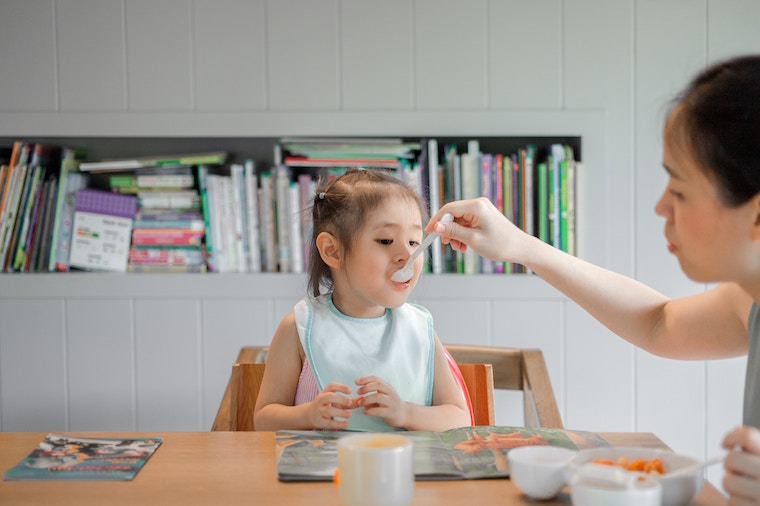
Providing food is a universal act of care in every species within the animal kingdom. Humans above all show affection by preparing and serving a variety of food. Often, certain types of food are given as “treats,” thus assigning them extra value.

Here’s an example of a dialogue between parent and child:

Parent: Finish your dinner and you can have a special treat.

Child: What’s the special treat?

Parent: You can have a frosted cupcake.

The problem here is that the frosted cupcake is given the status of a special treat, so the child perceives it as something highly desirable. The fact that the child has to finish dinner in order to obtain the treat implies that the dinner is something to get out of the way in order to obtain the cupcake. It may seem harmless enough, but this kind of behavior becomes entrenched in the child and carries into his or her adult life and can even perpetuate itself into the next generation. Unfortunately, high-calorie, high-fat and heavily sugared foods are the ones that are generally called treats, while nutrient-dense foods that should be valued, are not. No wonder childhood obesity has become a serious problem in North America.

Obese children are at a higher risk of having chronic health conditions, such as asthma, sleep apnea, bone and joint problems and type 2 diabetes. Onset of diabetes in children can lead to heart disease and kidney failure.1 And more obviously, children with obesity are more likely to become obese adults with numerous health challenges.

According to the American Dietetic Association (ADA), obesity threatens the health of today’s children to such an extent that they may, for the first time in U.S. history, have a shorter lifespan than their parents. This crisis has led to increasing interest in the prevention of obesity, starting with childhood. The ADA has compiled a lot of data about childhood obesity, based on ongoing studies and reports. The main areas of review are food and nutrients, eating behaviors, family interactions around food and meals and physical activity vs. sedentary behaviors.2

Since parents and caretakers are largely responsible for providing food for most young children, the “control” is in the adults’ hands. Here are some common sense guidelines:

  • Be a good role model and eat healthy foods.
  • Help children develop good nutritional habits by having healthy food available—lots of fresh fruit and vegetables, lean meats, poultry, fish, lentils and beans.
  • “Out of sight, out of mind,” so don’t purchase beverages with extra sugar. Evidence strongly supports a correlation between obesity in children with a high intake of sweetened beverages.3 Also avoid the availability of snacks with high fat and high sodium.
  • Have family meals together. Reports from the American Dietetic Association show evidence that increased frequency of family meals is associated with a higher consumption of nutritious foods and less of fried food and soft drinks.
  • Encourage children to drink water throughout the day, and provide them with their individual PiMag® Sport Bottle. Children like taking ownership of something special and the PiMag® Sport Bottle will help them receive clean, filtered water. Teach them to fill the PiMag® Sport Bottle with tap water or wherever there is potable water. In doing so, your children will be learning to drink less chlorinated water and at the same time, reduce plastic waste from bottled water.
  • Serve age-appropriate portions, and don’t expect children to “clean their plates” at every meal. On the other end of the spectrum, wait 15 minutes before serving seconds, so children can learn the feeling of fullness.
  • Don’t watch TV during meals or snacks. Distracted eating is the opposite of mindful eating.
  • Don’t use sweets as a reward. The definition of “treat” is really up to the parent, and when kids are taught to choose healthy foods from a very young age, it carries into adulthood.

Now let’s take the example dialogue mentioned above and change it up:

Parent: Finish your dinner and you can have a special treat.

Child: What’s the special treat?

Parent: We’re going to go for a bike ride together before it gets dark.

It’s never too early to start living Active Wellness. Examples of good treats that are 100 calories or less are a medium-sized apple or banana, a cup of blueberries, a cup of carrots, broccoli or bell peppers accompanied by a couple of tablespoons of hummus. A Kenzen Vital Balance® “milk shake” is also a healthy treat, and makes a wonderful breakfast or snack for the whole on-the-go family.