Natural vs. Synthetic: You Decide

In our daily lives, we interact with an extensive array of materials, each with its unique characteristics and applications. Whether it’s the clothes we wear, the buildings we live in, or the devices we use, the materials around us can be broadly categorized into two primary groups: natural vs synthetic.1

Examples of natural materials, which are derived from the environment, include wood, stone, silk, leather and cotton. These materials are found in nature and not man-made.

Synthetic materials are derived largely from human intelligence and creativity, mainly after the industrial revolution through the wide use of increasingly sophisticated technology. Plastics, composites, and artificial polymers are just a few examples of these engineered marvels.2

Are natural materials better than synthetic ones?

Here are some of the advantages of natural materials:

•           They are generally considered more environmentally-friendly than their synthetic counterparts, because they tend to be renewable and biodegradable, which reduces their footprint.

•           They are often more compatible with the human body. For example, natural fibers in clothing, organic materials in devices, and natural ingredients in skin care are less likely to cause allergic reactions—this is known as being biocompatible.

•           They vary in quality, texture and appearance due to natural variances found in nature. This makes them somewhat unique and exclusive, adding aesthetic value.

Here are some of the advantages of synthetic materials:

•           They are created in laboratories and factories, which are environments that are more easily controlled than nature.

•           They can be manufactured to be consistent and uniform in size, shape, appearance, etc. This consistency helps meet the precise requirements of different industries. Examples include plastics, nylon, polyester and many polymers.

•           They may be more durable than natural materials. With man-made specifications in mind, they can be manufactured to be more long-lasting and easier to mass-produce, rendering them more cost-effective than sourcing natural alternatives.

Both natural and synthetic materials have their own pros and cons. Your choice depends on the specific usage and your requirements for cost, durability, functionality, sustainability and eco-friendliness.

Nikken is inspired by nature, and our researchers and product developers try to incorporate as many sustainable, natural and organic materials as possible. We also embrace science and formulate using state-of-the-art technologies and facilities.

1, 2 https://europlas.com.vn/en-US/blog-1/natural-vs-synthetic-materials-what-are-the-differences

Differing Opinions May Lead to Better Team Decisions

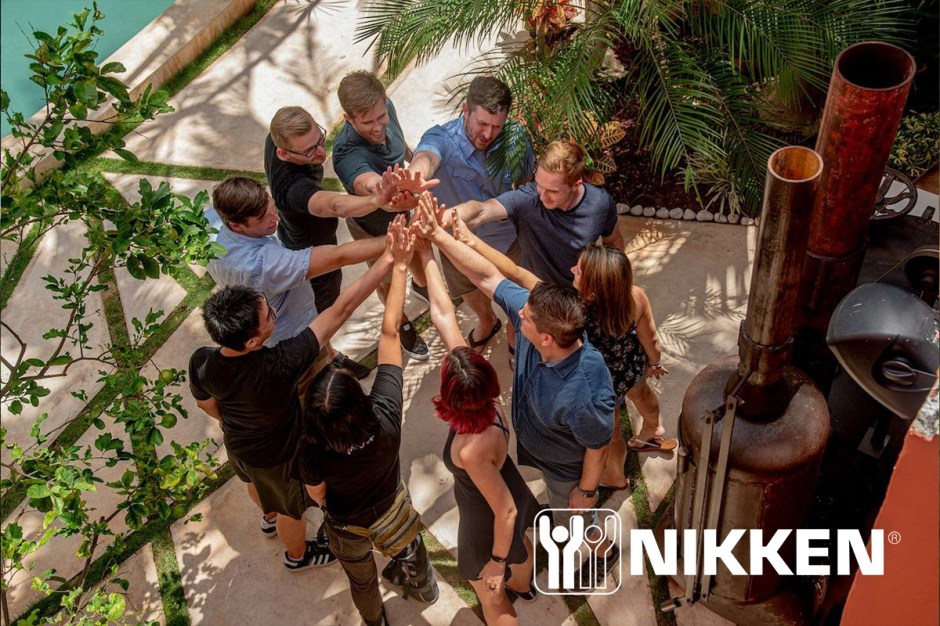
The importance of respecting differing opinions should not be underestimated. We are all unique with different perspectives which contribute to the strength of any team. It might sound counterintuitive, but having differing opinions on your team can actually create a more cohesive work environment.1 When each team member is treated fairly with every opinion seen as valid and valued, everyone can work together towards the same goal.

Imagine a team where everyone thinks alike, where there is no room for diverse opinions. While it may seem like a harmonious environment, it can actually limit the team’s potential for growth and innovation. When everyone has the same opinion, it can create a tunnel vision effect, where potential risks and alternative solutions are overlooked.

By having diverse opinions, teams can identify blind spots and consider alternative approaches that may have otherwise been missed. It is through the clash of differing opinions that new ideas are born, and existing ideas are challenged and refined.2

Of course, differing opinions can grow heated when not properly managed. There are basic steps that can help foster differing views as opportunities for growth and innovation, rather than as obstacles.

•          Create an environment of open communication. The entire team should be given carte blanche to express individual thoughts and ideas. In other words, team meetings should be safe spaces to share rather than to compete.

•          Be aware of introvert vs. extrovert personalities on the team. Make sure the extroverts don’t take up all the time in team meetings. The introverts may require a bit of prodding, but they often have great ideas that go unheard.

•          The most effective team leaders practice active listening. Make this something the entire team participates in. The mere act of listening respectfully to others can help create a mutually appreciative environment, regardless of the differences in perspectives.

•          Ask for constructive feedback. This becomes organic when the team functions cohesively with different perspectives seen as beneficial to the overall goals.

•          Share recognition of team members as a whole. Regardless of which “idea” serves as the springboard for new decisions, the whole team deserves credit for reaching a consensus.

Team unity and collaboration are the goals for healthy debates and varying perspectives. The same holds true for family discussions and strategic planning in any type of groups. Open- mindedness and encouraging individuals to speak up while respecting everyone else in the group is a great way to role model inclusivity for kids and peers.

1 https://cmdrecruitment.com/embracing-different-opinions-in-your-team/#:~:text=Differing%20opinions%20builds%20respect&text=Respect%20shows%20that%20we%20recognise,making%20the%20team%20more%20effective.

2 https://www.urbanchallenger.com/blog/how-to-resolve-with-differing-opinions-in-a-team

How Much Do You Risk in Launching a Business?

Entrepreneurs face known risks when they take on a new business venture. There’s the obvious financial risk. There’s also the volatile economy to consider when launching a business. Market trends can be erratic and what’s good one day can pose a risk on another. What about competitors? Are you looking at unique products or services or trying to cash in on a trend?

So many businesses had to move entirely to the digital market since the pandemic but brick and mortar outlets are gradually making a comeback. Many businesses will permanently be hybrid going forward, so that is something newly minted entrepreneurs need to factor in to their risk analyses.

A network marketing business relies on a different set of parameters and can offer entrepreneurs a shot at business ownership without as much risk as with traditional ventures. There’s no overhead, as anyone can work from wherever they live. A reputable company you sign up with should provide the systems and the technology needed. There’s no need for outside investors, and you choose the company that offers products or services that match your interests.

Aside from a one-time start-up fee, sometimes called a registration cost, there usually is not much cash required to launch a network marketing business. You can earn from retail sales right away without carrying inventory. You also can earn from commissions when you become an “upline” to those you register as your “downline” who generate retail sales. In a nutshell, the more product you and your group retail, the more you earn.

Network marketing is not for everyone; however, if you like working for yourself as an entrepreneurial business owner, forging your own hours, talking to people, making new friends, giving meet-and-greet parties, and you have the luxury of time to build up a team of like-minded people, this is a pretty low-risk way to become a business owner.

Interested? Contact your local Nikken distributor or call our Customer/Distributor Services. It could be the start of something amazing.

Celebrate International Women’s Day 2024

Amelia Earhart. Malala Yousafzai. Florence Nightingale. Madame Curie. Mother Teresa. These are famous women, pioneers in their own right. But what about so many women most of us have never heard of, because women pioneers have been overlooked throughout the years? Jackie Cochran, first woman to break the sound barrier, trained by Chuck Yeager. Nadezhda Popova who flew 852 missions for the Russians against the Nazis in World War II (Hero of the Soviet Union). Junko Tabie, Japanese mountaineer, author and teacher, first woman to reach the summit of Mount Everest and first woman to ascend the Seven Summits, climbing the highest peak on every continent. Rosalind Franklin, the chemist known for discovering the double helix structure of DNA.

The point is, women are under-acclaimed. That is in part, what International Women’s Day is all about. This year, the theme is “Inspire Inclusion.” When we inspire others to understand and value women’s inclusion, we forge a better world. And when women themselves are inspired to be included, there’s a sense of belonging, relevance, and empowerment. To inspire inclusion means to celebrate diversity and empowerment on International Women’s Day 2024 and beyond.1

International Women’s Day (IWD) is a global celebration of the social, economic, cultural, and political achievements of women. Each year, March 8th serves as a powerful reminder of the progress made towards gender equality and highlights the work that still needs to be done.2

This year’s campaign theme underscores the crucial role of inclusion in achieving gender equality. It calls for action to break down barriers, challenge stereotypes, and create environments where all women are valued and respected. Inspire Inclusion encourages everyone to recognize the unique perspectives and contributions of women from all walks of life, including those from marginalized communities.3

One of the key pillars of Inspire Inclusion is the promotion of diversity in leadership and decision-making positions. Women, especially those belonging to underrepresented groups, continue to face barriers when seeking leadership roles. By championing inclusion, organizations and communities can harness the full potential of diverse perspectives, leading to better decision-making and innovation.4

Regardless of where you live, gender equality is a fundamental human right. Advancing gender equality is critical to all areas of a healthy society, from reducing poverty to promoting the health, education, protection and the well-being of girls and boys.5

Nikken celebrates International Women’s Day every day! Won’t you join us and help to inspire inclusion?

1, 2, 3, 4 https://www.internationalwomensday.com/Missions/20202/What-does-it-mean-to-truly-inspire-inclusion

5 https://www.un.org/sustainabledevelopment/gender-equality/

Entrepreneurs Being More

Individuals who know Nikken are often familiar with Humans Being More (HBM), a foundational aspect of the company that focuses on self-development and ultimately, the betterment of the local and global communities. Many people attend Humans Being More workshops many times throughout their careers. Now Nikken is taking the philosophy even further with Entrepreneurs Being More (EBM).

Entrepreneurs Being More is focused on igniting business success rather than personal development, but the two are still related. Personal growth and business growth are both journeys taken over the long term, and intersect.

The main tenets of EBM are the power of collaboration, teamwork, leveraging strengths, fostering a culture of innovation and focusing on productivity. The cornerstone of business success is communication, and EBM provides tools to master this essential skill.

Whether you’re a seasoned entrepreneur or starting to conduct your business, there’s always something new to learn in order to communicate better. Business success may hinge on your sales pitch and how adept you are in  artful persuasion. Do you come across with confidence? Are you clear and succinct? EBM addresses all of these crucial elements of business-building and more.

EBM sessions are interactive and held in a supportive environment, so participants can thrive and grow. You will sharpen your ability to articulate your ideas and to connect with others: keys to business success.

Where EBM intersects with HBM is in creating the best version of yourself. Business success is not only about profits, it is also about impacting others positively, and helping them to succeed as you yourself succeed. By developing the people skills associated with HBM and learning how to build meaningful relationships, you then can lead your business with integrity and compassion.

Chancellor of Nikken University and Director of Sales & Training Jeff Isom will be conducting EBM workshops. For details, contact Nikken Customer Service or your personal Nikken Consultant.

Do you Fix Weaknesses or Focus on Strengths?

When you are a business owner, you have the advantage of being your own boss. You also have the pressure of making the right decisions, strategizing for business growth and often times, leading a team. It’s easy to be doing everything all the time, which means nothing gets well done.

One of the best things about network marketing is that you constantly work with a team. There are upline (those who sponsor newcomers) and downline (those you sponsor). Having a team means you inherently have a variety of perspectives and skillsets based on the backgrounds of your members. Why this is so important is because most of us tend to try to fix our weaknesses instead of capitalizing on our personal strengths. With a team, members can focus on personal strengths and complement each other—one’s weakness may well be another’s strength.

Fixing weaknesses used to be taught as opportunities for development. Research now shows that this approach is not most conducive to business-building success. Instead, contemporary research shows that focusing on personal strengths is self-empowering and therefore more likely to produce desired results. Author and motivational speaker Marcus Buckingham explains, “A strength is an activity that makes you feel strong. It is an activity where the doing of it invigorates you. Before you do it, you find yourself instinctively looking forward to it. While you are doing it you don’t struggle to concentrate, but instead you become so immersed that time speeds up and you lose yourself in the present moment. And after you are finished doing it, you feel authentic, connected to the best parts of who you really are.”1

Whether you are starting a business in 2024 or expanding, assess your approach and see if you are capitalizing on your personal strengths. Consider choosing potential partners based on their complementary strengths to cover your weaknesses, and help your team members do the same.

1 https://www.tmbc.com/

Do You Follow Through?

There are many types of people and each has notable strengths and weaknesses. Some naturally lead, others are strong in executing plans, and the rare ones do both. Regardless of your personality or strengths, follow-through is what propels you to closing the deal, completing a project, sealing a relationship, achieving a goal or honoring a commitment.

Knowing what you want to achieve is important, but setting a concrete deadline is equally crucial. Set a deadline that will drive you to follow through to ultimate success. The deadline should be one that you can work with, be accountable for and help you stay on track. Setting realistic, timely goals is the key to achieving them.

Often in our lives, not following through may have consequences. Follow-through may not always be pleasant, but without it, there is no reward. Here are a few tips to make follow-through easier:

•          Break tasks down into do-able parts. No task is too trivial to be part of the whole.

•          Do one thing at a time. This requires focus. Multi-tasking splits your focus and often ends with nothing being actually completed, and many things half-done.

•          Commit to completing a specific activity within a specified amount of time.

•          Think ahead and prioritize. What is most necessary to be done immediately vs. what can wait? Or, what can be completely crossed off your list?

•          Understand what motivates you. You are much more likely to follow through if you are motivated. Are you motivated by material rewards, emotional fulfillment, camaraderie, prestige, etc.? Once you determine what motivates you, you will be able to reward yourself accordingly.

•          Be real. Is there too much on your plate? Are you taking on too many things with too short a deadline? People-pleasers have the hardest time saying ‘No’ but it’s imperative to be realistic in order to follow through on what is most important.

•          Manage your time. There are 24 hours in the day and they are yours to schedule, so be clear on what activities require the most energy. Remember to factor in some down time so you can breathe, relax and keep burnout at bay.  This may require “padding” your blocks of times so you have a little extra leeway with each task.

Whether you’re easily distracted or totally engaged, follow-through is easier when you block time to work without having to answer calls, check social media or reply to emails. Distractions are everywhere, but remember that you are in control: you can mute the phone and shut off notifications on all devices. Let’s approach the final months of the year with determination and follow-through!

Source:

https://fellow.app/blog/productivity/ways-to-overcome-a-lack-of-follow-through/

May is the Month to Make Our Recommitments

May is the third and last month of the spring season in the northern hemisphere. In the United Kingdom, it’s known as the “smile month.” May is named after the Greek goddess of fertility, Maia, and the Romans called her Bona Dea. In the 1400s, the word designating the fifth month of the year changed from Maius to May.

In North America, May is known as National Recommitment Month! Its significance is as a time to reevaluate the meaningful areas of our lives and to see if we’re on the right path. Have we honored the commitments we made earlier in the year? How are we progressing with our goals for 2023? Are our relationships with family and friends where they should be?

Throughout our lives, we make goals and commitments, and before the middle of the year approaches, May is a good month to step back and assess how we are doing. No matter what the commitment—largely encompassed by any of the 5 Pillars of Wellness—healthy mind, body, family, society or finances—it’s time to take a look at where we stand.

Some practical ways to recommit are to examine our goals and see which ones are on track and which need more work or to be eliminated. If the original plan was too complicated to execute, then it’s time to simplify. If there were too many goals, it’s time to reset priorities and stick to the critical ones—our chances of success are higher when goals are realistic.

Focus. Multi-tasking is often presented as a desired skill when in reality, focusing on one goal at a time tends to produce a higher success rate. When we work on many things at once, chances are none of them will get done in a timely way. In other words, we don’t need to spread ourselves too thin. This holds true not only for work goals but also relationship goals.

Be mindful. Mindfulness is a means to an end. It helps ensure commitments are honored by decluttering the brain. Mindfulness requires our full intention as well as freedom from self-imposed anxiety, pressure, negativity and fear. Meditation is a form of mindfulness, but even without an actual meditation practice, we can take a few minutes every day to be quiet internally and renew our commitments and intentions. Meditation and being silent helps us consciously repel self-demeaning thoughts and emotions by emptying the mind. Mindfulness is positive self-talk and an essential component of self-care.

Prioritize. This is a no-brainer, but too often, we forget to do it. Since change is constant, we need to prioritize every day. That actually is what recommitment is founded on—as priorities change, our commitments change. What is most important to do today? And then, for the week?

Be flexible. Depending on each person’s personality, flexibility may come naturally or be a goal in and of itself. Just because we have made certain commitments and want to fulfill them doesn’t mean it’s always do-able or even practical. Sometimes we just have to go with the flow and adjust accordingly. On the other hand, sometimes we do have to stick to our plans even if they go against the general consensus. Exercising good judgment in that way is also part of recommitment.

What are you recommitting to this month? Are you hydrating and making sure you are breathing in fresh air? Are you exercising daily? Have you connected with your elder family members? Did you walk the dog today? Whatever your priorities are, remember to be kind to yourself.

As you recommit to prioritizing your health, be sure to take advantage of the 20% off filters promotion that Nikken is running now through June 30, 2023. It’s a great savings and the perfect time to purchase a spare for your PiMag® Sport Bottle, PiMag MicroJet® shower systems, PiMag Waterfall® and KenkoAir Purifier®! Each filter helps decrease your carbon footprint and gets your closer to being in harmony with nature!

Women in Leadership Then and Now

“Since 2008, more women have assumed leadership of huge and influential companies (GM, IBM, Lockheed Martin) and global institutions (the IMF, the World Bank, the European Central Bank). More women have also been elected to high office around the world.  Since 1964, 64 countries have had a female head of state or government, according to Women’s Power Index and as of May 2020, 19 countries were being led by a woman,”1 according to Sally Helgesen, author of seven books on leadership, and a keynote speaker around the world on women’s changing roles.

Even with these vastly improving numbers, women in leadership still lag behind the majority. This may be attributed to the basic challenges women continue to face in the workplace, even as progress is made:

1. Unconscious bias stems from gender stereotypes reflected in the subconscious attitudes both men and women have about female capabilities. Huge strides have been made, but the deeply ingrained image of women “barefoot and in the kitchen” still is widespread even in civilized nations.

2. Unequal pay is more complex than just dollars and cents. It extends into the opportunities women are presented with, often fewer than their male counterparts.

3. Different expectations makes it more difficult for women, because there is the need to balance actual ability, respect from peers and being likable. In other words, aggressive men are the norm, but aggressive women may be considered dislikable.

4. Limited career advancement opportunities take the form of fewer promotions for women in a corporate environment. A 2021 Yale study found women 14% less likely to be promoted at their companies annually as well as being consistently judged as possessing lower leadership potential than their male counterparts.2

5. Lack of sponsorship and mentorship ties in with limited career opportunities. Women are less often approached by mentors or sponsors who can be sources of knowledge and even lead to the “inside track.” What women need to do is to actively seek out mentors and coaches rather than hope to be “found.”

6. Sexual and gender-based harassment is something that women continue to contend with. The American Academy of Arts and Sciences found that women supervisors had to deal with even more sexual harassment than others in their fields in the United States, Japan and Sweden.3

Given the inherent challenges that women face, the progress that has been made by women in leadership in recent decades is impressive. According to recent statistics from the Organization for Economic Co-operation and Development, the proportion of women in higher education fields as of 2017 are as follows: 78% Education, 76% Health & Welfare, 64% Social Sciences, 63% Humanities, 54% Business and Law, 50% Science & Math, 24% Engineering and 19% IT & Communications. The World Bank shows that as of 2017, women accounted for 49% of the global workforce.4

Women inevitably will continue to rise in roles of responsibility and power. The reason is simple: women are major consumers and therefore drive the global economy. A report looking at female emerging markets by Ernst & Young pointed out that by 2028, 75% of the disposable income worldwide will be controlled by women.5 With women as the primary consumers for everyday products and services (fashion, home, health, education) female preferences will dictate the marketplace, and women executive and entrepreneurs will have the sensitivity and know-how to lead. In fact, start-ups founded by women since 2018 to date, have yielded higher benefits with an average 10% higher income than those founded by men.6

What is called “she power” by entrepreneurs in the Digital Age, refers to leadership traits attributed more often to women. It embodies the ability to combine, adapt and learn. In other words, women leaders tend to be able to adapt quickly to changing environments and to face hardships with optimism and perseverance. According to a survey published by the Boston Consulting Group in 2018, women are more dependent on data and information analysis as well as being more willing to spend time on research.7

This trend coincides with the decreasing “confidence gap,” where women questioned their own competence. Since female millennials are now a force to be reckoned with in the global workplace, confidence has increased as well as the recognition of women’s capacity for strategic insight and vision. According to Ms. Helgesen, “As growing confidence based on demonstrated competence has increased women’s determination to reach their full potential, so has greater solidarity among them. This is one of the most dramatic shifts that has taken place over the past 30 years. Increasing solidarity among women, a growing role for male allies, and vastly improved organizational engagement have combined to create an infrastructure of support for women almost entirely missing in previous decades.”8

As women continue to expand into leadership roles worldwide, initiatives that were once considered tokens to showcase a company’s commitment to women’s advancement have now become integral parts of many companies’ talent acquisition strategy. Global organizations look for leaders who can combine decision-making with relationship-nurturing, collaborative thinking and direct communications—qualities found often in women. And, as women come into positions of power, they are actively giving a hand to the new generations coming up through the ranks.

Some interesting trivia about women of wealth from Forbes: China had 45 self-made women billionaires in 2022, down from 57 in 2021. The U.S. had 24 self-made women billionaires in 2022. India’s richest self-made billionaire is Falguni Nayar whose fashion retailer Nykaa went public in November of 2022. Singer and entrepreneur Rihanna is Barbados’ first billionaire.9

One major change in workplace attitudes may be attributed to the pandemic. For some time, as workers were forced to stay home, the distance between those who worked outside of the home and those who worked within the home, closed. Women who worked from home used to be in the majority, but the pandemic shifted the numbers drastically. Companies that were able to be flexible and support working from home (like Nikken did globally) managed to survive and even thrive. Traditionally, women have always dominated in direct selling and network marketing—and the pandemic supported what women have been doing all along: being productive while working from home.

Let’s celebrate together on International Women’s Day on March 8 and honor all the women in our lives!

1,8 https://www.strategy-business.com/article/The-evolution-of-womens-leadership. (2020 article)

2,3 https://www.strategypeopleculture.com/blog/challenges-female-leaders-face-in-the-workplace/

4,5,6 https://www.ceibs.edu/new-papers-columns/women-leaders-then-now

9 https://www.forbes.com/sites/gigizamora/2022/04/05/the-10-richest-self-made-women-in-the-world/?sh=6b0cdd126c25

Do You Like to Work Alone or as Part of a Team?

Do you prefer solo endeavors or projects that require teamwork? There’s no right or wrong answer here, but thinking about it can be an interesting way to get to know more about yourself.

Your choice may depend in part on your personality—extrovert, introvert or a combination of the two—and also on your motivation. In other words, what motivates you to work and get the job done? Finding the balance between working alone and as part of team is a skill that also plays a big part in life and in Active Wellness.

Extroverts are outgoing and generally perceived as people who enjoy being around others. They typically thrive in group situations and are comfortable giving opinions and if necessary, arguing their points.

Introverts prefer alone time and are less likely to assert themselves in a group. This does not mean they are less capable; in reality, it usually pays off for a team to pick the brains of the introverts, because they tend to have unique perspectives that can make a project stand out but need to be coaxed to voice them.

Those who enjoy working on a team tend to be energized by interactions with others. They thrive on the energy of others and contribute their own into the group dynamic. Because they enjoy teamwork, they tend to be cooperative and likewise, expect others to help them find solutions to questions to create a good work flow. They use the team’s energy and goals as their primary sources of motivation.

The greatest benefit of working as part of a team may be the sharing of knowledge and skills. We are all gifted individually and when these skills are pooled, it can produce a much greater result than the abilities of one person. The collective brainstorming, in the best scenarios, produce creativity, strength and effectiveness.

Another benefit of working on a team is the potential to create friendships and even lifelong bonds. This certainly is true of network marketing organizations where the sponsor becomes a mentor to the people who sign up. Or, an entrepreneur who heads a start-up and grows an extended “family” who works to make the venture successful—the ups and down eventually end up being shared experiences that create permanent bonds. Just look at the unbreakable bonds of soldiers who have shared life-death encounters and survived together!

Motivation plays a big part in choosing how to work. Soloists are able to self-motivate, something not everyone can do. Rather than requiring the energy of others to become motivated, soloists know they are accountable for both the ups and the downs that can come from working alone. They won’t be held back by others, but neither do they have the support of a team.

Not everyone is capable of working independently without having someone looking over their work. Those who prefer working alone appreciate not having someone “hovering” or looking over their shoulders. They are highly motivated to do their best work when they are free of the interruptions that are part and parcel of being a team member. Introverts are often motivated by the feeling of independence and happy to set their own goals and schedules. Even if they belong to a company, these solo workers shape their own work flows and can create their own suitable work environments.

The pandemic changed the workplace in a big way. As people were relegated to working from home or remotely, teamwork took on a new practice. Even now, some work methods continue, for example, meetings via Zoom or other platforms rather than face-to-face. Working remotely or hybrid work formats also continue on.

At Nikken, we have learned to be more flexible and cooperative while working online as a team. And, we have learned how resilient we are.

https://www.hugo.team/blog/team-collaboration-vs-working-alone

The Benefits of Teamwork vs. Working Independently