Great Sleep Fuels a Fully Empowered Life

One of the 10 actions for Empowered Living is recharging your energy. Achieving this requires connecting with nature, consciously breathing in fresh air and getting restful sleep. Humans spend about a third of our lives sleeping, because it is critical to healthy living and longevity.

Here’s what happens with good quality sleep:

• The heart and blood vessels heal and repair themselves.

• Grhelin (hunger hormone) and leptin (satiety hormone) are balanced. Inadequate sleep makes ghrelin levels go up, so you feel hungrier than when you have restful sleep.

• Healthy insulin levels are supported. Insulin controls blood sugar levels, which increase when you are sleep-deficient.

• Deep sleep triggers the release of the growth hormone that helps children and teenagers develop healthy muscle mass, repair cells and tissues.

• Deep sleep supports healthy development during puberty and promotes fertility.

• Restful sleep supports the body’s immune system. Sleep deficiency can affect the body’s natural defense system against germs and illness, making it difficult to combat infections.

• Major threats to longevity are decreased. These risks include heart disease, high blood pressure, obesity and stroke.

• Good sleep supports the brain to improve learning and memory. Problem-solving, decision-making and creativity are enhanced.

Sleep deficiency can result in feelings of stress and depression; and can cause mood swings, lack of motivation and not getting along in social situations. It can also cause lack of focus, problems in learning new things, slow reactions and poor decision-making, which in turn result in making more mistakes. It’s a vicious cycle of frustration and fatigue, lack of confidence and inertia. In other words, when was the last time you felt joy when you were sleep-deprived?

Smart nutrition, clean air and water are basic necessities, but when you think about humans spending a third of our lives sleeping (or at least trying to sleep), the importance of good sleep is obvious. If you can’t sit still, watch TV, read or be a passenger in a vehicle for an hour without falling asleep, you probably need more restful sleep. It’s not about quantity as much as it is about quality.

Create your sleep sanctuary and commit to good habits that support deep sleep, so you can feel good every day and experience empowered living! With great sleep, you can choose joy!

Source: https://www.nhlbi.nih.gov/health/sleep-deprivation/health-effects

How Much Protein, Carbs and Fiber Do You Need?

What you eat and how much of it you need depends on your caloric requirements. The number of calories that you need each day day will depend on your age, weight, height, activity level, and health goals. Carbohydrate and protein each contribute four calories per gram, while fat contributes nine calories per gram. Soluble fiber only contributes two calories per gram and insoluble fiber contributes zero calories because it passes through without being absorbed, which is one way that fiber keeps the body regular.

The minimum calorie count recommended for adults is 1,800 calories per day for sedentary women and 2,400 calories per day for sedentary men, based on the U.S. Department of Health and Human Services and U.S. Department of Agriculture 2020–2025 Dietary Guidelines for Americans. Ninth Edition.Only children and youth can eat lower calorie counts and still satisfy their nutritional needs. There is no single diet that works for everyone. There are, however, a few general ranges.

The USDA’s Dietary Guidelines for Americans provide percent ranges for each macronutrient in the Healthy U.S.-style Pattern. For adults, the organization recommends consuming 10% to 35% of calories from protein, 45% to 65% from carbohydrates, and 20% to 35% from fat.  The guidelines also suggest consuming less than 10% of total calories from saturated fat.1

Those following a healthy vegetarian eating plan should meet the same nutrient and Dietary Guidelines standards as in the Healthy U.S.-style Pattern, so macronutrient ranges are the same. The difference between the two eating styles is the foods chosen within each food group. Someone on a vegetarian diet should try to consume 55% carbohydrate, 14% protein, and 34% fat with 3.5-ounce equivalents of protein foods, including legumes, soy products, eggs, nuts, and seeds.2

Those following a Mediterranean-Style eating plan should also meet the same nutrient standards as the Healthy U.S.-style Pattern, so the macronutrient ranges are the same. The difference between the two eating patterns is that the Mediterranean-style diet containsmore fruit and seafood and less dairy than the Healthy U.S.-style Pattern. For example, the USDA recommends 15 ounce-equivalents per week of seafood for those following a 2000-calorie-per-day Mediterranean diet, but only 8 ounce-equivalents per week of seafood for those following the Healthy U.S.-Style Pattern. The Mediterranean diet can be 52% carbohydrate, 18% protein, and 32% fat.3

Carbohydrates break down into an energy source for the body, especially the brain. They also add fiber to the diet which helps smooth digestive processes. Protein is important for maintaining muscle mass, cellular renewal and supporting the immune system.

A little research goes a long way, for example, some vegetables contain protein, so even if you are a meat eater, you don’t have to limit yourself to getting protein from animal sources. Newer research indicates that eating more plant-based protein may help reduce heart disease, since nuts and legumes are considered more heart-healthy than processed meat.4

Even though each person’s individual lifestyle will dictate how much protein, fiber and carbs to eat to feel good every day, a balanced plate is generally favored over one that eliminates an entire food group. In other words, choose to eat balanced meals that are sustainable for your activity level and lifestyle and try not to be swayed by fad diets.

No matter how you choose to eat, always hydrate daily with clean water. Don’t miss the PiMag Waterfall® sale at 20% off through August 31, 2025!

1, 2, 3 https://www.verywellfit.com/daily-diet-composition-calculator-charts-carbs-protein-fat

4 https://rightasrain.uwmedicine.org/body/food/all-about-protein

Conserving Water is Everyone’s Responsibility

The amount of fresh water on planet Earth is static but the world population is increasing, which means more and more living creatures have to share the clean water that currently exists. Since water is a basic necessity of life and only one percent of Earth’s supply can be used for drinking, washing and growing plants, everyone has a responsibility to conserve fresh water for future generations. In fact, it is estimated that 2.5 billion people do not have access to clean water, putting their lives at grave risk.1

Those of us who live in areas with easy access to potable water can do our part to conserve water. Here are just a few tips:

•          Reuse “gray” water. Gray water is what goes down the drain. For example, rather than rinsing fruit and vegetables under the faucet while it runs, put the produce in a basin and cover it with just enough water to wash it. Once done, pour the water on house or garden plants.

•          Water used for cooking pasta or noodles can be drained into a bin, cooled and poured over plants.

•          Rainwater can be caught in containers and reused on landscaping

•          Have a basin in the shower or tub to collect cold water while you wait for it to heat up.

•          Brushing your teeth with the tap running? Don’t. In fact, don’t let the faucet run when it’s not necessary. Each minute the faucet is on can waste up to two gallons of water.2 Make sure the water is off while you brush, shave, wash your face and hands, then turn it back on when you’re ready to rinse.

•          Did you know you can waste nearly five gallons of water daily when you have a leaky faucet? That’s based on a single drop per second.3 Leaky faucets can also damage your home. A timely repair can save a lot of money.

•          Have you seen the ads that ask you to use the dishwasher to save water? It’s actually true that you can save water by using the dishwasher, but only if you do a full load. So, make sure to fill your dishwasher to capacity before starting the load.

•          Doing dishes the old-fashioned way can also save water. All you need is a double sink or two bins, one for soapy water and the other with clean water to rinse off. Remember not to keep the faucet running while you’re dishwashing.

•          According to the U.S. Department of Energy, you can save as much as 3,400 gallons of water each year by only doing full loads of laundry versus half loads. And, if you purchase a water-efficient washing machine, it reduces the water needed according to the load, so you automatically conserve.4

•          Pool owners, be aware! The U.S. Department of Energy cites evaporation as the largest source of water loss. As the air temperature and wind speed reach the pool’s surface, the water evaporates more quickly. Investing in a pool cover can reduce the amount of water needed to refill your pool by 30 to 50 percent!5

World Water Day is March 22—this is the perfect time of year to assess your personal habits when it comes to using water.

1, 2, 3, 4, 5  https://streamlabswater.com/blogs/streamlab-blog/7-ways-to-conserve-water-at-home?gad_source=1&gclid=CjwKCAiAtYy9BhBcEiwANWQQLxoVVyzD5CsU337s9OgVIv_465MWmpScQZBqRggpOVsRVdd9VypCgxoC8yIQAvD_BwE

PiMag® Water: Taste the Difference

We love hearing from customers who have wonderful Nikken product experiences. We especially appreciate it when we’re told that a Nikken product not only helps people but may well make their lives more livable. Platinum Pam Barnes sent us a note that one of her customers wrote her:

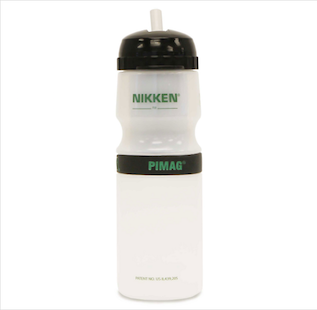
“Just a little note to let you know how much we appreciate our PiMag® Sport Bottles. We are living in a house on the Zambezi River here in Zambia. The drinking water comes from the river. Although it has passed through three different filters and an ultraviolet light, the taste is horrendous.

“We put this same filtered water* through our PiMag® Sport Bottles and we have great tasting water! When we make tea or coffee with the filtered river water, it tastes bad. But when we use PiMag® water to make coffee and tea, it tastes great. I don’t think we can ever do without our PiMag® Sport Bottles. Thank you!”

*PiMag® products are to be used for filtering potable water only.

pimag-bottle

Water that Makes Sense with PiMag®

Access to clean water is a problem of global proportions, as we head towards a water crisis. Global warming and other changing climate patterns are threatening lakes, rivers and other primary sources for drinking water. In addition to the dearth of water due to insufficient rains, there is the other end of the spectrum with contamination from flooding.

Contaminated water is a huge health risk not only in third world countries but also right here in America. According to the Natural Resources Defense Council, runoff of rain and snow from rooftops and roads pick up toxic chemicals, dirt and a multitude of germs as it makes its way to rivers and seas. As fortunate as we are to live in a nation where free running water is taken for granted, we are no longer guaranteed that what comes out of our faucets are safe to drink. In fact, rather than drinking tap water the way our grandparents did, the trend to purchase “name brand” bottled water has taken root in our culture, giving rise to yet another huge problem: landfills overflowing with non-biodegradable plastics.

The solution to drought or global warming is clearly too complex for the average brain, but doing our best not to contribute to landfills by filtering tap water rather than purchasing bottled water, is something everyone should do. It is such common sense that yes, if you’re not doing it, you should reprimand that image in the mirror.