Make Water Your Drink of Choice and Feel Good Every Day

When it comes to beverages, there are a lot of choices available. Some choices have plenty of sugars, saturated fat, sodium, artificial color and flavorings—none of which is beneficial, and much of it with unwanted calories.

Water, on the other hand, is the perfect drink of choice! It quenches thirst efficiently, has no empty calories and is crucial for maintaining health. Physically, water helps to keep body temperature regulated, to lubricate and cushion the joints, to protect the spinal cord and other sensitive tissues and to process waste through urination, perspiration and bowel movements.1

With the exception of breastmilk for newborns, water is the best drink for children and continues to be the best drink through adulthood and into old age. In fact, keeping the elderly hydrated with water is one of the keys to healthy longevity.

Eating nutritious food and drinking water come naturally to the entire animal kingdom, with the exception of humans, as we have the technology to create “unnatural” foods and beverages. To help get back to healthy roots—such as those of our non-technological ancestors—and to choose water more often, here are a few tips:2

  • Drink water that is hot or cold, depending on your preference.
  • Drink water with meals.
  • Ask for water with your food when eating out.
  • Carry a reusable water bottle when you are out.
  • Try a fruit and herb infused water or carbonated water.
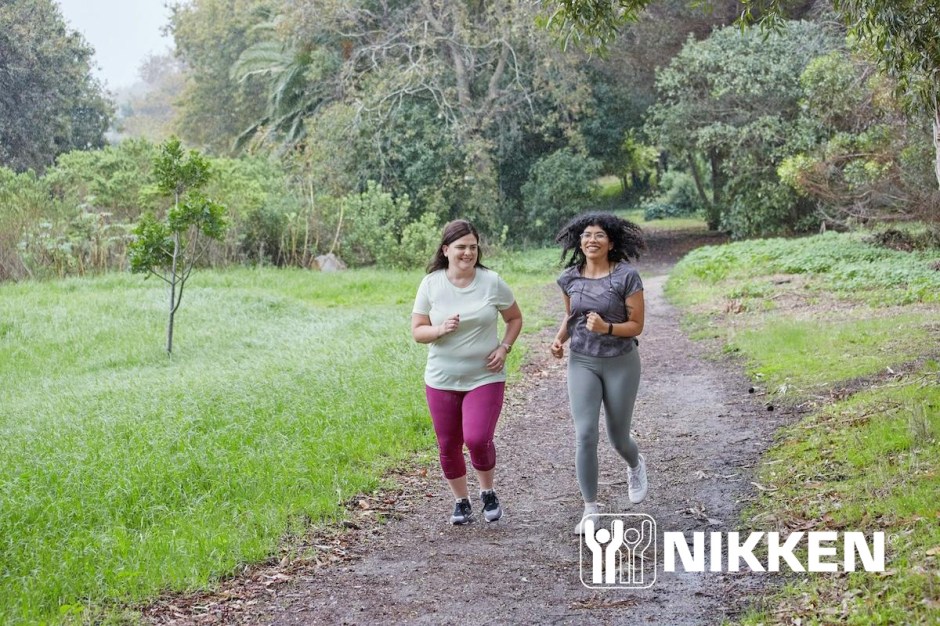
  • Hydrate with water during and after physical activity or playing sports.
  • Keep a pitcher of water in the fridge or on the table for easy access.

When you choose water instead of sugar-sweetened beverages, you are helping with weight management. Substituting water for just one 20-ounce sugar-sweetened soda will save 240 calories.

Drink water and feel good every day, not just physically but in knowing you made the right choice! Role model it for the kids—remember it’s healthier to eat a piece of fruit than to drink juice. Drink water and eat the fruit for a win-win! It’s all part of empowered living. 

1 https://www.canr.msu.edu/news/make_water_your_beverage_of_choice

2 https://food-guide.canada.ca/en/healthy-eating-recommendations/make-water-your-drink-of-choice/

Different Strokes for Different Folks: Exercise and Sports Around the Globe

Throughout history, people have exercised, consciously or unconsciously. As hunters and gatherers, our ancestors walked or ran to search for food. They didn’t need to exercise in the contemporary sense, because survival depended on constant physical activity. As civilizations developed, sports were invented.

The Greeks started the Olympics and focused mostly on wrestling. Enter the Romans who transformed activities of war into sport—throwing spears and javelins, hand-to-hand combat and sword fighting, later also known as fencing.

Navigate to the East, and the Japanese were developing sword play of their own in the form of Kendo with bamboo (shinkai) swords and wrestling in the form of sumo. Perhaps due to the prevalence of Buddhism in China and Shintoism in Japan, martial arts came to be in the forms of karate, Chinese kung fu, tai chi, wing chun and jiu-jitsu. Wing chun is a kung fu style notably founded by a Buddhist nun from the Shaolin Temple, and Manchu warriors learned to ice skate in order to reach their enemies, later transforming it to a sport!

Into the Americas, the Aztecs, Incas and Mayans played ball sports. “Pok-a-Tok” was played by Mayans not only for fun, but as a way to settle conflicts between warring factions, with losers suffering the fate of death. Apparently, Pok-a-Tok is a difficult mix of soccer and basketball! In contrast to playing for life and death, the Native American Tarahumara people were ancient marathoners who could run 200 miles at a time! They would likely best today’s extreme athletes!

North American sports largely came from European influences, and as witnessed by the addition of new events in current Olympics, exercise has truly evolved over time. For example, skateboarding originated in California by surfers who wanted to do something on land that felt like being on the waves. It debuted as an event at the Tokyo Olympics in 2020.

Whether you choose the slow gracefulness of tai chi or a team sport such as soccer, rugby, volleyball or basketball, the key is to keep moving. Take a look at the special Olympics and the wheelchair athletes from around the world for inspiration—choose a physical activity and do it consistently to feel good every day.

Nikken has many products that support physical activities, whether you’re a weekend warrior or a committed athlete. Right now, there’s still time, through the end of this month, to take advantage of free ground shipping, as long as you are a Registered Customer with Nikken and your single order is at least $185 USD /$259 CAD before tax and shipping costs!

Sources:

http://en.chinaculture.org/library/2013-11/22/content_496741.htm

https://www.amatravel.ca/articles/pok-a-tok-ancient-mayan-sport

A History of Physical Activity

How Does Exercise Enhance Gut Health?

We know that eating a healthy diet contributes to optimal gut health. Now clinical nutritionists and gastroenterologists are finding definitive proof that exercise can support gut health, too. The combination of healthy diet and exercise reigns supreme, but the discovery that exercise plays such a big role in gut physiology may help many couch potatoes to get moving!

“Exercise is one of the most powerful ways you can boost your gut microbiome. Your digestive tract is a muscle, and moving your body is good for all muscles, gut included. When we are physically inactive, the muscles in our gut also become less active. Over time, they lose their natural coordination and strength,” explains gastroenterologist Christine Lee, MD.1

Regular exercise helps the gut find its ideal digestive pace. Each gut has its natural rhythm that keeps things moving. If it’s too fast, you might get the runs. If it’s too slow, you might be constipated, bloated or nauseated. Exercise helps the gut stay “just right” in terms of gut motility, that is, the movement within the gut.

During movement, especially exercise of a cardiovascular nature, the heart pumps harder in order to deliver blood and oxygen to the muscles. Part of that extra blood and oxygen goes straight to the gut. In other words, exercise improves circulation in the whole body, and that includes the gut, which helps the digestive tract work better to maintain the right balance of healthy bacteria.2

Gut muscles react to exercise the same way our visible outer muscles do. Biceps, quadriceps and abdominals visibly get more toned with regular exercise. What you don’t see are the internal gut muscles getting more toned. Even though not visibly more toned, improved regularity is proof that your exercise is paying off by helping waste process out of the body more effectively so your gut simply feels good every day.

Different types of exercise are being researched for their impact on the gut microbiome. There is evidence that low intensity exercise can help reduce the amount of time it takes food to travel through the digestive tract and be successfully pushed out as waste. This is important because this allows the gut microbiome to perform multiple functions effectively, including converting non-digestive parts of food into energy.3

In contrast, higher intensity exercise allows more oxygen to reach the brain and bloodstream. The brain and the gut are connected by the vagus nerve, as well as through molecules secreted into the bloodstream from the gut microbes and immune cells that travel from the gut to the rest of the body.4 The brain and gut are therefore in constant communication and regular periods of high intensity exercise enhance that interaction.

There’s no better time than the summer months to start or add to your exercise regimen. And, regular exercise helps the body crave healthy foods; healthy foods fuel your body for better performance during exercise!

Nikken launched Golden Gut Formula, loaded with both pre- and probiotics, so you not only help increase your beneficial bacteria but you’re nourishing them so they can multiply more rapidly. Adding Golden Gut Formula to a healthy diet and exercising daily may help accelerate your ongoing quest for empowered living! 

1, 2 https://health.clevelandclinic.org/gut-health-workout#:~:text=Your%20metabolism%20is%20your%20body’s,%2C%E2%80%9D%20explains%20Dr.%20Lee.

3 https://www.uclahealth.org/news/article/new-microbiome-research-reveals-exercise-may-impact-gut

4 https://med.stanford.edu/news/insights/2025/03/gut-brain-connection-long-covid-anxiety-parkinsons.html#:~:text=Through%20direct%20signals%20from%20the,tracts%20are%20in%20constant%20communication.

How Important is Movement for Physical Well-Being?

Most of us acknowledge that staying mobile is a necessary part of an active and empowered lifestyle. But can movement also improve overall physical well-being? In reality, movement can help us feel good every day. And best of all, it doesn’t take a gym membership or strenuous exercise—small daily movements, as long as they’re done consistently, may increase mobility and contribute to overall health.

Here’s how movement can positively impact six crucial parts of the body:

•          Muscles: More than 600 muscles in the body make up 40% of the human body’s weight. Movement helps strengthen those muscles, which help the body to maintain stability, balance and coordination.1

•          Bones: Movement helps build more durable, denser bones. Whether you choose resistance training, jogging, walking, hiking or balance training, such as Pilates and yoga, movement supports bone density.2 Movement and exercise may offer protection against osteoporosis and age-related loss of muscle mass, strength, and function, also known as sarcopenia. Improved physical function can reduce the risk of falls and likelihood of serious injury if there is a fall.3

•          Joints: Flexibility and range-of-motion are important to keep the joints functioning smoothly. Stretching and being mindful of posture and how daily tasks are performed can help increase coordination and balance.

•          Brain: Researchers have made the connection between brain power and movement. As some people age and lose mobility, their cognitive functions deteriorate as well. Daily movement helps rejuvenate the structures within the brain that are linked to cognition. In rehab facilities, even those who are wheelchair bound are provided ways to “cycle” their arms, because movement is not limited to the legs!

•          Heart: Keep the heart pumping at optimal levels by moving every day. It used to be called aerobics and now it’s cardio. Increasing your heartrate through any form of cardiovascular activity done daily can help lower blood pressure, boost levels of good cholesterol and improve blood flow (circulation).4

•          Lungs: To breathe is to live, so keeping the lungs healthy is critical to physical well-being. Movement helps the lungs to improve cardiorespiratory endurance. Walking at a brisk pace is an easy way to help the lungs. And, mindfully inhaling and exhaling deeply is a small but healthy movement in and of itself!

Movement can help you feel better, look better and live better—it’s a natural way to lift your mood and spirits, to sleep better and to connect with nature and the people around you!

1, 2 https://medschool.cuanschutz.edu/fitness/blog/blogs-just-move–the-six-benefits-of-everyday-movement

3 https://www.nia.nih.gov/health/exercise-and-physical-activity/health-benefits-exercise-and-physical-activity

4 https://www.heart.org/en/healthy-living/fitness/fitness-basics/why-is-physical-activity-so-important-for-health-and-wellbeing

Do You Know About Magnets and Acupressure Points?

Our bodies have naturally-occurring magnetic and electric fields, that is, all of the molecules in our bodies that make up cells have a small amount of magnetic energy in them. Ions such as calcium and potassium help the cells communicate with each other by creating and sending electrical signals. When we feel spasms or muscle contractions, we are experiencing our nerves sending signals! Therefore, when the body’s magnetic and electric fields are out of balance, a host of issues can arise.

Those who study magnetic field therapy believe that these imbalances can be normalized when the body is exposed to a magnetic field. How is this done? In general, different types of magnets may be applied to specific acupuncture/acupressure points.1 These areas are called energy pathways or channels. Traditional Chinese Medicine (TCM) also describes these special acupressure points as “meridians” in the body.

Used for thousands of years in China to promote relaxation and wellness, the goal of acupressure and acupuncture is to restore health and balance to the body’s energy channels by regulating the opposing forces of negative and positive energies. TCM posits that a vital life force known as qi (ch’i) flows through these invisible channels where 12 major meridians connect a specific network of organs that operates a communication system throughout the body. The meridians begin at the fingertips, connect to the brain, and then connect to an organ associated with a certain meridian. According to this theory, when one of these meridians is blocked or out of balance, physical challenges can occur.2

Magnetic field therapy takes TCM’s theory of energy channels and partners it with magnets. When magnets are placed on the acupressure points within the energy channels, the affect is similar to acupuncture, but without needles. The magnets create a magnetic field, which promotes more optimal functioning of the circulatory system, while enhancing the nervous system’s innate abilities to refresh and restore balance.3

Alternative modalities may help you experience Empowered Living the Nikken way! They can help us take control of our lives in order to feel good every day by practicing health and wellness through mindful intention.

1, 2, 3 https://www.webmd.com/balance/acupressure-points-and-massage-treatment

Do Something to Feel Good Every Day

Doing something to feel good every day seems natural, but think about it. Do you consciously behave in ways to that make you feel good? Feeling good is not just about physical well-being. Your brain tells you to feel good or not, so mental well-being is also crucial.

The first step to feeling good every day may be by creating intentions. By doing so, feeling good comes from conscious acts. You can then alter your behavior to establish positive habits that become second nature and no longer require questioning and searching for answers.

Feeling good, both mentally and physically, often depends on a few basic activities. Try it and see if it makes a difference in how you feel!

•          Get enough sleep. You spend about a third of your life sleeping, so getting plenty of rest is a no-brainer. Without enough restful sleep, your brain and the rest of your body cannot function optimally. When you don’t get enough sleep, not only do you suffer from brain fog and bad moods, but ironically you can gain weight, raise your blood pressure and weaken your immune system.

•          Spend some time outdoors every day. Even if it’s only for 20 minutes or a brisk walk around the block, being outside (rain or shine) can elevate your mood or create an optimistic attitude as well as lower blood pressure.

•          Do some kind of exercise consistently—whether it’s walking or working out, swimming or biking—your body will look forward to how well it feels, and you will have created a wonderful lifelong habit.

•          Be helpful. You don’t have to formally volunteer somewhere to be helpful. You can hold the door open for someone, let someone go in front of you in a supermarket queue, give a fellow driver the right of way in crowded traffic, or simply smile at strangers. You may or may not make someone else’s day better, but you definitely will feel pretty good yourself.

•          Drink enough water. By the time you actually feel thirsty, you’re probably already dehydrated, so make it a conscious habit to sip water throughout the day. If it’s PiMag® water, even better—because then you’re drinking alkaline water that efficiently hydrates.

•          Meditate or spend a few minutes daily doing nothing. This is practicing the art of true relaxation. Doing nothing for a short period of time, from a few minutes up to an hour, may resemble meditation; however, not everyone is a natural meditator, while everyone is able to do nothing, whether laying down, sitting up, standing or leaning.

•          Interact with an animal. If you have a pet, this one will come naturally. Pet your dog, cat or bunny. Something about the sense of touch against their fur is calming and soothing. Converse with your parakeets. No pets? Go outside and listen—birds, crickets, insects have a symphony of their own and gives you a break from your own inner dialogue.

•          A good diet definitely is key to feeling good every day. One specific part of a healthy diet is fiber. Fiber keeps you regular and being regular is one way to feel good every day. Make sure to eat plenty of fiber. Examples of digestible or soluble fiber are beans, Brussel sprouts, yams, apples, carrots and asparagus. Examples of indigestible or insoluble fiber are kale, cauliflower, spinach, peas, nuts and pears. You can’t go wrong if you eat a wide variety of fruits and vegetables—the more colorful, the better.

•          There’s nothing that compares to the feeling of doing something creative. Do you enjoy cooking? Painting? Playing or listening to music? Do you crochet, knit, practice carpentry or build mobiles? Do anything you enjoy that is not related to your work and notice how good you feel.

•          Laughter not only helps boost your immune system, but it also triggers your body to release endorphins and other hormones that make you feel good! So, spend time with your buddies who laugh with you, watch some standup or tune into your favorite comedies.

For the whole month of January, select filters are at 20% off, so you can breathe in clean air and energize as well as hydrate and cleanse with PiMag® water—two ways to feel good every day!