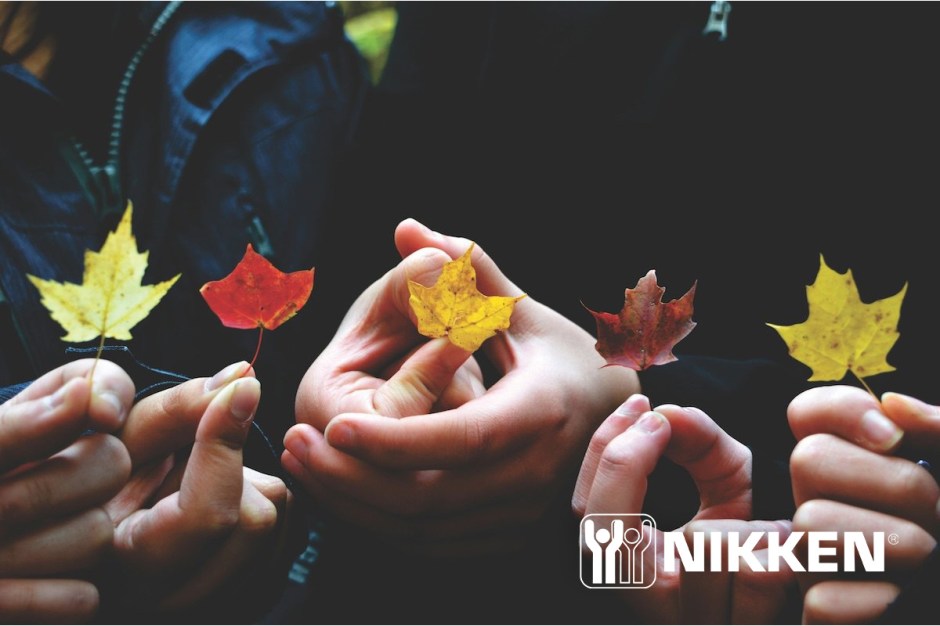
Being Part of a Community Supports Well-Being and Business Growth

The Oxford Dictionary defines “community” as “a group of people living in the same place or having a particular characteristic in common.” The secondary definition is “a feeling of fellowship with others, as a result of sharing common attitudes, interests and goals.” If John Donne was correct and “no man is an island,” then it makes sense that being part of a community supports overall well-being and the group’s business growth.

From the time you’re born, your relationships help you learn to navigate the world. You learn how to interact with others, express yourself, conduct everyday health habits, and be a part of different communities from those around you. Positive social habits can help you build support systems and stay healthier mentally and physically.1

Being an active member of a community creates a sense of belonging, which results in a positive state of mind, important to overall well-being. As the population ages, being part of a community helps deter feelings of isolation and loneliness. Being connected to others also helps prevent a nagging sense of anxiety and stress.

Communities are about giving and taking; the more you do that, the more you share with others and the more likely you are to build meaningful relationships, which can develop quickly among like-minded people who share common interests, shared goals, or experiences. By networking with other community members, you can make new friends, help others, or even find strategic partnerships, opportunities, and clients.2 Being part of a community is essential to well-being but also the key to business growth, regardless of whether you are a business owner or an employee in a school, store, corporation or service provider.

Living with uncertainty has become the norm. This has made it more important than ever to have a strong support network in place.3 One of the main lessons learned with the pandemic is that having a community, even when it is online rather than in person, can help fight feelings of hopelessness and provide a sense of security. Community benefits go two ways: you support others as they support you. Giving engenders a sense of usefulness and receiving produces gratitude.

From now until November 30th, Nikken is offering Black Friday Month specials. Contact your local Nikken Consultant or Nikken Customer Service to find out how to access free ground shipping and up to 20% in discounts.

1 https://www.nih.gov/health-information/your-healthiest-self-wellness-toolkits/social-wellness-toolkit

2, 3 https://gcestrategicconsulting.com/blog/reasons-to-join-community

Why is PiMag® Water Better for Hydration?

Water is a basic nutrient of the human body and critical to human life, yet between 65-75% of us are typically dehydrated, because it’s often overlooked and also because the thirst mechanism can be suppressed or misinterpreted.

Dehydration occurs when our body loses more water than is taken in. It can also affect our body’s mineral salt or electrolyte balance. We lose approximately 68 to 101 fluid ounces (two to three liters) of water a day through every day basic functions such as breathing, perspiring and eliminating waste. 

The human body is composed of about 66 percent water. Our bones are composed of 22 percent water, muscles are 76 percent and blood is 83 percent. Lungs are 90 percent, and our brains are actually 95 percent water. Is it any wonder that water and hydration play such a critical role in a total wellness lifestyle?

Smart Hydration is the practice of enhancing the quality of water to improve mineral absorption, while maintaining optimal pH levels and overall well-being. Our bodies function best when properly hydrated. Inspired by the need to hydrate wherever we are and the desire to help decrease single-use plastic waste, PiMag® water is like naturally alkaline spring water.

PiMag water is based on a discovery in the 1970s by Japanese scientists. Water from an isolated hillside was having a remarkable effect on the growth of local plant life. They studied the environment and found magnetite and calcium in the hillside. Also, the water flowed over silicates, which naturally formed crystals. Replicating the Earth’s magnetic field in natural surroundings where spring water is found, PiMag® water not only purifies but also contains neodymium magnets, the strongest in the family of rare earth magnets.

PiMag water products are designed to convert tap water into spring-like naturally-sourced water that is ionized and alkaline. PiMag watertechnology uses a multi-stage filtration system based on natural materials to purify water by helping to reduce bacteria and contaminants without chemicals.

Spring water is rich in magnesium, potassium, calcium, sodium and other trace minerals. In the PiMag Waterfall®, the addition of mineral stones imbued with copper ions, replicates what is found in natural spring water. Magnetic technology and ceramic elements help improve hydration and absorption. And, PiMag technology is incorporated into our shower systems to help remove chlorine and other contaminants.

Drinking PiMag® water not only helps us to maintain good hydration and therefore, overall well-being, it also helps planet Earth—when we drink filtered water from a PiMag Waterfall®, we decrease and hopefully can eliminate our reliance on single-use plastic-bottled water.

Now through the end of the month, get select PiMag® replacement filters at 20% off! Drink to your health and the health of our planet!

Source: https://www.sagora.com/making-mental-health-a-priority-hydration/

How Important is Movement for Physical Well-Being?

Most of us acknowledge that staying mobile is a necessary part of an active and empowered lifestyle. But can movement also improve overall physical well-being? In reality, movement can help us feel good every day. And best of all, it doesn’t take a gym membership or strenuous exercise—small daily movements, as long as they’re done consistently, may increase mobility and contribute to overall health.

Here’s how movement can positively impact six crucial parts of the body:

•          Muscles: More than 600 muscles in the body make up 40% of the human body’s weight. Movement helps strengthen those muscles, which help the body to maintain stability, balance and coordination.1

•          Bones: Movement helps build more durable, denser bones. Whether you choose resistance training, jogging, walking, hiking or balance training, such as Pilates and yoga, movement supports bone density.2 Movement and exercise may offer protection against osteoporosis and age-related loss of muscle mass, strength, and function, also known as sarcopenia. Improved physical function can reduce the risk of falls and likelihood of serious injury if there is a fall.3

•          Joints: Flexibility and range-of-motion are important to keep the joints functioning smoothly. Stretching and being mindful of posture and how daily tasks are performed can help increase coordination and balance.

•          Brain: Researchers have made the connection between brain power and movement. As some people age and lose mobility, their cognitive functions deteriorate as well. Daily movement helps rejuvenate the structures within the brain that are linked to cognition. In rehab facilities, even those who are wheelchair bound are provided ways to “cycle” their arms, because movement is not limited to the legs!

•          Heart: Keep the heart pumping at optimal levels by moving every day. It used to be called aerobics and now it’s cardio. Increasing your heartrate through any form of cardiovascular activity done daily can help lower blood pressure, boost levels of good cholesterol and improve blood flow (circulation).4

•          Lungs: To breathe is to live, so keeping the lungs healthy is critical to physical well-being. Movement helps the lungs to improve cardiorespiratory endurance. Walking at a brisk pace is an easy way to help the lungs. And, mindfully inhaling and exhaling deeply is a small but healthy movement in and of itself!

Movement can help you feel better, look better and live better—it’s a natural way to lift your mood and spirits, to sleep better and to connect with nature and the people around you!

1, 2 https://medschool.cuanschutz.edu/fitness/blog/blogs-just-move–the-six-benefits-of-everyday-movement

3 https://www.nia.nih.gov/health/exercise-and-physical-activity/health-benefits-exercise-and-physical-activity

4 https://www.heart.org/en/healthy-living/fitness/fitness-basics/why-is-physical-activity-so-important-for-health-and-wellbeing

Can Magnets Support Mental Health?

Overall well-being includes mental health, not just physical health. When it comes to physical health, much of the science is black and white; whereas with mental health, there are more gray areas. While medication and psychotherapy are often seen as the end-all-be-all treatments for depression and other mental health conditions, magnets can serve as alternative ways to regulate neural activity: Transcranial magnetic stimulation (TMS) is an advanced method of relieving erratic brain activity that can cause poor mental health.1

Approved by the U.S. Food and Drug Administration (FDA), TMS usually is used only when other depression treatments haven’t been effective. The FDA also approved TMS for obsessive-compulsive disorder (OCD), migraines and to help people stop smoking when standard treatments haven’t worked well. Research continues into other potential uses for TMS, including epilepsy.2

When used for depression, OCD and to stop smoking, this treatment involves delivering repeated magnetic pulses, so it’s called repetitive TMS or rTMS. During an rTMS session for depression, an electromagnetic coil is placed against the scalp of the head. This coil delivers magnetic pulses that stimulate nerve cells in the region of the brain involved in mood control and depression. It’s thought to activate regions of the brain that have decreased activity during depression.3

The difference between rTMS and deep TMS has to do with the type of coil used. The deep TMS coil stimulates deeper and wider areas of the brain, compared with rTMS. Deep TMS coils have been FDA-approved for OCD and to stop smoking. Although the biology of why TMS works isn’t completely understood, the stimulation appears to affect how the brain is working. It seems to ease depression symptoms and improve mood.4

According to the Cleveland Clinic, the recipient of TMS is fully aware of what’s happening during the entire treatment and can talk, read or nap. The coil delivers stimulation for approximately four seconds, then stops for 15 seconds and then resumes. This is repeated about 75 times per session. During the stimulation, the patient may hear a tapping sound as well as feel the sensation of being tapped on the scalp. Phase one can be time-consuming, with 30 treatments being recommended over a six-week period of time. During the second or maintenance phase, the frequency decreases according to each case, varying from once every other week to once a month or every two months.5

Magnets and magnetic fields are part of nature, and nature continues to be a primary source of solutions for overall well-being. The more we learn, the more we can practice empowered living.

1 https://www.brainsway.com/knowledge-center/the-truth-about-magnet-therapy-aka-tms-therapy/

2, 3, 4 https://www.mayoclinic.org/tests-procedures/transcranial-magnetic-stimulation/about/pac-20384625 5 https://health.clevelandclinic.org/cant-conquer-depression-how-magnets-can-help

Stress Awareness: Sometimes a Hug Does the Trick

We all experience stress at some point every day; however, if we’re aware of it, we can actually do something about it. Some of the signs that stress levels are too high include: pain or tension in the head, chest, stomach or muscles, digestive issues, fluctuating heart rate and blood pressure, poor sleep, jaw pain, appetite changes, mood swings, difficulty focusing and feeling overwhelmed.1

Exercise, healthier eating, and getting enough sleep all have health benefits. One benefit is fewer symptoms of stress. Doing things you enjoy can help balance out stressful times. Mental Health America says that laughter, as well as positive feelings from your activities or relationships, helps beat stress.2

Talking to someone you trust helps lower stress levels. Keeping it bottled up can lead to increasing stress. Simple actions like petting a dog or going for a walk outdoors can help decrease stress. This is because cortisol levels are heightened during times of stress, and lowering them has a calming effect. Cortisol is known as the stress hormone.

A hug is a sign of affection and a way to transmit positive feelings. One study, published in the journal PLOS One, demonstrated that there are actual health benefits to hugging, including reduced blood pressure, decreased inflammation, lower risk of infection and better overall well-being.3

Just as cortisol levels increase when we are under stress, oxytocin, the feel-good hormone, is released when we receive or give a hug. Cortisol decreases during a hug. But how long does a hug have to be to have beneficial effects?

A 2021 study investigated how people reacted to both the duration of hugs and how the hugs transpired (either criss-crossed with arms or neck-waist style). The results were published in the peer-reviewed journal Acta Psychologica, showing that hugs lasting five to 10 seconds were felt to be more favorable than hugs lasting only a second.4 The researchers inferred that longer hugs are more pleasant than very short ones, and criss-cross hugs are more common than neck-waist embraces.

Those who have been with Nikken for a long time may have been fortunate enough to have met our Founder Isamu Masuda. Mr. Masuda was known for his humility and affection for everyone, and often hugged people upon meeting and departing. His hugs were of the criss-cross version, and known as “heart-to-heart.” Over the years, this became known as the “Masuda Hug.” The Masuda Hug continues on everywhere there is a Nikken event or celebration. It has become a cherished part of the Nikken feel-good lifestyle.

The next time you’re aware that stress is getting to you, try to be kind to yourself. See if you can find someone to hug! You might be able to reap the benefits within 10 seconds!

1 https://www.webmd.com/balance/stress-management/stress-level-too-high

2 https://drexelmedicine.org/blog/overview/stress-relief-tips-for-stress-awareness-month-and-beyond/

3, 4 https://apple.news/A08s2oe2ZSVSbwbzJveGY0A

Meaningful Activities Help Overall Well-Being

Buttoning a shirt. Tying shoelaces or a necktie. Scratching that hard-to-reach spot on the back. These are some of the things we may take for granted but are actually “meaningful activities” because they are everyday aspects of Active Wellness and impact the quality of our lives. Sometimes a life event might transform these everyday activities into goals.  Beginning in 2010, that’s what World Occupational Therapy Day celebrates every year on October 27: helping people across their lifespans to do the things they want and need to do through the therapeutic use of daily activities.1

We might not think about these daily activities until they’re hard to do. Finding ways for us to do them is what occupational therapists are concerned with.2 An occupational therapist will talk with us about our needs and goals. They’ll do tests to find out our strengths and challenges, then come up with a plan to reach our goals. This will include exercises and activities to strengthen our skills. While the word “occupation” usually means a job or profession, it can also refer to daily activities that let us live independently and bring meaning to our lives.

The World Federation of Occupational Therapists (WFOT) is the international voice of the profession and globally comprises 101 national organizations. World Occupational Therapy Day is the opportunity to promote their holistic approach to maintaining mobility throughout life. Occupational therapists focus on adapting the environment and/or task to fit the person, who is considered an integral part of the therapy team. It is an evidence-based practice deeply rooted in science.3

This year’s theme for World Occupational Therapy Day is “Belong. Be You.”4 OTs (as occupational therapists are known for short) do just that: help us belong in our Global Wellness Community by being ourselves, as purposeful participants in Active Wellness.

1 https://www.aota.org/conference-events/otmonth/what-is-ot.aspx

2, 3 https://www.webmd.com/a-to-z-guides/what-is-an-occupational-therapist 4 https://wfot.org/world-occupational-therapy-day