Why Ecocert is a Big Deal

When something is certified by Ecocert, it means the product has met the strict standards set for its specific category. Ecocert is an inspection and certification body established in France in 1991 by agronomists aware of the need to develop environmentally friendly agriculture and the importance of recognizing those committed to sustainable development in production.

Product categories open for certification include natural and organic cosmetics, natural and organic home perfumes, natural cleaning products, fair trade, ecological outdoor areas, organic textiles, eco-sustainable golf course, reforestation and solidarity, organic and ecological spa, ecological and recycled textiles, climate commitment and biodiversity commitment.

Now an international network dedicated to helping people and their environment, Ecocert is affiliated in 26 countries:

  • Europe: France, Germany, Portugal, Romania, Serbia, Spain, Switzerland and Turkey
  • Africa: Burkina Faso, Madagascar, Morocco, South Africa and Tunisia
  • Asia: China, India, Japan, Singapore and South Korea
  • Americas: Argentina, Brazil, Canada, Colombia, Chile, Mexico, Peru, United States

Still very involved in promoting organic farming, Ecocert today works with French and international institutions in supporting project development. By winning the confidence of professionals and consumers, Ecocert has become a benchmark in organic certification worldwide.

In the EU, Ecocert is accredited by the Cofrac (French Accreditation Committee). In the USA, Ecocert is accredited by the USDA (US Department of Agriculture) for the National Organic Program (NOP) and in Japan, Ecocert is accredited by the MAFF (Agricultural Department) for the Japanese Agricultural Standard (JAS)

Companies voluntarily request Ecocert certification to prove:

  • control and traceability throughout the supply chain.
  • commitment to environmental protection.
  • integrity of raw materials and ingredients.
  • high standards within the specific industry, e.g., food and/or cosmetics.

True Elements® Marine Organic Skin Care is certified by Ecocert, a distinction that very few products — even those labeled as “organic” — can claim. A complete line of products that support the Active Wellness lifestyle, True Elements® skin care products are derived from various seaweeds and abundant in natural minerals that are well absorbed by skin. The entire line is formulated with a combination of ingredients that works synergistically to offer remarkable benefits. True Elements® is synonymous with skin care that is safe to use and made with organic ingredients from sustainable sources.

In a Nutshell, Eat Nuts for Health

According to the American Heart Association (AHA), cardiovascular disease (CVD) is the leading cause of death globally. Approximately 17.3 million deaths annually are attributed to a cardiovascular incident and the AHA projects that these numbers will increase each year in the coming decades. Lifestyle factors such as diet and exercise play a large role in maintaining heart health, but genetics can also influence risk factors such as blood pressure and cholesterol levels.

In the largest study of its kind, scientists from Dana-Farber Cancer Institute, Brigham and Women’s Hospital, and the Harvard School of Public Health found that people who ate a handful of nuts daily were 20 percent less likely to die from any cause over a 30-year period than those who didn’t consume nuts. Their report, which was published in the New England Journal of Medicine, also found that those who ate nuts regularly were more slender than those who didn’t.

“The most obvious benefit was a reduction of 29 percent in deaths from heart disease,” says Charles S. Fuchs, MD, MPH, director of the Gastrointestinal Cancer Center at Dana-Farber, senior author of the report. The reduction in mortality was similar both for peanuts and tree nuts, such as walnuts, hazelnuts, almonds, Brazil nuts, cashews, macadamias, pecans, pistachios and pine nuts.

Higher nut consumption also has been linked to reductions in cholesterol levels, oxidative stress, inflammation, obesity and insulin resistance. The Nurses’ Health Study provided data on 76,464 women between 1980 and 2010, while the Health Professionals’ Follow-up Study yielded data on 42,498 men from 1986 to 2010. Participants filled out food questionnaires every two to four years and were asked to estimate how often they consumed one ounce servings of nuts.

Dr. Ying Bao, MD, ScD of Brigham and Women’s hospital and first author of the report explains that “in all these analyses, the more nuts people ate, the less likely they were to die over the 30 -year follow-up period. “Those who ate nuts less than once a week had a seven percent reduction in mortality; once a week, 11 percent reduction; two to four times a week, 13 percent reduction; five to six times per week, 15 percent reduction, and seven or more times a week, a 20 percent reduction in death rate.”

Based on these and other smaller reports, the U.S. Food and Drug Administration has concluded that eating 1.5 ounces per day of most nuts “may reduce the risk of heart disease.” So if you like nuts and have avoided them because they’re high in calories and fat, you can rest assured that a handful of nuts every day is good for you. They’re delicious, help give you energy and are perfect for an Active Wellness regimen.


Why go organic?

No one would ingest pesticides given a choice for cleaner food, right? So why doesn’t everyone choose organic food? The main concern with purchasing organic food is cost, because organic farming practices are more expensive than conventional approaches.

“Organic” refers to the way farmers grow and process fruit, vegetables, grains, dairy products and meat. Organic farming meets environmental and sustainability goals to:

  • Enhance soil and water quality.
  • Reduce pollution.
  • Provide safe, healthy livestock habitats.
  • Enable natural livestock behavior.
  • Promote a self-sustaining cycle of resources on a farm.

Organic farming adheres to a disciplined commitment to growing food and livestock that is not only safe to ingest but is kind to planet Earth. Take a look at what is not permitted in organic farming:

  • Synthetic fertilizers to add nutrients to the soil
  • Sewage sludge as fertilizer
  • Most synthetic pesticides for pest control
  • Irradiation to preserve food or to eliminate disease or pests
  • Genetic engineering, used to improve disease or pest resistance to improve crop yields
  • Antibiotics or growth hormones for livestock

Instead, organic farming practices may include:

  • Plant waste left on fields (known as green manure) livestock manure or compost to improve soil quality.
  • Crop rotation to preserve soil quality and to interrupt cycles of pests or disease.
  • Mulch to control weeds.
  • Predatory insects or insect traps to control pests.
  • Certain natural pesticides and a few synthetic pesticides, used only as a last resort in coordination with a U.S. Department of Agriculture (USDA) organic certifying agent.
  • Healthy living conditions and access to the outdoors for livestock.
  • Pasture feeding for at least 30 percent of livestock’s nutritional needs during grazing season.
  • Organic foods for animals.

Whether you decide to go organic or not with your fresh foods, you can rest assured that with the NikkenWellness™ nutritional supplements designed to promote Active Wellness, you’re getting only organic ingredients. We’re committed to helping you live with optimal health while being kind to planet Earth.

Fighting Toxins is a Full-Time Job

Realistically, no matter how careful we are, we ingest some toxins every day through the food we eat, the water we drink or bathe in, the air we breathe and the personal care products we use. These toxins end up in our liver, kidneys, fatty tissue and lymphatic system. When too many toxins stay in the body and are not flushed out, we become incapable of absorbing and using the nutrients we need for Active Wellness.

Disorders from a sluggish liver are so common that the market is flooded with liver cleanses—some are natural, some are medicinal, some take a couple of days, some are long-term. What they have in common is that they’ll make you uncomfortable in various ways and involve complicated steps to take. You may need to drink gallons of multiple concoctions and stay close to a bathroom.

Whether you go to a health food store, drug store, supermarket or specialty juice shop, commercially sold liver cleanses are time consuming and expensive. You may need to purchase 20 or more herbal ingredients to mix and brew. Or chop, peel, grind and juice a dozen fruit and vegetables. You could choose the “grab and drink” cleanses but that’ll cost you even more. And once you’re done with those cleanse and detox routines, your body reverts back to whatever dysfunction it had: abdominal bloat, digestion problems, heartburn, itchy skin and unexplained weight gain.

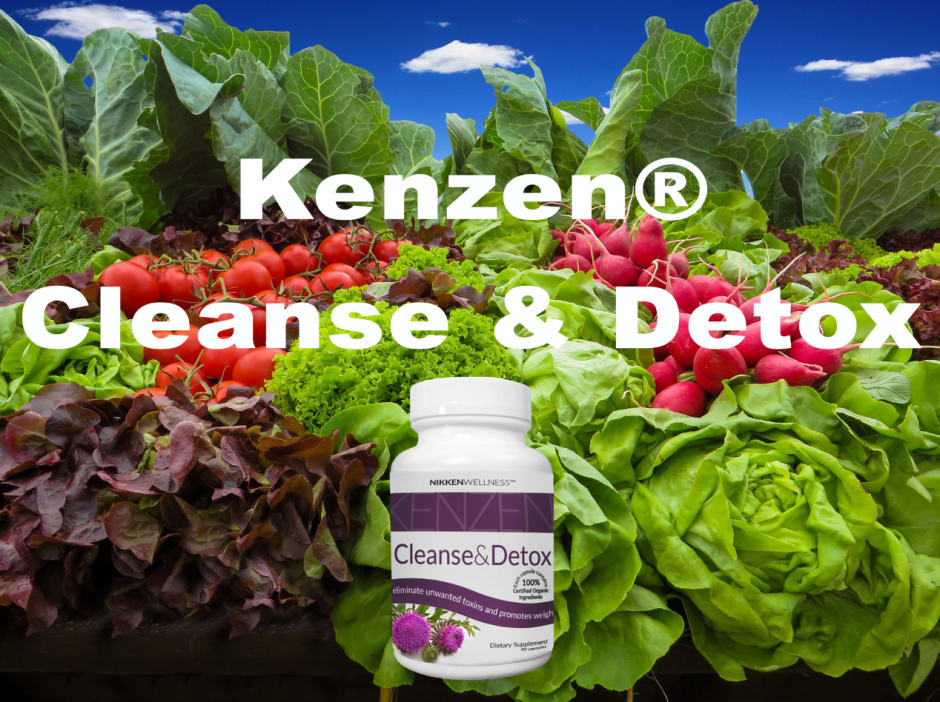
Kenzen® Cleanse & Detox has bragging rights because it’s so easy to incorporate into a healthy regimen. It’s a gluten-free, organic nutritional supplement that lives up to its name by promoting a healthy way to help cleanse and detox the liver while assisting metabolism and supporting weight management.* Made with our Proprietary Synergistic Cleanse & Detox Complex, the NikkenWellness dietary supplement is 100 percent organic. It is naturally high in compounds that aid liver function* such as organic Roasted Chicory Root, Milk Thistle extract, Turmeric extract, Bupleurum extract, Shisandra and Ashwaghanda. Each of these organic ingredients serves multiple purposes on its own, but together, work synergistically to produce optimal results. Simply take three capsules every day 20 minutes before a meal. No fuss, no muss.

  • These statements have not been evaluated by the Food and Drug Administration. This product is not intended to diagnose, treat, cure or prevent any disease.