What’s Real and What’s Not

We live in a world of blurred lines—between real and faux, natural and artificial, original and altered—and genetically modified organisms (GMOs). Whether we choose to or not, chances are high that we’ve all ingested GMOs at some time.

The World Health Organization (WHO) defines genetically modified organisms (GMOs) as plants, animals or microorganisms with genetic material that has been altered in ways that are not natural (such as mating or natural recombination). The technology used in genetic modification is known as “modern biotechnology “ or “gene technology” and sometimes as “recombinant DNA technology” or “genetic engineering.”

The WHO cites that “one of the objectives for developing plants based on GMOs is to improve crop protection. The GM crops currently on the market are mainly aimed at an increased level of crop protection through the introduction of resistance against plant diseases caused by insects or viruses or through increased tolerance towards herbicides.”

GM foods also were developed to create food with greater nutritional value and durability as well as a lower price, thus enabling the world to feed the starving masses.

Unfortunately, this ideal has not become reality. There is some understanding of the purpose for creating GMOs but worries still run high, especially among consumers who conscientiously make healthy food choices when grocery shopping.

The three main issues concerning GMOs and human health are allergic reactions, gene transfer and outcrossing. Some questions remain unanswered.

  • What happens when genes from allergenic organisms are transferred to non-allergenic ones? According to the WHO, no known allergic reactions have been seen. Does that mean there will not be allergic reactions in the future?
  • What if the transferred genetic material adversely affects human health? What if antibiotic resistant genes, used as markers when creating GMOs were transferred? The probability of transfer is low, according to the WHO.
  • Outcrossing is the migration of genes from GM plants into conventional crops or related species in the wild. What are the direct and indirect effects on food safety? Cases have been reported where GM crops approved for animal feed or industrial use were detected at low levels in the products intended for human consumption.

Opponents of GM crops argue that sustainable agriculture and biodiversity benefit most from the use of a rich variety of crops. They fear that as a result of the interest of the chemical industry in seed markets, the strains used by farmers may be reduced mainly to GM crops. For example, with the development of crops that are resistant against insect pests and tolerant of certain herbicides, the exclusive use of herbicide-tolerant GM crops would make the farmer dependent on these chemicals, placing the control of agricultural development in the virtual hands of the chemical industry.

If you practice Active Wellness and want to stay away from GMOs, eat only fresh, whole, unprocessed foods marked “certified organic” or “USDA organic” and only consume organic nutritional supplements. There are no blurred lines with NikkenWellness products.
Go Mediterranean for Good Nutrition and Health

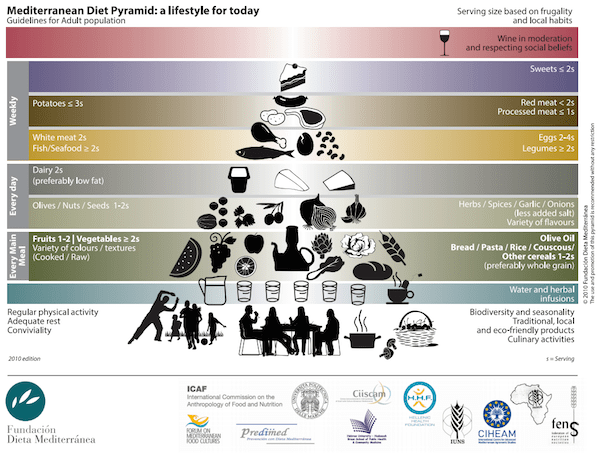
March is National Nutrition Month®, a nutrition education and information campaign created by the Academy of Nutrition and Dietetics to remind people to return to the basics of healthy eating. Although the right diet depends on each individual’s personal needs and state of health, the Mediterranean diet is one that is often recommended.

Eating Mediterranean style is actually easy and best of all, delicious. Here are 10 basics:

  1. Eat lots of fruits, vegetables, legumes and nuts. Fruits and vegetables contain vitamins, minerals and fiber. They have a lot of water content and help to provide a feeling of fullness. Preferably, eat locally grown fruits and vegetables that retain the highest nutrient content.
  2. Choose olive oil as your main source of added fat. It’s rich in vitamin E, beta-carotenes and monounsaturated fat.
  3. Incorporate healthful grains into your everyday diet. Carbohydrates have gotten a lot of bad press, but in the Mediterranean diet, moderate consumption of whole grains are a source of energy for a life of Active Wellness.
  4. Consume moderate amounts of dairy products, especially fermented ones such as yogurt, as it is known to contain live micro-organisms that can help improve the balance of good gut bacteria.
  5. Be sure to incorporate fish into your meal plans. Eat it at least once or twice a week. Cold water fish are known to contain omega fatty acids, beneficial for heart health.
  6. Eat eggs. They’re perfect alternatives to meat, high in quality proteins and fat. Once given a bad rap, eggs are now considered a complete food.
  7. Replace baked goods and other desserts with added sugar with fresh fruit. Eating fruit, such as dates, for dessert is common not only with Mediterranean cultures but also in Asian and African traditions.
  8. More than any other beverages, drink water. Water truly sustains healthy living. The Mediterranean diet also incorporates red wine as a healthful beverage, but only in moderation. Nutritionists recommend limiting consumption to no more than one portion daily for women and two for men.
  9. Eat red meat in moderation. If possible, use meat in combination with vegetables, such as in stews. Choose lean meats for their protein content and iron.
  10. Don’t eat processed foods. Processing removes valuable nutrients and enzymes, so you end up with empty calories.

With NikkenWellness organic nutritional supplements to fill in dietary gaps, it’s even easier to get back to the basics of healthy eating!

Sources: dietamediterranea.com, eatright.org

Stevia by any other name would taste as sweet

On our Active Wellness blog, we’ve discussed the harmful effects of sugar consumption. We’ve also shown the hard-to-access monk fruit as a wonderful zero-calorie sweetener. But what can we use as a sweetener that doesn’t have harmful effects and is easily available?

Given the dual epidemics of diabetes and obesity, it’s a good thing that there’s a natural sweetener that has shown virtually no side effects with long-term usage. Unlike artificial sweeteners, stevia has the benefit of zero calories but doesn’t produce adverse effects.

The raw leaves of the stevia plant can be 20 to 40 times sweeter than cane sugar, while the powdered derivative is 200 to 300 times sweeter! What this means is that a little bit of stevia goes a long way. For example, a single teaspoon of stevia extract may have the same sweetening ability as an entire cup of sugar. This ratio varies between brands.

The active compounds of stevia are steviol glycodes (mainly stevioside and rebaudioside). Studies have shown that stevia seems to help in balancing blood sugar levels. Usage of stevia by diabetics has shown significant results. In one of the studies, type 2 diabetic patients took either one gram of stevioside with a meal or one gram of maize starch. The group taking stevioside had a reduction in blood sugar by about 18 percent. 1

Does stevia taste as good as sugar when added to beverages and food? It depends: Some are more concentrated, some contain filler, some have artificial flavoring and some are extremely diluted. Some stevia extracts may also leave a bitter after-taste. And, because stevia is so intensely sweet, it’s important to use it sparingly when replacing the sugar that is generally called for in baking. It may take a bit of trial and error before you decide on the form (liquid or powder), the substitution ratio (sugar vs. stevia) and your preferred brand.

Kenzen Ten4® Energy Drink Mix uses high quality stevia extract from organic stevia leaves as a sweetener, in addition to the mild sweet taste of the organic brown rice solids. Drink to your health!

  1. Soren Gregersen, Per B Jeppesen, Jens J Holst, Kjeld Hermansen, Antihyperglycemic effects of stevioside in type 2 diabetic subjects, Metabolism Clinical and Experimental Jan 2004 Vol 53, Issue 1, Pages 73-76.

Mushrooms may help us lose weight and much more…

Mushrooms are a nutrient-dense food that are low-calorie, and when cooked or grilled, take on the consistency of some meat. Studies find that substituting mushrooms for meat may help us lose weight. Eating mushrooms as part of a meal several times a week is linked to a healthy body weight, reduced waist circumference and better overall health.1

But mushrooms provide far more benefits than just promoting weight loss. Mushrooms have been part of the Asian herbal tradition for thousands of years—practitioners of Chinese medicine have used a variety of mushrooms to prevent and address a host of physical and mental conditions. Much research has been conducted in the past decades.

Since there are an estimated 14,000 different species of mushrooms or “macrofungus,” research indicates that scientists may only know about 10 percent of them. They differ in benefits and nutrient count, but they’re mostly low in carbs, fat, sodium and sugar, and high in antioxidants, B vitamins, copper and selenium. Mushrooms are 90 percent water and therefore low in calories.

Scientists and health practitioners have taken a particular interest in the anti-inflammatory and immune-boosting traits of certain species of mushrooms.

The global appetite for herbal alternatives to chemical drugs has grown by leaps and bounds—annual sales of these products account for a big chunk of the wider market for nutritional supplements that is valued at $50 billion and seems impervious to the economic instability that has affected other business sectors. 2

Lab studies have shown various immune-enhancing and anti-aging effects with the Reishi, Shiitake, Cordyceps, Maitake and Oyster mushrooms.4 In addition to these five species, Kenzen® Immunity contains nine others. In fact Kenzen® Immunity contains six strains exclusive to Nikken, developed for the highest concentration of beneficial compounds. It would be virtually impossible to include such a high variety of mushrooms in a regular diet, so Nikken has formulated this superior nutritional supplement in order to provide a wide-spectrum range of natural biochemicals that support Active Wellness.

  1. http://healthsomeness.com/mushrooms-fattening-weight-loss
  2. A Global Look at Supplements on the Rise, 10 March 2014 http://www.nutringredients.com
  3. http://www.ncbi.nlm.nih.gov/pmc/articles
  4. https://thewholejourney.com/5-mushrooms-that-boost-immunity-and-fight- cancer/

When do you eat your biggest meal of the day?

In North America, there’s a good chance you eat your biggest meal at dinner. This habit is based on tradition where the family convenes after school and work to enjoy a hearty meal together. Unfortunately, this is not the healthiest way to eat. Here’s why. 

Katherine Tallmade, Registered Dietician and author of Diet Simple: 195 Mental Tricks, Substitutions, Habits & Inspirations, comments that “more and more research is confirming the importance of eating lighter at night and heavier during the day — for health, not just weight.”1 She goes on to explain that various studies have shown that even when the same number of calories are consumed, weight loss (or gain) may vary according to the time food is eaten. When more food is eaten during breakfast or lunch rather than at dinner, more weight is lost or a healthy weight is maintained.

Ms. Tallmade’s opinion is congruent with studies being presented by researchers in the field of nutrition as well as weight management/obesity. For example, a study published in the American Journal of Clinical Nutrition contends that a body at rest overnight doesn’t need as many calories. Therefore, eating a big meal in the evening will result in fat storage. The researchers recommend eating a big breakfast and a medium lunch when a person is most active during the day so calories eaten will be used for energy. They also found that eating a substantial breakfast helped minimize impulsive snacking, helping to sustain a weight reduction program.2

John De Castro, psychology professor and researcher of eating habits, suggests that “intake in the morning of low-density foods is satiating and can reduce the amount ingested over the rest of the day to such an extent that the total amount ingested for the day is less overall. It appears that people who eat at least two thirds of their calories before dinner will consume less calories for the whole day than people who eat the majority of their calories at night.” 3

At Nikken, we help you embrace Active Wellness with organic nutritional supplements that enable you to stay on a healthy eating regimen over the long term. Isn’t your health worth it?

  1. http://katherinetallmadge.com
  2. Schlundt DG, Hill JO, Sbrocco JP, et al. The role of breakfast in the treatment of obesity: a randomized clinical trial. Am J Clin Nutr. 1992;55(3):645-651.
  3. De Castro JM. The time of day of food intake influences overall intake in humans. J Nutr. 2004;134(1):104-111.


The Healthiest Natural Sweetener

With obesity at an all-time high, finding healthier alternatives to sugar has become an increasingly important priority for many people. The main concern is that sugar substitutes and artificial sweeteners tend to be filled with harmful chemicals and ingredients, and some still contain calories.

According to famed nutritionist and chiropractor Dr. Josh Axe, “Monk fruit has been celebrated as a revolutionary way to sweeten foods and drinks without the harmful effects of traditional sugar and sugar substitutes.” 1

Here’s why: Monk fruit contains powerful antioxidants called mogrosides, which are metabolized differently by the body than natural sugars. In effect, monk fruit extract provides the sweet taste people crave but none of the typical side effects. That means no spike in blood sugar levels and therefore, no crash. For this reason, monk fruit is considered a zero-calorie fruit. This unusual characteristic makes monk fruit an ideal sugar replacement, especially since its compounds, when extracted, are 300 to 400 times sweeter than cane sugar. It’s practically a no-brainer that using monk fruit as a sweetener can help those already suffering from obesity and/or diabetes.

So why isn’t this healthy natural sweetener more commonly used in weight-management and diabetic-friendly products? Extraction of mogrosides is complicated, making it an expensive ingredient. In addition, monk fruit spoils very quickly after harvesting and is grown primarily in southern China. You won’t find it in supermarkets any time soon; however, you can find dried monk fruit for purchase in ethnic markets. The western world only discovered monk fruit in the 20th century, and it has only been in the last 20 years that major international attention has been drawn to it.

Where you will find monk fruit as a main ingredient is in the newly formulated Kenzen Vital Balance® Meal Replacement Mix in both vanilla and chocolate flavors. Nikken remains a pioneer in the industry and dedicated to using only the healthiest ingredients in our nutritional supplements designed for Active Wellness.

1          https://draxe.com/monk-fruit/

A Better Source of Protein for Long-term Health

The western world tends to associate protein with animal sources: meat, poultry and seafood. In the eastern world, legumes have long been key sources of protein: soy, garbanzo, lentil, bean sprouts, pea sprouts, adzuki bean and so on. The largest study to ever look at the effects of different sources of protein has found that eating plenty of plant protein was associated with a lower risk of premature death.

Mingyang Song, MD, ScD, the study’s author, says, “Overall, our findings support the importance of the sources of dietary protein for long-term health outcomes.” A research fellow at Massachusetts General Hospital, she explains, “While previous studies have primarily focused on the overall amount of protein intake—which is important—from a broad dietary perspective, the particular foods that people consume to get protein are equally important. Our findings also have public health implications and can help refine current dietary recommendations about protein intake, in light of the fact that it is not only the amount of protein but the specific food source that is critical for long-term health.”

The study was published in August 2016 in JAMA Internal Medicine and analyzed comprehensive health data on more than 170,000 participants since the 1980s. Participants completed overall health questionnaires every two years and provided information on their dietary intake every four years. The researchers found that a high consumption of protein from animal sources combined with at least one factor associated with an unhealthy lifestyle, increased the risk of mortality. Unhealthy lifestyle factors included being obese or underweight, as well as behaviors such as heavy drinking, smoking, or not being physically active. In contrast, high consumption of protein from plant sources was associated with a lower mortality rate.

Kenzen Vital Balance® Meal Replacement Mix in Vanilla or Chocolate flavors is formulated with naturally-sourced protein from organic pea, organic rice and organic chlorella—no saturated fat and calories associated with animal protein. Whether you’re vegan, vegetarian or just health-conscious, KVB helps you put plant protein into your diet for health and Active Wellness.

The Secret to Health and Longevity: “hara hachi bu”

According to recent estimates by the U.S. Census Bureau, there are approximately 80,000 centenarians in the United States, which equates to about 25 persons who are 100 years or older per 100,000 population. On the small island of Okinawa, centenarian ratios are considered to be most likely the world’s highest with 50 plus per 100,000. So what’s their secret?

Longevity is complex, but in a nutshell, good genes and healthy living are the prerequisites. Researchers who participated in the Okinawa Centenarian Study were able to identify so called “human longevity genes” but also isolated non-genetic advantages for the ideal combination. Non-genetic advantages include the traditional Okinawan dietary habits, physical activity, psychological and social aspects. Their study was not widely translated but in recent years, an increasing number of western scientists have taken an interest in the phenomenal longevity of the islanders, most specifically Dr. Bradley Willcox and Dr. Craig Willcox, co-principal investigators. Led by Dr. Makoto Suzuki, principal investigator, the Okinawa Centenarian Study is now in its 28th year, one of the longest running centenarian studies in the world.

We can’t change our genes but we can certainly emulate the Okinawan diet and lifestyle. The traditional Okinawan diet emphasizes vegetables, whole grains, fruits, legumes (soy) and fish, with limited amounts of lean meats and monounsaturated fats and omega 3s. There is a notable lack of processed or fast food and desserts.

Okinawans take this healthy eating a step further with the cultural habit of “hara hachi bu.” This means “eat until you are 80 percent full.” When you think about it, it is another way of implementing portion control. Since it takes about 20-30 minutes for the stomach to register that it’s full, if we eat to 100 percent fullness, we’ve actually overdone it. Many of us are too familiar with that uncomfortable feeling of being stuffed. This is the result of eating until the stomach is stretched to capacity. If we practice “hara hachi bu,” we would be giving our stomachs time to feel full.

Most of us want to live long lives, but how many of us are willing to exercise not only our bodies but our will power as well? It seems such a small price to pay for a long and healthy life of Active Wellness.

Is Sugar as Deadly as Cigarettes?

We don’t have to go looking for added sugar. It’s practically everywhere and comes in many forms, such as sucrose, maple syrup, fructose, molasses, brown sugar, cane sugar, honey and high fructose corn syrup.  You can and will find added sugar in desserts, candy, sodas, and covertly in processed foods such as ketchup, canned sauces, cereals, energy bars, energy drinks, bread and so much more. If you read Gary Taube’s latest book, “The Case Against Sugar,” you’ll see why a sugar habit can easily be compared to a nicotine habit.

Gary Taube is the co-founder of the Nutrition Science Initiative. In his 2010 best seller, “Why We Get Fat,” he argued that carbohydrates like grains and starchy vegetables were the true culprits behind the obesity epidemic. His new book, “The Case Against Sugar” takes this argument a step further by zeroing in on the harmful effects of sugar.

In a recent article he wrote for the Los Angeles Times, Mr. Taube posited, “How often can we smoke cigarettes without doing at least some harm to our health? Doctors these days answer ‘never,’ thus redefining the concept of moderation. We don’t say smoking too much causes lung cancer, although that’s surely true. We say smoking does. The same hard line may also make sense for sugar. If it takes 20 years of either smoking cigarettes or consuming sugar for the consequences to appear, how can we know whether we’ve smoked or consumed too much before it’s too late? Isn’t it more reasonable to decide early in Iife (or early in parenting) that not too much is as little as possible?”

Research continues to grow with regard to the evils of sugar. Evidence is being amassed that may soon prove that sugar is the cause of metabolic syndrome, a disorder that afflicts 75 million Americans, as cited by the Centers for Disease Control and Prevention. Metabolic syndrome is the group of risk factors that raises the risk for heart disease, diabetes and stroke.

Risk factors include traits, conditions and habits that increase the chances of developing a disease. One major habit contributing to metabolic syndrome is the consumption of sugar that results in insulin resistance. This occurs when the pancreas responds to high volumes of sugar by producing more insulin and the cells that normally use glucose for power, fail to respond. The vicious cycle often ends up in type 2 diabetes.

If we understand why not smoking is important to good health, we can see why not consuming added sugar may similarly decrease our risk factors. At Nikken, we push for the Active Wellness lifestyle and pledge to improve our NikkenWellness products as evolving science informs us. That’s why Kenzen Ten4® Energy Drink Mix has no added sugar. Consumers can add their own sweetener, if they please, but our commitment is to promote Active Wellness through healthy eating, drinking and sleeping.

Have a Happy & Prosperous New Year

As I reflect back on 2016, I am heartened by the successful transformation that continues to take place with Nikken. It is not by luck that our company has weathered the many global changes—economic, political and regulatory—since its humble beginnings in 1975. As we move forward into 2017, we will focus on two main aspects of our business:

  • A product line that is unique, wonderful and organic.
  • The direct sales industry‘s simplest compensation plan.

Our product line has evolved over the years, not only to fulfill the needs and preferences of our Nikken Consultants and Customers, but also to reveal the latest developments in organic food science and our own patented DynaFlux® magnetic technology. These include NikkenWellness norganic nutritional supplements, True Elements® Marine Organic Skin Care and products with sleep and magnetic technology.

In 2017, we will continue developing our consumables—they will contain the highest quality organic ingredients and be stripped of anything that may be detrimental to the pursuit of Active Wellness. We will be the standard bearers for Active Wellness and healthy weight management.

Our compensation plan will be even simpler to understand and execute. Our Nikken Consultants will find it easier to reap the rewards of a home-based part-time income with flexible hours, extra cash and a business opportunity that may lead to a second career. Anyone who makes the commitment to retail product and sponsor business builders will succeed as a Nikken entrepreneur.

Choosing Nikken is the smart move to improve health and earn money. I look forward to a prosperous 2017 and wish you all the best in each of the 5 Pillars of Health®.

Kurt H. Fulle                                                                                                                                                       CEO & Chairman of the Board

Kurt_profile.jpg