Embracing Spring Cleaning and Warmer Weather

Spring is here and that usually means warmer weather, more sunshine and frequent but short showers—all helping flowers to bloom and foliage to grow. That adds up to more outdoor activities, such as hiking, running, swimming, yard work and picnics. While outdoors, we’re breathing in a mixture of pollen, clean and polluted air, and depending on the location, possibly industrial waste.

Spring is also a time of renewal and part of that is the universal embrace of spring cleaning. In fact, in many parts of Asia, spring cleaning involves not only one’s house but also the gravesites of ancestors. It’s a way to celebrate the gifts that the spring season brings to the living and remembrance and honor to those who have gone by keeping their resting places swept and clean.

The average American spends 80% of their lives indoors, where the air quality may actually be worse than the air quality outdoors! Depending on where we live, clean air and potable water can be valuable commodities rather than the norm. The rite of spring cleaning addresses indoor air pollutants and the need to hydrate more as the climate changes.

Even when outdoor air is breathable and water is potable, we run the risk of bad indoor air quality that can cause respiratory issues or other ailments. Air pollutants can range from contaminants brought in by pets, dust mites, spores, mold and mildew, or even harmful gases like carbon monoxide and radon, or volatile chemicals emitted from conventional cleaners and cooking.1

These air pollutants and allergens can cause respiratory problems and flare-ups in people who already have breathing issues. Children, people with asthma and the elderly may be especially sensitive to indoor pollution. These same people often do not stay well hydrated and other health issues can arise.This is why it’s so important to use water and air filtration units.

Nikken is committed to creating environmentally-friendly products that are in harmony with nature. They help us to breathe clean air, to live a a wellness lifestyle and to keep hydrated with alkaline water. When we’re spring cleaning, it’s the perfect time to make sure all our water and air filters are changed in a timely way!

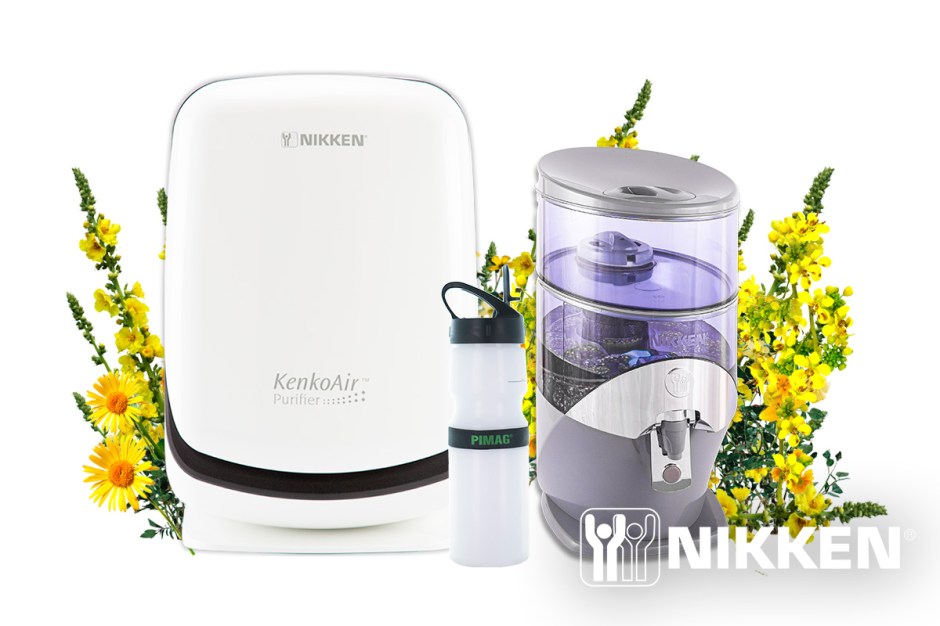
  • The KenkoAir Purifier® exceeds the measured efficiency of capturing up to 99.95% of 0.3 micron particles in the air. It’s 35% more efficient than standard models and saves a minimum of 215 kilowatt-hours per year. Unlike typical air filters, this advanced system helps generate negative-ions similar to those found in natural environments.

Nikken recommends changing the filters every six months. Be sure to clean the reusable prefilter when the other filters are replaced. Choose Item #1444.

  • The PiMag® Sport Bottle uses state-of-the-art filtration technology that exceeds NSF standards for reducing particulates, chlorine, chloramine, taste and odor, cysts, lead, bacteria, VOCs, MTBE and more.

Nikken recommends changing the filter approximately every 40 gallons or three months of average use or up to an estimated 250 refills per filter. Choose item #13503 for the Replacement Filter Pack.

  • The PiMag Waterfall® is the eco-friendly Sport Bottle’s counterpart for the home and office. It also exceeds NSF standards as mentioned above.

Nikken recommends changing the filter every 3- 6 months or 900 liters/238 gallons, whichever comes first. Choose item 13845. Mineral stones should be changed annually. Choose item #13846.

  • The PiMag MicroJet® Shower System has also been tested according to NSF standards and been proven to effectively reduce chlorine exposure. While most chlorine-reduction systems in shower filters merely trap chlorine or add other chemicals to counteract it, the PiMag MicroJet uses a reduction/oxidation process to neutralize chlorine ions. The MicroJet injects air into the shower stream to increase the electronegative potential of the water for more effective filtration. Micro-bubbles are released through the nozzle to provide an exceptional cleansing action.

Nikken recommends changing the filter for the hand held model every 5,000 gallons or three months, based on average use. Choose Item #14661.

Nikken recommends changing the filter for the wall mount model every 10,000 gallons or six months, based on average use. Choose Item #13831.

Pet Love Equals Better Health

April 11 is National Pet Day, and those of us who live with pets can attest to the multiple ways they enrich our lives. The truth is that the benefits of having pets are scientifically proven, not just our emotional bias. The Human Animal Bond Research Institute (HABRI) gathers the latest information on the positive health effects pet companions have on their humans.

Pet love is known to provide emotional support and in doing so, to help reduce stress. Cortisol is a hormone activated by stress, and studies have found that being around animals can decrease cortisol levels.1 Being around pets has proven to be so effective that some workplaces and schools are allowing dogs to be present.

Pets are also known to help with hypertension. A study of stockbrokers found that having a dog or cat helped lower the spike in blood pressure that happens when a person is stressed. Another study of hospitalized heart patients found that dogs decreased the patients’ blood pressure by about 10%!2

Cats specifically have shown they are able to decrease the likelihood of a stroke by more than a third! Researcher theorize that petting a cat can lower stress. They also surmise that the type of people who own cats might tend to be more stress-free naturally.3

Pets require care and can be a lot of work; however, even that ends up being helpful for our health, especially mentally. Whether it’s a daily wellness routine of walking, grooming or feeding, our labor of love provides a sense of purpose that overflows into other parts of our lives. This sense of purpose and the ability to take care of a loved pet can alleviate some mental health conditions, including PTSD, anxiety and depression.4

A 2016 HABRI study explored the role of pets in the social networks of people managing a long-term mental health issue and found that pets contribute to a stronger sense of identity, provide a sense of security and routine that reinforces stable cognition and serve as positive distractions from internal distress signals.5 For these reasons, pets are now widely used as support and therapy animals.

Even caring for fish can have positive effects. A recent study showed that caring for fish helped teens with diabetes better manage their disease. Researchers had a group of teens with type 1 diabetes care for pet fish twice a day by feeding and checking water levels. The caretaking routine also included changing the tank water weekly. The researchers tracked how consistently the teens checked their blood glucose levels compared with teens who didn’t have fish to care for. The teens with fish to care for were more disciplined about checking their own blood glucose levels, a key to maintaining their health.6

Considering that cats and dogs all have pet dander, a seven-year study of almost 500 children produced some interesting results. Children exposed to dogs and cats as babies were half as likely to have allergies and risk factors for asthma as they grew up than those who had no pets. Infants with more than one pet in the home had the lowest risk of allergies!7

There are so many animals available for adoption and waiting for a loving home. When you save an animal’s life, it will repay you and end up saving yours in so many other ways! Why not check out your local shelters, rescues and pounds and welcome one or more new family members!

1, 2, 3, 7 https://www.animalhealthfoundation.org/blog/2012/10/8-health-benefits-of-having-a-pet/?gclid=Cj0KCQjww4-hBhCtARIsAC9gR3bsJF3jJTRin9pp3bUSRqhD6-XKfEgrM-teCN9TNSKKQGrfpY_FgAEaAkOpEALw_wcB

4, 5 https://www.onehealth.org/blog/10-mental-physical-health-benefits-of-having-pets

6 https://newsinhealth.nih.gov/2018/02/power-pets

When a Negative is Actually a Plus

Being out in nature is good for us. From forest bathing to surfing, a simple walk outdoors to swimming in lakes and the ocean—it’s the combination of movement and breathing in fresh air that gives our entire body and mind a healthy boost! It’s especially important to seek some time with nature when we spend so much time indoors during the winter months.

What is it about fresh air that makes us feel happier and invigorated?  They’re called negative ions.

Negative ions are odorless, tasteless, and invisible molecules that we inhale freely in natural environments,  such as forests, waterfalls and beaches. When inhaled, negative ions are believed to produce biochemical reactions that help relieve stress and increase energy levels.

Ions are molecules that have gained or lost an electrical charge. They are created in nature as air molecules break apart due to sunlight, radiation and moving air and water. The air circulating in the mountains and the beach is said to contain tens of thousands of negative ions —much more than the average home or office building, which contain dozens or hundreds, and may even register a flat zero.

Generally speaking, negative ions increase the flow of oxygen to the brain; resulting in higher alertness, decreased drowsiness, and more mental energy. They also may protect against germs in the air, resulting in decreased irritation due to inhaling various particles that make you sneeze, cough, or have a throat irritation,” says Pierce J. Howard, PhD, author of The Owners Manual for the Brain: Everyday Applications from Mind Brain Research and director of research at the Center for Applied Cognitive Sciences in Charlotte, N.C.1

It’s estimated that one in three people are sensitive to the effects of negative ions. If you are one of them, simply opening a window and breathing in fresh air can cause an immediate effect of feeling lighter and almost euphoric. According to Dr. Howard, you may be one of them if you feel sleepy when you are around an air-conditioner, but feel immediately refreshed and invigorated when you step outside or roll down the car window. Air conditioning depletes the atmosphere of negative ions and natural air replenishes it.

Negative ions provide more benefits than just freshening the air. They can help clear the air of allergens such as pollen, mold spores, bacteria and viruses, as well as dust, pet dander and cigarette smoke. This occurs when negative ions attach themselves to positive ion particles in large numbers and negatively charging those ions. When that happens, those allergens become too heavy to remain airborne and are prevented from being inhaled!2

Natural energy sources of negative ions come from five main areas: 1. radiant or cosmic rays in the atmosphere, 2. sunlight including ultraviolet rays, 3. discharges of electricity in the air after thunder and lightning, 4. the shearing forces of water (as in a waterfall), and 5. plant-generated ions from natural growths.3

When indoors, the use of an air purifier can help to freshen stale air affected by dust, pet dander, cooking fumes, poor room air circulation, heat and humidity, and the proximity of grounded devices that may emit counteracting positive ions (such as computer monitors and other electronics).

We encourage everyone to experience the KenkoAir Purifier® for themselves. Once you do, you’ll want to share your experience with those you care about, because as we say at Nikken, “to breathe is to live” and living well means breathing clean, refreshing air filled with negative ions! Ask your Nikken Consultant how to take advantage of special pricing on the KenkoAir Purifier by ordering through the Yes! My Wellness Home link through the end of March.

1 https://www.webmd.com/balance/features/negative-ions-create-positive-vibes

2, 3 https://www.ncbi.nlm.nih.gov/pmc/articles/PMC6213340/

It’s not Magic, It’s Hyaluronic Acid

The numbers are stunning: the global hylaluronic acid market size in 2022 was valued at 9.4 billion US dollars.1 The market is expected to grow as technologically advanced products continue to be introduced. So, what is hyaluronic acid and why is it trending?

Hyaluronic acid is a gooey, slippery substance that is found throughout the body, especially in eyes, joints and skin.2 In scientific terms, hyaluronic acid (HA) is a naturally occurring glycosaminoglycan found throughout the body’s connective tissue. Glycosaminoglycans are simply long unbranched carbohydrates, or sugars, called polysaccharides.3 HA is the main element that gives skin its structure, and is therefore responsible for creating the appearance of plump, hydrated skin.

The natural aging process, tobacco smoking, and pollution can reduce the amount of hyaluronic acid present in human skin. Since hyaluronic acid is produced naturally by the skin but production slows down due to multiple reasons, using hyaluronic acid-based supplements and serums helps boost the skin’s natural processes.

Here are a few benefits of hyaluronic acid: 4

  • Helps things move smoothly. Hyaluronic acid helps your joints work like a well-oiled machine. It helps prevent pain and injury from bones grinding against each other.
  • Helps keep things hydrated. Good at retaining water, a quarter-teaspoon of hyaluronic acid holds about one and a half gallons of water. That’s why hyaluronic acid is often used for treating dry eyes. It’s also used in moisturizing creams, lotions, ointments and serums.
  • Makes skin flexible. Hyaluronic acid helps skin stretch and flex to reduce the appearance of wrinkles and lines. Hyaluronic acid is also proven to help wounds heal faster and can reduce scarring.

Hyaluronic acid belongs to a type of long, complicated chain-like molecules called polymers. The chain has plenty of spots on it where other chemical compounds (like water, for example) can latch on. That’s why a quarter-teaspoon of hyaluronic acid can hold about one and a half gallons of water, making it the best polymer — natural or artificial — for absorbing water (and a key ingredient in moisturizing products). Hyaluronic acid’s chain-like structure also means it can act like a scaffold structure, allowing tissues to grow.5

Put another way, HA can bind up to 1000 times its weight in water!6 It functions as a humectant and holds water molecules onto skin’s surface to keep it hydrated and counteract the effects of transepidermal water loss (TEWL), which is the scientific term for measuring how much water evaporates from the skin. When a product prevents TEWL, it keeps skin hydrated by making sure that water doesn’t escape from skin’s surface. Hyaluronic acid does exactly that by slowing the rate at which the water evaporates.7

Three Kenzen True Elements® Marine Organic Skin Care products are formulated with hyaluronic acid in the form of sodium hyaluronate.

• True Elements® Youth Activ Serum contains low molecular weight hyaluronic acid. Molecules with lower molecular weight are smaller, so they reach the deeper layers of skin. There, they help sustain skin’s moisture content, while stimulating collagen synthesis to leave skin feeling firmer and smoother.

• True Elements® Revitalizing Serum is the complement to Youth Activ Serum. It contains high molecular weight hyaluronic acid, which acts to help retain moisture on the surface of the epidermis rather than at depth. Keeping the skin’s surface hydrated gives it a healthy, glowing appearance.

• True Elements® Moisturizing Face Cream contains high molecular weight hyaluronic acid, similar to Revitalizing Serum. Together with the other ingredients in the formula, the hyaluronic acid helps skin maintain hydration by forming a protective veil on its surface.

All TRUE elements® skin care products are EcoCert COSMOS Organic certified, pH balanced and naturally fragranced. There are no parabens, synthetic colors or fragrances.

1 https://www.grandviewresearch.com/industry-analysis/hyaluronic-acid-market#:~:text=The%20global%20hyaluronic%20acid%20market,introduction%20of%20technologically%20advanced%20products.

2, 4, 5 https://my.clevelandclinic.org/health/articles/22915-hyaluronic-acid#:~:text=Hyaluronic%20acid%20helps%20skin%20stretch,faster%20and%20can%20reduce%20scarring.

3, 6, 7 https://www.healthline.com/health/beauty-skin-care/hyaluronic-acid

The Power of Women in More Than Childbearing and Childbirth

One primary physiological ability stands out between men and women: women give birth. Labor and childbirth are universally considered the toughest and possibly most painful “workout” a body can undergo. What does this mean in terms of women’s overall health and specifically, physical strength?

The power required to bear children and give birth means women are not just strong but extremely strong. In general, women have the same basic health requirements as all human beings in terms of needing good air to breathe, clean water to drink to keep hydrated and adequate whole food nutrition.

Women typically require more calcium than men to keep bones strong due to smaller mass, and during pregnancies, more balanced whole nutrients. In fact, it is men’s overall larger mass and weight that gives them the perceived advantage in strength. When differences in height and weight are factored in, the strength quotient is more similar than not.

Strength is measured not only by how much weight a person can lift, but also by longevity or life expectancy, ability to withstand pain, mental and emotional toughness, and even crisis management.

• Longevity: The global Gerontology Research Group notes that out of the 43 people in the world who’ve made it past the age of 110 years, 42 are women.Scientifically speaking, women tend to live longer than men due to a “complex interaction of biological, environmental and social factors” as per a study published in the journal Proceedings of National Academy of the United States of America.1

  Bearing pain: According to a study conducted at McGill University, women have a higher threshold for pain.Can that be why Nature gave women the physique and responsibility for labor and childbirth?

Mental strength: According to a study conducted by the researchers from the Ben Gurion University of the Negev, the University of St.Gallen, and NYU Shanghai–women cope with pressure well and do not tend to buckle during tense moments. This is due to the fact that cortisol, the stress hormone, tends to increase less rapidly in women.3

Emotional strength: A study published in the journal Emotion says that women are adept at identifying sadness and disgust, due to the same hormones that work for reproduction.4 Women are therefore more sensitive to environmental chemicals and deal with them. A study conducted at the Binghamton University in New York and University College London, showed that in case of a break-up, women may feel the hurt deeper as compared to men, but tend to heal faster by dealing with the pain rather than burying it.

Survival by natural selection: Women have been found to survive the toughest conditions such as famine, extreme climate change, epidemics, etc. Even though a clear reason is yet to be found for women’s exceptional endurance, researchers attribute it to the possibility of a mother’s placenta working harder to maintain the pregnancy and avoid infections in the case of a female fetus. Women get that extra dose of survivability in their mother’s womb itself.5  Pretty much at every age, women seem to survive better than men,” says Steven Austad, an international expert on ageing, and chair of the biology department at the University of Alabama.6

Strong immune system: Higher levels of estrogen and progesterone could be protecting women in some way, not only by making their immune systems stronger, but also more flexible. This may help maintain a healthy pregnancy. A woman’s immune system is more active in the second half of her menstrual cycle, when she’s able to conceive.7 Even when it comes to everyday coughs and colds, women have the advantage. “If you look across all the different types of infections, women have a more robust immune response,” says Director of the Centre for the Study of Sex Differences in Health, Ageing and Disease at Georgetown University Kathryn Sandberg. “If there’s a really bad infection, women survive better. If it’s about the duration of the infection, women will respond faster.”

• High cognitive skills: According to a study conducted at the Washington University School of Medicine, women can maintain their cognitive skills and retain their memories for longer periods of time as men’s brains tend to diminish faster with age. Although men have been proven to have a higher brain volume, women have thicker cortices, the area of the brain that is linked to improved performance on intelligence tests—women therefore outperform men on I.Q. tests.8

So what could it have been in our evolutionary past that gave the female body a little more robustness? Why would women have developed a survival edge? The human body, both male and female, adapted over millennia to their changing environments: Studies of hunter-gatherer societies provide a few clues. Many anthropologists studying tribal communities in Africa, South America, Asia and Australia believe early humans lived fairly equal lives, sharing responsibility for food, shelter and raising children. The evidence shows that women would have done at least the same physical work as men, but with the added burden of bearing children.9

In evolutionary terms, these were the circumstances under which our bodies were shaped. Through a large part of early human history, humans migrated through Africa to the rest of the world, and the women not only travelled hundreds or thousands of miles, under the same extreme environmental conditions as the men, but they also had to reproduce and survive.

Adrienne Zihlman, an anthropologist at the University of California-Santa Cruz, says, “Women have to reproduce. That means being pregnant for nine months. They’ve got to lactate. They’ve got to carry these kids. There’s something about being a human female that was shaped by evolution. There is something about the female form, the female psyche, just the whole package, that was honed over thousands and thousands, even millions, of years to survive.”10

Where super heroes traditionally have been depicted as men in the western world—Superman, Batman, Ant Man, The Flash, etc.—we now have, among many others, Katniss, Black Widow, Xena Princess Warrior, Shuri, and a revival of Mulan who goes back millennia into Chinese folklore, to more accurately reflect the power of women.

1, 2, 3, 4, 5 https://www.healthshots.com/mind/are-women-stronger-than-men-here-are-8-scientific-facts-to-put-this-debate-to-rest/

6, 7, 8, 9, 10 https://www.theguardian.com/world/2017/jun/11/the-weaker-sex-science-that-shows-women-are-stronger-than-men

Building Relationships is Key to Good Health and Quality of Life

Whether we tend to be introverted or extroverted, our health, happiness and even longevity, may depend largely on our relationships. From the moment of birth, we have to interact with other people, and how we do so can impact our wellness lifestyle for the extent of our lifetime.

Relationships come in many forms—co-workers, family, inner circle of friends, wider reach of friends, acquaintances, teams both in sports and entrepreneurial endeavors, pets, co- volunteers, and so on. Each type of relationship can improve our quality of life if we approach it in a mindful way.

How relationships work often mirror the theories behind the psychology of team building. Relationships work best when the people involved have their basic and deeper needs fulfilled, just as team members function best when each person’s professional needs are fulfilled.

Maslow’s hierarchy of needs include physiological, safety, belongingness and love, esteem and self-actualization.1 Depending on the type of relationship, fulfilling some or all of these needs is key to forming, developing and keeping positive connections. For example, a parent-child relationship would require the parent to work with the child to fulfill the entire hierarchy, whereas a team leader at a job or athletic group would focus more on belongingness, esteem and self-actualization. Whether the relationship is hierarchical or between peers, the key is for both parties to work in tandem for it to be mutually beneficial.

In addition to Maslow’s hierarchy of needs, relationships may also depend on Clark’s four stages of psychological safety, which are inclusion, learner, contributor and challenger.2

1) Inclusion safety is when people feel wanted and that they matter.

2) Learner safety is when it’s okay to ask questions and to make mistakes without negative repercussions.

3) Contributor safety is when people can make a difference with their particular set of skills, so they actively participate.

4) Challenger safety is when people are allowed to disagree without fear of reprisal.

Clark’s stages of psychological safety apply to the work environment, but even in friendship or familial relationships, they can make the difference between a close loving connection vs. an adversarial or tense association. By creating a work environment or entrepreneurial team where each member feels secure enough to act true to themselves, we can lift invisible barriers and empower colleagues to experiment and reach their full potential. By the same token, children, relatives and friends who feel empowered to ask questions, make mistakes, contribute differing opinions and know they’ll be loved no matter what, naturally develop into Humans Being More.

What if a professional or personal relationship runs into obstacles that manifest in problems or dissent? A handy way to determine why the relationship is not flowing smoothly is Beckhard’s GRPI Model. This diagnostic tool developed by organizational theorist Dick Beckhard is based on goals, roles, processes and interpersonal relationships.3 When issues arise, the three questions to ask are:

1)Are goals clearly defined and is everyone committed to finishing them?

2)Is each member’s role and responsibilities clear in every aspect of a project?

3)Does everyone involved understand the processes involved through completion?

4)Are team members communicating with each other in a mutually agreeable and trusting way?

Although Beckhard’s model was created for a work environment, it certainly works on a personal level as well. Friends and family need to be committed to their relationships, clear in what their roles are and honestly communicating with each for their connections to be strengthened and lasting.

In a nutshell, good relationships matter a great deal. Proven links include lower rates of anxiety and depression, higher self-esteem, greater empathy and a stronger immune system. We can also recover more quickly from illness and even live longer, more productive lives when we develop ongoing solid relationships.4 It’s always the perfect time to reach out from your heart to a long-lost friend, a geographically distant relative or a professional mentor from years long gone!

1, 2, 3 https://teambuilding.com/blog/team-building-psychology#:~:text=Team%20building%20psychology%20is%20a,work%20environment%20where%20everyone%20thrives.

4 https://www.betterhealth.vic.gov.au/health/healthyliving/Strong-relationships-strong-health

Love Makes the Heart Beat Better

As far back as the ancient Greeks, lyric poetry identified the heart with love. Among the earliest known Greek examples, the poet Sappho agonized over her own “mad heart” quaking with love. For the most part, Greek philosophers agreed that the heart was linked to our strongest emotions, including love. Plato argued for the dominant role of the chest in love and in negative emotions of fear, anger, rage and pain. Aristotle expanded the role of the heart even further, granting it supremacy in all human processes.1

Fast forward to contemporary times. Cardiologists, scientists and researchers agree with the ancient Greeks that love is truly good for the heart, and in more ways than one. “One theory on why love is good for your health is that blood pressure responds to calmness and peace,” says Christopher Suhar, MD, a cardiologist and director of Scripps Center for Integrative Medicine. “If you’re in love, you’re calmer and more at peace, which could translate into lower blood pressure.”2

All types of love can benefit your heart. Love may help you recover if you ever develop heart problems. It could be from having love in your life, or simply having someone there who has a vested interest in you and is taking care of you. It’s not just romantic love that can improve your heart health. Having close, loving relationships with your friends and family can have cardiovascular benefits. For example, researchers have investigated the role of having the support of loved ones after cardiac bypass surgery.3 Over time, patients who had good social support had a better recovery and survival rate.

Everyone has read about how the heart races when the beloved comes near—in schlocky romance novels as well as world renowned literature. This physical phenomenon is real, not just the stuff of fiction! The brain releases hormones such as dopamine, adrenaline and norepinephrine, all of which makes the heart beat faster and stronger.4 These temporary spikes in heart rate actually benefit the heart muscle by training it to pump more efficiently—the same way doing aerobics or cardio workouts do. Of course, a racing heart due to love has lesser effects on Active Wellness than a daily workout, but still, it’s a bonus that love is good for overall health!

There are even heart-healthy benefits to spending time with your four-legged friends. “Pet ownership also helps people survive longer after a heart procedure,” notes Dr. Suhar. “This relationship has been looked at in both dogs and cats. Those two animals provide a definite benefit from a survival perspective. I believe it is because of the unconditional love that pets give you.”5

Research published in the European Heart Journal shows that having a positive outlook on life can protect against cardiovascular disease. The researchers defined “positive affect” as feelings of joy, happiness, excitement, enthusiasm, and contentment, all of which may stem from having people you love in your life. Each participant’s level of positivity was measured based on a 12-minute in-person interview and checked health records over the following 10 years to look for incidences of cardiovascular disease. They found that people who scored even a single point higher for positive affect had a 22% lower risk for cardiovascular disease. They also found that those with higher positive affect were more likely to be female, less likely to smoke, had lower levels of total cholesterol, and lower levels of hostility and anxiousness, suggesting that a positive attitude contributes to better health overall.6

Love floods the body with hormones that affect the nervous system and by association, the heart. The warm feeling of affection ramps up your parasympathetic nervous system, helping you relax, which reduces stress and improves feelings of depression and anxiety. Feelings of love also tamp down the sympathetic nervous system, which is responsible for your fight or flight reactions. According to New York cardiologist Dr. Sandeep Jauhar, “When relaxed, blood vessels tend to dilate a little bit more and blood pressure tends to drop, producing a calmer state.”7

Can love ever hurt your overall health and especially the heart? The answer may be surprising. People talk about a “broken heart” when grieving over a loss—it doesn’t have to be the loss of a romantic partner; it can be the loss of a pet, family member, friend or even a public figure.

Known as stress-induced cardiomyopathy, broken heart syndrome occurs when the heart is stunned by sudden, acute stress and its left ventricle weakens. Instead of contracting into its normal arrow-like shape, the left ventricle fails to function, creating a more rounded, pot-like shape. First described in 1990 in Japan, a broken heart looks so much like a Japanese octopus trap called a “takotsubo” that doctors began calling the condition Takotsubo cardiomyopathy.

“Broken heart syndrome is a very real medical disorder,” says Dr. Suhar. “This is typically a temporary condition where the heart will have sudden enlargement and be very ineffective at pumping. It is usually reversible and can normalize after the stress is resolved, but that can take a few weeks to a few months.”8

There are things we can do on a daily basis to improve heart health, and it comes down to eating right and exercising. But what about something that is more loving? Those who know Nikken history may have heard of the “Masuda hug.” Nikken Founder Isamu Masuda was renowned for his hugs and it was an endearing way to connect with his many friends from around the world. Nikken legend has it that anyone who experienced a Masuda hug never forgot it and that it created a feeling close to euphoria.

Fast forward again to contemporary times. According to research from the University of North Caroline, when you participate in a warm embrace with someone you love—a parent, child, spouse, etc.—your body releases oxytocin, otherwise known as the feel-good hormone, which may reduce stress and lower blood pressure. Even holding hands with someone you love has a calming effect on the body, according to a study published in Psychological Science.9

February is heart health awareness month, so pay attention to your ticker. Give someone a hug every day and see how you feel. And don’t forget to take your Kenzen Super Ciaga® and Kenzen Bergisterol®!

1 https://ideas.ted.com/how-did-the-human-heart-become-associated-with-love-and-how-did-it-turn-into-the-shape-we-know-today/

2, 3, 5, 8 https://www.scripps.org/news_items/4743-how-love-affects-your-heart

4, 6 https://www.everydayhealth.com/heart-health-pictures/reasons-love-is-good-for-your-heart.aspx#:~:text=When%20you%20lock%20eyes%20with,heart%20beat%20faster%20and%20stronger.

7 https://www.cnn.com/2019/02/14/health/love-heart-health/index.html

9 https://www.everydayhealth.com/heart-health-pictures/reasons-love-is-good-for-your-heart.aspx#:~:text=When%20you%20lock%20eyes%20with,heart%20beat%20faster%20and%20stronger.

Healthy Routines for Healthy Hearts

There are many ways to help keep our hearts healthy, our circulation smooth and our blood vessels free of plaque. Certain conditions are inherited, but being aware of them can help us embrace the Active Wellness habits that counteract them. Our habits start with choices, and it depends on what we’re willing to do, give up or add to our lifestyles.

No smoking: It’s been decades since the benefits of not smoking cigarettes have been brought to light, but now, there are so many things other than cigarettes to smoke. The truth of the matter is, none of it is good for our heart or lungs—some substances can alleviate pain or quell nausea, but inhaled habitually, can cause heart and lung damage. In other words, quitting smoking means stopping the inhalation of a whole range of things—and vaping is ill-advised, too. The American Heart Association, National Heart, Lung and Blood Institute, and Centers for Disease Control & Prevention jointly encourage all smokers to quit!1

Curb belly fat: Certain parts of the body have a special impact on heart health. Research in the Journal of the American College of Cardiology has linked excess belly fat to higher blood pressure and unhealthy blood lip levels.2 Health practitioners advise us to try to decrease the belly fat through diet and exercise, not just from spot routines. In other words, a hundred sit-ups a day won’t get rid of belly fat, but losing some weight by eating better (or less) combined with a daily exercise routine that includes some form of cardio or aerobic activity, may do the trick.

Healthy snacks: We all know that eating right is critical for good health. When trying to eat the right foods, one of the things that is hard to do is to give up unhealthy snacking. The good news is that there are actually healthy snacks we can incorporate into our diets. One example is chips and salsa. The salsa is a delightful mix of healthy vegetables as long as we don’t oversalt it. Add in some whole or blended beans—black, white, pinto, any other choices—and the salsa gets a big boost of heart-healthy fiber. According to the Mayo Clinic, a diet rich in soluble fiber can help lower LDL (bad cholesterol).

Omega-3 fatty acids: Another source of heart-healthy food is fish, due to its omega-3 fatty acid content. Not all fish are equal, but salmon, tuna, sardines and herring, for example, contain good amounts of omega-3 fatty acids. Nutritionists recommend eating fish twice a week, with the health benefits outweighing the risks of mercury ingestion.3  If you’re a vegetarian, our Kenzen® Omega Green + DHA is a great source of omega-3 fatty acids.

Eat the color spectrum: Have you heard the saying, “eat the rainbow?” This simply means that a heart-healthy diet can be made up of naturally colorful food—green, red, yellow, orange, purple and blue—easily found in vegetables and fruits. Think of favorite fruits and vegetables and simply incorporate them into meals or eat them in between meals.

A half teaspoon of salt a day: Researchers have reported in The New England Journal of Medicine that a half teaspoon of salt is all we need per day!4 Salt is apparently one of the leading culprits of high blood pressure which in turn causes heart disease. Salt is a hidden menace found in excessive quantities in processed foods, many restaurant foods and especially fast-foods. Breaking the salt habit can be challenging, but for starters, never salt anything without tasting it first!

Dark chocolate: Dark chocolate contains heart-healthy flavonoids. These compounds help reduce inflammation and may lower the risk of heart disease, according to scientists in the journal Nutrients. Incorporating dark chocolate into a diet is prudent but not in copious amounts—a couple of squares is recommended.

Go Nuts: Thankfully, some fats are actually good for us! These heart-healthy fats come in the form of almonds, walnuts, pecans and even moderate amounts of peanuts. They also contain protein and fiber that act as fuel and digestive helpers. Although high in healthy fats, they’re also high-calorie so nutritionists advise eating small amounts daily.

7% fat daily: Like salt, decreasing fat intake daily to just 7% of our daily calories can help lower the risk of heart disease, according to the USDA. One way to help calculate our intake is to read the nutrition labels on the food we buy.

Eat breakfast: Although intermittent fasting is trending for weight loss, breakfast truly is an important meal of the day, if not the most important one. To build a heart-healthy meal that ends the overnight “fast,” incorporate whole grains, such as oatmeal, lean protein such as peanut butter, yogurt or low-fat dairy milk from animal or vegetable sources) and fruit, especially berries high in antioxidants and polyphenols.

Drink tea: Black or green, it’s our choice and either is healthy for the heart. In fact, drinking one to three cups of tea every day may help lower the risk of heart problems. So, have a “cuppa” and enjoy the possibility of lowering the risk of angina and heart attacks!

Fun exercises: Not everyone likes going to the gym and working out, but regular exercise is important for sustained heart health. In fact, sitting for too much of the day is now considered as bad as smoking! It’s therefore imperative to get a move on! There are many alternatives to working out. For example, dancing raises the heart rate and gets the lungs pumping. It also burns up to 200 calories or more per hour, and listening to music while dancing is an added pleasure. Walking, swimming, running/jogging, rowing, hiking and so forth, are all great alternatives to the gym and you can connect with nature at the same time.

Yoga: Another ongoing trend is the practice of yoga. Since it originated in India more than 5,000 years go, this “trend” has proven it’s here to stay. The western world had some catching up to do, but has now shown that yoga has the potential to improve heart health. By stretching virtually every part of the body (even ears, nose and mouth), yoga can help improve balance, flexibility and strength. It also helps relieve stress and helps improve sleep, all adding up to maintaining a healthy heart.

Make your HaHas Loud: This is such a great to-do to incorporate into an Active Wellness lifestyle. Laughing out loud may be good for the heart, according to the American Health Association. Laughing out loud has been found to lower stress hormones, decrease inflammation on arteries and raise levels of high-density lipoprotein (HLD or good cholesterol).

Gum and tooth health: Cleveland Clinic researchers have found that bacteria that can cause gum disease also may raise the risk of heart disease. Findings to date are mixed, but there’s only good that come of keeping teeth and gums healthy. Brush and floss every day if you don’t already, and see the results.

Get enough sleep: When we don’t get enough sleep, the heart is significantly impacted.5 It’s no surprise that the entire body needs its rest, but the heart works 24/7 and really needs to rest!

Remember, Kenzen® Nutrition is here to help fill in the gaps of anyone’s diet! From now until March 23, 2023, each purchase of a PiMag Waterfall® will be accompanied by a bonus bottle of Kenzen® Immunity; each purchase of a KenkoAir Purifier® will have a bonus bottle of Kenzen® Clarity; and each purchase of a Kenko Sleep Pack will contain a bonus bottle of Kenzen® Joint.

1, 2 3, 4 https://www.healthline.com/health/healthy-heart-tips#know-your-numbers

5 https://www.scripps.org/news_items/5146-5-heart-healthy-habits

Stress and the Mighty Trio: Immunity, Mental Clarity and Mobility

Stress is the body’s way of responding to any kind of demand or threat. When you sense danger—whether it’s real or imagined—the body’s defenses kick into high gear in a rapid, automatic process known as the “fight-or-flight” reaction or the “stress response.”1

When working properly, the stress response protects us and allows us to stay focused and alert. For example, to avoid a car accident, we might slam on the brakes as our stress response. In this way, stress is a positive part of our lives.

Too much stress, however, can cause major damage to our bodies and minds—not only to health, but also to mood, productivity, relationships and overall quality of life. Stress can definitely put a damper on the pursuit of an Active Wellness lifestyle.

The varying levels of stress can be likened to a spectrum. At one end is “eustress,” the manageable levels of stress that help tackle challenges at work, school, or in relationships. Eustress does not necessarily feel comfortable, but it is useful and can help us succeed.

At the opposite end of the spectrum is “distress.” This is the type of stress that is destructive—it disrupts sleep and creates undesired tension, mood disorders and a negative outlook. Distress can occur when we are too busy at work, owe money, are grieving or suffering any type of painful loss.

Our personalities and perspectives on how we work, compete or play can affect whether stress takes the form of eustress or distress. For example, if there is a looming deadline and it worries or overwhelms us, we are going to experience distress. If that same deadline creates a sense of excitement about the ensuing outcome, we would experience eustress. We therefore are somewhat in control of the stress we live with, but we cannot foresee the future or the unknown.

When we get stressed out frequently, the body exists in a heightened state of anxiety most of the time. That can lead to serious health problems, since chronic stress disrupts nearly every system in the body and its functions. It can suppress the immune system, upset the digestive and reproductive systems, increase the risk of heart attack and stroke, and speed up the aging process. It can even rewire the brain, leaving us more vulnerable to anxiety, depression, and other mental health problems.2

Chronic stress occurs because stress is sneaky. It can creep up on us and we get so used to feeling stressed out that we don’t even notice its ill effects until they manifest in disturbing ways. That’s why it’s important to be aware of the symptoms that chronic stress can cause.

The three main areas that stress impacts are immunity, mental clarity and mobility. We need a strong immune system to fight disease, but stress weakens the body’s defenses. Stress can reduce the number of natural killer cells or lymphocytes in the body, which are needed to fight viruses, according to the American Psychological Association. It makes us catch colds or the flu more easily, for example.

Chronic stress can produce higher-than-normal levels of the hormone cortisol. This can hamper the body’s anti-inflammatory response and cause continual infections, according to recent immunology research studies.3

Issues with mental clarity include memory problems, inability to concentrate, poor judgment, persistent anxiety, runaway thoughts, constant worrying, moodiness, irritability and depression.

Mobility is affected when stress causes pain, tightness, soreness or spasms in the muscles. According to the American Psychological Association, muscles tense up during stress. When the stress is gone, the muscles then relax and release the built-up tension.

Other physical symptoms include skin breakouts, irregular heartbeats, fluctuating weight, trouble sleeping, indigestion and other digestive issues. If inflammation is persistent and widespread, it can contribute to chronic diseases, including the buildup of plaque on the arterial walls. This is just one of the many factors at play in the complex relationship between stress and the heart.  Stress is related to heart rhythm abnormalities, high blood pressure, stroke and asthma. Lung conditions include shortness of breath and rapid breathing.

Knowing our stress triggers can help us deal with them more effectively. Here are a few ways to cope with stress:

Exercise: Regular exercise is known to improve moods and relieve stress. Rhythmic exercises such as walking, running, swimming, and dancing are particularly effective, especially when focusing attention on the physical sensations of each movement.

Make human contact: In this day and age of electronic devices, we often spend more time with screens than with people. The simple act of talking face-to-face with another human can trigger hormones that relieve stress. Even a brief exchange of kind words or a friendly look from another human being can help calm and soothe the nervous system.

Use the senses: Sight, sound, taste, smell, touch. The key is to find the sensory input that works best for each individual. Does listening to an uplifting song produce calmness? Is the scent of a favorite flower soothing? Research has shown that the act of petting a dog or cat not only comforts the animal, but also the human.  Everyone responds to sensory input a little differently, so finding the best use of any of the five senses can be a fun experiment.

Relax. Some people are good at letting go of stress at the end of the day and can relax. Others need to consciously practice the art of relaxation. Yoga, meditation, and deep breathing activate the body’s relaxation response, a state of restfulness that is the polar opposite of the stress response. When practiced regularly, these activities can help reduce everyday stress levels and boost feelings of joy and serenity. They also may increase the ability to stay calm and collected under pressure.

Eat healthy food. “You are what you eat” doesn’t need to be taken literally, but it holds truth. Food can improve or worsen moods and affect how we cope with life’s stressors. Eating a diet full of processed and convenience food, refined carbohydrates, and sugary snacks can worsen symptoms of stress, while a diet rich in fresh fruit and vegetables, high-quality protein, and omega-3 fatty acids, can help us cope with life’s ups and downs.

Get enough sleep. Feeling tired can magnify stress. Getting restful sleep can be tricky because chronic stress can disrupt sleep. Making the sleep environment as comfortable as possible and adhering to a sleep cycle that allows for 6-8 hours can be helpful.

The pursuit of Active Wellness includes finding adequate ways to cope with stress. At Nikken, we have three nutritionals that may help in the “mighty trio”: Kenzen® Immunity, Clarity and Joint. From now until March 23, 2023, each purchase of a PiMag Waterfall® will be accompanied by a bonus bottle of Kenzen® Immunity; each purchase of a KenkoAir Purifier® will have a bonus bottle of Kenzen® Clarity; and each purchase of a Kenko Sleep Pack will contain a bonus bottle of Kenzen® Joint.

1, 2  https://www.helpguide.org/articles/stress/stress-symptoms-signs-and-causes

3, 4  https://health.umms.org/2020/11/10/stress-immune-system/

A Healthy Start for 2023

Wipe the slate clean each day! In life, we begin every day anew, but somehow the start of each year is when many of us decide to make resolutions or set goals. The reality is that without good health, we cannot do anything else, so total body wellness has to be an annual goal in one way or another.

We all know the ABCs for good health: restful sleep, clean air, fresh water, nourishing nutrition, adequate exercise and refraining from smoking, excessive drinking of alcoholic beverages and overusing medications and other addictive substances. All of this can be achieved, but consistency is the key. If we “fall off the wagon” in any area, wipe the slate clean, don’t beat yourself up and start fresh the next day.

Here are half a dozen things that may help make 2023 our healthiest ever:

1.         Pay attention to how your body feels. Are you constantly tired? Do you wake up in the morning feeling as if you never even slept? Commit to making changes, so that you have energy. It’s simple to say, “get enough sleep,” but so many of us don’t. It may require going to bed earlier or later than what you are currently doing. Striving for eight hours is fine, but be content to start with six or seven restful hours. Quality sleep not only makes us feel energized, but it also helps manage weight and cardiovascular health. Adequate sleep even helps us to think more clearly and accomplish daily tasks.

2.         Reach out to someone you care about but haven’t been in touch with regularly. Even if you don’t continue to reconnect consistently, you may be surprised what happens as a result of a simple phone call or “miss you” card in the mail. Remember that mental health is as important as physical health, and staying in touch with those we care about gives us a boost in multiple ways.

3.         We often forget to check important areas of our bodies, as many of us avoid going to the health practitioner unless we actually feel ill. This year, vow to get eyes, ears and teeth checked. Letting these three areas go untended can lead to problems down the road.

4.         Set aside time to read. Reading has different effects on our brains. Although studies largely focus on children, it is reasonable to believe reading vs. screen time has similar effects on adults. A 2020 study of 47 healthy children, aged three to five, found those who spent more than an hour daily on screens performed worse on cognitive tests than those who frequently read books with their parents or caregivers.1 Whereas screen time may produce a hypnotic effect, reading triggers thought. Regardless of age, retention of information and cognitive reasoning are precious.

5.         Make a conscious effort to be kinder to yourself. Sometimes we are kind to everyone else but we tend to be our own worst critics. The effect of being kind to ourselves has big health ramifications, all good ones! We really can help ourselves be happier!

6.         Weight loss is one of the most popular new year’s resolutions. It is also one that quickly fails and can even lead to depression. One alternative healthy habit to pursue is to simply ditch the sodas. Diet sodas with artificial sweeteners are even worse than the high-calorie sugary ones, because the chemicals added for flavoring may actually be health hazards.2 It’s not as big of a change as going on a special diet; it’s eliminating one item, but the positive results can be inspiring.

Nikken is committed to helping our Global Wellness Community live a healthy lifestyle, and our products reflect that. We are proud of our PiMag® water filters, Kenko Sleep System, KenkoAir Purifier®, Kenzen® nutritionals and True Elements® Marine Organic Skin Care as well as our vast array of magnetic support products. These products give you the power to take your health into your own hands, to sleep well, eat and drink well, breathe easily and obtain optimal hydration. They enable you to maintain the healthy lifestyle that gives you energy and ultimately, more joy.

1 https://sparktutoringservices.com/reading-time-vs-screen-time/

2 https://www.ncbi.nlm.nih.gov/pmc/articles/PMC3198517/