Gut Health Matters: Supporting Your Gut Barrier for Overall Wellness

An Educational Look at Gut Permeability and Why It’s Worth Your Attention

Imagine pouring a glass of water from your tap and seeing it cloudy with debris. Would you drink it? Most of us wouldn’t. Instead, many rely on advanced water filtration systems to purify and enhance the quality of what we consume.

Now, think of your gut barrier as a filtration system for your body. It plays a key role in supporting digestion and overall wellness by selectively allowing nutrients to pass into your bloodstream while helping regulate exposure to other particles. Some researchers suggest that when this system is under stress, it may become more permeable—an area of growing scientific interest. While the term “leaky gut” is sometimes used to describe this phenomenon, it is not a recognized medical condition. Instead, ongoing research is exploring how gut permeability may be influenced by lifestyle factors and how maintaining gut health may contribute to overall well-being.

Just as you wouldn’t compromise on clean water, supporting your gut barrier could be a proactive step toward feeling your best.

What Influences Gut Barrier Health?

Think of your gut barrier as a tightly woven mesh, composed of specialized cells that regulate what enters the bloodstream. When functioning optimally, this barrier allows properly digested nutrients to be absorbed while maintaining balance in the digestive system. However, certain lifestyle factors may challenge this balance, according to some studies:

•Diets high in processed foods or unhealthy fats

•Ongoing stress or poor sleep quality

•Frequent use of antibiotics or certain medications

•High intake of alcohol or sugar

Some research suggests that these factors may affect proteins (such as Claudin-3 and Zonulin-1) that help maintain the gut lining’s integrity, potentially leading to increased permeability. While more studies are needed, maintaining a balanced diet and adopting healthy lifestyle habits may support gut function and digestive wellness.

Signs Your Gut Might Need Support

Gut health plays a vital role in overall well-being, but subtle signs of imbalance can sometimes go unnoticed. Consider the following:

Do you experience occasional bloating or digestive discomfort? Do you sometimes feel fatigued or experience brain fog? Are you finding it challenging to maintain energy levels and a balanced metabolism?

If you answered yes to any of these, your gut may benefit from extra care. While maintaining gut health through diet, lifestyle, and possibly supplements may help, it is always best to consult a healthcare professional for personalized advice.

Final Thoughts: Caring for Your Gut Like You Care for Your Water

Would you knowingly drink unfiltered, contaminated water? Probably not. Similarly, prioritizing gut health may contribute to overall wellness, as it plays a vital role in nutrient absorption and digestion.

While research continues to explore gut permeability and its broader implications, one thing remains clear—a balanced diet, stress management, and mindful lifestyle choices can all contribute to gut health.

Explore ways to support your gut health today—because just as you wouldn’t compromise on clean drinking water, nurturing your gut barrier is a step toward feeling your best.

Suggested Further Reading: · Groschwitz KR, Hogan SP (July 2009). “Intestinal barrier function: molecular regulation and disease pathogenesis”. The Journal of Allergy and Clinical Immunology. 124 (1): 3–20, quiz 21–2.

· Bischoff SC, Barbara G, Buurman W, Ockhuizen T, Schulzke JD, Serino M, Tilg H, Watson A, Wells JM (Nov 18, 2014). “Intestinal permeability–a new target for disease prevention and therapy”. BMC Gastroenterology (Review). 14: 189. · Canakis, Andrew; Haroon, Mustafa; Weber, H. Christian (2020). “Irritable bowel syndrome and gut microbiota”. Current Opinion in Endocrinology, Diabetes & Obesity. 27: 28–35.

· Tsung-Ru Wu et al., 2019. Gut commensal Parabacteroides goldsteinii plays a predominant role in the anti-obesity effects of polysaccharides isolated from Hirsutella sinensis. Gut, 68(2):248-262

Disclaimer: This article is for informational purposes only. The information provided does not constitute medical advice and should not be used to diagnose or treat any condition. Always consult a healthcare professional for personalized guidance.

About the Author:

Dr. Rob is a nutrition and fitness expert with a PhD from The Ohio State University. He has led innovation in dietary supplements and functional foods for top wellness brands and now serves as Chief Science Officer for TCI BIOTECH US & Americas. An author of four books and over 100 research papers, he works globally with athletes and health professionals to optimize performance and well-being.


Women in Leadership Then and Now

“Since 2008, more women have assumed leadership of huge and influential companies (GM, IBM, Lockheed Martin) and global institutions (the IMF, the World Bank, the European Central Bank). More women have also been elected to high office around the world.  Since 1964, 64 countries have had a female head of state or government, according to Women’s Power Index and as of May 2020, 19 countries were being led by a woman,”1 according to Sally Helgesen, author of seven books on leadership, and a keynote speaker around the world on women’s changing roles.

Even with these vastly improving numbers, women in leadership still lag behind the majority. This may be attributed to the basic challenges women continue to face in the workplace, even as progress is made:

1. Unconscious bias stems from gender stereotypes reflected in the subconscious attitudes both men and women have about female capabilities. Huge strides have been made, but the deeply ingrained image of women “barefoot and in the kitchen” still is widespread even in civilized nations.

2. Unequal pay is more complex than just dollars and cents. It extends into the opportunities women are presented with, often fewer than their male counterparts.

3. Different expectations makes it more difficult for women, because there is the need to balance actual ability, respect from peers and being likable. In other words, aggressive men are the norm, but aggressive women may be considered dislikable.

4. Limited career advancement opportunities take the form of fewer promotions for women in a corporate environment. A 2021 Yale study found women 14% less likely to be promoted at their companies annually as well as being consistently judged as possessing lower leadership potential than their male counterparts.2

5. Lack of sponsorship and mentorship ties in with limited career opportunities. Women are less often approached by mentors or sponsors who can be sources of knowledge and even lead to the “inside track.” What women need to do is to actively seek out mentors and coaches rather than hope to be “found.”

6. Sexual and gender-based harassment is something that women continue to contend with. The American Academy of Arts and Sciences found that women supervisors had to deal with even more sexual harassment than others in their fields in the United States, Japan and Sweden.3

Given the inherent challenges that women face, the progress that has been made by women in leadership in recent decades is impressive. According to recent statistics from the Organization for Economic Co-operation and Development, the proportion of women in higher education fields as of 2017 are as follows: 78% Education, 76% Health & Welfare, 64% Social Sciences, 63% Humanities, 54% Business and Law, 50% Science & Math, 24% Engineering and 19% IT & Communications. The World Bank shows that as of 2017, women accounted for 49% of the global workforce.4

Women inevitably will continue to rise in roles of responsibility and power. The reason is simple: women are major consumers and therefore drive the global economy. A report looking at female emerging markets by Ernst & Young pointed out that by 2028, 75% of the disposable income worldwide will be controlled by women.5 With women as the primary consumers for everyday products and services (fashion, home, health, education) female preferences will dictate the marketplace, and women executive and entrepreneurs will have the sensitivity and know-how to lead. In fact, start-ups founded by women since 2018 to date, have yielded higher benefits with an average 10% higher income than those founded by men.6

What is called “she power” by entrepreneurs in the Digital Age, refers to leadership traits attributed more often to women. It embodies the ability to combine, adapt and learn. In other words, women leaders tend to be able to adapt quickly to changing environments and to face hardships with optimism and perseverance. According to a survey published by the Boston Consulting Group in 2018, women are more dependent on data and information analysis as well as being more willing to spend time on research.7

This trend coincides with the decreasing “confidence gap,” where women questioned their own competence. Since female millennials are now a force to be reckoned with in the global workplace, confidence has increased as well as the recognition of women’s capacity for strategic insight and vision. According to Ms. Helgesen, “As growing confidence based on demonstrated competence has increased women’s determination to reach their full potential, so has greater solidarity among them. This is one of the most dramatic shifts that has taken place over the past 30 years. Increasing solidarity among women, a growing role for male allies, and vastly improved organizational engagement have combined to create an infrastructure of support for women almost entirely missing in previous decades.”8

As women continue to expand into leadership roles worldwide, initiatives that were once considered tokens to showcase a company’s commitment to women’s advancement have now become integral parts of many companies’ talent acquisition strategy. Global organizations look for leaders who can combine decision-making with relationship-nurturing, collaborative thinking and direct communications—qualities found often in women. And, as women come into positions of power, they are actively giving a hand to the new generations coming up through the ranks.

Some interesting trivia about women of wealth from Forbes: China had 45 self-made women billionaires in 2022, down from 57 in 2021. The U.S. had 24 self-made women billionaires in 2022. India’s richest self-made billionaire is Falguni Nayar whose fashion retailer Nykaa went public in November of 2022. Singer and entrepreneur Rihanna is Barbados’ first billionaire.9

One major change in workplace attitudes may be attributed to the pandemic. For some time, as workers were forced to stay home, the distance between those who worked outside of the home and those who worked within the home, closed. Women who worked from home used to be in the majority, but the pandemic shifted the numbers drastically. Companies that were able to be flexible and support working from home (like Nikken did globally) managed to survive and even thrive. Traditionally, women have always dominated in direct selling and network marketing—and the pandemic supported what women have been doing all along: being productive while working from home.

Let’s celebrate together on International Women’s Day on March 8 and honor all the women in our lives!

1,8 https://www.strategy-business.com/article/The-evolution-of-womens-leadership. (2020 article)

2,3 https://www.strategypeopleculture.com/blog/challenges-female-leaders-face-in-the-workplace/

4,5,6 https://www.ceibs.edu/new-papers-columns/women-leaders-then-now

9 https://www.forbes.com/sites/gigizamora/2022/04/05/the-10-richest-self-made-women-in-the-world/?sh=6b0cdd126c25

5 Tips to Help Clear Your Mind

Let’s face it. We all have brain fog once in a while. It’s annoying at best and at worst, can be downright embarrassing. Why not do something about it? Here are 5 tips to keep your mind nimble:

  1. Aerobic exercise. Known simply as “cardio” by trainers, it’s not just good for your heart and circulation. It’s good for your brain. When you get your heart rate up, you are actually helping your synapses fire, too! Try to get in 30 minutes at least 5 times a week.
  2. Weight training. It doesn’t just tone your muscles and make you stronger, but it also keeps your mind sharp. Add resistance training to your workout at least twice a week and you’ll be extending your long-term brain health. You don’t need to join a gym: hand weights for curls and ankle weights for leg lifts will do the trick.
  3. Expand your knowledge. It doesn’t have to be intense book learning as in school or university, but it should be intellectually stimulating. Essentially you are giving your brain a workout and stimulating neurochemicals needed for forming new memories as well as retaining the old.
  4. Master a new skill. Have you ever noticed how quickly a toddler acquires language skills? After age 25, the pace of absorbing information slows, but forcing the brain to learn something new helps keep it focused. Your brain has to make a whole new set of connections in order to learn the new skill—whether it’s driving a car, dancing the tango or speaking a foreign language.
  5. Play games. Solve a crossword puzzle or fill in all the squares of Sudoku. Play checkers or chess. Roll the dice for backgammon. All these games challenge the brain to work, which in turn, might increase the levels of growth factors. These types of thinking games force the brain to focus.

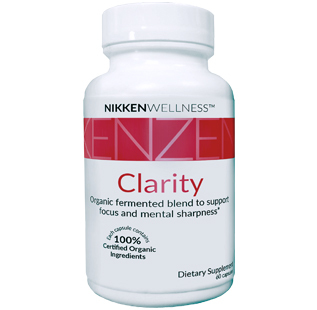
Kenzen® Clarity under the NikkenWellness line is formulated to help support your brain power. A fermented blend of 100% organic ingredients, Clarity is designed to help you stay focused and mentally sharp.

thumbnail-3

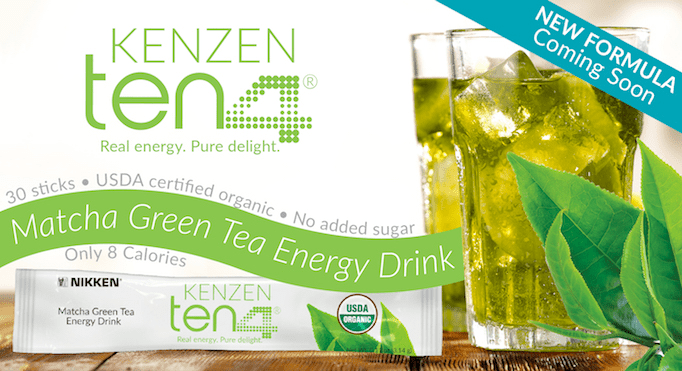
Caffeine-sensitive? Try Kenzen Ten4® with natural caffeine.

Athletes are always looking for that competitive edge. For example, some swimmers shave their entire bodies; many runners swear by carbo-loading; jockeys are known to fast before races; extreme behaviors become run-of-the-mill—all in pursuit of heightened performance and victory. One performance enhancer that is drawing more attention from elite athletes is perfectly legal: caffeine.

Caffeine has always been the perennial best friend of high school and college students—whether as a wake-me-up or a means to stay awake while cramming for exams. Triathletes and distance runners have used caffeine as an energy booster for decades, but in more recent years, those involved in short-burst sports are also taking advantage of this stimulant.

Natural sources of caffeine include seeds, leaves, nuts and berries. In Kenzen Ten4® Energy Drink Mix, there are 80 mg per serving of natural caffeine from organic matcha green tea. The caffeine in organic matcha green tea not only may help boost energy, but it also may create a calm type of awareness. In other words, organic matcha green may well provide you with a pick-me-up feeling without the jitteriness that caffeine from other sources may cause. The natural caffeine in organic matcha green tea binds to the naturally occurring phytonutrients to slow down the absorption of the stimulant, giving it a slow release effect, resulting in up to six hours of enhanced alertness or physical performance.

PiMag® Water: Taste the Difference

We love hearing from customers who have wonderful Nikken product experiences. We especially appreciate it when we’re told that a Nikken product not only helps people but may well make their lives more livable. Platinum Pam Barnes sent us a note that one of her customers wrote her:

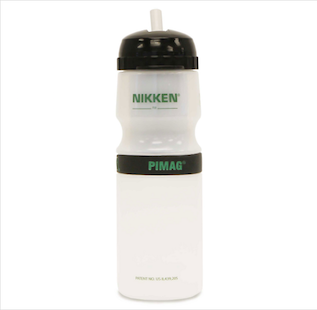
“Just a little note to let you know how much we appreciate our PiMag® Sport Bottles. We are living in a house on the Zambezi River here in Zambia. The drinking water comes from the river. Although it has passed through three different filters and an ultraviolet light, the taste is horrendous.

“We put this same filtered water* through our PiMag® Sport Bottles and we have great tasting water! When we make tea or coffee with the filtered river water, it tastes bad. But when we use PiMag® water to make coffee and tea, it tastes great. I don’t think we can ever do without our PiMag® Sport Bottles. Thank you!”

*PiMag® products are to be used for filtering potable water only.

pimag-bottle