The Natural Cycle of Renewal

Nature follows cycles of renewal. In the spring, plants sprout, flowers bloom and you actually can smell growth in the air. In the summer, days are warmer and it’s time to harvest some of the most delicious fruits, vegetables and grains. Autumn signals the beginning of a natural withdrawal with colorful changes, and winter is nature’s time of rest to prepare for renewal once again.

If you take a look at a tree, you see the trunk, its branches and the leaves. What you don’t see are the roots, but the taller the tree, the firmer the roots. Apply this image to the human experience. Human lives follow a similar cycle of renewal. There are seasons of growth, not only physically but intellectually, culturally and in business. There are also seasons that are focused on reflection, quiet contemplation and rest.

Successful individuals appear healthy and strong, but the foundation they are built on is not visible but surely there. The roots of that invisible foundation are what allow the progression of personal development, perseverance and resilience. Regardless of which season you are in, the basics of rest, hydration, clean air and whole food nourishment are necessary components to complete a successful cycle of renewal.

Just as nature thrives in seasons, you can build your own cycles of growth, renewal and rest. Nature doesn’t rush through winter to reach spring; it patiently endures each season, drawing strength and renewal from every phase. In the same way, you can learn to respect your own seasons — both the highs that fill you with energy and the lows that call for quiet and rest. Growth isn’t about constant improvement; it’s about respecting the natural ebb and flow of life.1

To evaluate how to complete cycles of renewal in more productive ways, simply ask a few basic questions:  Are you getting enough restful sleep? Are you making sure your indoor air is clean rather than full of dust, dander and allergens? Are you eating nutrient-dense foods? Are you practicing some kind of movement every day? Movement does not have to be a specific exercise. It can be as simple as climbing stairs instead of using the elevator, parking the car a little further so you can get a walk in, taking the dog for a walk, mowing the lawn and so on. Are you making private time to nurture yourself instead of always serving others?

For the entire month of January 2026, Nikken is offering 20% off replacement filters! Air and water filters need to be renewed— just like nature and just like you!

1 https://medium.com/@neeraj.narayan/what-can-natures-seasons-teach-us-about-growth-and-renewal-e848f6caa952

Great Sleep Fuels a Fully Empowered Life

One of the 10 actions for Empowered Living is recharging your energy. Achieving this requires connecting with nature, consciously breathing in fresh air and getting restful sleep. Humans spend about a third of our lives sleeping, because it is critical to healthy living and longevity.

Here’s what happens with good quality sleep:

• The heart and blood vessels heal and repair themselves.

• Grhelin (hunger hormone) and leptin (satiety hormone) are balanced. Inadequate sleep makes ghrelin levels go up, so you feel hungrier than when you have restful sleep.

• Healthy insulin levels are supported. Insulin controls blood sugar levels, which increase when you are sleep-deficient.

• Deep sleep triggers the release of the growth hormone that helps children and teenagers develop healthy muscle mass, repair cells and tissues.

• Deep sleep supports healthy development during puberty and promotes fertility.

• Restful sleep supports the body’s immune system. Sleep deficiency can affect the body’s natural defense system against germs and illness, making it difficult to combat infections.

• Major threats to longevity are decreased. These risks include heart disease, high blood pressure, obesity and stroke.

• Good sleep supports the brain to improve learning and memory. Problem-solving, decision-making and creativity are enhanced.

Sleep deficiency can result in feelings of stress and depression; and can cause mood swings, lack of motivation and not getting along in social situations. It can also cause lack of focus, problems in learning new things, slow reactions and poor decision-making, which in turn result in making more mistakes. It’s a vicious cycle of frustration and fatigue, lack of confidence and inertia. In other words, when was the last time you felt joy when you were sleep-deprived?

Smart nutrition, clean air and water are basic necessities, but when you think about humans spending a third of our lives sleeping (or at least trying to sleep), the importance of good sleep is obvious. If you can’t sit still, watch TV, read or be a passenger in a vehicle for an hour without falling asleep, you probably need more restful sleep. It’s not about quantity as much as it is about quality.

Create your sleep sanctuary and commit to good habits that support deep sleep, so you can feel good every day and experience empowered living! With great sleep, you can choose joy!

Source: https://www.nhlbi.nih.gov/health/sleep-deprivation/health-effects

You Can Create a Sleep Sanctuary

Sleeping well is a challenge for many people. Often, it’s because keeping up with the demands of family, friends and work can cause a huge amount of stress. The result is that neither body nor mind can decompress enough to get a good night’s sleep.

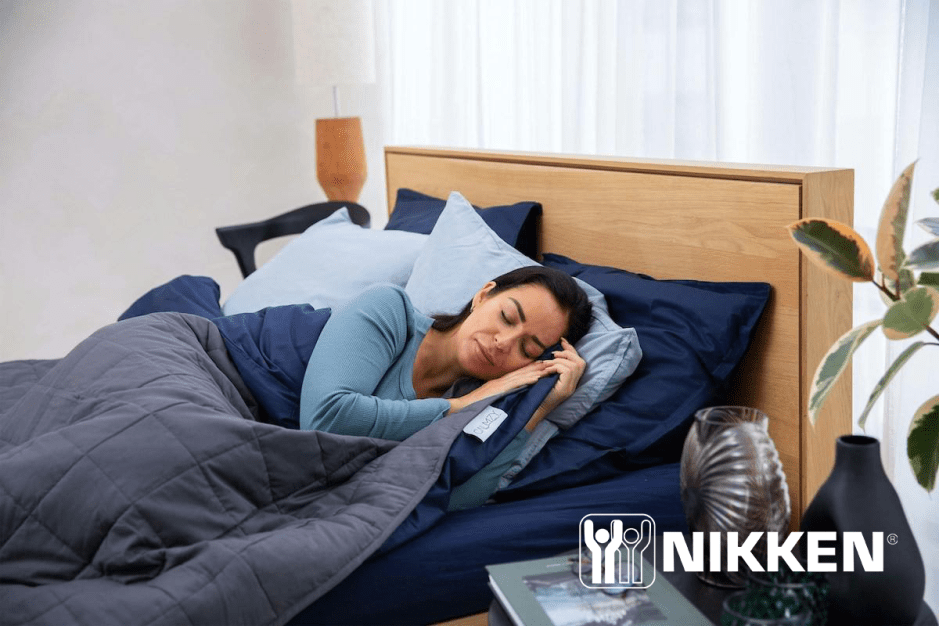
Fortunately, there are actual steps you can take to create a “sleep sanctuary,” some place pleasant and cozy, relaxing and soothing:

1. Perhaps the most important item in a sleep sanctuary is the bed. Regardless of the type of frame you choose for your bed, the mattress is important and should suit your personal needs. Do you like firm, medium or soft? More importantly, what type of mattress suits your spine? For example, even if you prefer a soft, cushy mattress, if your spine is weak, you would probably be better off with a firm mattress, because it affords more support.

Solution: No matter what type of mattress you currently have, the Kenko Naturest® Fit is a topper that sits right under your fitted sheet, in twin, full, queen or king sizes. The Fit is made with sculptured rubberthane latex, which provides massaging effects while allowing for air circulation and ceramic reflective fibers that help regulate body temperatures. 800 gauss magnets create a magnetic field which cocoons the body for relaxation to help improve sleep. Tourmaline gives off electrons that help create calming effects when exposed to pressure, heat or motion, which is provided by your own body as it lays on top of the Fit.

2. Just as the Kenko Naturest® Fit supports your comfort, what your skin actually touches also can make a difference in how well you sleep. Choose linen that feels the most comfortable for you. Invest in natural fabrics, such as cotton, flannel, flax or even silk. Manmade fabrics do not allow air to circulate as freely and may even cause itchy or sweaty skin. Natural fabrics help regular temperatures—cools in hot months and warms in cold ones.

3. Do the breath test of your bedroom or wherever you want your sleep sanctuary to be. Inhale in and out slowly. What do you smell? Since you will be spending all night in the sleep sanctuary, you need to make sure the air is fresh. Stale or unpleasant odors are not conducive to restful sleep. If there is a window, make sure to keep it open at least for a few hours every day so the room has outside air flowing through. Indoor air often contains more contaminants than outdoor air! Dust, pet dander, pollen and odors are typically in household air. Mold, mildew and dust mites may be present. Even gases such as radon and carbon monoxide are found in measurable quantities in many homes.

Solution: Whether you have a window or not, the KenkoAir Purifier®provides multiple-stage HEPA filtration, is energy efficient and includes a deodorizing filter. It operates quietly, is ozone-free and has a negative-ion generator.

4. Many people enjoy the aroma of essential oils. Lavender and cedarwood are examples of essential oils that people choose to de-stress and relax for better sleep.

5. Is your sleep sanctuary dark? Sleep scientists agree that a cool, dark environment is ideal for sleep. You can use black out curtains or wear a sleep mask.

Solution: The Kenko Power Sleep Mask not only helps block out light like a typical eye mask. It also helps relax the entire eye area, using similar technologies to those found in the Kenko Naturest® Fit. The Power Sleep Mask is made with patented Dynaflux® magnetic technology, ceramic reflective fibers and tourmaline technology which helps produce a calming effect. When your eyes are relaxed, you have a much better chance at sleeping through the night.

6. A sleep sanctuary is for rest. Your best bet is to create an environment that is natural—you might want a few green plants, but try to limit the clutter. For example, you don’t need to keep piles of books or clothes in a sleep sanctuary. Instead, hang simple photos or art on the walls and limit the amount of unnecessary furniture or accessories. In other words, create a space that you look forward to retiring in every night!

From now through October 31st, take advantage of free ground shipping on any size Makura Sleep Pack and other select Kenko Sleep products!

Still Tired After Eight Hours of Sleep?

During sleep, the body’s major organs are doing self-repair—the heart and the brain, the lungs, the digestive and circulatory systems all depend on rest to recover energy levels, maintain weight, bolster immunity and keep you at optimum health. The rule of thumb is to get eight hours of sleep, more or less, depending on your individual needs, but what does it mean when you sleep but still feel tired?

There’s a difference between restful sleep and sleeping. Restful sleep can help improve heart and brain health, support steady mood, boost energy, reduce stress and even lower your risk of chronic diseases.1 On the other hand, if you’re sleeping but fitfully with multiple wakeups, or have a hard time falling asleep to begin with, you’re not getting the quality sleep your body needs to function at full capacity.

Here are some tips for obtaining restful sleep, that is, falling asleep and staying asleep until it’s the right time to rise:

•          Give yourself time to wind down at day’s end. Don’t do anything strenuous close to bedtime, and try for calming activities, such as reading, meditating, drinking chamomile tea, and simply relaxing.

•          Create a good sleep environment. What this may include is a room temperature that is on the cool side, since sleep studies find that cool temperatures (about 65º F or 18 Cº) are more conducive to deep sleep.

•          Try for complete darkness. The body reacts to light, equating it with action, not rest. Black out curtains work to help your body reach a state of rest.

 •         Listen to quiet or soothing sounds. Many parents turn on a sound machine to drown out “active sounds” so their babies can sleep, and this trick actually works on adults as well.

•          Practice slow, deep breathing to help you fall asleep. If you awaken during your sleep hours, repeat the same slow breathing.

•          Cold water tends to be something that wakes you up, so opt for a hot bath or shower before sleep. The warm water initially raises your body temperature, and then as it cools down, this helps you fall asleep.

Still feeling fatigued even after setting yourself up for restful sleep? Fatigue is more than just feeling sleepy. It’s a deep-rooted exhaustion that leaves you with a lack of energy and motivation, making daily tasks much more challenging.2 There could be a medical issue causing your fatigue, including low iron levels, thyroid disorders, infections and autoimmune disorders. Or, you may not be getting enough whole foods and therefore lacking nutrients. Dehydration also causes fatigue, as does high stress levels or not enough exercise.3

The quality of sleep is as important as the quantity of sleep you get. Sleep disorders specialist Marri Horvat, MD, explains that if you’re feeling foggy and tired during the day, it could be a sign of an underlying sleep disorder. These include sleep apnea, restless legs syndrome, insomnia, narcolepsy and hypersomnia.4 If you experience fever, unexplained weight loss or gain, repeated headaches, shortness of breath or chest pain together with fatigue, be sure to check in with your physician.5

Since sleep affects your health in so many profound ways, empower yourself by eating right, exercising regularly, spending time in nature and breathing clean air during your waking hours! During autumn, warm weather transitions into cooler climes, making it some of the best conditions for getting restful sleep.

1 https://apple.news/AI5JBnwq3ROWnQQ9MiCsxGQ

2,3 https://newhealthjournal.org/tiredness/tired-quiz/

4, 5 https://health.clevelandclinic.org/why-you-wake-up-tired-after-8-hours-of-sleep

Do You Know Five Ways You Can Listen to Your Body?

Our bodies talk to us every day but sometimes we don’t listen and miss out on some important cues that can help keep us in top physical and mental shape! To make sure you are feeling good every day, be sure to spend a little time alone with yourself and really listen to what your body is telling you.

Here are five ways you can listen to your body by asking a few questions:

1.         Do you feel rested, tired or so-so? Is your body telling you to get a good night’s sleep or do you feel energetic and ready to tackle the day? Do you need to break up your busy day with a nap? Restful sleep is an important part of feeling good every day and one aspect of practicing empowered living.

2.         How are you feeling mentally and emotionally? Are you sad and depressed, anxious or stressed out? Or do you feel calm and content? Paying attention to your state of mind can help you maintain high energy levels and to avoid a slump. Sometimes all it takes is getting up and taking a walk in the fresh air to feel stable again. Deep breathing, getting up and stretching, a few minutes of quality time with yourself—these are all simple ways to maintain your mental equilibrium.

3.         What do you like to eat and is it nutritious? Are you eating regular meals? Are you snacking in between meals when your blood sugar dips? Are you actually hungry when you eat, or are you eating mindlessly out of boredom? Do you have a good cut-off time in the evening when you stop eating until tomorrow morning? Overeating and undereating can both wreak havoc with your body and your overall mood, so are you eating more or less than usual? If you are, what is your body telling you? On the other hand, mindful eating or eating the right foods at the right times of the day—based on your personal preferences and needs—can help you feel good every day.

4.         When was the last time you exercised? Do you have a daily routine to get up and do something active? Exercise doesn’t have to be a full-out strenuous workout at the gym. It can be a brisk walk with your dog or a stroll with your toddler. It can be doing a few laps in the pool or doing chair yoga, stretching out on the mat or cleaning your kitchen. Setting aside time every day to do something active can help you feel good every day. Once you start, your body will remind you every day it’s ready for some movement.

5.         Quality time with people who are important to you is key to feeling good every day. Are you spending enough time staying connected to those you care about? Do you text or call your elderly parents? Do you text or call your adult children? Never underestimate the power of talking and laughing with someone you feel close to, whether it’s a friend, mentor or family member. It does wonders to cheer you up or you can be cheering them up!

Listening to the body means cultivating a mindful awareness of what it (you!) needs at any given moment, followed by honoring that need. This intuitive practice will help you understand and make decisions based on internal cues, rather than steamrolling past your own limits. Long-term, sustainable health comes when you listen to your body, and then respond with care, action, and compassion.1

1 https://lindywell.com/listen-to-your-body-strategies/?srsltid=AfmBOorRVWB2X-ZymDQsijV9BGE7JIWRiyMBMSmQ8zRIM26bj0Y9WTDf

What is Empowered Living?

At Nikken, we strive to be catalysts for positive change. We want to inspire individuals to transform their lives and create a ripple effect throughout society. We foster a global wellness community that empowers people to make a difference, where everyone has a purpose to positively impact the lives of others.

Empowered living involves actively taking charge of your choices, decisions and actions. Positive choices lead to positive outcomes, and in turn, to personal growth, prosperity and a sense of balance, vitality and connection to the world.

The 5 Pillars of Wellness are pathways to empowered living:

•The Mind cultivates a fulfilling purpose and pursues continuous growth to find peace through life’s challenges.

•The Body embraces natural movement and nourishes your body with wholesome foods and adequate hydration.

•The Family nurtures loving connections and shares the joy of empowered living with loved ones.

• Society fosters a supportive and inclusive community, where individuals feel a deep sense of belonging and a shared sense of purpose and identity.

• Finances flourish from purposeful action. It’s not just about having a purpose but requires actively working for it and managing resources wisely.

Empowered living is not about being perfect or seeking perfection. It is about finding ways to feel and be well every day. It is about maintaining a state of well-being where there are consistently positive emotions, the ability to function both physically and mentally at optimal or near-optimal levels, and a sense of balance within oneself and with the environment. When we experience empowered living, we feel energized, focused and capable of achieving our goals.

Nature provides us with the sources for empowered living — clean air and water, soil to grow food, earth to ground us, conditions for restful sleep. Nikken technologies are inspired by nature: negative ions, ceramic reflective fibers, minerals from the earth, natural water filtration systems, sustainable marine plant life, magnetics, and more, are combined to produce Kenzen® nutrition, PiMag® water, Kenko Balance, Sleep & Support and True Elements® skin care. Nature serves as the source of smart nutrition, smart hydration, restful sleep, vital energy, fresh air and nourished skin.

This year and every year, practice empowered living and experience hope, happiness, joy and prosperity!

Support Your Immune System During the Winter Months

During the cold weather months of winter, the body faces multiple viral and bacterial challenges. That’s why colds and flus are common during this time of year, so it’s especially important to support your immune system.

Here are a few things you can do intentionally to support a healthy winter lifestyle:

•          Incorporate ways to manage or reduce stress, so you can help lighten the load on immune cells. Try stretching a few minutes at a time throughout the day, or simply sit quietly and take measured deep breaths. If you can meditate for even 15 minutes, it may be helpful.

•          Fostering an environment conducive to quality sleep helps empower your body to maintain a resilient immune system. Try to get 7-9 hours of sleep nightly, so that your body can reap the benefits of rest and reproduce immune cells. Remember, physical and mental restoration often take place during sleep. Check out the Makura Sleep Packs with pillows, mattress toppers and comforters for a comfortable sleep environment. (link to https://store.nikken.com/usa/en/product/makura-sleep-packs)

•          Drink plenty of water. Hydration plays an important role in the circulation of immune cells. Proper hydration also supports mucosal barriers and helps your body function at its best.1

Fill your PiMag Waterfall® with tap water and it dispenses filtered alkaline water, so you can hydrate fully.

               Handwashing is a simple way to support the immune system, as it is one of the most effective ways to prevent the spread of germs and infections. Wash your hands with soap and water for at least 20 seconds, especially before preparing food, eating, and after being in public places.2

•          Eat with essential nutrients that can boost your immune cells in mind. These include foods rich in vitamins A, C and D, as well as minerals such as zinc. Vitamin A can be found in green, yellow and orange vegetables such as yams, carrots and spinach. Vitamin C is in citrus, peppers, broccoli and many fruits and vegetables. Get out into the sun for a dose of vitamin D, which is needed for good immune response. Support your white blood cells and help maintain a strong gut with zinc-rich foods, such as pumpkin and sesame seeds, seafood and legumes.3 Even if you don’t normally take nutritional supplements, the winter months are a good time to try. Kenzen® Mega Daily 4 comes in two formulas, one for women and one for men. They feature a multivitamin and mineral, vegetable superfoods selected for exceptional nutrient content, whole body renewal components, and gender-specific support.*

•          Stay active. Physical activity helps enhance the body’s immune function by helping to improve circulation, which in turn helps flush out bacteria. Incorporating walking into your daily routine is one of the simplest ways to stay active.

•          During the holidays, there is always the temptation to eat and drink. A little of this and a little of that goes a long way, but keep your intake moderate, especially when it comes to alcoholic beverages. Alcohol tends to weaken the immune system.

So, eat, drink and be merry, but make the right choices to stay healthy all winter long! And remember, you can shop for great gifts with the Nikken Holiday Gift Guide through the end of the year.

*This statement has not been evaluated by the Food and Drug Administration. This product is not intended to diagnose, treat, cure, or prevent any disease.

1 https://bastyr.edu/about/news/boost-your-immunity-winter-lifestyle-tips-and-essential-nutrients

2,3 https://mheds.org/?p=7909

What Happens to Your Body During Sleep?

Were you ever told not to eat too much before going to bed at night? Or to make sure you apply moisturizer at night? It’s because your body is busy repairing cells and finishing digestion while you sleep. Those are just two key activities your body performs during sleep.

Hormone production changes during sleep. Growth hormone production increases while stress hormones decrease. In fact, cortisol, known as the stress hormone, goes down when you fall asleep but then rises again, before you wake up. Melatonin, on the other hand, rises when you are ready to sleep and falls when daylight approaches. In healthy bodies, kidneys make less urine during sleep, so you don’t have to get up to use the bathroom during a good night’s rest.

Another change the body undergoes during sleep is body temperature. It goes up and down a bit throughout the day, but at night, body temperature tends to be one to two degrees lower than during the day. The lower body temperature helps you stay asleep because humans sleep better when cooler. To prepare for the next day’s activities, your body temperature starts rising as morning approaches.

“Sleep is a period during which the brain is engaged in a number of activities necessary to life—which are closely linked to quality of life,” says Johns Hopkins sleep expert and neurologist Mark Wu, M.D., PhD.1 Throughout your time asleep, your brain will cycle repeatedly through two different types of sleep: REM (rapid-eye movement) sleep and non-REM sleep.

The first part of the cycle is non-REM sleep, which is composed of four stages. The first stage comes between being awake and falling asleep. The second is light sleep, when heart rate and breathing regulate and body temperature drops. The third and fourth stages are deep sleep. Though REM sleep was previously believed to be the most important sleep phase for learning and memory, newer data suggests that non-REM sleep is more important for these tasks, as well as being the more restful and restorative phase of sleep.2

As you cycle into REM sleep, the eyes move rapidly behind closed lids, and brain waves are similar to those during wakefulness. During the day, your breathing changes a lot, depending on what you’re doing and feeling. During non-REM sleep (about 80% of an adult’s sleeping time), you breathe slowly and regularly. But during REM sleep, your breathing rate goes up again, which also dreaming time. Breathing also becomes more shallow and less regular during this sleep phase. Some of it may be due to throat muscles relaxing. It may also be due to less movement of the rib cage during REM sleep. Whenever you’re sleeping, your oxygen levels are lower and your carbon dioxide levels are higher because your level of breathing goes slightly down.3

During non-REM sleep, your brain takes a real rest; however, during REM sleep, your brain may be even more active than when you’re awake! Blood flow to the brain and metabolism in the brain increases during REM sleep, which supports activity. Your brain also uses your sleep cycles to consolidate memories. So, staying up all night to cram for a test or a special work project might be counterproductive.4. In other words, when you sleep too little, you are unable to process what you’ve learned during the dayand have more trouble remembering it in the future. Simply put, restful sleep is important so that your body can utilize the time to rejuvenate and ensure optimal levels of immunity, metabolism and brain function.

Throughout the month of October, Nikken is offering 20% off our Kenko sleep products (except for the Kenko PowerSleep Mask) plus free ground shipping. The Makura Sleep Packs are already priced with a 10% discount, but we’re adding another 10%, so you still get 20% off plus free ground shipping. Take advantage of this great sale to help your entire body enjoy the luxury of restful sleep!

1, 2 https://www.hopkinsmedicine.org/health/wellness-and-prevention/the-science-of-sleep-understanding-what-happens-when-you-sleep

3, 4 https://www.webmd.com/sleep-disorders/what-happens-body-during-sleep

Why Sleep Matters in Big Ways

Achieving deep, restful sleep is essential to maximizing our well-being and daily performance. Sleep is a personal matter and what serves as adequate sleep for one can be completely insufficient for another. Nonetheless, sleep issues can affect people of all ages and impact many parts of our lives.

The Sleep Foundation1 compiles data regarding sleep habits and performance. Some of the statistics are truly daunting:

• Insufficient sleep has an estimated economic impact of more than $411 billion each year in the United States alone.

• 4.8 of 10 workers say they are regularly tired during the day, and 7 of 10 say they are tired when their work day is done.

• Up to two-thirds of adults occasionally experience insomnia symptoms. 10-15% of people experience chronic insomnia, which persists over multiple months. Women are 40% more likely to have insomnia than men. 55% of nurses say they experience insomnia.

• One study estimates the annual cost of workplace errors and accidents linked to insomnia at $31.1 billion in America.

• Drowsy driving is responsible for more than 6,000 fatal car crashes.

• About 57% of men, 40% of women and 27% of children snore in the U.S. Up to 70% of snorers have been diagnosed with sleep apnea.

Obstructive sleep apnea (OSA) affects around one billion adults worldwide, with 80-90% of cases going undiagnosed. A 10% increase in body weight may make us six times more likely to have OSA.

Research2 shows that what we eat and drink can make it easier or harder to get the sleep we need:

• Drinking more than two servings of alcohol per day for men and more than one serving per day for women can decrease sleep quality by 39%.

• On average, adults in North America snack before bedtime 3.9 nights each week. Adults who snack on seeds and nuts before bed sleep an average of 32 minutes more than those who snack on chips, crackers, or pretzels.

• Eating within two hours before bed is linked to later bedtimes, trouble falling and staying asleep and obesity.

• 71% of SleepFoundation.org survey respondents drink coffee every day. Of these, 70% think caffeine has an impact on their sleep. Top issues reported by caffeine-drinkers are sleepiness, fatigue and insomnia, with 30% experiencing anxiety.

Daylight Saving Time in North America has a big impact on people’s sleep patterns. Generally speaking, it’s easier to transition in the autumn when we gain an hour but our circadian rhythms still need to adjust. In the week after the November time change, people experienced 115% increase in difficulty falling asleep, 103% increase in excessive daytime sleepiness, 64% increase in difficulty staying asleep and 34%increase in sleep dissatisfaction.3

Throughout the month of October, Nikken is offering 20% off our Kenko sleep products (except for the Kenko PowerSleep Mask) plus free ground shipping. The Makura Sleep Packs are already priced with a 10% discount, but we’re adding another 10%, so you still get 20% off plus free ground shipping. Take advantage of this sale to transform every bedroom into the perfect sleep environment!

1, 2, 3 https://www.sleepfoundation.org/how-sleep-works/sleep-facts-statistics#:~:text=at%20$31.1%20billion-,View%20Source%20.,almost%2020%20million%20children%20snore

Do Men Have Special Sleep Needs?

An important part of people’s health is how they sleep. Too often people awaken from sleep feeling unrested and tired, exactly the opposite of what sleep is expected to accomplish. Although all nature’s creatures require restful sleep, the amount and the timing may vary greatly. With humans, there are some aspects specific to men.

Individual sleep requirements are different from person to person, but on the average, most adults are said to need seven to eight hours each night in order to feel alert and rested.1 According to sleep experts at the University of California-Los Angeles (UCLA), many men simply do not realize they are not getting enough restful sleep. The reason is that sleeplessness with men is so common that they believe it to be the norm. In other words, men get used to being tired and rather than trying to rectify the situation, believe it’s supposed to be that way and they need to put up with it.

The result of not getting enough sleep on a regular basis is functioning at less than optimal levels of energy and focus. Some signs of not getting enough sleep (in both men and women) include:

•          Low energy levels during the day.

•          Difficulty paying attention in meetings.

•          Lack of motivation, trouble moving from task to task.

•          Bad temperament—irritability, grouchiness.

•          Inability to awaken when the alarm goes off.

•          Sleepiness when behind the wheel— as dangerous as texting while driving.

Work demands are considered to be the primary causes of men’s lack of sleep. UCLA findings state that men’s perceptions of their work-life demands often stop them from seeking the needed amount of restful sleep. For example, many men have full work schedules, and for lifestyle balance, they go to the gym regularly to work out. They may also go to sports events, work on projects around the house and help with the kids if they have families. Single men may socialize with their single friends or be on a dating schedule. In other words, in addition to an already full work schedule, men often tend to overlook the need for rest in favor of pursuing more activities that only add to their fatigue.

Another aspect that deters some men from obtaining enough sleep are certain behaviors or habits. Statistically men consume more alcohol, nicotine and caffeine—each of which can disrupt healthy sleep patterns. Big meals and exercising close to bedtime are other sleep disruptors. Men also are known to keep irregular sleep schedules, often going to bed and waking up at different times rather than adhering to a more constant routine. This irregularity can disrupt the internal body clock from producing sound sleep. The antidote to this is to keep the internal clock set at the correct time by sleeping and rising at consistent times daily—this involves not sleeping in late on non-work days. The healthier alternative is to go to bed earlier at night when feeling tired rather than pursuing additional activities. Although men seem to be good nappers, too long a nap may cause more sleeplessness at night, so sleep experts advise keeping naps to less than one hour, and taking them early in the afternoon.

Sleep disorders are pervasive globally, but men suffer from some specific ones more often than others. These are:

•          Obstructive sleep apnea (OSA)2: Men are twice as likely as women to have OSA, which is caused when the tissue in the back of the throat collapses during sleep. The tongue falls back and blocks the airway to cause a temporary pause in breathing that can wake you up or disturb sleep. Primary signs of OSA are loud snoring, snorting and gasping. Many men with OSA are unaware they have it, and since snoring is so often accepted as a norm, the dangers go untended. Sleeping on the side and losing weight sometimes alleviates the condition but severe cases require medical intervention.

•          Narcolepsy3: Extreme sleepiness during the day can cause people to suddenly fall asleep even when eating, walking or driving. This condition requires medical treatment to help produce more normal patterns of being asleep and awake.

•          Delayed sleep phase disorder (DSP)4: As the name implies, sleep is delayed from normal hours. Usually the delay is for two or more hours, resulting in very late nights and difficulty waking in the morning. DSP may be caused by continually going to bed very late at night and causing the timing of the body’s clock to be thrown off, preventing the ability to fall asleep at an earlier or more acceptable hour. To correct DSP, avoid bright lights in the late afternoon and evening and make sure your sleep environment is dark. Then get as much bright sunlight in the mornings and early afternoons to set the body clock right.

•          Jet lag disorder and shift work disorder5: Jet lag is something most people experience when they travel between time zones after spending more than a few days in one and entering into another. The internal body clock doesn’t have time to adjust to a new location right away due to the speed of the travel, making it hard to sleep well. The same thing holds true for people who work rotating, early-morning or night shifts, confusing the body when you try to sleep when the body expects to be awake. The result is trouble sleeping and fatigue.

Kenko Sleep Technology takes what nature provides in the form of magnets, tourmaline and reflective fibers to provide a cocooning effect, relaxation, temperature regulation and calmness for a great night’s sleep. For a special opportunity to purchase a select group of Kenko Sleep products at extraordinarily decreased prices, contact your Nikken Consultant.

1, 2, 3, 4, 5 https://www.uclahealth.org/medical-services/sleep-disorders/patient-resources/patient-education/sleep-and-men