Choose Gratitude to Write the Next Chapter of Your Story

Approaching the end of the year is the ideal time to pause, reflect, and decide who you want to become next. As you step into a new chapter of your life, one of the main practices you can choose is gratitude.

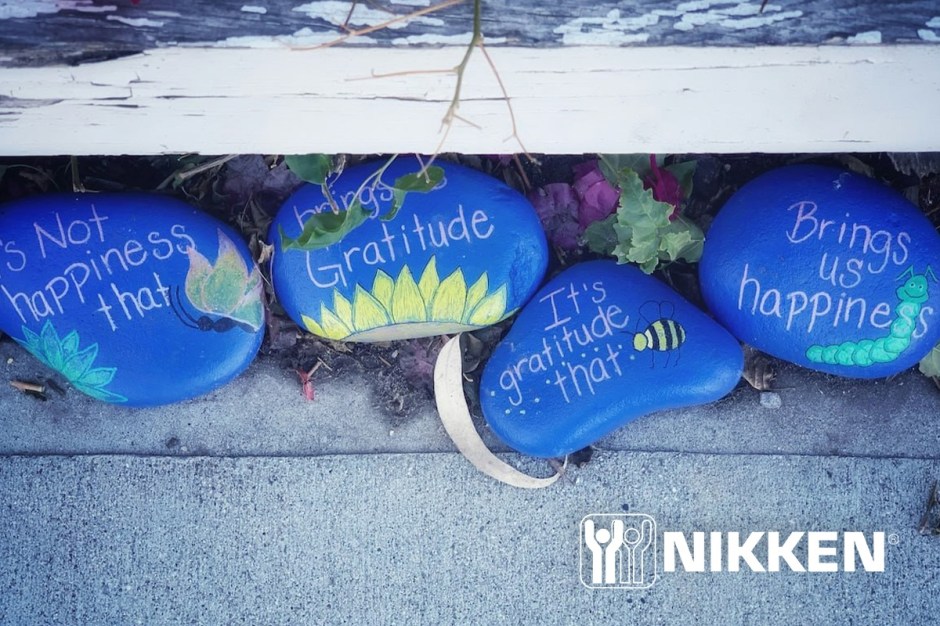
Choosing gratitude is a vital aspect ofEmpowered Livingand Feeling Good Every Day. Empowered Living starts with the belief that you have the ability to make things happen and to write your own story. Gratitude reinforces that belief. When you consciously appreciate the positive aspects of your life, you’re much more likely to feel good every day—or at least most days!

Studies show that gratitude reduces stress, supports better sleep, enhances relationships, and contributes to overall emotional and physical wellness. When your mind feels lighter and your heart feels steadier, it becomes easier to take meaningful action. Gratitude creates an inner environment where you can thrive—where feeling centered, motivated, and hopeful becomes more natural.

Gratitude isn’t just a feeling. It’s a practice, a mindset, and a daily choice that can shape the way you experience your life. In other words, gratitude may shift your perspective from the bleak or negative to the bright and positive. Life is full of ups and downs, and gratitude allows you to focus on the ups while letting go of the downs. This conscious embrace of the positive does not mean ignoring the negative, but it prevents misfortunes from taking center stage.

When you take time each day to acknowledge your strengths, the people who care about you, small moments of beauty—you become grounded and develop clarity and resilience. Gratitude propels you forward with confidence and intention, to becoming a Human Being More.

Expressing gratitude strengthens relationships, deepens trust, and encourages kindness. When you acknowledge the people who support, inspire, or simply share part of your day, you create a ripple effect—your gratitude attracts others to be grateful for being connected to you. Each relationship that is forged in gratitude stands to last the longest.

Whether you have new goals or simply want to continue working on existing ones, taking small steps consistently every day will bring results. Gratitude is a great partner with patience and hope. As you head towards 2026, write your next chapter with gratitude and intention. Honor yourself and all that you have been through, regardless of whether it’s in service of others or simply surviving the unexpected ordeals in life.

You have the power to choose where you’re going and who you become.

All of us at Nikken wish you a beautiful season filled with love, joy and gratitude.

Beyond Resolutions: From Purpose to Planning for 2026

The dictionary defines a resolution as “a firm decision to do or not to do something.” As we reach the end of each year, the question of resolutions inevitably comes up, unless you are someone who has decided not to entertain the prospect of resolving and failing. According to research, about 88% of people who make New Year’s resolutions fail, despite 52% of them feeling confident they will follow through.”1

Part of the reason for this high failure rate is because the resolutions are made without a concrete goal or purpose. If a resolution is made due to previous errors, out of guilt or regret, it may well be doomed to fail. On the other hand, some resolutions are so ambitious that they are not realistic.

To heighten the possibility of success in meeting resolutions, researchers recommend having a clear purpose for change and then planning realistically how to implement it. In other words, why do you want to make the resolution, what is it precisely, and how can you make it happen? For example, many people resolve to lose weight; however, that is not a well-defined resolution. Instead, you could resolve to lose weight by going on a mile-walk five days a week and incorporating at least three salads into every 10 meals. Those are precise goals that spell out how to make the resolution happen.

Let’s take that same example and move to the planning or strategy stage. If you are going to walk a mile five days a week, decide which five days they will be. Also plan ahead what time those walks will take place and on which days of the week. A wall calendar is a great tool to use! Are you going solo or is a walk-buddy or family member included? Do you have a dog who would love to go with you? Plan it and do it!

Going back to the example of eating at least three salads out of every 10 meals, plan to have plenty of vegetables on hand. When will you go grocery shopping? What are your favorite veggies? The more you like them, the better your chances are of staying on the regimen. For example, if greens aren’t your favorite but you need to eat more of them for their chlorophyll and mineral content, be sure to have complementary veggies on hand so you can combine and adjust flavors. As your body adapts to nutrient-dense foods, you will start craving the right foods instead of those with empty calories. That’s a plan, not just a resolution.

A study found that writing down goals and sharing your progress with a friend led to a 76% goal achievement versus only 43% when unwritten.2 This shows how important it is to be clear and focused. What you see written down makes resolutions more concrete, and likewise, writing down your goals and plans give you a “cheat sheet” to refer to. Telling your results to a friend or family member is a no-brainer—we all like approval and there’s nothing more enjoyable than sharing good news. And if your confidante has similar resolutions, you can reinforce each other’s efforts and celebrate together.

In summary, make your resolutions, define them clearly, set clear-cut goals, plan the details of how to implement your goals, daily and weekly, write it all down! You have almost a month to plan and finesse your resolutions for the new year! Happy December!

1 https://anthropedia.org/articles/new-years-resolutions

2 https://holdingyourfeettothefire.com/goals-for-2026/

Did You Know Fatherhood Transforms Men’s Bodies?

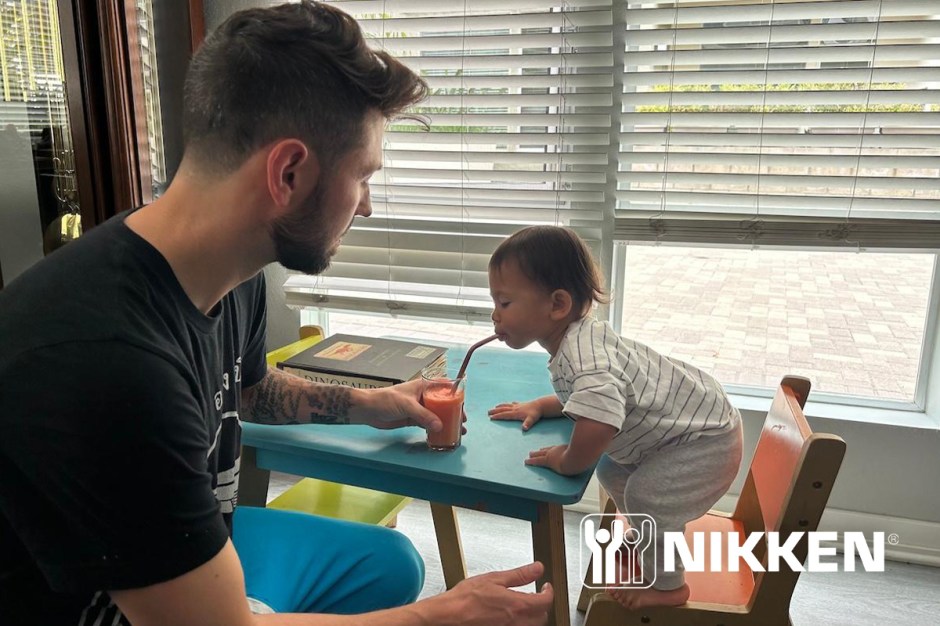
Motherhood transforms women’s bodies in obvious ways, but did you know men’s bodies evolve when they become fathers? Men’s physical changes are not necessarily apparent to the human eye. Instead, they morph internally. The two main changes are hormonally and cerebrally.

The hormonal change is mainly a drop in testosterone, the male sex hormone. The drop is the male body’s way of preparing for the new role of fatherhood. According to scientists, men with lower testosterone are much more sensitive towards children. They are also more empathetic and motivated to take care of their children.1 One example given by researchers is that of different reactions to a baby crying. They found that men with lower testosterone levels, particularly fathers, are anxious when hearing a baby cry; whereas men with high testosterone levels react with irritation. By the same token, fathers exhibit more patience with daily activities, such as waiting for a parking spot.

Cerebral changes that come with fatherhood also enhance parenting abilities. The outer brain of fathers shows increases in areas that impact planning, focusing and problem-solving. Areas of the brain related to nurturing and risk detection are also activated—which is nature’s way of empowering fathers to know when their babies are safe.2 Dads become more sensitive to others’ pain, which equates to being more empathetic, especially when it comes to children.3

Women are often attributed with having naturally maternal instincts. Women are said to know instinctively what to do with babies, having gone through pregnancy, childbirth and when possible, breastfeeding. Men, on the other hand, are said to “learn” how to be a father. The biological changes that fathers undergo prove that they have naturally paternal feelings that parallel mothers’ maternal instincts. In other words, dads are gifted by nature just as moms are. The difference is that because society doesn’t proclaim it, dads need to be aware of their biological transformation, trust in it, and be confident enough to rely on their nature-given instincts.

There is even a male counterpart to post-partum depression, traditionally attributed only to new mothers. Studies show that one in 10 men experience mental health difficulties in the first six months after a baby arrives.4 This is due partly to the new dad’s expectations of himself to know the right things to do at the right times. It’s a form of self-stress. In addition, the new schedule can create chaos—no time to eat, sleep or exercise as both new parents focus on the baby. These changes in lifestyle patterns impact not only the new mom, but also the new dad. So, new fathers need to be aware of their own mental and emotional states as well as their partners’.

Childrearing experts agree that the fastest way to bond with new babies is to start interacting with them right away. Mothers who breastfeed have a distinct advantage but fathers can dive right in by participating in diaper changing, bathing, bottle-feeding and soon, playing. Talking to babies, feeding them, walking them, learning their milestones and cheering them on—it’s all part of both motherhood and fatherhood.

Nikken wishes all dads a very Happy Father’s Day this coming Sunday!

1, 2, 3 https://www.bbc.co.uk/tiny-happy-people/articles/zvnhjsg

4 https://www.bbc.co.uk/tiny-happy-people/articles/zb7svk7

Women’s Equality Then & Now

In 1971, the Joint Resolution of Congress designated August 26 of each year as Women’s Equality Day in the United States. August 26 is the anniversary date of the certification of the Nineteenth Amendment to the U.S. Constitution, which granted women the right to vote in 1920. The campaign for woman suffrage was long and hard—Black and women of other minorities still were not allowed to vote until much farther into the 20th century, due to discriminatory state voting laws. 

Now Women’s Equality Day is recognized as a day of national celebration. It commemorates the women’s suffrage movement and the work to secure and expand equal rights today. Women who are citizens of the U.S. vote in every state, regardless of cultural and religious groups they belong to.

Equality is not just about the right to vote. Currently, many organizations continue to fight for equality. There is still wage disparity. It is the most crucial inequality in the workplace and applies to virtually every industry. Even women athletes win smaller prizes for competing in the same sports as men.

The inequality in pay leads to another inequity: The Gender Equity Policy Institute has found that women, particularly women of color and single mothers, are more likely to spend more than a third of their income on housing. This is more than what economists and financial advisors consider reasonable to make other ends meet.1 Because women are more burdened by housing, they are more exposed to homelessness.

Gender-based violence continues to be prevalent. Worldwide, 35 percent of women have experienced physical and/or sexual violence from a partner or non-partner.2 Gender-based violence also occurs during war and in political situations.

There is still an education gap. In many countries, women are not allowed to pursue advanced education or even limited education. This is changing and in North America, there are even some large cities where more women are obtaining advanced education than men.

There is a general lack of access to affordable and adequate healthcare for all, but especially for women and those is underserved communities. Before 1993, women were rarely included in clinical trials, so even now, the medical field is not clear on how well many drugs and devices work on women due to gender bias. Women therefore experience adverse reactions to medications at twice the rate of men.3

Women have come a long way in obtaining equality but still have a long way to go. The Global Wellness Community is inclusive and welcomes one and all. Let’s spread the word and help sisterhood around the world.

1 https://www.latimes.com/california/newsletter/2022-08-19/california-politics-housing-crisis-womens-issue-ca-politics

2 https://www.codehergirls.org/post/women-are-still-fighting-for-these-basic-rights-in-2021

3 https://www.aamc.org/news/why-we-know-so-little-about-women-s-health

Mothers are Super Heroes

A mother in different stages of motherhood is a caregiver who cooks and feeds, washes and bathes, does financial planning and budgeting, chauffeurs and gives driving lessons, nurses sick bodies and teen angst, plays the role of plumber and electrician, researches preschools and childcare, helps with homework, mends ouchies and broken hearts, manages multiple schedules, delegates chores, teaches morals and values, gives advice and much more. This juggling act performed by at-home moms as well as moms with outside professions, can take a toll on the physical and mental well-being of “super” mom.

It’s no wonder moms suffer from burnout. The feeling of mental, emotional and physical exhaustion—especially losing that sense of self from having to play so many roles—is sometimes called “depleted mother syndrome.” Dads can also experience burnout, but it is more common among moms. Even though contemporary dads have really stepped up to the plate , in general, moms still shoulder a disproportionate amount of parenting responsibilities.1

While women are socialized to be nurturing, caring, and extremely giving to others, they are often not taught that they ought to be on the list of people receiving care as well.2 To help keep stress from becoming overwhelming, moms need to cut themselves some slack:

•          Get rid of “mom guilt.” Society imposes expectations on moms that are often unrealistic. Moms need to practice TLC on themselves, to strive for okay, not perfection. The kids will also benefit from this approach.

•          Recognize that “it takes a village to raise a child.” Realize that needing help is the norm. Moms need to ask their partner, relatives, friends and anyone else who can be supportive.

•          Take time out for self-care. This is hard for many people, but especially mothers who are conditioned to give time to everyone in the family but herself. Even if it’s only time to take a soak in the tub, an hour at the gym or Pilates class, an afternoon nap, every bit of self-time is helpful in fighting stress.

•          Moms spend a lot of time planning for their children’s future. These days, deciding between the right preschool and homeschooling can be tantamount to applying to an Ivy League college or becoming an entrepreneur. Given these pressures, it’s important for moms to live in the present and enjoy the small daily occurrences that make motherhood a blessing and joy.

•          Accept and embrace your individual style of mothering. Each mom has to decide what works best with her child(ren). Just because breastfeeding works for some moms doesn’t mean it’s for all moms. Just as there are countless books on sleep-training, there are just as many on the benefits of co-sleeping.

For the whole month of May, Nikken is honoring mothers with gifts inspired by the wisdom of Mother Earth! Grounding products such as KenkoGround® and Kenko Precision Set—ideal for helping lessen stress—are 40% off! And, True Elements® Marine Organic Skin Care as well as Kenko Jewelry are 20% off. Show the mothers in your life how much you appreciate all the sacrifices they made and continue to make!

1 https://www.caron.org/addiction-101/substance-abuse/mom-burnout-substance-abuse-what-you-need-to-know#:~:text=Mom%20burnout%20sometimes%20called%20depleted,resources%20for%20coping%20with%20it.

2 https://rcchicago.org/motherhood-stress/

Celebrate International Women’s Day 2024

Amelia Earhart. Malala Yousafzai. Florence Nightingale. Madame Curie. Mother Teresa. These are famous women, pioneers in their own right. But what about so many women most of us have never heard of, because women pioneers have been overlooked throughout the years? Jackie Cochran, first woman to break the sound barrier, trained by Chuck Yeager. Nadezhda Popova who flew 852 missions for the Russians against the Nazis in World War II (Hero of the Soviet Union). Junko Tabie, Japanese mountaineer, author and teacher, first woman to reach the summit of Mount Everest and first woman to ascend the Seven Summits, climbing the highest peak on every continent. Rosalind Franklin, the chemist known for discovering the double helix structure of DNA.

The point is, women are under-acclaimed. That is in part, what International Women’s Day is all about. This year, the theme is “Inspire Inclusion.” When we inspire others to understand and value women’s inclusion, we forge a better world. And when women themselves are inspired to be included, there’s a sense of belonging, relevance, and empowerment. To inspire inclusion means to celebrate diversity and empowerment on International Women’s Day 2024 and beyond.1

International Women’s Day (IWD) is a global celebration of the social, economic, cultural, and political achievements of women. Each year, March 8th serves as a powerful reminder of the progress made towards gender equality and highlights the work that still needs to be done.2

This year’s campaign theme underscores the crucial role of inclusion in achieving gender equality. It calls for action to break down barriers, challenge stereotypes, and create environments where all women are valued and respected. Inspire Inclusion encourages everyone to recognize the unique perspectives and contributions of women from all walks of life, including those from marginalized communities.3

One of the key pillars of Inspire Inclusion is the promotion of diversity in leadership and decision-making positions. Women, especially those belonging to underrepresented groups, continue to face barriers when seeking leadership roles. By championing inclusion, organizations and communities can harness the full potential of diverse perspectives, leading to better decision-making and innovation.4

Regardless of where you live, gender equality is a fundamental human right. Advancing gender equality is critical to all areas of a healthy society, from reducing poverty to promoting the health, education, protection and the well-being of girls and boys.5

Nikken celebrates International Women’s Day every day! Won’t you join us and help to inspire inclusion?

1, 2, 3, 4 https://www.internationalwomensday.com/Missions/20202/What-does-it-mean-to-truly-inspire-inclusion

5 https://www.un.org/sustainabledevelopment/gender-equality/

Mothers are Our First Teachers

“Our mothers are our first teachers, and we teach others the same lessons we learn from them. As a child, when your mother believes in you, you believe in yourself, and when that happens, there is nothing you can’t do. As a mother, that is the greatest gift we can give to a child.”  Caroline Kennedy

From the minute a child is born, especially a first child, a mother is faced with so many decisions to make, decisions she never had to make before. Breastfeed or bottle? Diaper service or disposables? Traditional pediatrician or alternative care? Homemade food or ready-made when starting solids? Sleep train or co-sleep?

As the child develops, parenting becomes more complicated. How strict should a mother be? How much discipline is considered being overly controlling versus simply teaching good habits and manners? Public school or private? One language or multiple languages spoken at home?

Then there are the teen years, which are full of land mines for mothers to step on. There is the big issue of privacy. Is it okay to monitor your teenager’s phone calls, online activities and choice of friends? Is there a serious boyfriend/girlfriend? Do they know about and practice safe sex? How much can you ask without seeming to pry—and is your teenager even speaking to you? Is your teenager simply moody or suffering from depression, OCD, ADHD and many more possible irregularities? Are your high schoolers type A and pushing themselves too hard as they try to get into the “best” universities?  Every mother is different, yet every mother of a teen wonders even more than before, “what am I supposed to do to be a good mom?”

Once that child is “grown up” and leaves the house, mom does not stop worrying. The difference is now she sees them less often and no longer has a front row seat to view their successes and foibles. By this point, blessed moms may have become friends of their offspring. Friends get together and the teaching aspect of the relationship may even out in that the child may be imparting advice and knowledge to the mom as much as the other way around. Mom may be taken care of in many ways—role reversal begins when you’re blessed to be a friend mom.

When your daughter becomes a mother herself (or when your son becomes a father), that huge milestone changes the parenting dynamic yet again. Your “child” may actually show gratitude on a regular basis—there’s nothing like first-hand experience to teach or learn the lesson of parenthood: you no longer come first when you’re a parent. As we navigate into the different phases of our lives, mothers especially have to walk through fire before realizing we cannot take care of everyone else unless we take care of ourselves. This counterintuitive lesson is something virtually every mother struggles with.

We have many moms at Nikken, both who are Consultants and staff members. Being part of Nikken influences how mothers develop their parenting styles over the years and as the children gradually mature. Regardless of the wide range of parenting choices, Nikken Consultants and staff members cannot help but be guided by the 5 Pillars of Wellness, and this becomes integral to how we guide our children—to live fully with healthy body, mind, family, society and finances—in harmony with nature. These children will in turn impart this conscious and gentle lifestyle to the next generations.

May 14 is Mother’s Day this year— let’s show the true heroines — the mothers in our lives— how much we appreciate their teachings, patience, love and sacrifice! Let’s mindfully and intentionally do something to help take care of the beloved mothers in our lives every day of the year as they continue on their heroic journeys as mothers.

Women in Leadership Then and Now

“Since 2008, more women have assumed leadership of huge and influential companies (GM, IBM, Lockheed Martin) and global institutions (the IMF, the World Bank, the European Central Bank). More women have also been elected to high office around the world.  Since 1964, 64 countries have had a female head of state or government, according to Women’s Power Index and as of May 2020, 19 countries were being led by a woman,”1 according to Sally Helgesen, author of seven books on leadership, and a keynote speaker around the world on women’s changing roles.

Even with these vastly improving numbers, women in leadership still lag behind the majority. This may be attributed to the basic challenges women continue to face in the workplace, even as progress is made:

1. Unconscious bias stems from gender stereotypes reflected in the subconscious attitudes both men and women have about female capabilities. Huge strides have been made, but the deeply ingrained image of women “barefoot and in the kitchen” still is widespread even in civilized nations.

2. Unequal pay is more complex than just dollars and cents. It extends into the opportunities women are presented with, often fewer than their male counterparts.

3. Different expectations makes it more difficult for women, because there is the need to balance actual ability, respect from peers and being likable. In other words, aggressive men are the norm, but aggressive women may be considered dislikable.

4. Limited career advancement opportunities take the form of fewer promotions for women in a corporate environment. A 2021 Yale study found women 14% less likely to be promoted at their companies annually as well as being consistently judged as possessing lower leadership potential than their male counterparts.2

5. Lack of sponsorship and mentorship ties in with limited career opportunities. Women are less often approached by mentors or sponsors who can be sources of knowledge and even lead to the “inside track.” What women need to do is to actively seek out mentors and coaches rather than hope to be “found.”

6. Sexual and gender-based harassment is something that women continue to contend with. The American Academy of Arts and Sciences found that women supervisors had to deal with even more sexual harassment than others in their fields in the United States, Japan and Sweden.3

Given the inherent challenges that women face, the progress that has been made by women in leadership in recent decades is impressive. According to recent statistics from the Organization for Economic Co-operation and Development, the proportion of women in higher education fields as of 2017 are as follows: 78% Education, 76% Health & Welfare, 64% Social Sciences, 63% Humanities, 54% Business and Law, 50% Science & Math, 24% Engineering and 19% IT & Communications. The World Bank shows that as of 2017, women accounted for 49% of the global workforce.4

Women inevitably will continue to rise in roles of responsibility and power. The reason is simple: women are major consumers and therefore drive the global economy. A report looking at female emerging markets by Ernst & Young pointed out that by 2028, 75% of the disposable income worldwide will be controlled by women.5 With women as the primary consumers for everyday products and services (fashion, home, health, education) female preferences will dictate the marketplace, and women executive and entrepreneurs will have the sensitivity and know-how to lead. In fact, start-ups founded by women since 2018 to date, have yielded higher benefits with an average 10% higher income than those founded by men.6

What is called “she power” by entrepreneurs in the Digital Age, refers to leadership traits attributed more often to women. It embodies the ability to combine, adapt and learn. In other words, women leaders tend to be able to adapt quickly to changing environments and to face hardships with optimism and perseverance. According to a survey published by the Boston Consulting Group in 2018, women are more dependent on data and information analysis as well as being more willing to spend time on research.7

This trend coincides with the decreasing “confidence gap,” where women questioned their own competence. Since female millennials are now a force to be reckoned with in the global workplace, confidence has increased as well as the recognition of women’s capacity for strategic insight and vision. According to Ms. Helgesen, “As growing confidence based on demonstrated competence has increased women’s determination to reach their full potential, so has greater solidarity among them. This is one of the most dramatic shifts that has taken place over the past 30 years. Increasing solidarity among women, a growing role for male allies, and vastly improved organizational engagement have combined to create an infrastructure of support for women almost entirely missing in previous decades.”8

As women continue to expand into leadership roles worldwide, initiatives that were once considered tokens to showcase a company’s commitment to women’s advancement have now become integral parts of many companies’ talent acquisition strategy. Global organizations look for leaders who can combine decision-making with relationship-nurturing, collaborative thinking and direct communications—qualities found often in women. And, as women come into positions of power, they are actively giving a hand to the new generations coming up through the ranks.

Some interesting trivia about women of wealth from Forbes: China had 45 self-made women billionaires in 2022, down from 57 in 2021. The U.S. had 24 self-made women billionaires in 2022. India’s richest self-made billionaire is Falguni Nayar whose fashion retailer Nykaa went public in November of 2022. Singer and entrepreneur Rihanna is Barbados’ first billionaire.9

One major change in workplace attitudes may be attributed to the pandemic. For some time, as workers were forced to stay home, the distance between those who worked outside of the home and those who worked within the home, closed. Women who worked from home used to be in the majority, but the pandemic shifted the numbers drastically. Companies that were able to be flexible and support working from home (like Nikken did globally) managed to survive and even thrive. Traditionally, women have always dominated in direct selling and network marketing—and the pandemic supported what women have been doing all along: being productive while working from home.

Let’s celebrate together on International Women’s Day on March 8 and honor all the women in our lives!

1,8 https://www.strategy-business.com/article/The-evolution-of-womens-leadership. (2020 article)

2,3 https://www.strategypeopleculture.com/blog/challenges-female-leaders-face-in-the-workplace/

4,5,6 https://www.ceibs.edu/new-papers-columns/women-leaders-then-now

9 https://www.forbes.com/sites/gigizamora/2022/04/05/the-10-richest-self-made-women-in-the-world/?sh=6b0cdd126c25

Letter from the C.E.O.

Dear Nikken Wellness Community,

As we bid farewell to 2019, I am grateful for the many memorable experiences of the past 12 months. There was the Recognition event in Mexico City, the Nikken North America Anniversary celebration in San Diego and the Team Kaizen trip to Italy. There was the Diamond Seminar in Toronto, the European Inspire event in Paris and a North American Leadership Summit in Irvine. And finally, there was the opening of Chile. All of these activities gave me the chance to reconnect with old friends and make new friends. Every one of these events gave me an adrenalin rush!

I am also grateful for your unwavering belief in sharing Nikken Active Wellness with so many people who are in dire need of our products. There can be no more rewarding activity than introducing people to the 5 Pillars of Wellness. Your dedication to creating Wellness Homes everywhere certainly is an example of Humans Being More.

The year 2020 promises to be a very exciting year for our Global Wellness Community. Here are a few examples of what’s ahead for us in 2020:

• In Europe and North America, Nikken will rollout cutting edge IT platforms for our website, shopping cart and back office.

• We will continue to introduce new and improved products that customers will want and need.

• We will provide you with more great tools that will make it easier to sell products.

• We will celebrate 45 years of Active Wellness in New York City at our global convention.

• We will host another European event in Paris, another Diamond Seminar in North America and another Leadership Summit in North America.

• And qualifying for Team Taishi or Kaizen will offer exciting excursions in 2021.

Together we will improve the well-being of people in all corners of the world. In helping others, you can benefit directly from the various rewards that are a part of our Incentive Program. We will do all of this while being respectful of the environment.

On behalf of all of us at Nikken World Headquarters, I would like to wish you a healthy, happy and prosperous New Year!

Best Wishes,

Kurt H. Fulle

KurtFulle copy

Reaching Diamond with Persistence and Faith

In November of 2018, Dr. John and Annette Jackson became the newest Diamond Consultants. They have been with Nikken for 18 years and it took “15 short years” to go from Platinum to Diamond. They tell the story of their Nikken journey with enthusiasm and unwavering faith.

“Since day one the goal was to reach Diamond. Why? We wanted to prove that anyone can be successful with Nikken. We were so grateful to Nikken for transforming our lives with the Active Wellness lifestyle that our focus was laser-sharp on sharing the products and opportunity. We worked with the conviction that failure was absolutely never an option.

“When strong leaders started appearing on our team, we could see their actions and goals. We then knew that reaching Diamond was only a matter of time. We increased our activities and rode the momentum. We chose November as the month to advance to Diamond and made many more contacts to ensure we would meet the requirements. By the end of the month, we celebrated with three new Platinum Consultants, one Gold Consultant and five new Silver Consultants. It was truly collaborative teamwork.”

For the Jacksons, consistency, persistence and faith throughout the years proved to be key in their leadership quest for Diamond. Their daily activities have largely remained the same and include prayer, making phone calls, following up with contacts, and constantly looking for prospects while being prepared to share Nikken anywhere.

“We changed our business-building methods about three years ago when Nikken shifted the emphasis to retailing. We love this approach because we believe it is beneficial for Nikken globally. We remain in constant communication with our team members in both North and Latin America by providing pertinent information and counseling, answering questions, conducting ABCs and always being available.”

Steadfast in their business-building approach, the Jacksons have now set their goals even higher. “We will continue with our same routine. We have never swayed in our passion and belief in Nikken products, our company and the necessity of sharing. With effort and prayer, we intend to reach the rank of Royal Diamond much faster than it took us to become Diamond Consultants!”

Congratulations to Dr. John and Annette Jackson from all of us at Nikken!