How Important is Movement for Physical Well-Being?

Most of us acknowledge that staying mobile is a necessary part of an active and empowered lifestyle. But can movement also improve overall physical well-being? In reality, movement can help us feel good every day. And best of all, it doesn’t take a gym membership or strenuous exercise—small daily movements, as long as they’re done consistently, may increase mobility and contribute to overall health.

Here’s how movement can positively impact six crucial parts of the body:

•          Muscles: More than 600 muscles in the body make up 40% of the human body’s weight. Movement helps strengthen those muscles, which help the body to maintain stability, balance and coordination.1

•          Bones: Movement helps build more durable, denser bones. Whether you choose resistance training, jogging, walking, hiking or balance training, such as Pilates and yoga, movement supports bone density.2 Movement and exercise may offer protection against osteoporosis and age-related loss of muscle mass, strength, and function, also known as sarcopenia. Improved physical function can reduce the risk of falls and likelihood of serious injury if there is a fall.3

•          Joints: Flexibility and range-of-motion are important to keep the joints functioning smoothly. Stretching and being mindful of posture and how daily tasks are performed can help increase coordination and balance.

•          Brain: Researchers have made the connection between brain power and movement. As some people age and lose mobility, their cognitive functions deteriorate as well. Daily movement helps rejuvenate the structures within the brain that are linked to cognition. In rehab facilities, even those who are wheelchair bound are provided ways to “cycle” their arms, because movement is not limited to the legs!

•          Heart: Keep the heart pumping at optimal levels by moving every day. It used to be called aerobics and now it’s cardio. Increasing your heartrate through any form of cardiovascular activity done daily can help lower blood pressure, boost levels of good cholesterol and improve blood flow (circulation).4

•          Lungs: To breathe is to live, so keeping the lungs healthy is critical to physical well-being. Movement helps the lungs to improve cardiorespiratory endurance. Walking at a brisk pace is an easy way to help the lungs. And, mindfully inhaling and exhaling deeply is a small but healthy movement in and of itself!

Movement can help you feel better, look better and live better—it’s a natural way to lift your mood and spirits, to sleep better and to connect with nature and the people around you!

1, 2 https://medschool.cuanschutz.edu/fitness/blog/blogs-just-move–the-six-benefits-of-everyday-movement


3 https://www.nia.nih.gov/health/exercise-and-physical-activity/health-benefits-exercise-and-physical-activity

4 https://www.heart.org/en/healthy-living/fitness/fitness-basics/why-is-physical-activity-so-important-for-health-and-wellbeing

Mushrooms that Feed the Brain

In Asia, the Lion’s Mane Mushroom is said to give you “nerves of steel and the memory of a lion.” It’s been used by Chinese herbalists for centuries as a general restorative but also has been recognized as positively affecting brain function.

Besides being called Lion’s Mane Mushroom, Hericium erinaceus is known by various other names: bearded tooth fungus, bearded hedgehog, bearded tooth mushroom, “smart mushroom” and in Japan, yamabushitake. The “smart” aspect of the Lion’s Mane Mushroom is the focal point of western researchers, and evidence now exists that this species encompasses characteristics that help improve cognitive function, including memory, attention and creativity.1

In one of the few human studies to date, older adults with mild cognitive impairment were given 250 mg powdered Lion’s Mane Mushroom thrice daily for 16 weeks. Compared with another group that received a placebo, the group taking Lion’s Mane Mushroom scored significantly higher on the cognitive function scale, with no adverse effects. 2

Two unique compounds found in Lion’s Mane Mushroom enable it to nourish the brain. These compounds, hericenones and erinacines, are known as powerful Nerve Growth Factor (NGF) inducers. NGF is a protein that is important in the maintenance, survival and regeneration of neurons in the central and peripheral nervous systems—the compounds are able to cross the blood-brain barrier to stimulate production of neurons.3

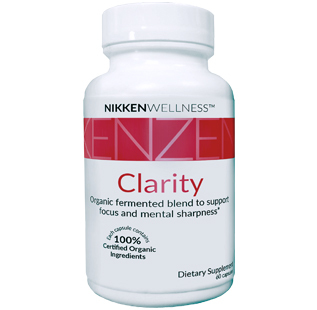
Ongoing research continues to confirm the potency and potential of Lion’s Mane Mushroom as a brain and cognition enhancer, and therefore a valuable nutritional supplement, especially as life spans continue to lengthen. Organic Lion’s Mane Mushroom is the first ingredient in the Organic Fermented Brain Support Blend in Kenzen® Clarity, formulated so that your mind stays as nimble as your body in the pursuit of Active Wellness and healthy longevity.

  1. https://www.braintropic.com/nootropics/lions-mane-mushroom/
  2. Koichiro Mori, Satoshi Inatomi, Kenzi Ouchi, Yoshihito Azumi, Takashi Tuchida, Improving effects of the mushroom Yamabushitake (hericium ernaceus) on mild cognitive impairment: a double-blind placebo-controlled clinical trial. Phytother Res.2009 Mar;23(3): 367-72.
  3. Koichiro Mori, Yutaro Obara, Misturu Hirota, Yoshihito Azumi, Satomi Kinugasa, Satoshi Inatomi, Norimichi Nakahata, Nerve growth factor-inducing activity of Hericium erinaceus in 1321N1 human astrocytoma cells, Colorectal Dis. 2007 Jul;9(6):549-52.

5 Tips to Help Clear Your Mind

Let’s face it. We all have brain fog once in a while. It’s annoying at best and at worst, can be downright embarrassing. Why not do something about it? Here are 5 tips to keep your mind nimble:

  1. Aerobic exercise. Known simply as “cardio” by trainers, it’s not just good for your heart and circulation. It’s good for your brain. When you get your heart rate up, you are actually helping your synapses fire, too! Try to get in 30 minutes at least 5 times a week.
  2. Weight training. It doesn’t just tone your muscles and make you stronger, but it also keeps your mind sharp. Add resistance training to your workout at least twice a week and you’ll be extending your long-term brain health. You don’t need to join a gym: hand weights for curls and ankle weights for leg lifts will do the trick.
  3. Expand your knowledge. It doesn’t have to be intense book learning as in school or university, but it should be intellectually stimulating. Essentially you are giving your brain a workout and stimulating neurochemicals needed for forming new memories as well as retaining the old.
  4. Master a new skill. Have you ever noticed how quickly a toddler acquires language skills? After age 25, the pace of absorbing information slows, but forcing the brain to learn something new helps keep it focused. Your brain has to make a whole new set of connections in order to learn the new skill—whether it’s driving a car, dancing the tango or speaking a foreign language.
  5. Play games. Solve a crossword puzzle or fill in all the squares of Sudoku. Play checkers or chess. Roll the dice for backgammon. All these games challenge the brain to work, which in turn, might increase the levels of growth factors. These types of thinking games force the brain to focus.

Kenzen® Clarity under the NikkenWellness line is formulated to help support your brain power. A fermented blend of 100% organic ingredients, Clarity is designed to help you stay focused and mentally sharp.

thumbnail-3