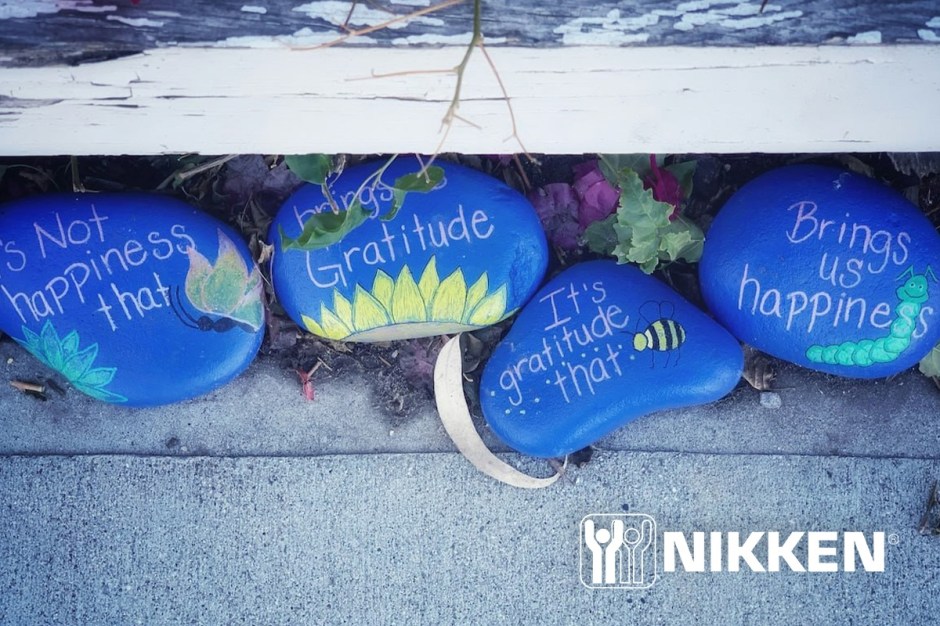
Choose Gratitude to Write the Next Chapter of Your Story

Approaching the end of the year is the ideal time to pause, reflect, and decide who you want to become next. As you step into a new chapter of your life, one of the main practices you can choose is gratitude.

Choosing gratitude is a vital aspect ofEmpowered Livingand Feeling Good Every Day. Empowered Living starts with the belief that you have the ability to make things happen and to write your own story. Gratitude reinforces that belief. When you consciously appreciate the positive aspects of your life, you’re much more likely to feel good every day—or at least most days!

Studies show that gratitude reduces stress, supports better sleep, enhances relationships, and contributes to overall emotional and physical wellness. When your mind feels lighter and your heart feels steadier, it becomes easier to take meaningful action. Gratitude creates an inner environment where you can thrive—where feeling centered, motivated, and hopeful becomes more natural.

Gratitude isn’t just a feeling. It’s a practice, a mindset, and a daily choice that can shape the way you experience your life. In other words, gratitude may shift your perspective from the bleak or negative to the bright and positive. Life is full of ups and downs, and gratitude allows you to focus on the ups while letting go of the downs. This conscious embrace of the positive does not mean ignoring the negative, but it prevents misfortunes from taking center stage.

When you take time each day to acknowledge your strengths, the people who care about you, small moments of beauty—you become grounded and develop clarity and resilience. Gratitude propels you forward with confidence and intention, to becoming a Human Being More.

Expressing gratitude strengthens relationships, deepens trust, and encourages kindness. When you acknowledge the people who support, inspire, or simply share part of your day, you create a ripple effect—your gratitude attracts others to be grateful for being connected to you. Each relationship that is forged in gratitude stands to last the longest.

Whether you have new goals or simply want to continue working on existing ones, taking small steps consistently every day will bring results. Gratitude is a great partner with patience and hope. As you head towards 2026, write your next chapter with gratitude and intention. Honor yourself and all that you have been through, regardless of whether it’s in service of others or simply surviving the unexpected ordeals in life.

You have the power to choose where you’re going and who you become.

All of us at Nikken wish you a beautiful season filled with love, joy and gratitude.

Renew Skin and Spirit in the Comfort of Your Home

December is an ideal time to prepare for the new year. As the year winds down, there are some activities that are not only fun but also beneficial to overall health. Two such enjoyable activities are the renewal of your skin and your spirit. Rather than go to a spa or a retreat, skin and spirit can both be revived, renewed and regenerated in the comfort of your own home. Simply carve out a private area and make sure all electronic devices are off.

For skin renewal, the three basic steps are cleansing, toning and moisturizing. Be sure to choose products that are made with ingredients of the highest quality, such as the Kenzen True Elements® Marine Organic Skin Care line, which is EcoCert® COSMOS certified, an international certification renowned for its strict guidelines and guarantees the highest organic integrity.

At the heart of the True Elements® range is a synergistic blend of sustainably harvested organic seaweeds and coastline plants. These natural ingredients are a source of vitamins, minerals, amino acids, antioxidants and fatty acids.

For cleansing, regenerating and remineralizing, use Velvet Cleansing Milk and Radiance Scrub. The Velvet Cleansing Milk gently removes impurities while seaweed extracts provide trace elements and minerals that help boost the radiance of the skin and maintain its moisture content. Radiance Scrub is formulated to gently exfoliate the skin with natural perlite mineral so that its natural glow can shine through. Organic seaweed and sea fennel help to strengthen and protect, while organic aloe vera helps to renew damaged skin.

For toning, refreshing and brightening, use Refreshing Tonic Lotion and Youth Activ Serum. The tonic is perfect for the removal of makeup and grime. Seaweed extracts, spray-dried seawater, and aloe vera are combined to help soothe and tone the upper layers of the epidermis, leaving skin that looks fresh and bright. Youth Activ Serum is rich in marine extracts and hyaluronic acid to plump skin from within and supports skin’s elasticity, leaving the skin looking firmer and smoother. Organic ulva lactuta helps brighten skin and decrease the appearance of dark spots.

For moisturizing, protecting and restoring, use Moisturizing Face Cream and Revitalizing Serum. The Face Cream is smooth and light, enriched with marine extracts, shea butter and hyaluronic acid to moisturize the skin. Organic sea fennel is packed with minerals to support skin cell regeneration. Revitalizing Serum is enriched with sea fennel, hyaluronic acid and marine magnesium to moisturize intensely and help transform dry, dull-looking skin into supple, youthful-looking skin.

Your complete skin regimen can be followed with spirit renewal, or you can set aside special time just for your soul. Again, find a dedicated space that feels peaceful and serene. This can be outdoors or indoors, depending on the environment you prefer. You can choose complete quiet or select soothing, meditative music—whatever promotes calmness within you.

You may choose to sit or lie on top of the KenkoGround® to feel connected to nature. Practice deep breathing and simply rest, or do some stretches to help your physical state be in tune with your relaxed state of mind.

Another way to practice mindfulness for renewal of your spirit is to write down your feelings and thoughts. Renewing your spirit does not have to involve goals and to-dos, only if writing those down feel beneficial during this private time. You can focus instead on your inner secrets, emotions and deepest reflections.

Enjoy your private time with yourself as you head towards the end of the year, and you might decide to to schedule skin renewal and spirit renewal regularly! It’s all part of empowered living and feeling good every day, both internally and externally.

The Gift of Wellness Technology is the Best Gift of All

What do you think of when you see the term “wellness technology”? Do apps come to mind? Meditation guidance, sleep sounds, white noise, heartbeat monitors, mood rings, step counters—gadgets galore—it seems like there’s a new one on the market every day!

Our founder started Nikken by producing Kenko Insoles. A single product that combines the wisdom of nature with magnetic technology led to the creation of many more. This year, Nikken celebrates 50 years of sharing advanced products with the world. Some notable innovations include the Kenko Sleep System, Kenko MagDuo®, KenkoTherm® wraps, the Kenko PowerChip®, Kenko PowerMini®, the Kenko Precision Set, Kenko PowerBand®, Kenko® Jewelry, the KenkoGround® and more.

As diverse as Nikken products are, they share one thing in common, just like the original insoles: They are inspired by mother nature and utilize state-of-the-art technology to produce balance, calm and relaxation, both physically and mentally. Kenko product lines fall under the categories of magnetic, ceramic reflective and grounding technologies. Each of these technologies enhance health and wellness. Every one of these Nikken products works to enhance empowered living—how often you use them is up to you, but consistency brings the best results.

Think about it: magnetic, grounding and ceramic reflective technologies are all forms of wellness technology! During a time of global turmoil, peace of mind is the one gift that everyone will welcome this season. Peace of mind will bring heightened focus, clarity, creativity and balance into a lifestyle filled with purpose and mindfulness. That is the foundation of empowered living.

A gift of wellness technology, which you can individualize to each person on your gift list, will show just how much you care. Because wellness technology can help transform daily habits, they ultimately may help your recipients live happier and healthier lives—what better way is there to show your care and consideration?

There are still a few days left to take advantage of our Black Friday specials. The more you buy, the more you save, and you may also get free ground shipping. Contact your local Nikken Consultant or call Nikken Customer Service to find out how!

Great Sleep Fuels a Fully Empowered Life

One of the 10 actions for Empowered Living is recharging your energy. Achieving this requires connecting with nature, consciously breathing in fresh air and getting restful sleep. Humans spend about a third of our lives sleeping, because it is critical to healthy living and longevity.

Here’s what happens with good quality sleep:

• The heart and blood vessels heal and repair themselves.

• Grhelin (hunger hormone) and leptin (satiety hormone) are balanced. Inadequate sleep makes ghrelin levels go up, so you feel hungrier than when you have restful sleep.

• Healthy insulin levels are supported. Insulin controls blood sugar levels, which increase when you are sleep-deficient.

• Deep sleep triggers the release of the growth hormone that helps children and teenagers develop healthy muscle mass, repair cells and tissues.

• Deep sleep supports healthy development during puberty and promotes fertility.

• Restful sleep supports the body’s immune system. Sleep deficiency can affect the body’s natural defense system against germs and illness, making it difficult to combat infections.

• Major threats to longevity are decreased. These risks include heart disease, high blood pressure, obesity and stroke.

• Good sleep supports the brain to improve learning and memory. Problem-solving, decision-making and creativity are enhanced.

Sleep deficiency can result in feelings of stress and depression; and can cause mood swings, lack of motivation and not getting along in social situations. It can also cause lack of focus, problems in learning new things, slow reactions and poor decision-making, which in turn result in making more mistakes. It’s a vicious cycle of frustration and fatigue, lack of confidence and inertia. In other words, when was the last time you felt joy when you were sleep-deprived?

Smart nutrition, clean air and water are basic necessities, but when you think about humans spending a third of our lives sleeping (or at least trying to sleep), the importance of good sleep is obvious. If you can’t sit still, watch TV, read or be a passenger in a vehicle for an hour without falling asleep, you probably need more restful sleep. It’s not about quantity as much as it is about quality.

Create your sleep sanctuary and commit to good habits that support deep sleep, so you can feel good every day and experience empowered living! With great sleep, you can choose joy!

Source: https://www.nhlbi.nih.gov/health/sleep-deprivation/health-effects

Do You Know Five Ways You Can Listen to Your Body?

Our bodies talk to us every day but sometimes we don’t listen and miss out on some important cues that can help keep us in top physical and mental shape! To make sure you are feeling good every day, be sure to spend a little time alone with yourself and really listen to what your body is telling you.

Here are five ways you can listen to your body by asking a few questions:

1.         Do you feel rested, tired or so-so? Is your body telling you to get a good night’s sleep or do you feel energetic and ready to tackle the day? Do you need to break up your busy day with a nap? Restful sleep is an important part of feeling good every day and one aspect of practicing empowered living.

2.         How are you feeling mentally and emotionally? Are you sad and depressed, anxious or stressed out? Or do you feel calm and content? Paying attention to your state of mind can help you maintain high energy levels and to avoid a slump. Sometimes all it takes is getting up and taking a walk in the fresh air to feel stable again. Deep breathing, getting up and stretching, a few minutes of quality time with yourself—these are all simple ways to maintain your mental equilibrium.

3.         What do you like to eat and is it nutritious? Are you eating regular meals? Are you snacking in between meals when your blood sugar dips? Are you actually hungry when you eat, or are you eating mindlessly out of boredom? Do you have a good cut-off time in the evening when you stop eating until tomorrow morning? Overeating and undereating can both wreak havoc with your body and your overall mood, so are you eating more or less than usual? If you are, what is your body telling you? On the other hand, mindful eating or eating the right foods at the right times of the day—based on your personal preferences and needs—can help you feel good every day.

4.         When was the last time you exercised? Do you have a daily routine to get up and do something active? Exercise doesn’t have to be a full-out strenuous workout at the gym. It can be a brisk walk with your dog or a stroll with your toddler. It can be doing a few laps in the pool or doing chair yoga, stretching out on the mat or cleaning your kitchen. Setting aside time every day to do something active can help you feel good every day. Once you start, your body will remind you every day it’s ready for some movement.

5.         Quality time with people who are important to you is key to feeling good every day. Are you spending enough time staying connected to those you care about? Do you text or call your elderly parents? Do you text or call your adult children? Never underestimate the power of talking and laughing with someone you feel close to, whether it’s a friend, mentor or family member. It does wonders to cheer you up or you can be cheering them up!

Listening to the body means cultivating a mindful awareness of what it (you!) needs at any given moment, followed by honoring that need. This intuitive practice will help you understand and make decisions based on internal cues, rather than steamrolling past your own limits. Long-term, sustainable health comes when you listen to your body, and then respond with care, action, and compassion.1

1 https://lindywell.com/listen-to-your-body-strategies/?srsltid=AfmBOorRVWB2X-ZymDQsijV9BGE7JIWRiyMBMSmQ8zRIM26bj0Y9WTDf

Creating Mindful Eating Habits

Today’s fast-paced society offers an abundance of food choices. In addition to the food that is grown—vegetables, fruits, grains—seafood from the oceans, farmed livestock and poultry—there is a huge variety of processed food as well as ready-to-eat snacks full of added salt, fat and sugar. Distractions have also shifted our attention away from the actual act of eating and instead toward televisions, computers, and smartphones.1

Mindful eating is a form of meditation. How do you meditate while eating? By slowing down and paying attention to the food you eat and doing so with appreciation and intention. In this way, every meal becomes a practice in awareness of what you’re eating, why you’re eating and how eating it makes you feel—which supports your ability to differentiate between physical and emotional hunger. In other words, mindful eating habits help you eat when you are actually hungry, not when you are bored or want something to do.

Mindful eating isn’t about dieting or restrictions. It’s about being fully conscious of choosing what you’re eating and appreciating it. If you are scrolling on the phone or watching TV, you are not savoring and honoring the food. Honor may seem a lofty term when applied to eating, but mindful eating includes being aware of where your food came from and honoring the long journey it took to get on your plate. By honoring the food, you are practicing gratitude, an emotion that promotes joy and sharing.

How can you practice and develop mindful eating habits? Here are a few tips:2

•          Ponder: Before you eat, ask yourself, “Am I really hungry?” Sometimes we think we want to eat something, not because we’re hungry, but simply to enjoy the pleasure that the food brings. Ask yourself if you need nourishment in the form of food or something else?

•          Appraise: Look at the food that is in front of you. How does it smell? Do you really want it? Is it more or less than what you need? Be aware of how the food affects your body and how you feel.

•          Slow: Slow down. Pause between bites. Do not get distracted. Really chew your food and taste it. Slowing down can help your brain catch up with your stomach.

•          Savor: Really enjoy your food. How does the texture feel in your mouth? Can you discern the different flavors? Savor and appreciate the taste of each bite. Engaging as many senses as you can by noticing colors, smells, sounds, textures, and flavors.

•          Stop: Stop when you’re full. Cleaning your plate isn’t necessary, even if that’s what you were taught by your parents. By noticing when you’re full and stopping may help you avoid unnecessary calories and indigestion. This is known as paying attention to your hunger cues.

By changing the way you think about food, you may be able to replace negative feelings associated with eating with awareness, improved self-control, and positive emotions.3 Mindful eating is part of smart nutrition—a key component of empowered living.

1 https://www.healthline.com/nutrition/mindful-eating-guide

2, 3 https://www.heart.org/en/healthy-living/healthy-lifestyle/mental-health-and-wellbeing/mindful-eating-savor-the-flavor

Make Water Your Drink of Choice and Feel Good Every Day

When it comes to beverages, there are a lot of choices available. Some choices have plenty of sugars, saturated fat, sodium, artificial color and flavorings—none of which is beneficial, and much of it with unwanted calories.

Water, on the other hand, is the perfect drink of choice! It quenches thirst efficiently, has no empty calories and is crucial for maintaining health. Physically, water helps to keep body temperature regulated, to lubricate and cushion the joints, to protect the spinal cord and other sensitive tissues and to process waste through urination, perspiration and bowel movements.1

With the exception of breastmilk for newborns, water is the best drink for children and continues to be the best drink through adulthood and into old age. In fact, keeping the elderly hydrated with water is one of the keys to healthy longevity.

Eating nutritious food and drinking water come naturally to the entire animal kingdom, with the exception of humans, as we have the technology to create “unnatural” foods and beverages. To help get back to healthy roots—such as those of our non-technological ancestors—and to choose water more often, here are a few tips:2

  • Drink water that is hot or cold, depending on your preference.
  • Drink water with meals.
  • Ask for water with your food when eating out.
  • Carry a reusable water bottle when you are out.
  • Try a fruit and herb infused water or carbonated water.
  • Hydrate with water during and after physical activity or playing sports.
  • Keep a pitcher of water in the fridge or on the table for easy access.

When you choose water instead of sugar-sweetened beverages, you are helping with weight management. Substituting water for just one 20-ounce sugar-sweetened soda will save 240 calories.

Drink water and feel good every day, not just physically but in knowing you made the right choice! Role model it for the kids—remember it’s healthier to eat a piece of fruit than to drink juice. Drink water and eat the fruit for a win-win! It’s all part of empowered living. 

1 https://www.canr.msu.edu/news/make_water_your_beverage_of_choice

2 https://food-guide.canada.ca/en/healthy-eating-recommendations/make-water-your-drink-of-choice/

How Does Exercise Enhance Gut Health?

We know that eating a healthy diet contributes to optimal gut health. Now clinical nutritionists and gastroenterologists are finding definitive proof that exercise can support gut health, too. The combination of healthy diet and exercise reigns supreme, but the discovery that exercise plays such a big role in gut physiology may help many couch potatoes to get moving!

“Exercise is one of the most powerful ways you can boost your gut microbiome. Your digestive tract is a muscle, and moving your body is good for all muscles, gut included. When we are physically inactive, the muscles in our gut also become less active. Over time, they lose their natural coordination and strength,” explains gastroenterologist Christine Lee, MD.1

Regular exercise helps the gut find its ideal digestive pace. Each gut has its natural rhythm that keeps things moving. If it’s too fast, you might get the runs. If it’s too slow, you might be constipated, bloated or nauseated. Exercise helps the gut stay “just right” in terms of gut motility, that is, the movement within the gut.

During movement, especially exercise of a cardiovascular nature, the heart pumps harder in order to deliver blood and oxygen to the muscles. Part of that extra blood and oxygen goes straight to the gut. In other words, exercise improves circulation in the whole body, and that includes the gut, which helps the digestive tract work better to maintain the right balance of healthy bacteria.2

Gut muscles react to exercise the same way our visible outer muscles do. Biceps, quadriceps and abdominals visibly get more toned with regular exercise. What you don’t see are the internal gut muscles getting more toned. Even though not visibly more toned, improved regularity is proof that your exercise is paying off by helping waste process out of the body more effectively so your gut simply feels good every day.

Different types of exercise are being researched for their impact on the gut microbiome. There is evidence that low intensity exercise can help reduce the amount of time it takes food to travel through the digestive tract and be successfully pushed out as waste. This is important because this allows the gut microbiome to perform multiple functions effectively, including converting non-digestive parts of food into energy.3

In contrast, higher intensity exercise allows more oxygen to reach the brain and bloodstream. The brain and the gut are connected by the vagus nerve, as well as through molecules secreted into the bloodstream from the gut microbes and immune cells that travel from the gut to the rest of the body.4 The brain and gut are therefore in constant communication and regular periods of high intensity exercise enhance that interaction.

There’s no better time than the summer months to start or add to your exercise regimen. And, regular exercise helps the body crave healthy foods; healthy foods fuel your body for better performance during exercise!

Nikken launched Golden Gut Formula, loaded with both pre- and probiotics, so you not only help increase your beneficial bacteria but you’re nourishing them so they can multiply more rapidly. Adding Golden Gut Formula to a healthy diet and exercising daily may help accelerate your ongoing quest for empowered living! 

1, 2 https://health.clevelandclinic.org/gut-health-workout#:~:text=Your%20metabolism%20is%20your%20body’s,%2C%E2%80%9D%20explains%20Dr.%20Lee.

3 https://www.uclahealth.org/news/article/new-microbiome-research-reveals-exercise-may-impact-gut

4 https://med.stanford.edu/news/insights/2025/03/gut-brain-connection-long-covid-anxiety-parkinsons.html#:~:text=Through%20direct%20signals%20from%20the,tracts%20are%20in%20constant%20communication.

How Important is Movement for Physical Well-Being?

Most of us acknowledge that staying mobile is a necessary part of an active and empowered lifestyle. But can movement also improve overall physical well-being? In reality, movement can help us feel good every day. And best of all, it doesn’t take a gym membership or strenuous exercise—small daily movements, as long as they’re done consistently, may increase mobility and contribute to overall health.

Here’s how movement can positively impact six crucial parts of the body:

•          Muscles: More than 600 muscles in the body make up 40% of the human body’s weight. Movement helps strengthen those muscles, which help the body to maintain stability, balance and coordination.1

•          Bones: Movement helps build more durable, denser bones. Whether you choose resistance training, jogging, walking, hiking or balance training, such as Pilates and yoga, movement supports bone density.2 Movement and exercise may offer protection against osteoporosis and age-related loss of muscle mass, strength, and function, also known as sarcopenia. Improved physical function can reduce the risk of falls and likelihood of serious injury if there is a fall.3

•          Joints: Flexibility and range-of-motion are important to keep the joints functioning smoothly. Stretching and being mindful of posture and how daily tasks are performed can help increase coordination and balance.

•          Brain: Researchers have made the connection between brain power and movement. As some people age and lose mobility, their cognitive functions deteriorate as well. Daily movement helps rejuvenate the structures within the brain that are linked to cognition. In rehab facilities, even those who are wheelchair bound are provided ways to “cycle” their arms, because movement is not limited to the legs!

•          Heart: Keep the heart pumping at optimal levels by moving every day. It used to be called aerobics and now it’s cardio. Increasing your heartrate through any form of cardiovascular activity done daily can help lower blood pressure, boost levels of good cholesterol and improve blood flow (circulation).4

•          Lungs: To breathe is to live, so keeping the lungs healthy is critical to physical well-being. Movement helps the lungs to improve cardiorespiratory endurance. Walking at a brisk pace is an easy way to help the lungs. And, mindfully inhaling and exhaling deeply is a small but healthy movement in and of itself!

Movement can help you feel better, look better and live better—it’s a natural way to lift your mood and spirits, to sleep better and to connect with nature and the people around you!

1, 2 https://medschool.cuanschutz.edu/fitness/blog/blogs-just-move–the-six-benefits-of-everyday-movement

3 https://www.nia.nih.gov/health/exercise-and-physical-activity/health-benefits-exercise-and-physical-activity

4 https://www.heart.org/en/healthy-living/fitness/fitness-basics/why-is-physical-activity-so-important-for-health-and-wellbeing

Can Magnets Support Mental Health?

Overall well-being includes mental health, not just physical health. When it comes to physical health, much of the science is black and white; whereas with mental health, there are more gray areas. While medication and psychotherapy are often seen as the end-all-be-all treatments for depression and other mental health conditions, magnets can serve as alternative ways to regulate neural activity: Transcranial magnetic stimulation (TMS) is an advanced method of relieving erratic brain activity that can cause poor mental health.1

Approved by the U.S. Food and Drug Administration (FDA), TMS usually is used only when other depression treatments haven’t been effective. The FDA also approved TMS for obsessive-compulsive disorder (OCD), migraines and to help people stop smoking when standard treatments haven’t worked well. Research continues into other potential uses for TMS, including epilepsy.2

When used for depression, OCD and to stop smoking, this treatment involves delivering repeated magnetic pulses, so it’s called repetitive TMS or rTMS. During an rTMS session for depression, an electromagnetic coil is placed against the scalp of the head. This coil delivers magnetic pulses that stimulate nerve cells in the region of the brain involved in mood control and depression. It’s thought to activate regions of the brain that have decreased activity during depression.3

The difference between rTMS and deep TMS has to do with the type of coil used. The deep TMS coil stimulates deeper and wider areas of the brain, compared with rTMS. Deep TMS coils have been FDA-approved for OCD and to stop smoking. Although the biology of why TMS works isn’t completely understood, the stimulation appears to affect how the brain is working. It seems to ease depression symptoms and improve mood.4

According to the Cleveland Clinic, the recipient of TMS is fully aware of what’s happening during the entire treatment and can talk, read or nap. The coil delivers stimulation for approximately four seconds, then stops for 15 seconds and then resumes. This is repeated about 75 times per session. During the stimulation, the patient may hear a tapping sound as well as feel the sensation of being tapped on the scalp. Phase one can be time-consuming, with 30 treatments being recommended over a six-week period of time. During the second or maintenance phase, the frequency decreases according to each case, varying from once every other week to once a month or every two months.5

Magnets and magnetic fields are part of nature, and nature continues to be a primary source of solutions for overall well-being. The more we learn, the more we can practice empowered living.

1 https://www.brainsway.com/knowledge-center/the-truth-about-magnet-therapy-aka-tms-therapy/

2, 3, 4 https://www.mayoclinic.org/tests-procedures/transcranial-magnetic-stimulation/about/pac-20384625 5 https://health.clevelandclinic.org/cant-conquer-depression-how-magnets-can-help