Elderberry: Our BFF

You hear about antioxidant this and antioxidant that. You know antioxidants are good. But why are they good and how do they work? Relative to antioxidants, you hear a lot about free radicals. Here’s why:

Antioxidants are natural substances that may slow or even prevent damage to the body’s cells. Our bodies contain natural antioxidants in the form of vitamins, minerals and hormones. Our immune system uses these natural antioxidants to fight “threats” such as pollutants, toxins, radiation and UV light. Importantly, antioxidants fight and work to reverse the damage caused by free radicals that wreak havoc in our bodies and are the leading cause of premature aging.1

Free radicals are bad cells that are unstable and reactive. They enter our bodies as we breathe in polluted air and cigarette smoke; they creep in from unclean water; they’re generated when we’re under prolonged stress or suffering from illness; they even come in the form of unhealthy diets. Every metabolic reaction that involves oxygen has the potential to generate free radicals and if nothing is done, inflammation and arterial wall damage are the end results.2

Even though our bodies contain natural antioxidants, we obviously need more support to maintain Active Wellness in our increasingly polluted world. That’s where the elderberry can play a starring role.

The elderberry is generally traced back to Hippocrates, the Greek known as the “father of medicine.” He described it as his “medicine chest” for its wide variety of health benefits. Over the centuries, elderberry has been used to treat colds, flu, fever, burns, cuts and more than 70 other maladies. 3

In the year 2007, the US Department of Agriculture looked at the oxygen radical absorbance capacity (ORAC) or overall antioxidant capability of various berries. That is, which berries were the most effective at attacking damaging free radicals? Elderberry had higher ORAC values than blackberry, blueberry, cranberry, raspberry and strawberry, which also are relatively high in antioxidants.4

With such a high ORAC, it’s no wonder that elderberries are known as excellent immune system boosters. Your local drugstore in the US, Canada and Europe are likely to have an array of elderberry syrups or tablets. Numerous studies have demonstrated that elderberry extract is highly effective in mitigating flu-like symptoms and shortening the duration of colds.5

Research published in the Journal of Nutrition show that elderberry extract helps expedite the process of clearing excess sugar from the bloodstream and into muscles and the liver, thereby helping to maintain normal levels of blood sugar.6 Studies also show that Sambucus (the scientific name for elderberry) has natural diuretic and laxative effects, which helps the body decrease fluid retention and constipation.7

Kenzen Super Ciaga® contains a mighty medley of berries with the powerful maqui berry having the highest ORAC value at 27,600 per 100g serving of fresh fruit. Elderberry, which is an excellent source of vitamins A, B and C, provides substantial support with an ORAC value of 14,500 per 100g serving of fresh fruit. Blueberry, blackberry and raspberry add to the overall ORAC value as well as enhancing flavor with their natural sweetness. Kenzen Super Ciaga® is a delicious way to ingest some powerful antioxidants!

Why not do a little experimentation of your own—Kenzen Super Ciaga® tastes like a treat and acts like bodyguard—create your own recipes!

1, 2 http://www.blackelderberry.info/understanding-antioxidants/

3 http://www.blackelderberry.info/elderberry-history/

4 http://www.blackelderberry.info/sources-of-antioxidants-and-orac/

5, 6, 7 https://draxe.com/elderberry/


The Horror of the World’s Plastic Footprint

The discerning mind understands the importance of drinking filtered water and commits to using a good filtration system. Unfortunately, the success of the bottled water industry continues to grow, even with the knowledge that plastic bottles are a huge potential health hazard. As reported in the Japan Times earlier this month, the world’s leading brands of bottled water have been contaminated with tiny plastic particles that are likely seeping in during the packaging process.1

There’s also the matter of conscience. Every one of us can choose to contribute to the preservation of our environment or expedite its demise. As recently as earlier this month, the Ocean Cleanup Foundation—with researchers at institutions in New Zealand, the United States, Britain, France, Germany and Denmark—published in the journal Scientific Reports, that 79,000 tons of plastic debris, in the form of 1.8 trillion pieces, now occupy an area three times the size of France in the Pacific Ocean between California and Hawaii.2 It’s known as the “Great Pacific Garbage Patch.”

According to the Ocean Cleanup Foundation researchers, the plastic is coming largely from Pacific countries, but they also believe that some of the debris comes from elsewhere, moved by ocean currents. Based on prior examinations dating back to the 1970s, the study finds that the plastic in the patch is growing, as more flows in than out. 2

Plastic pollution is so far-reaching that even the pristine Arctic has been infiltrated. A study published in 2017 in the journal Science Advances, estimates that 300 billion pieces of tiny plastic are suspended in Arctic waters, with even more on the seafloor. 3 Because the population in the Arctic is so small, it is unlikely that it directly contributed to so much waste. Instead, researchers believe the aged and weathered state of the plastic waste suggests that it has been traveling the seas for decades, breaking down along the way. The study was led by Andrés Cózar of the University of Cádiz in Spain, together with researchers from universities in Denmark, France, Japan, the Netherlands, Saudi Arabia, Spain, the United Kingdom and the United States.

Environmental engineer Jenna Jambeck at the University of Georgia conducted a study on plastic waste processes in 2015 and found that humans were filling the oceans with an estimated eight million tons of plastic annually. Projections are that this will increase 22 percent by 2025.4 In addition, the study found that much of the plastic was sinking and damaging the lower depths of the ocean as well as the seafloor. As the plastic footprint enlarges, the future of our planet diminishes.

For Active Wellness and for the planet, quit the bottled water habit. Share the benefits of the PiMag® Waterfall, indisputably an amazing deal for PiMag® water technology.

1 https://www.japantimes.co.jp/news/2018/03/16/business/top-bottled-water-brands-contaminated-plastic-particles-report/#.Wr0YvrT83zI

2 https://www.nature.com/articles/s41598-018-22939-w

3 http://advances.sciencemag.org/content/3/4/e1600582.full

4 https://www.washingtonpost.com/news/energy-environment/wp/2015/02/12/humans-are-putting-8-million-metric-tons-of-plastic-in-the-oceans-annually/


Keep Your Heart Healthy

Keeping your heart healthy is a critical aspect of Active Wellness. Cardiovascular disease includes heart attack, stroke or congestive heart failure. 1 A new study shows that one of the main effects of being chronically overweight is that you are at a higher risk for cardiovascular disease than those with normal weight. This study is particularly meaningful given that the researchers followed 190,672 participants for at least 10 years and mined the accumulated data. 2

Participants were grouped according to age and weight. After adjusting the data for risk factors such as age, race, ethnicity and smoking status, head research Dr. Sadiya Khan of Northwestern University’s Feinberg School of Medicine and her colleagues found that the higher the BMI (body-mass index), the greater the lifetime risk of some type of cardiovascular event.2

Normal weight and BMI are personal issues and can best be determined with the help of a physician. People at exactly the same height can be at a wide range of weights and still be healthy. Bone structure and musculature may account for much of the variation. Other than staying at a comfortable and healthy personal weight, here are some other tips for heart health:

  1. Aim for seven hours of sleep. According to a study discussed on WebMD, young and middle-aged adults who slept seven hours a night had less calcium in their arteries (an early sign of heart disease) than those who slept five hours or less or nine hours or more. In addition, those who got good-quality sleep had healthier arteries than those who did not sleep soundly.3 Kenko Sleep Products help support restful sleep.
  2. Get your blood pressure checked regularly. The rule of thumb is to get it checked every three to five years if you’re between the ages of 18 and 39; and if you’re 40 or older, to check it annually. If you know you have high blood pressure, definitely check it every year or even more often. Kenzen® Bergisterol™ capsules help support blood pressure that is within normal limits.*
  3. Develop healthy eating habits. Focus on vegetables, fruits, whole grains and lean protein. Limit salt, sugar, saturated fats and alcohol. One of the fastest ways to clean up your diet is to cut out sugary beverages like soda and fruit juice.3 Kenzen Super Ciaga® makes it so easy to quit drinking soda.
  4. Get your blood sugar tested regularly. Millions of people have diabetes and aren’t aware of it until they suffer from a cardiovascular event. Diabetes adds to the risk of heart disease.
  5. Dr. Monika Sanghavi, assistant professor of cardiology at the University of Texas Southwestern Medical Center says, “We now know that even if you exercise for 30 minutes a day, being sedentary for the other 23.5 hours is really bad for your heart.”3 Break up long periods of sitting by standing or walking intermittently.
  6. If you smoke, quit. Don’t replace tobacco with e-cigarettes. They may not have the harmful chemicals in cigarette smoke, but they still contain nicotine.

We challenge you to come up with your own recipes for Kenzen Super Ciaga® and share them with Nikken.

heart health.png

*This statement has not been evaluated by the Food and Drug Administration. This product is not intended to diagnose, treat, cure or prevent any disease.

1 http://www.heart.org/HEARTORG/Conditions/What-is-Cardiovascular-Disease_UCM_301852_Article.jsp#.WqAxi7T83zI

2 https://jamanetwork.com/journals/jamacardiology/article-abstract/2673289?redirect=true

3 https://www.webmd.com/a-to-z-guides/prevention-15/heart-healthy/12-tips-for-better-heart-health?page=1


What’s in Your Water?

There are three different types of drinking water: tap water, filtered water and bottled water. In many countries, tap water is not potable, so it has to be boiled first. Even in North America, not all tap water is potable—for example, the Flint, Michigan water crisis1 and the First Nations indigenous water crisis in Canada2 are still not fully resolved.

Water is supposedly tasteless, but everyone knows tap water can taste nasty. The Natural Resources Defense Council (NRDC) conducted a study in 2003 that showed public water supplies in 19 of America’s largest cities delivered drinking water that contained contaminant levels exceeding EPA limits, including rocket fuel, arsenic, lead, fecal waste and chemical byproducts.3

According to the NRDC, approximately 25% of bottled water is nothing more than tap water. The best way to find out is to read the label and see whether it tells you how the water is filtered. If it doesn’t say, chances are it’s straight from the tap.

The other problem with bottled water is the bottle itself. Many plastic bottles are created with a chemical called bisphenol A, otherwise known as BPA. It’s linked to numerous health issues, including infertility, obesity, diabetes, insomnia, arthritis, heart disease and more.4 And, the plastic bottles add to the trash that goes into landfills and the oceans, adding to environmental degradation.

Filtered water is clearly the best option for drinking. According to the Food and Water Watch Organization, even expensive water filters are more cost effective than bottled water, especially when evaluating costs over a 5, 10 and 20-year period.5

Water filters offer the last line of defense between the body and the more than 2,100 known toxins that may be present in drinking water.6 Experts recommend looking for a water filter that satisfies the standards of NSF International, a nonprofit organization that conducts safety testing for food and water industries. Look specifically for what type of contaminants the water filter will remove.

The PiMag Waterfall® complies with NSF standards as follows:

  • NSF Standard 42—Reduction of chlorine, chloramine, taste and odor*
  • NSF Standard 53—Reduction of mercury, volatile organic chemicals (VOCs)*
  • NSF Standard 372—Lead compliance

*Reverse Osmosis systems do not remove VOCs, chlorine or chloramine.8

The PiMag Waterfall® is an advanced filtration system that produces water with added minerals (unlike expensive Reverse Osmosis systems that leach out beneficial minerals) in a pH range of 8.5-9.5. Regular tap water typically has a pH range of 6.5-8.5, with 7 considered “basic” and below 7 as acidic.7

Because the PiMag Waterfall works without electricity or plumbing, it can be used in any location. As with all PiMag products, the Waterfall is made with recyclable and biodegradable materials, including a polymer that does not leach chemicals into water.


1 https://en.wikipedia.org/wiki/Flint_water_crisis

2 https://news.vice.com/en_ca/article/3kpjby/canadas-indigenous-water-crisis

3 https://www.greenamerica.org/green-living/facts-about-water-filters

4 https://draxe.com/bpa-toxic-effects/

5 https://www.waterbenefitshealth.com/filtered-drinking-water.html

6 http://www.allaboutwater.org/water-filters.html

7 www.water-research.net/ph.htm

8 https://www.waterbenefitshealth.com/filtered-drinking-water.html

Kick the Soda and Sugary Drink Habit!

Last year, the many reasons to reduce or eliminate added sugar from our diets were explored on NikkenActiveWellness. See Get Smart and Get Rid of Sugar and Is Sugar as Deadly as Cigarettes? What we know is right and what we do, are unfortunately not always the same. That’s why Kenzen Super Ciaga® is such an exciting new product for Nikken to launch. It’s an organic mixed superfruit concentrate that’s going to help us kick the soda habit for good! And it’s coming to you on March 1, 2018!

Here are just a few simple numbers—average calories from sugar—of commercially sold beverages1:

  • 12 oz. can of coca cola contains 140 calories from sugar at 39g
  • 8 oz. can of Rockstar Energy Drink contains 124 calories from sugar at 31g
  • 8 oz serving of Arizona Lemon Ice Tea contains 90 calories from sugar at 24g
  • 8 oz serving of Snapple Lemon Iced Tea contains 92 calories from sugar at 23g

According to the U.S. National Library of Medicine, in one study, people who added soda on top of their current diet ended up consuming 17% more calories than before.2 That is because liquid sugar does not cause a feeling of fullness in the same way as solid foods, making people eat more total calories. Sugar-sweetened beverages may be the most fattening aspect of the modern diet. In fact, as little as one can of soda per day has been consistently linked to an increased risk of type 2 diabetes. To put that number in perspective, if the entire U.S. population added one can of soda to their daily diets, almost 3.5 million people might become diabetic.3

Here’s why Kenzen Super Ciaga® can be so helpful in kicking the soda habit. It’s at least three times more concentrated than CiagaV, so dilution is recommended. That means instead of drinking one ounce in a shot glass, diluting to your taste is best. We suggest that you add three to four ounces of water per ounce. Add Super Ciaga to seltzer and you have a natural soda that’s jam packed with antioxidants—from maqui berry, elderberry, blueberry, blackberry and raspberry—and so delicious you won’t miss those nasty sodas, fully sugared or even worse, made with artificial sweeteners.

New Kenzen Super Ciaga is really a perfect “mixer.” It makes the perfect companion to Kenzen Ten4® Energy Drink. The natural sweetness from the organic mixed superfruit juice concentrate gives the organic matcha green tea a different flavor and double the antioxidant punch! Active Wellness has never been easier to maintain.


1 http://www.sugarstacks.com/beverages.htm

2 https://www.ncbi.nlm.nih.gov/pubmed/10878689 

3 https://www.healthline.com/nutrition/13-ways-sugary-soda-is-bad-for-you

Why Kenzen® Bergisterol™ Capsules?

According to researchers, the bergamot fruit contains various phytochemicals, flavonoids and other health-promoting compounds.

The bergamot used in Kenzen Bergisterol capsules is harvested exclusively from the Reggio Calabria province of Italy between the months of November and March.No pesticides are used on bergamot crops destined for Kenzen Bergisterol. The outer capsule is made with organic Pullulan. Pullulan is naturally fermented from tapioca and provides a high barrier to oxygen, thereby keeping capsules dry and fresh. This also ensures that Kenzen Bergisterol capsules not only are certified organic but vegan as well.

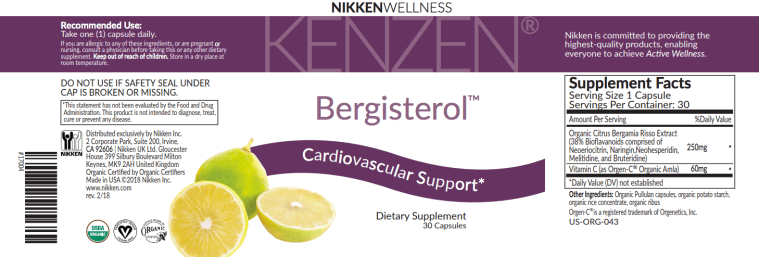
In addition to Citrus bergamia Risso, each Kenzen Bergisterol capsule contains 60 mg of vitamin C known as Orgen-C®. This derivative of Organic Amla Extract is commonly known as Indian Gooseberry. Valued for its high amount of natural vitamin C, Indian Gooseberry also contains more than 50 co-nutrients in the form of polyphenols and bioflavonoids. Orgen-C has the added benefit of a patent-pending water extraction process that produces a concentrated form of all natural and 100% organic vitamins derived from various fruits and vegetables along with existing co-nutrients of the same botanicals.

Kenzen Bergisterol capsules are portable and convenient, especially during travel. Whereas liquid Kenzen Bergisterol could not be carried on board airplanes, the new capsules definitely can.

The recommended serving size is one capsule, giving you 250 mg of Organic Citrus Bermagia Risso Extract and 60 mg of Vitamin C. Please consult your physician prior to taking Bergisterol if you are on any medications.

Screen Shot 2018-02-26 at 2.30.23 PM.png

* These statements have not been evaluated by the Food and Drug Administration. This product is not intended to diagnose, treat, cure or prevent any disease.

When Do You Need Calcium?

Calcium is one of the most important minerals for the human body. It helps to form and maintain healthy teeth and bones. By maintaining a proper level of calcium in the body over a lifetime, we can help prevent osteoporosis.1 In addition, calcium is used throughout the body to help with blood clotting, sending and receiving nerve signals, flexing and relaxing muscles, releasing hormones and other chemicals and keeping a regular heartbeat—all important functions.

Calcium is the most abundant mineral found in the human body, but as we age, we absorb less and less calcium from our diets. This results in our bodies taking more from our bones, which can contribute to osteopenia or osteoporosis.2 How much calcium we need depends on age and gender. Adolescents, especially girls, postmenopausal women and the elderly often have a high risk of calcium deficiency.3

Recent research shows that a diet high in calcium and also high in protein and other essential nutrients can positively impact bone health by aiding in more calcium absorption. Most of these nutrients can be found in high-quality dairy products like organic whey protein, raw unpasteurized milk, organic goat cheese, and kefir.4 Other sources of calcium include green leafy vegetables, salmon and sardines, nuts, blackstrap molasses, tofu and calcium-fortified foods, such as orange juice, soy milk, cereals and seeds.

Although the calcium found in dairy is considered the most readily absorbed, these foods are not eaten by various segments of the population, including vegans and those who are lactose intolerant. When dietary calcium is not sufficient, a supplement may be needed, and there are many kinds. Some of the common calcium supplements include Calcium carbonate, Calcium citrate, Calcium gluconate, and Calcium lactate. It’s recommended that not more than 500 mg of calcium be taken at one time.5 No matter how much we take of any supplement, if it cannot be assimilated by the digestive system and used by the body’s systems, it will not support an Active Wellness lifestyle.

Kenzen® Calcium Complex stands out specifically for its high bioavailability. That means it is easily absorbed: The complex mimics the mineral composition of our bones. In addition to 400 mg of Calcium derived from whey isolates of milk, vitamins and minerals that enhance calcium absorption are added, including vitamin D, phosphorus, zinc, boron and copper. (Magnesium and potassium are found in the TruCal® blend itself and not separately listed.) Furthermore, Kenzen® Calcium Complex is produced with sensitive filters that purify and separate out the calcium-rich minerals used in the formulation from the lactose and proteins, so that it may be tolerated by virtually everyone. Nonetheless, if you are severely allergic to milk and milk byproducts, we recommend consulting your physician.

Screen Shot 2018-01-31 at 3.51.21 PM.png

1 https://medlineplus.gov/ency/article/002412.htm

2 https://www.medicine.wisc.edu/rheumatology/hansenresearchcalcium

3 https://www.ncbi.nlm.nih.gov/pmc/articles/PMC4337919/

4, 5 https://draxe.com/calcium-deficiency/

Does Cold Weather Affect our Joints?

Some of us experience a nagging discomfort in our joints during rainy days or throughout the winter months. Or, what’s bearable during warmer weather veers out of control when the temperature dives. These physical changes aren’t just part of our imaginations.

Lauren Farrell, M.S.P.T., physical therapist and clinic director of Professional Physical Therapy in New Jersey, says, “While it can happen in any part of the body, this cold-weather achiness is most common in weight-bearing joints, like the knees, hips and ankles. This is especially true for the running population, where they tend to be spending longer periods of time exercising outside in the cold.”1

Although there is scanty research to prove why this happens, experts do have some theories. According to orthopedic surgeon and founder of Manhattan Orthopedic Care, Armin Tehrany, M.D., “The research suggests that in colder weather, the body will conserve heat, and it will send more of the blood to the organs in the center of the body, like the heart or the lungs. So when that happens—the arms, legs, shoulders, knee joints—those blood vessels will constrict. Less blood flow makes those areas colder and stiffer, which can cause discomfort and pain.”2

Another trigger for achy joints is a change in barometric pressure, a measurement that refers to the weight of the surrounding air. Researchers have found that barometric pressure affects pressure inside the joints. The Arthritis Foundation reported that when pressure in the hip joints was equated with atmospheric pressure, it threw the ball of the hip joint about one-third of an inch off track.3

When barometric pressure is high, it pushes against the body from the outside and keeps the tissues from expanding. When it is low, there is less air pressure pushing against the body, allowing the tissues to expand, which puts pressure on the joints. Even though there may seem to be only a small change in pressure, people with sensitive joints can discern a difference, especially those with injuries, chronic inflammation or even scarring of the tissues.

If you are someone who has tender joints or muscles, here are some practical tips to help maintain Active Wellness:

  1. Dress warmly for the outdoors. Wear layers so you can peel them off when temperatures fluctuate. Layers also help trap in your body’s natural heat. Since heat is often lost from the extremities, wear gloves, socks and a hat.
  2. When indoors, try to keep your home warm. Use a heating pad on your joints if needed. Heat relaxes muscles and helps ease achiness.
  3. Soak in warm tubs, if possible. Hot tubs can provide great relief.
  4. Swimming in a heated pool is one of the best exercises to soothe joints. It’s not weight bearing, yet it provides great cardiovascular exercise.
  5. Inactivity causes increased stiffness of the joints, so keep physically mobile no matter how the temperature dips. Be sure to warm up to prevent stiffening of the joints and muscles. If you can’t stand being outdoors in the cold, find something to do indoors, whether it’s going to the gym or exercising to a DVD, dancing or using a treadmill or stationary bike at home.
  6. Stay hydrated. Dehydration increases sensitivity to discomforts, especially in the joints. Hence the saying, “Keep the joints lubricated.” Caffeine and alcohol are dehydrating, so the best thing to drink is water.
  7. Lose weight if you need to. In people with tender joints, especially in the knees, even a few pounds can make a difference. Weight puts a strain on the knees and joints.
  8. Check your vitamin D levels. Research shows that low levels of vitamin D might increase sensitivity to the discomforts of arthritis. Since you might not get enough vitamin D from sunshine if you tend to stay indoors during cold weather, you may need a supplement such as Kenzen® Mega Daily 4. It supplies 100% of the RDA of vitamin D as well as other beneficial vitamins, minerals and vegetable superfoods.
  9. To give your joints nutritional support, consider Kenzen® Joint with its advanced formula of a naturally occurring compound, cetyl myristoleate. This ingredient has natural surfactant and lubricant properties to help in smooth movement.*
  10. The same ingredient is found in CM Cream Complex. When applied topically, the combination of cetyl myristoleate with peppermint, aloe and menthol, provides a naturally cooling and soothing effect.

*These statements have not been evaluated by the Food and Drug Administration. This product is not intended to diagnose, treat, cure or prevent any disease.

1, 2 https://www.self.com/story/why-joints-hurt-more-cold-winter-weather

3 https://reverehealth.com/live-better/cold-weather-joints/

Stay Healthy through the Flu Season with Active Wellness

Extreme weather conditions wreak havoc. Cold, flu, bronchitis and pneumonia lead to misery and even death. What can we do to help maintain good health with all the germs around us?

Researchers at Carnegie Mellon University conducted an experiment that suggests the more restful sleep we get, the better our chances of fighting off respiratory bugs. The scientists worked with 153 healthy men and women who agreed to be quarantined and injected with cold viruses. Monitored over the next five days, those who slept less than seven hours nightly were nearly three times more likely to contract colds than those who slept eight hours or more. The researchers measured how deeply the people slept in addition to the number of hours, and the people who had better sleep quality were the ones more likely to fight off colds.1

David Katz, MD, founder of the Yale University Prevention Research Center and author of Disease-Proof: The Remarkable Truth About What Makes Us Well, explains that “our bodies need seven to eight hours of sleep in order to stimulate an immune response from our ‘natural killer cells,’ which attack viruses. Sleep is my most reliable defense against infection.”2 There’s nothing comparable to the Kenko Naturest® Mattress Topper when it comes to helping you with restful sleep!

Here are some other suggestions to help prevent or shorten colds, flus and respiratory viruses:

  • Eat protein. Douglas Kalman, PhD, RD, director of nutrition and applied clinical trials at Miami Research Associates in Florida says, “Research shows that diets too low in protein can deplete the immune system. So I make sure to get protein-rich foods throughout the day, especially fish, eggs and yogurt.” 2 Nikken makes it easy with nutritional pea protein in Kenzen Vital Balance®!
  • Drink lots of water. Paramedic Kristina Economou of Monterey, California says, “As a paramedic, I never know what germs I’ll be encountering, so I drink water constantly to flush toxins out of the lymph system.” 2
  • Use a water bottle. A kindergarten teacher in Atlanta, Georgia, Cheryl Lassister says, “I never use water fountains or the railings on stairs. They’ve got the prints of hundreds of germy hands and mouths. And they don’t get sanitized as other surfaces, like sinks. I’ll use my own water bottle!” 2 The PiMag® Sport Bottle not only serves as your personal water bottle but it also has a built in filter, so you get alkaline water without sediment!
  • Get massages regularly. A massage therapist in Las Cruces, New Mexico, Christine Nelson says she doesn’t just give massages, she gets them. She explains, “I receive massages once a month to increase my circulation, which boosts immunity by nourishing cells with more oxygen and blood. It also makes me relaxed and less stressed. When you’re less stressed, you’re less likely to be a germ magnet.” 2 When you feel like a quick massage, there’s nothing easier than the hand-held KenkoTouch® with its warming pulsation in three speeds or the MagCreator.
  • Take care of your gut. According to the National Institute of Health, approximately 70 to 80 percent of the body’s immune tissue is located within the digestive system, so boosting your immune system really requires a healthy gut.3 For efficient G.I. Tract support, Kenzen® Lactoferrin 2.0™ is both helpful and convenient!
  • Drink tea. Murray Grossnan, MD, ear, nose and throat specialist at Cedars-Sinai Hospital in Los Angeles, California says, “I drink hot black or green tea with lemon and honey. Drinking the tea and breathing in steam stimulates the cilia—the hair follicles in the nose—to move out germs more efficiently. Lemon thins mucus and honey is antibacterial.” 2

Wise diet and lifestyle choices can improve your health and well-being. For your well-being, Nikken provides choices in support of Active Wellness with its nutritional supplements, water and sleep products.

1 https://www.webmd.com/cold-and-flu/features/dont-let-a-cold-get-you-down#1

2 http://www.health.com/health/gallery/0,,20752945,00.html

3 https://www.ncbi.nlm.nih.gov/pmc/articles/PMC2515351/ 

New Year, New Approach to Active Wellness

Do you beat yourself up for caving into bad food cravings? Do you blame yourself for lacking will power? Understanding why you have those annoying cravings for sugar, fat, salt and so on, may be just how you can curb them!

In 2008, the U.S. National Institutes of Health (NIH) formed the Human Microbiome Project (HMP). Microbiome is defined as “the collection of microbes or microorganisms that inhabit an environment, creating a ‘mini-ecostystem.’”1

The human microbiome, located in the gut, is made up of trillions of bacteria that send messages to the brain. This communication is known as the “brain-gut connection.” Because approximately 70 to 80 percent of the body’s immune tissue is located within the digestive system, boosting your immune system really requires a healthy gut.2

The good news is that you can actually help manage your microbiome and influence the brain-gut connection as well as strengthen your immune system. You can increase the good gut bacteria that sends the brain positive messages and decrease the bad bacteria that causes bad food cravings. In this way, “you are what you eat.”

How to manifest a positive brain-gut connection is relatively simple, but the challenge is getting started. Since good bacteria thrives on fiber and nutrient-dense food, eating that type of food consistently is the key to a healthy brain-gut connection. Good bacteria feeds on fibrous food, digests it and releases a gas up to the brain, telling it that the body is well nourished. When the brain is told that the body is well nourished, it doesn’t think there’s a need to fill in the gaps created by a lack of nutrition. It’s a healthy cycle where nutrient-dense food that is fibrous creates more good bacteria.

On the other hand, bad food leaves nutritional gaps. The gaps are what lead to those unhealthy cravings. Sugar and processed foods contain empty calories rather than useful nutrients and the bad bacteria feeds off of it! In other words, when you avoid foods that generate negative messages from the gut to the brain, you’ll minimize cravings.

Fiber does more than curb cravings. It also helps your mood. The Human Microbiome Project has shown that serotonin, the “feel-good” chemical the body generates, is actually created in the gut, not the brain. More fiber and nutrient-dense food in the gut therefore influences our emotional health as well as our physical well being.

You may be surprised how quickly a healthy gut helps the brain minimize unhealthy cravings and also helps improve your overall health. If you currently don’t eat lots of fibrous foods, integrate them into your daily regimen slowly so that your body has time to adjust. Incorporate it into each meal or snack. The fiber will give a sense of fullness to help you cut back on sugar and processed food.

  • Eat leafy greens, asparagus, any type of bean and root vegetables.
  • Try not to peel apples and pears. Well-scrubbed potato and carrot skins are also fibrous and edible.
  • Do you throw away stems? For example, broccoli stems are full of healthy fiber and taste great in soups and stir-fries. The same is true of kale and spinach stems.
  • Add variety to your diet. Be adventuresome and try vegetables you haven’t had. Or, try new ways of preparing your favorites. Many vegetables are delicious raw while others are easily steamed or sautéed.
  • Be generous in your use of garlic, onions, herbs and spices. They are also sources of fiber and add so much flavor.

The happier your microbiome, the fewer bad food cravings there’ll be. Change doesn’t happen overnight, but the important thing is to get started in helping your gut converse positively with your brain! Best of all, you will discover how delicious these nutrient-dense and fibrous foods are!

To help jumpstart your microbiome, take Kenzen® Digestion Complex 4-20 to assist in processing the additional fiber you eat. Containing a combination of ingredients that tackles fats, proteins, carbohydrates and fiber, Kenzen® Digestion Complex 4-20 supports the assimilation of all types of nutrients.* And to help your circulatory and immune systems work optimally with your gut, take Kenzen® Immunity and Kenzen® Lactoferrin 2.0!

* This statement has not been evaluated by the Food and Drug Administration. This product is not intended to diagnose, treat, cure or prevent any disease.

1 https://www.hmpdacc.org/hmp/overview/

2 https://www.ncbi.nlm.nih.gov/pmc/articles/PMC2515351/