Can Napping or Extra Weekend Rest Make Up for Lost Sleep?

Almost everyone experiences sleep loss or deprivation at some point in their lives. Whether it’s from being a new parent or an overly demanding job, the results of sleep loss can range from mild crankiness to poor performance and when chronic, a shorter lifespan.

According to sleep medicine specialist Dr. Nancy Foldvary-Schaefer, sleep debt is the difference between the amount of sleep you need and how much you actually get. Taking a nap is one way most people try to make up for lost sleep. Over the past several decades, research has shown that a mid-afternoon nap lasting as few as 10 to 20 minutes may help you feel more refreshed during the day. A mid-afternoon nap may also increase working memory, learning and mental acuity for a few hours.1

Another way people try to catch up on lost sleep is to sleep in on the weekends, or whichever days are not work days. In 2018, a long-term study found that folks who slept four, five or six hours a night during the week, then caught up on weekends, lived longer than those who remained sleep-deprived all week long. A 2020 study found that catch-up sleep was associated with better health outcomes than just staying sleep deprived.2

While both napping and sleeping in on weekends may help ease symptoms like fatigue or daytime sleepiness, research has shown that it can take up to four days to recover from one hour of lost sleep and up to nine days to completely eliminate sleep debt. A full recovery from sleep debt returns our body to its baseline, reducing the negative effects associated with sleep loss.3

According to the U.S. Centers for Disease Control and Prevention (CDC), sleep-deprived people sleep more deeply, which equates to more restful sleep. Therefore, when trying to make up for lost sleep, you don’t need to make up each hour with an hour. Dr. Foldvary-Schaefer recommends compensating for sleep debt by going to bed 30 minutes to an hour earlier each night, taking short naps that last 15-30 minutes during the day, and adjusting your schedule so you can wake up a little bit later each morning. 4

To avoid sleep loss, stay on a set sleep schedule to keep circadian rhythms in sync, take short naps when possible if fatigued, avoid screen time at least 30 minutes to an hour before bedtime, limit caffeine intake and keep your sleep environment pitch black or as dark as possible.

Sleep is not the only thing that keeps you energetic and alert! Breathing in clean air and hydrating throughout the day are also crucial. You have until the end of this month to take advantage of the 20% discount on select air and water filters! Make 2025 the year you keep your KenkoAir Purifiers® and PiMag® water filtration systems functioning optimally with filters changed on time!

1, 3 https://www.sleepfoundation.org/how-sleep-works/sleep-debt-and-catch-up-sleep

2, 4 https://health.clevelandclinic.org/insomnia-can-you-make-up-for-lost-sleep-on-weekends

Do Something to Feel Good Every Day

Doing something to feel good every day seems natural, but think about it. Do you consciously behave in ways to that make you feel good? Feeling good is not just about physical well-being. Your brain tells you to feel good or not, so mental well-being is also crucial.

The first step to feeling good every day may be by creating intentions. By doing so, feeling good comes from conscious acts. You can then alter your behavior to establish positive habits that become second nature and no longer require questioning and searching for answers.

Feeling good, both mentally and physically, often depends on a few basic activities. Try it and see if it makes a difference in how you feel!

•          Get enough sleep. You spend about a third of your life sleeping, so getting plenty of rest is a no-brainer. Without enough restful sleep, your brain and the rest of your body cannot function optimally. When you don’t get enough sleep, not only do you suffer from brain fog and bad moods, but ironically you can gain weight, raise your blood pressure and weaken your immune system.

•          Spend some time outdoors every day. Even if it’s only for 20 minutes or a brisk walk around the block, being outside (rain or shine) can elevate your mood or create an optimistic attitude as well as lower blood pressure.

•          Do some kind of exercise consistently—whether it’s walking or working out, swimming or biking—your body will look forward to how well it feels, and you will have created a wonderful lifelong habit.

•          Be helpful. You don’t have to formally volunteer somewhere to be helpful. You can hold the door open for someone, let someone go in front of you in a supermarket queue, give a fellow driver the right of way in crowded traffic, or simply smile at strangers. You may or may not make someone else’s day better, but you definitely will feel pretty good yourself.

•          Drink enough water. By the time you actually feel thirsty, you’re probably already dehydrated, so make it a conscious habit to sip water throughout the day. If it’s PiMag® water, even better—because then you’re drinking alkaline water that efficiently hydrates.

•          Meditate or spend a few minutes daily doing nothing. This is practicing the art of true relaxation. Doing nothing for a short period of time, from a few minutes up to an hour, may resemble meditation; however, not everyone is a natural meditator, while everyone is able to do nothing, whether laying down, sitting up, standing or leaning.

•          Interact with an animal. If you have a pet, this one will come naturally. Pet your dog, cat or bunny. Something about the sense of touch against their fur is calming and soothing. Converse with your parakeets. No pets? Go outside and listen—birds, crickets, insects have a symphony of their own and gives you a break from your own inner dialogue.

•          A good diet definitely is key to feeling good every day. One specific part of a healthy diet is fiber. Fiber keeps you regular and being regular is one way to feel good every day. Make sure to eat plenty of fiber. Examples of digestible or soluble fiber are beans, Brussel sprouts, yams, apples, carrots and asparagus. Examples of indigestible or insoluble fiber are kale, cauliflower, spinach, peas, nuts and pears. You can’t go wrong if you eat a wide variety of fruits and vegetables—the more colorful, the better.

•          There’s nothing that compares to the feeling of doing something creative. Do you enjoy cooking? Painting? Playing or listening to music? Do you crochet, knit, practice carpentry or build mobiles? Do anything you enjoy that is not related to your work and notice how good you feel.

•          Laughter not only helps boost your immune system, but it also triggers your body to release endorphins and other hormones that make you feel good! So, spend time with your buddies who laugh with you, watch some standup or tune into your favorite comedies.

For the whole month of January, select filters are at 20% off, so you can breathe in clean air and energize as well as hydrate and cleanse with PiMag® water—two ways to feel good every day!

Small Resolutions May Be Easier to Keep

Approximately 93 percent of people set new year’s resolutions, yet only 8-9 percent actually achieve them. Despite not following-through on resolutions, making them is still much better than forgoing them entirely, according to a study published in the Journal of Clinical Psychology. The study found that those who set resolutions are 10 times more likely to alter their behavior than others who don’t.1

Why is it so hard for these new behaviors to become habits and part of daily life?  It is because the new desired behaviors require a significant amount of change, which individuals try to make all the necessary changes at one time.  It is hard to stick with behavior change that is drastic. Far too often, individuals are motivated to make changes to improve their health, but frustration and feelings of being overwhelmed by drastic changes creep up and get in the way.2

Focus on making small realistic changes that you feel confident about.  Small changes are easier to make into habits. One popular idea is that it takes about 21 days to solidify a habit, but this seems to be more myth than truth.  A hallmark 2009 study on habit creation found that habits developed in a range of 18 to 254 days; participants reported taking an average of about 66 days to reliably incorporate one of three new daily activities—eating a piece of fruit with lunch, drinking a bottle of water with lunch or running for 15 minutes before dinner. Consistent daily repetition was the biggest factor influencing whether a behavior would become part of an automatic daily routine.3

Small resolutions are based on the concept of taking baby steps. You can’t run successfully without learning how to walk steadily first. In the same way, small resolutions are less overwhelming and intimidating, so you are more likely to stick to them. Once you create a good habit, you can then incorporate more behaviors that develop into an increasingly active and healthy lifestyle.

Make 2025 your most successful year for sticking to your healthy lifestyle resolutions! Nikken helps to jumpstart your resolutions with 20% off selected water and air filters so you can breathe deeply, hydrate consistently and cleanse with ease every single day!

1 https://www.linkedin.com/pulse/how-set-new-years-resolutions-you-can-actually-keep-dan-schawbel/

2 https://healthypennstate.psu.edu/2017/01/10/new-years-resolutions-are-hard-to-keep-think-small/

3 https://www.scientificamerican.com/article/how-long-does-it-really-take-to-form-a-habit/

Nature Knows Best How to Nurture

Those of us born before electronic devices were invented, grew up quite differently from the children of today. We were told to “go outside and play” and we had a fair amount of unmonitored time. Granted, not every kid has the luxury of living in or near nature, but just being outdoors under the sky and breathing in natural air is now being studied more and more—because the benefits appear to be substantial.

From a stroll through a city park to a day spent hiking in the wilderness, exposure to nature has been linked to a host of benefits, including improved attention, lower stress, better mood, reduced risk of psychiatric disorders and even upticks in empathy and cooperation.1 Much of the research being conducted currently focuses on parks and forests, known as “green spaces” but “blue spaces” are beginning to be studied as well. Blue spaces are identified as places with river and ocean views. In other words, no matter the color of nature you choose to be in, you will somehow feel uplifted.

Lisa Nisbet, PHD, a psychologist at Trent University in Ontario, Canada, studies connectedness to nature. She says, “You can boost your mood just by walking in nature, even in urban nature. And the sense of connection you have with the natural world seems to contribute to happiness even when you’re not physically immersed in nature.”2 But why does this happen? Why does nature make us feel better? Scientists have come up with different theories.

The biophilia hypothesis argues that since our ancestors evolved in the wild and relied on the environment for survival, we have an innate drive to connect with nature. The stress reduction hypothesis posits that spending time in nature triggers a physiological response that lowers stress levels. And, the attention restoration theory holds that nature replenishes our cognitive resources, which in turn restores our ability to focus.3 Regardless of theories, experimental findings show that even a few moments of green space can revive a tired brain, and nature sounds, such as bird calls or crickets chirping, can also be recuperative.

John Zelenski, PhD, a psychology professor at Carelton University, says that another unproven explanation about the beneficial aspects of nature is the emotion awe. “There are some hints that awe is associated with generosity, and nature can be a way to induce awe. One of the things that may come from awe is the feeling that individual is part of a much bigger whole.”4

Alison Pritchard, PhD at the University of Derby in England, had similar findings: people who feel more connected to nature have a type of contentment that goes beyond just feeling good and includes having meaningful purpose in life.5 So, choose your blue or green space, even for a few minutes a day, and feel lighter, more energetic or even purposeful!

During the entire month of December, get the KenkoAir Purifier® for 30% off and benefit from three-level filtration and negative ion technology. You’ll be inhaling clean, ozone-free air wherever you place it! Also get the KenkoGround® to keep you connected to nature even when you’re indoors—at 20% off!

1, 2, 3, 4, 5 https://www.apa.org/monitor/2020/04/nurtured-nature

Do You Get the Right Amount of Rest to Feel Renewed?

According to Dr. Saundra Dalton-Smith, author of Sacred Rest: Recover Your Life, Renew Your Energy, Restore Your Sanity, many people misinterpret the meaning of rest. She says that “anything that is not their normal work, they call rest.”1 She gives the example of people who go on vacation to rest. In reality, the vacationers do not actually get rest. Instead, they do a lot of fun activities, which leave them feeling tired rather than rested or restored. So, there is a difference between not working and resting versus not working and doing fun work.

How much rest you need in order to feel renewed or restored is an individual matter. There isn’t a magic formula; however, Dr. Dalton-Smith has identified seven types of rest that work together to provide the renewal every body and mind needs. Here is how they work in tandem:

1.         You can achieve mental rest by scheduling activities that do not require much thought throughout the day. This will have a grounding effect and truly give your brain a rest. You can take a short walk outside and breathe in some natural air. You can simply sit still for a few minutes and keep your mind blank.

2.         What Dr. Dalton-Smith calls spiritual rest is what the Japanese call ikigai. She says to “consider your life purpose and your connection to something bigger than yourself.” This can simply be achieved by soaking in some sunlight, smelling flowers that are in bloom, listening to the rain or anything in relation to nature. This is similar to the Japanese practice of Shinrin-Yoku, or forest bathing—soaking in the effects of being in nature, specifically the forest.

3.         Emotional rest occurs when you feel comfortable enough to let down your guard to be open and vulnerable. Find your inner circle of people with whom you can show your true emotions, whether it’s fear, joy or anything else.

4.         Finding your community of like-minded people can providesocial rest. This is the “no man is an island” type of rest as you need time to spend with others.

5.         In the digital world, many suffer from sensory overload. Sensory rest can be achieved by shutting off electronic devices, listening to calming music, and stimulating your sense of smell with aromas you enjoy.

6.         In Zen Buddhism, there is something called “beginner’s mind.” Dr. Dalton-Smith’s version is called creative rest. She says, “Go back to a beginner’s mind and experience something with a fresh new perspective to tap your creative juices.”2

7.         Every single body needs time to recover from work, play and everything in between. Physical rest is equated with sleep most often. Dr.Dalton-Smith defines physical rest as recovery time. She says, “Honor your body by stretching and taking breaks to breathe deeply and reboot. This practice will calm your body and lift your mood.”3

Proper rest is an important fuel for our human tanks. Productive people require enough mental, physical, creative, emotional and spiritual rest. Breathing clean air and staying grounded are two other ways to achieve proper rest. For the entire month of December, take advantage of 30% off the KenkoAir Purifier® and 20% off the KenkoGround®, and see how much it can help you get the rest you truly need!

1, 2, 3 https://mindfulhealthsolutions.com/embrace-these-7-types-of-rest/#:~:text=The%20seven%20types%20of%20rest%20are%20physical%2C%20mental%2C%20emotional%2C,prioritize%20our%20self%2Dcare%20accordingly.

Feel Renewed by Breathing in Clean Air

At Nikken we say, “To breathe is to live.” Said another way, there is no life without breath. Breathing is such a crucial part of existence that we often take it for granted, unless we have a cold and are congested, or if we suffer from any type of respiratory distress. Breathing fills the body with oxygen, which is even more important than food and water to fuel cell activity! After all, we can spend hours and days without food and water, but how long can we survive without breathing?

Every system in the body relies on oxygen. It’s not just the respiratory system that is fueled by oxygen—the digestive, circulatory, endocrine, nervous, cardiovascular and immune systems all depend on oxygen, so imagine how important it is to breathe deeply and the importance of the quality of the air we breathe in! Dirty air still fuels the body but it also wreaks havoc, whereas clean air supports the body’s natural abilities for renewal.

The process of breathing is one of the body’s amazing feats. With each inhalation, the diaphragm that is located at the bottom of the ribcage, contracts so the lungs can expand. As air travels through the air sacs and lungs, oxygen is passed to the bloodstream. At the same time this is happening, carbon dioxide travels into the air sacs from the bloodstream to be released out of the body with each exhalation. On average, this process takes place between 17,000 to 30,000 times a day!1

You can actually maximize the benefits of breathing in clean air by taking time out each day to breathe mindfully. It’s far easier to do than to quiet the mind for meditation! Here are the two main ways to increase the benefits of deep breathing:

1. Make sure your posture is good. Sit or stand up straight. This allows your lungs to expand quickly and efficiently with each breath you take. It also helps to get the carbon dioxide out quickly with each exhalation. When you feel groggy or are suffering from an afternoon slump, sit or stand up straight and take some deep breaths in and out. You may be surprised how quickly you feel a renewal of energy, because oxygen has filled your brain!

2. Most people think about breathing in terms of inhalations. In reality, exhalations are just as important, because you are pushing carbon dioxide out. Most people only exhale 70 percent of the carbon dioxide in their lungs.2 Do your best to push all the air out of your lungs as though you are blowing bubbles. Your body will feel renewed almost instantly.

Scientists are finding that breathing properly can help reduce stress and even strengthen the brain’s functionality and performance. Breathing techniques can also help maintain clarity and a sense of calm and focus as oxygen nourishes every single in the body.3

During the entire month of December, get the KenkoAir Purifier® for 30% off and benefit from three-level filtration and negative ion technology. You’ll be inhaling clean, ozone-free air wherever you place it!

1 https://elliottphysicaltherapy.com/importance-proper-breathing-overall-health/

2, 3 https://www.fireengineering.com/firefighting/restore-renew-rejuvenate-one-breath-at-a-time-the-yoga-way/

Do You Practice Grounding?

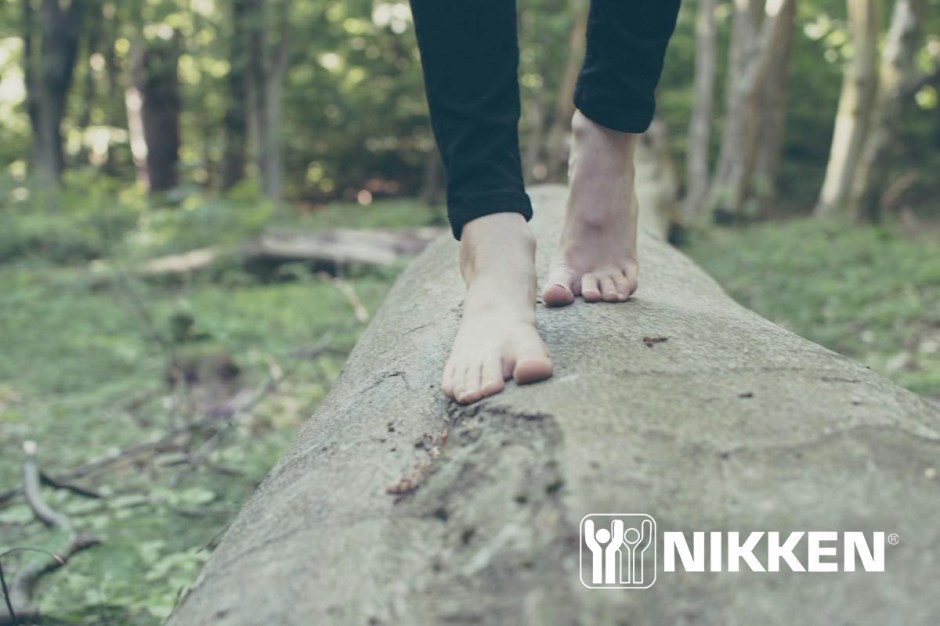
We talk about being connected to nature as a way to get back to the way we were intended to live. In the beginning of time as we know it, humans lived like all other creatures, with nothing separating us from the earth beneath our feet. That means there was direct contact with the ground and its negatively charged electrons. These beneficial electrons help us to stay in balance and creates the effect that is now known as grounding or earthing.

Grounding has been researched over the years, and it has been found that “when connected, the electrons we absorb work as natural antioxidants that neutralize the positively charged free radicals that can damage the body. Exposure to the electrons is vital for functioning at our best.”1 In fact, grounding has been found to improve sleep, support the healing process, and support the reduction of inflammation linked to a variety of health ailments.2

As we consciously work to get reconnected to nature, our contemporary lifestyles pose a challenge in that we spend so much more time indoors than our ancestors did.

The upcoming generations are even more cloistered as they fixate on video games and all manner of electronics rather than on outdoor activities and sports. We can set a good example by taking our youngsters to the beach, to lakes, to natural parks, to wherever being barefoot is safe so connection to earth, sand and natural bodies of water can be made—in order to allow natural grounding to take place. When going barefoot outdoors is not an option, Nikken has an alternate solution.

Nikken is serious about the importance of reconnecting with nature. Our products therefore often emulate or replicate what is found in nature. One prime example is the KenkoGround®. The name really helps to define what the product is about: Kenko means “health” and Ground is for grounding. The KenkoGround plugs into a grounded outlet. When you expose bare skin—whether it’s your feet, arms, shoulders, neck, etc.—to the KenkoGround, you receive the beneficial electrons that neutralize the positive ones that are potentially harmful.

How and where you use the KenkoGround® is up to you. Some people sit at a computer with the KenkoGround under their bare feet. Others drape it around their neck and shoulders while relaxing on the couch. Many sleep with the KenkoGround underneath their bodies. Grounding researchers recommend doing it regularly and building up to longer periods of time, for example, starting out with 10 minutes a day, then increasing to 20 and more than 30 if you can.3

The KenkoGround® is made of conductive fabric that is silky to the touch: it’s 20% silver and 80% nylon and is made to be anti-radiation, anti-bacterial and anti-odor.

As we are already approaching the hectic holiday season, try out the KenkoGround to help maintain your equilibrium. Also be sure to check out the 2024 Holiday Gift Guide!

1, 2, 3 https://www.webmd.com/balance/grounding-benefits

Get Energized and Ready for the Holidays!

The holiday season can bring a lot of joy to many, as it’s designated as a time to give and receive. However, the joy of giving is sometimes accompanied by the stress of choosing gifts and the additional energy needed on top of regular daily activities—it can be overwhelming. Here are some tips on how to stay energized during hectic times!

•          Try to eat lots of fruits and vegetables. This is the time of year where there will be many “treats” to tempt you. Enjoy in moderation, as even adults can suffer from the sugar highs and ensuing crashes.

•          Resist the urge to burn the candle at both ends. Especially when there is so much to get done, get your rest. Even one night of poor sleep can affect your mood and energy.

•          Keep PiMag® water with you and drink it throughout the day. Staying hydrated can help support your energy levels.

•          Even if you feel like a shot of caffeine can help energize you, try to drink caffeinated beverages only in the morning. Try herbal teas in the afternoons and evenings. Remember, Kenzen Super Ciaga® powder can turn plain PiMag® water into a delicious beverage that supports your natural energy levels.

•          Prioritize, execute and eliminate. You can’t do everything at once, so choose the most important tasks, do them, and eliminate the ones that are less important. If you have family members or friends who can help with less critical tasks, ask them.

•          When things start getting hectic, set aside some time for yourself to exercise. Even a 10-minute walk can help raise your energy levels.

•          You may not be able to attend every single function you’re invited to. It’s hard to say “no” but again, prioritize, execute and eliminate. Attend the functions close to your heart.

•          Stare at the color red.1 According to research, looking at the color red can help boost energy levels! There’s no harm in giving it a try!

•          Donate. Whether you have gently used toys or clothes, there is someone out there who will appreciate them. And, when you do a charitable good, you release endorphins that support your energy levels! Win-win!

One way to help ease the pressures of the holiday season is to let your fingers do the shopping. Take a look at our 2024 Feel Good, Share Joy Nikken Gift Guide. There are great gift ideas and bundles that can save you money while you’re spreading some holiday joy. You’ll even receive 10% cashback in your eWallet for your purchases that can be used in January 2025 to start the new year with more joy!

1 https://www.calendar.com/blog/12-ways-to-stay-energized-this-holiday-season/

What Happens to Your Body During Sleep?

Were you ever told not to eat too much before going to bed at night? Or to make sure you apply moisturizer at night? It’s because your body is busy repairing cells and finishing digestion while you sleep. Those are just two key activities your body performs during sleep.

Hormone production changes during sleep. Growth hormone production increases while stress hormones decrease. In fact, cortisol, known as the stress hormone, goes down when you fall asleep but then rises again, before you wake up. Melatonin, on the other hand, rises when you are ready to sleep and falls when daylight approaches. In healthy bodies, kidneys make less urine during sleep, so you don’t have to get up to use the bathroom during a good night’s rest.

Another change the body undergoes during sleep is body temperature. It goes up and down a bit throughout the day, but at night, body temperature tends to be one to two degrees lower than during the day. The lower body temperature helps you stay asleep because humans sleep better when cooler. To prepare for the next day’s activities, your body temperature starts rising as morning approaches.

“Sleep is a period during which the brain is engaged in a number of activities necessary to life—which are closely linked to quality of life,” says Johns Hopkins sleep expert and neurologist Mark Wu, M.D., PhD.1 Throughout your time asleep, your brain will cycle repeatedly through two different types of sleep: REM (rapid-eye movement) sleep and non-REM sleep.

The first part of the cycle is non-REM sleep, which is composed of four stages. The first stage comes between being awake and falling asleep. The second is light sleep, when heart rate and breathing regulate and body temperature drops. The third and fourth stages are deep sleep. Though REM sleep was previously believed to be the most important sleep phase for learning and memory, newer data suggests that non-REM sleep is more important for these tasks, as well as being the more restful and restorative phase of sleep.2

As you cycle into REM sleep, the eyes move rapidly behind closed lids, and brain waves are similar to those during wakefulness. During the day, your breathing changes a lot, depending on what you’re doing and feeling. During non-REM sleep (about 80% of an adult’s sleeping time), you breathe slowly and regularly. But during REM sleep, your breathing rate goes up again, which also dreaming time. Breathing also becomes more shallow and less regular during this sleep phase. Some of it may be due to throat muscles relaxing. It may also be due to less movement of the rib cage during REM sleep. Whenever you’re sleeping, your oxygen levels are lower and your carbon dioxide levels are higher because your level of breathing goes slightly down.3

During non-REM sleep, your brain takes a real rest; however, during REM sleep, your brain may be even more active than when you’re awake! Blood flow to the brain and metabolism in the brain increases during REM sleep, which supports activity. Your brain also uses your sleep cycles to consolidate memories. So, staying up all night to cram for a test or a special work project might be counterproductive.4. In other words, when you sleep too little, you are unable to process what you’ve learned during the dayand have more trouble remembering it in the future. Simply put, restful sleep is important so that your body can utilize the time to rejuvenate and ensure optimal levels of immunity, metabolism and brain function.

Throughout the month of October, Nikken is offering 20% off our Kenko sleep products (except for the Kenko PowerSleep Mask) plus free ground shipping. The Makura Sleep Packs are already priced with a 10% discount, but we’re adding another 10%, so you still get 20% off plus free ground shipping. Take advantage of this great sale to help your entire body enjoy the luxury of restful sleep!

1, 2 https://www.hopkinsmedicine.org/health/wellness-and-prevention/the-science-of-sleep-understanding-what-happens-when-you-sleep

3, 4 https://www.webmd.com/sleep-disorders/what-happens-body-during-sleep

Sleep the Way Nature Intended

The closer you replicate the natural environment, the more conducive it is for sleeping well. When you sleep under the stars, you are sleeping directly under the earth’s electromagnetic field, soothed by the ground and all the elements it contains. Negative ions abound from the growth surrounding you. Nesting creatures add leaves, twigs and feathers—did you know if you leave out the fur your dog sheds, birds will come and take it to cushion their nests just as they would gather the fur fallen off a wild creature in the woods?

Since people tend to sleep indoors, creating a good sleep environment entails other basic aspects: Noise can be an impediment to sleep, but it depends on the type of noise. The trend now is for babies to sleep with a white noise machine, sometimes replicating the sounds heard in a mother’s womb. Grown people might benefit from a sound machine which plays the notes of a trickling stream, gentle ocean waves, leaves rustling in the breeze or soft music. There are always those who appreciate silence, so that can be part of their sleep environment.

Everyone has a preference when it comes to room temperature. Generally speaking, sleep experts have found that people sleep more soundly in a sightly cool environment. This again replicates what is found in nature: The air temperature cools down at night. Similarly, our body temperature dips around 4 a.m., which helps to preserve our energy.1

The Kenko Dream Comforter and its lighter partner, the Kenko Dream Light Comforter offer a cozy effect with a magnetic layer as well as ceramic-reflective fibers that help release heat to keep a comfy temperature. Innovative chitocotton contains chitosan for a breathable cover that helps with ventilation.  

When sleeping under the stars, there is darkness and possibly moonlight and starlight. The human body’s natural circadian rhythm follows the dark-light cycle, with restful sleep taking place during darkness. So, sleep experts recommend keeping your bedroom dark, with a night light peeking out if necessary. The light from a TV or any mobile device is a deterrent to restful sleep—nature does not supply electronics.

The firmness of your mattress can make a difference in your sleep. Some people prefer a soft cushion while others require the support of a stiffer mattress. When camping out, a sleeping bag provides some cushion, but the real support is the ground itself, which flexes a little but is quite firm. Find the bedding that supports your needs.

Kenko Sleep Technology provides the perfect solution to convert any mattress into one with the ideal support. The Kenko Naturest® Fit is made to fit twin, full, queen and king mattresses. Placing the Fit over your mattress will transform your sleep environment so that it replicates different parts of nature that are conducive for restful sleep. When exposed to pressure, heat or motion, tourmaline gives off electrons which can help create a calming effect; 800 gauss magnets create a magnetic field that cocoons the body for a relaxing effect; reflective and breathable fibers help regulate body temperature; and rubberthane with natural latex nodules provide massaging effects! The Fit brings nature right into your bedroom!

Throughout the month of October, Nikken is offering 20% off our sleep products (except for the Kenko PowerSleep Mask) plus free ground shipping. The Makura Sleep Packs are already priced with a 10% discount, but we’re adding another 10%, so you still get 20% off plus free ground shipping. Take advantage of this sale to transform every bedroom into a sleep environment the way nature intended!

1 https://wellnesscenter.gatech.edu/sleep/bedroom-environment#:~:text=Silence%20or%20low%20levels%20of,deep%20sleep%20will%20be%20compromised.