How Deep Sleep Awakens Your Best Self

Did you know that your body goes through four stages of sleep? As you sleep, your body cycles through those four stages. Sleep cycles vary throughout the night, with the shortest at the beginning of the night, typically lasting between 70 to 100 minutes. Later on, sleep cycles can last between 90 to 120 minutes.

Each of the four stages of sleep serves a purpose. Stage 1 is the lightest stage and occurs when you first fall asleep. Stage 1 allows your body to slow down and begin the process of relaxation. It is easy to be awakened, and if so, you have to repeat stage 1 until you’re asleep. If you stay asleep, your body will move into Stage 2.

During Stage 2, your muscles relax, body temperature drops, your heart rate and breathing both slow down. Brain activity also slows down in stage 2. During the first sleep cycle, stage 2 might last 10-25 minutes and each stage 2 later on, may become longer. Sleep experts estimate that a person generally spends half of a night’s sleep in stage 2.1

Stage 3 is where you get the deepest sleep. This stage is especially important because during deep sleep, your body recovers and grows. In other words, stage 3 is when your body experiences restorative sleep and the immune system and other major bodily processes are strengthened.2 Stage 3 is also known as delta sleep or slow-wave sleep, due to the identifiable pattern of brain activity. Muscle tone, pulse and breathing rate all decrease, and although brain activity slows, there is evidence that deep sleep contributes to insightful thinking, creativity and memory.3

During the early sleep cycles, deep sleep typically lasts from 20-40 minutes. As you continue sleeping, stage 3 sleep actually shortens and more time is spent in stage 4, REM sleep. Because the eyes are moving rapidly even though they’re closed during stage 4, that’s why it’s called REM sleep.

Perhaps the most attention has been paid to stage 4 REM sleep, because it’s during this phase that brain activity increases, almost to the levels of wakefulness. In contrast to the active brain, the rest of the body experiences a temporary paralysis of the muscles (known as atonia), with the exception of the rapid eye movement and the muscles involved with the breathing process. Although you can dream throughout the night, it’s during REM stages that the most vivid ones occur, probably due to the increase in brain activity.

But why is stage 3 deep sleep considered the key to awakening your best self? Take a look at what happens during deep sleep.

•          Your body’s natural processes of repair take place and grows bone, muscle and tissue.

•          Hormonal shifts take place to support the immune system. In fact, growth hormone is released, which helps with cell regeneration.

•          The body’s energy molecule, known as ATP, is produced. This readies your body for awakening and facing the day.

•          Memory is enhanced during deep sleep. Studies have shown that people who get enough sleep perform better on tests or when undertaking a new task.3

•          Getting enough deep sleep is linked to better moods and decreasing the risk of depression.

•          There is evidence that enough deep sleep can help prevent mental fog and help retain information.4

To get enough deep sleep, make sure you create the best possible sleep environment for yourself. Nikken can help you with free ground shipping on select Kenko sleep products through October 31st this month. (Free ground shipping does not apply to the Kenko Power Sleep Mask.)

1, 2 https://www.sleepfoundation.org/stages-of-sleep

3 https://aasm.org/college-students-getting-enough-sleep-is-vital-to-academic-success/
4 https://pmc.ncbi.nlm.nih.gov/articles/PMC7983127/

Pinched Neck Be Gone!

Your neck holds up your head, one of the heaviest parts of the body. Approximately 10-11 pounds (4.5-5 kg) for an average adult, this weight is from the skull and the brain, and relies on the neck muscles for support.

The neck is clinically known as the cervical spine, made up of seven flexible vertebrae. Not only does it support the heavy head, but it also protects the nerves that start from the brain and fan out to the rest of the body. Since the neck plays such a critical role in the overall function of the body, it is of utmost importance to provide it with ample support to decrease the risk of aches and pains from poor positioning during sleep. Any misalignment can strain the neck muscles, resulting in stiffness and achiness once you’re awake. It can also produce more serious issues, including nerve compression and decreased blood flow to the brain.1

How you sleep plays a role in what type of pillow is more beneficial to you. If you are a side sleeper, a firm pillow helps to keep your neck aligned with your spine. If you’re a back sleeper, a medium-firm pillow is more supportive of the natural curve of your neck. If you sleep on your stomach, you will do better with a soft, thin pillow to reduce strain on the neck.2 Most sleep experts advise against sleeping on your stomach, as it is believed to cause the most neck strain.

To keep your neck aligned with your spine, the pillow most beneficial for your sleeping position will be neither tilted upwards nor downwards. In other words, the pillow will be high enough to support your neck without angling your head up or down.3

Nikken is a pioneer in sleep technology and continues to innovate. In 2022, Nikken launched the Kenko Naturest® Makura, a partner product to the Kenko Naturest® Fit. The Fit is a topper that comes in different sizes to fit snugly on virtually any mattress, to help provide luxuriously deep sleep.

Made with the same technologies as the Fit—magnetic cocooning, soothing, calming tourmaline, and temperature-regulating Rubberthane nodules—the Kenko Naturest® Makura is unlike any other pillow. Here’s why:

The Makura (Japanese for “pillow”) is made with three removable layers. This means you can customize it to your personal needs. No matter if you’re a side, back or stomach sleeper, you can tailor the Makura to the height that provides the ergonomic support you personally need to keep your neck and spine aligned.

            1. One outer foam layer contains the Rubberthane nodules of natural latex, magnets and tourmaline. This side provides you with a firm pillow and a massaging sensation.

            2. The middle layer acts like a thin traditional pillow.

            3. The other outer layer has smooth Rubberthane without the latex nodules. It holds the magnets and tourmaline. By removing the latex nodules, this side provides a softer, cushioned pillow that still supports your head.

With the Makura, you get three pillows in one. In a household with people who sleep in different positions, the Makura can even be shared! For example, a side sleeper could use the firm side while the stomach sleeper could use the middle layer, and a back sleeper could use the medium-firm side! You won’t find anything like it elsewhere, because the Makura is exclusive to Nikken.

From now through the end of October 31, receive free ground shipping on any Makura Sleep Pack and select Kenko Sleep Products, including the Kenko Naturest® Makura—once you try this pillow, you’ll never sleep on another one again!

1,3 https://synergyrehabinc.com/neck-support-while-sleeping/

2 https://pillow.app/article/the-importance-of-pillow-support-for-neck-health-and-sleep-quality

You Can Create a Sleep Sanctuary

Sleeping well is a challenge for many people. Often, it’s because keeping up with the demands of family, friends and work can cause a huge amount of stress. The result is that neither body nor mind can decompress enough to get a good night’s sleep.

Fortunately, there are actual steps you can take to create a “sleep sanctuary,” some place pleasant and cozy, relaxing and soothing:

1. Perhaps the most important item in a sleep sanctuary is the bed. Regardless of the type of frame you choose for your bed, the mattress is important and should suit your personal needs. Do you like firm, medium or soft? More importantly, what type of mattress suits your spine? For example, even if you prefer a soft, cushy mattress, if your spine is weak, you would probably be better off with a firm mattress, because it affords more support.

Solution: No matter what type of mattress you currently have, the Kenko Naturest® Fit is a topper that sits right under your fitted sheet, in twin, full, queen or king sizes. The Fit is made with sculptured rubberthane latex, which provides massaging effects while allowing for air circulation and ceramic reflective fibers that help regulate body temperatures. 800 gauss magnets create a magnetic field which cocoons the body for relaxation to help improve sleep. Tourmaline gives off electrons that help create calming effects when exposed to pressure, heat or motion, which is provided by your own body as it lays on top of the Fit.

2. Just as the Kenko Naturest® Fit supports your comfort, what your skin actually touches also can make a difference in how well you sleep. Choose linen that feels the most comfortable for you. Invest in natural fabrics, such as cotton, flannel, flax or even silk. Manmade fabrics do not allow air to circulate as freely and may even cause itchy or sweaty skin. Natural fabrics help regular temperatures—cools in hot months and warms in cold ones.

3. Do the breath test of your bedroom or wherever you want your sleep sanctuary to be. Inhale in and out slowly. What do you smell? Since you will be spending all night in the sleep sanctuary, you need to make sure the air is fresh. Stale or unpleasant odors are not conducive to restful sleep. If there is a window, make sure to keep it open at least for a few hours every day so the room has outside air flowing through. Indoor air often contains more contaminants than outdoor air! Dust, pet dander, pollen and odors are typically in household air. Mold, mildew and dust mites may be present. Even gases such as radon and carbon monoxide are found in measurable quantities in many homes.

Solution: Whether you have a window or not, the KenkoAir Purifier®provides multiple-stage HEPA filtration, is energy efficient and includes a deodorizing filter. It operates quietly, is ozone-free and has a negative-ion generator.

4. Many people enjoy the aroma of essential oils. Lavender and cedarwood are examples of essential oils that people choose to de-stress and relax for better sleep.

5. Is your sleep sanctuary dark? Sleep scientists agree that a cool, dark environment is ideal for sleep. You can use black out curtains or wear a sleep mask.

Solution: The Kenko Power Sleep Mask not only helps block out light like a typical eye mask. It also helps relax the entire eye area, using similar technologies to those found in the Kenko Naturest® Fit. The Power Sleep Mask is made with patented Dynaflux® magnetic technology, ceramic reflective fibers and tourmaline technology which helps produce a calming effect. When your eyes are relaxed, you have a much better chance at sleeping through the night.

6. A sleep sanctuary is for rest. Your best bet is to create an environment that is natural—you might want a few green plants, but try to limit the clutter. For example, you don’t need to keep piles of books or clothes in a sleep sanctuary. Instead, hang simple photos or art on the walls and limit the amount of unnecessary furniture or accessories. In other words, create a space that you look forward to retiring in every night!

From now through October 31st, take advantage of free ground shipping on any size Makura Sleep Pack and other select Kenko Sleep products!

What Happens to Your Body During Sleep?

Were you ever told not to eat too much before going to bed at night? Or to make sure you apply moisturizer at night? It’s because your body is busy repairing cells and finishing digestion while you sleep. Those are just two key activities your body performs during sleep.

Hormone production changes during sleep. Growth hormone production increases while stress hormones decrease. In fact, cortisol, known as the stress hormone, goes down when you fall asleep but then rises again, before you wake up. Melatonin, on the other hand, rises when you are ready to sleep and falls when daylight approaches. In healthy bodies, kidneys make less urine during sleep, so you don’t have to get up to use the bathroom during a good night’s rest.

Another change the body undergoes during sleep is body temperature. It goes up and down a bit throughout the day, but at night, body temperature tends to be one to two degrees lower than during the day. The lower body temperature helps you stay asleep because humans sleep better when cooler. To prepare for the next day’s activities, your body temperature starts rising as morning approaches.

“Sleep is a period during which the brain is engaged in a number of activities necessary to life—which are closely linked to quality of life,” says Johns Hopkins sleep expert and neurologist Mark Wu, M.D., PhD.1 Throughout your time asleep, your brain will cycle repeatedly through two different types of sleep: REM (rapid-eye movement) sleep and non-REM sleep.

The first part of the cycle is non-REM sleep, which is composed of four stages. The first stage comes between being awake and falling asleep. The second is light sleep, when heart rate and breathing regulate and body temperature drops. The third and fourth stages are deep sleep. Though REM sleep was previously believed to be the most important sleep phase for learning and memory, newer data suggests that non-REM sleep is more important for these tasks, as well as being the more restful and restorative phase of sleep.2

As you cycle into REM sleep, the eyes move rapidly behind closed lids, and brain waves are similar to those during wakefulness. During the day, your breathing changes a lot, depending on what you’re doing and feeling. During non-REM sleep (about 80% of an adult’s sleeping time), you breathe slowly and regularly. But during REM sleep, your breathing rate goes up again, which also dreaming time. Breathing also becomes more shallow and less regular during this sleep phase. Some of it may be due to throat muscles relaxing. It may also be due to less movement of the rib cage during REM sleep. Whenever you’re sleeping, your oxygen levels are lower and your carbon dioxide levels are higher because your level of breathing goes slightly down.3

During non-REM sleep, your brain takes a real rest; however, during REM sleep, your brain may be even more active than when you’re awake! Blood flow to the brain and metabolism in the brain increases during REM sleep, which supports activity. Your brain also uses your sleep cycles to consolidate memories. So, staying up all night to cram for a test or a special work project might be counterproductive.4. In other words, when you sleep too little, you are unable to process what you’ve learned during the dayand have more trouble remembering it in the future. Simply put, restful sleep is important so that your body can utilize the time to rejuvenate and ensure optimal levels of immunity, metabolism and brain function.

Throughout the month of October, Nikken is offering 20% off our Kenko sleep products (except for the Kenko PowerSleep Mask) plus free ground shipping. The Makura Sleep Packs are already priced with a 10% discount, but we’re adding another 10%, so you still get 20% off plus free ground shipping. Take advantage of this great sale to help your entire body enjoy the luxury of restful sleep!

1, 2 https://www.hopkinsmedicine.org/health/wellness-and-prevention/the-science-of-sleep-understanding-what-happens-when-you-sleep

3, 4 https://www.webmd.com/sleep-disorders/what-happens-body-during-sleep

Why Sleep Matters in Big Ways

Achieving deep, restful sleep is essential to maximizing our well-being and daily performance. Sleep is a personal matter and what serves as adequate sleep for one can be completely insufficient for another. Nonetheless, sleep issues can affect people of all ages and impact many parts of our lives.

The Sleep Foundation1 compiles data regarding sleep habits and performance. Some of the statistics are truly daunting:

• Insufficient sleep has an estimated economic impact of more than $411 billion each year in the United States alone.

• 4.8 of 10 workers say they are regularly tired during the day, and 7 of 10 say they are tired when their work day is done.

• Up to two-thirds of adults occasionally experience insomnia symptoms. 10-15% of people experience chronic insomnia, which persists over multiple months. Women are 40% more likely to have insomnia than men. 55% of nurses say they experience insomnia.

• One study estimates the annual cost of workplace errors and accidents linked to insomnia at $31.1 billion in America.

• Drowsy driving is responsible for more than 6,000 fatal car crashes.

• About 57% of men, 40% of women and 27% of children snore in the U.S. Up to 70% of snorers have been diagnosed with sleep apnea.

Obstructive sleep apnea (OSA) affects around one billion adults worldwide, with 80-90% of cases going undiagnosed. A 10% increase in body weight may make us six times more likely to have OSA.

Research2 shows that what we eat and drink can make it easier or harder to get the sleep we need:

• Drinking more than two servings of alcohol per day for men and more than one serving per day for women can decrease sleep quality by 39%.

• On average, adults in North America snack before bedtime 3.9 nights each week. Adults who snack on seeds and nuts before bed sleep an average of 32 minutes more than those who snack on chips, crackers, or pretzels.

• Eating within two hours before bed is linked to later bedtimes, trouble falling and staying asleep and obesity.

• 71% of SleepFoundation.org survey respondents drink coffee every day. Of these, 70% think caffeine has an impact on their sleep. Top issues reported by caffeine-drinkers are sleepiness, fatigue and insomnia, with 30% experiencing anxiety.

Daylight Saving Time in North America has a big impact on people’s sleep patterns. Generally speaking, it’s easier to transition in the autumn when we gain an hour but our circadian rhythms still need to adjust. In the week after the November time change, people experienced 115% increase in difficulty falling asleep, 103% increase in excessive daytime sleepiness, 64% increase in difficulty staying asleep and 34%increase in sleep dissatisfaction.3

Throughout the month of October, Nikken is offering 20% off our Kenko sleep products (except for the Kenko PowerSleep Mask) plus free ground shipping. The Makura Sleep Packs are already priced with a 10% discount, but we’re adding another 10%, so you still get 20% off plus free ground shipping. Take advantage of this sale to transform every bedroom into the perfect sleep environment!

1, 2, 3 https://www.sleepfoundation.org/how-sleep-works/sleep-facts-statistics#:~:text=at%20$31.1%20billion-,View%20Source%20.,almost%2020%20million%20children%20snore

Do You Have Trouble Sleeping During Springtime?

Some people have a hard time getting a good night’s sleep during the spring season. There are several reasons for this, and there are measures that can be taken. Although spring is the season that many look forward to as they emerge from the cold, gray winter weather, there’s a price to pay for warmth and longer sunlit hours. The sun may actually rise before your body is ready for it, and the light suppresses melatonin production, the hormone that makes you sleepy.1

Other reasons for poor sleep quality during the spring months include the onslaught of allergies (to pollen and other airborne allergens) and an energy surge. Just as melatonin decreases, serotonin levels rise in the spring, boosting energy levels and making it more difficult to sleep at the usual time.2 The good thing is that a rise in serotonin directly influences people’s feelings of happiness, so perhaps you are in a better mood when spring arrives.

It’s hard enough to get sufficient restful sleep, but have you heard the cruel truth that while you suffer from sleep deprivation, you actually tend to gain weight? Here’s why: During sleep, leptin levels increase, telling your brain you have plenty of energy for the time being and there’s no need to trigger the feeling of hunger or the burning of calories. The decrease in leptin brought on by sleep deprivation can result in a constant feeling of hunger and a general slow-down of your metabolism. Ghrelin, on the other hand, tells people when they need to eat. People who don’t sleep enough end up with too much ghrelin in their system, so the body thinks it’s hungry and it needs more calories, and it stops burning those calories because it thinks there’s a shortage.3

You can improve the quality of your sleep and recharge this spring with these simple tips:

  • Establish and maintain a bedtime ritual. Just as children benefit from a repetitive bedtime routine that gears both body and mind for sleep, so do adults. Whether it’s taking a shower, reading or meditating, try to consciously lay in bed and relax from the head down, one muscle group at a time. Slow down your breathing.
  • Visualize images instead of words.4 Envision something calming in your mind rather than focusing on lists or things you heard or said throughout the day. Focus exclusively on Active Wellness images.
  • Shorten or eliminate daytime naps. According to the Mayo Clinic, limit yourself to 10 to 30 minute naps and make sure you take them no later than mid-afternoon.5
  • Keep your bedroom temperature on the cool side. The National Sleep Foundation recommends keeping the temperature between 60 and 67 degrees.6 The slightly cool temperature is believed to help the body relax and stay asleep.
  • Exercise daily. Expending energy during the day helps your body feel tired enough to go to sleep faster.
  • Limit the use of electronic devices at least an hour before your bedtime. The light that emanates from a laptop or cell phone activates the brain.7
  • Eat a Mediterranean diet that is rich in vegetables, fruits, legumes, nuts, beans, whole grains, fish and olive oil. Eating a well-balanced diet helps maintain feelings of well-being, which in turn helps you sleep.
  • When the sun shines before your alarm, it may cause you to wake too early. To sleep on your own schedule rather than the sun’s, keep your room dark. A simple solution is to wear a Kenko PowerSleep Mask that not only blocks out light but also includes patented DynaFlux® magnetic technology that may help you sleep better.
  • Make sure your bed is comfortable and your covers keep you comfortably cool or warm. Kenko Sleep Products help you do just that.


1https://www.sleep.org/articles/refresh-your-sleep-this-spring/

2https://www.beliefnet.com/wellness/articles/5-ways-to-tell-if-you-have-spring-fever.aspx

3 https://science.howstuffworks.com/life/inside-the-mind/human-brain/sleep-obesity1.htm

4, 5, 6, 7 https://www.gohealthuc.com/library/springtime-tips-better-sleep-through-night

Active Aging is Part of Active Wellness

The beauty industry has inundated the marketplace with a slew of “anti-aging” products. But “anti” means against and is also more than skin deep. A more positive approach to aging is with grace, discipline and common sense.

In the United States, baby boomers (those born between 1946 and 1964) are reshaping the population. The number of Americans aged 65 and older is projected to more than double from 46 million today to more than 98 million by 2060. That translates to nearly 24 percent of the population, a substantial increase from 15 percent today. 1

One of the key approaches to address the aging revolution is known as “active aging,” crystalized by the World Health Organization in 2002 by three pillars: participation, health, and security. The active aging policy has financial and economic aspects and affects both men and women as older adults are working longer. 2 As more people live to be centenarians, counteracting the onset of age-related degeneration becomes increasingly important.

Here are 10 head-to-toe tips for Active Wellness and active aging:

  1. Keep challenging your brain. Learn a new language, sport or anything out of your comfort zone. Do puzzles and crosswords.
  2. Play and listen to music. Branch out and try a different instrument if you already play one and listen to something new.
  3. Did you know leafy greens also deliver lutein and zeaxanthin, antioxidants that help the retina’s ability to break down harmful compounds from stressors such as sunlight, junk food and smoke? 3 Incorporate them into your daily diet together with carrots and other colorful fruits and vegetables.
  4. Use sunscreen on your face and all exposed areas of the body to protect from UV rays.
  5. Cut back on sugar. It contributes to wrinkles and dehydrated skin, as well as causing inflammation and pain. 4
  6. Hug people who welcome it. A University of North Caroline study found that those who got more frequent hugs had lower blood pressure and healthier resting heart rates compared to those who weren’t hugged often. Scientifically speaking, hugs trigger the release of feel-good hormones like oxytocin, while lowering stress hormones like cortisol. 5
  7. Muscles become less pliable after age 40, so performing a stretching routine daily helps the body remain flexible and more able to prevent injuries and even rebuild atrophied cells. 6 A supple spine is key to being limber, so include forward and backward bends.
  8. Sleep well. Not only does it help keep you alert, but it also affects your skin. One study showed that women who reported sleeping well were found to have fewer fine lines and more even pigmentation and skin elasticity compared with those who reported sleeping poorly.7
  9. Stand up straight. Aging often causes posture to suffer in the form of breathing problems, joint pain and walking difficulties. Research from the Mayo Clinic shows that proper body alignment can help prevent excess strain on joints, muscles and spine, and can also boost mood. 8
  10. Soak your feet regularly in warm water and Epsom salts. Sore feet lead to inflammation and pain. Comfortable feet help you stand tall, walk and exercise consistently.Kenko Sleep Products, NikkenWellness nutritional supplements  and True Elements® Marine Organic Skin Care help take care of your Active Wellness needs every day.


    1 https://www.prb.org/aging-unitedstates-fact-sheet/

    2 https://www.ncbi.nlm.nih.gov/pubmed/28368781

    3, 4, 5, 7 Taylor, Marygrace, Your Total Body Anti-Aging Plan, Spry Living, March 2017.

    6, 8 https://bestlifeonline.com/anti-aging-tips-for-men/


Keep Your Heart Healthy

Keeping your heart healthy is a critical aspect of Active Wellness. Cardiovascular disease includes heart attack, stroke or congestive heart failure. 1 A new study shows that one of the main effects of being chronically overweight is that you are at a higher risk for cardiovascular disease than those with normal weight. This study is particularly meaningful given that the researchers followed 190,672 participants for at least 10 years and mined the accumulated data. 2

Participants were grouped according to age and weight. After adjusting the data for risk factors such as age, race, ethnicity and smoking status, head research Dr. Sadiya Khan of Northwestern University’s Feinberg School of Medicine and her colleagues found that the higher the BMI (body-mass index), the greater the lifetime risk of some type of cardiovascular event.2

Normal weight and BMI are personal issues and can best be determined with the help of a physician. People at exactly the same height can be at a wide range of weights and still be healthy. Bone structure and musculature may account for much of the variation. Other than staying at a comfortable and healthy personal weight, here are some other tips for heart health:

  1. Aim for seven hours of sleep. According to a study discussed on WebMD, young and middle-aged adults who slept seven hours a night had less calcium in their arteries (an early sign of heart disease) than those who slept five hours or less or nine hours or more. In addition, those who got good-quality sleep had healthier arteries than those who did not sleep soundly.3 Kenko Sleep Products help support restful sleep.
  2. Get your blood pressure checked regularly. The rule of thumb is to get it checked every three to five years if you’re between the ages of 18 and 39; and if you’re 40 or older, to check it annually. If you know you have high blood pressure, definitely check it every year or even more often. Kenzen® Bergisterol™ capsules help support blood pressure that is within normal limits.*
  3. Develop healthy eating habits. Focus on vegetables, fruits, whole grains and lean protein. Limit salt, sugar, saturated fats and alcohol. One of the fastest ways to clean up your diet is to cut out sugary beverages like soda and fruit juice.3 Kenzen Super Ciaga® makes it so easy to quit drinking soda.
  4. Get your blood sugar tested regularly. Millions of people have diabetes and aren’t aware of it until they suffer from a cardiovascular event. Diabetes adds to the risk of heart disease.
  5. Dr. Monika Sanghavi, assistant professor of cardiology at the University of Texas Southwestern Medical Center says, “We now know that even if you exercise for 30 minutes a day, being sedentary for the other 23.5 hours is really bad for your heart.”3 Break up long periods of sitting by standing or walking intermittently.
  6. If you smoke, quit. Don’t replace tobacco with e-cigarettes. They may not have the harmful chemicals in cigarette smoke, but they still contain nicotine.

We challenge you to come up with your own recipes for Kenzen Super Ciaga® and share them with Nikken.

heart health.png

*This statement has not been evaluated by the Food and Drug Administration. This product is not intended to diagnose, treat, cure or prevent any disease.

1 http://www.heart.org/HEARTORG/Conditions/What-is-Cardiovascular-Disease_UCM_301852_Article.jsp#.WqAxi7T83zI

2 https://jamanetwork.com/journals/jamacardiology/article-abstract/2673289?redirect=true

3 https://www.webmd.com/a-to-z-guides/prevention-15/heart-healthy/12-tips-for-better-heart-health?page=1


Sleeping Like a Baby is Good for Health

Have you ever wondered why most babies sleep so much? Deep sleep triggers the body to release the hormone that promotes normal growth in children and teens. This growth hormone also boosts muscle mass and helps repair cells and tissues in children, teens, and adults.

Sleep plays an important role in our health throughout our lives. For example, sleep is involved in the healing and repair of the heart and blood vessels. Ongoing sleep deficiency is linked to an increased risk of heart disease, kidney disease, high blood pressure, diabetes, and stroke. 1 There’s nothing fair about it: losing sleep can feel like punishment but to add insult to injury, it even puts us at a higher risk for obesity!

According to the National Heart, Lung and Blood Institute, one study of teenagers showed that with each hour of sleep lost, the odds of becoming obese increased. Sleep deficiency increases the risk of obesity in other age groups as well. Sleep helps maintain a healthy balance of the hormones that make us feel hungry (ghrelin) or full (leptin). When we don’t get enough sleep, our level of ghrelin goes up and our level of leptin goes down. This makes us feel hungrier than when we’re well rested.

Sleep is one of the many topics covered by the National Institutes of Health. Their archives contain multiple studies that attribute weight gain to lack of sleep. For example, a study in the American Journal of Clinical Nutrition revealed that when people were sleep-deprived, late-night snacking increased, and they were more likely to choose high-carb snacks. In another study done at the University of Chicago, sleep-deprived participants chose snacks with twice as much fat as those who slept at least eight hours. Yet another study found that sleeping too little is a trigger to eat bigger portions of all foods, increasing weight gain. And in a review of 18 studies, researchers found that a lack of sleep led to increased cravings for energy-dense, high-carbohydrate foods.

As if that’s not bad enough, the stress hormone known as cortisol spikes when we get too little sleep. Cortisol signals our bodies to conserve energy for later use, which tends to make us hold on to fat rather than burn it!

Sleep also affects how the body reacts to insulin, the hormone that controls blood glucose (sugar) levels. Sleep deficiency results in a higher than normal blood sugar level, which may increase the risk for diabetes. When the body doesn’t respond properly to insulin, processing fats from the bloodstream becomes difficult, and it ends up being stored as fat. In a nutshell, not enough sleep slows down the metabolism and contributes to weight gain.

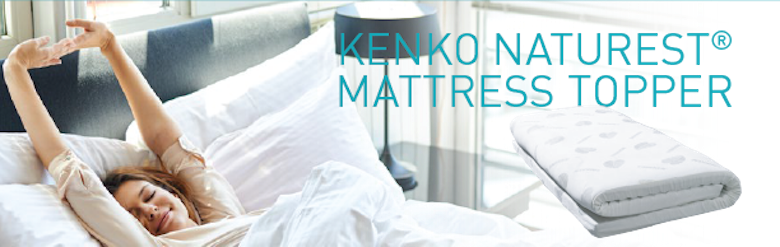
Kenko Sleep Products are an integral component of Active Wellness lifestyle. From the Kenko Naturest® Mattress Topper and Custom Pillow to our comforters and KenkoTherm® Cocoon, once you try them, you’ll never want to give them up!

1 https://www.nhlbi.nih.gov/health/health-topics/topics/sdd/why