May is the Month to Make Our Recommitments

May is the third and last month of the spring season in the northern hemisphere. In the United Kingdom, it’s known as the “smile month.” May is named after the Greek goddess of fertility, Maia, and the Romans called her Bona Dea. In the 1400s, the word designating the fifth month of the year changed from Maius to May.

In North America, May is known as National Recommitment Month! Its significance is as a time to reevaluate the meaningful areas of our lives and to see if we’re on the right path. Have we honored the commitments we made earlier in the year? How are we progressing with our goals for 2023? Are our relationships with family and friends where they should be?

Throughout our lives, we make goals and commitments, and before the middle of the year approaches, May is a good month to step back and assess how we are doing. No matter what the commitment—largely encompassed by any of the 5 Pillars of Wellness—healthy mind, body, family, society or finances—it’s time to take a look at where we stand.

Some practical ways to recommit are to examine our goals and see which ones are on track and which need more work or to be eliminated. If the original plan was too complicated to execute, then it’s time to simplify. If there were too many goals, it’s time to reset priorities and stick to the critical ones—our chances of success are higher when goals are realistic.

Focus. Multi-tasking is often presented as a desired skill when in reality, focusing on one goal at a time tends to produce a higher success rate. When we work on many things at once, chances are none of them will get done in a timely way. In other words, we don’t need to spread ourselves too thin. This holds true not only for work goals but also relationship goals.

Be mindful. Mindfulness is a means to an end. It helps ensure commitments are honored by decluttering the brain. Mindfulness requires our full intention as well as freedom from self-imposed anxiety, pressure, negativity and fear. Meditation is a form of mindfulness, but even without an actual meditation practice, we can take a few minutes every day to be quiet internally and renew our commitments and intentions. Meditation and being silent helps us consciously repel self-demeaning thoughts and emotions by emptying the mind. Mindfulness is positive self-talk and an essential component of self-care.

Prioritize. This is a no-brainer, but too often, we forget to do it. Since change is constant, we need to prioritize every day. That actually is what recommitment is founded on—as priorities change, our commitments change. What is most important to do today? And then, for the week?

Be flexible. Depending on each person’s personality, flexibility may come naturally or be a goal in and of itself. Just because we have made certain commitments and want to fulfill them doesn’t mean it’s always do-able or even practical. Sometimes we just have to go with the flow and adjust accordingly. On the other hand, sometimes we do have to stick to our plans even if they go against the general consensus. Exercising good judgment in that way is also part of recommitment.

What are you recommitting to this month? Are you hydrating and making sure you are breathing in fresh air? Are you exercising daily? Have you connected with your elder family members? Did you walk the dog today? Whatever your priorities are, remember to be kind to yourself.

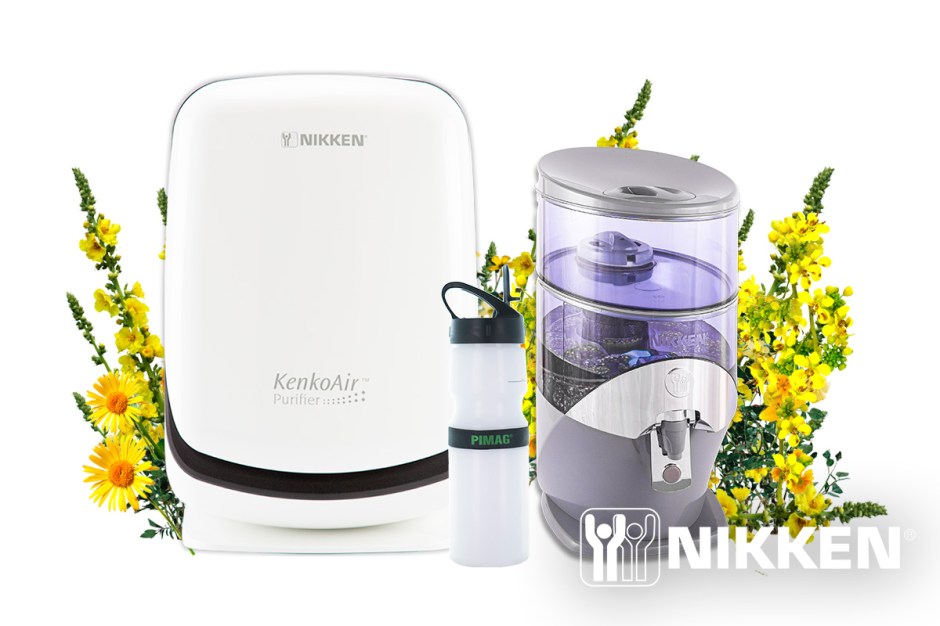
As you recommit to prioritizing your health, be sure to take advantage of the 20% off filters promotion that Nikken is running now through June 30, 2023. It’s a great savings and the perfect time to purchase a spare for your PiMag® Sport Bottle, PiMag MicroJet® shower systems, PiMag Waterfall® and KenkoAir Purifier®! Each filter helps decrease your carbon footprint and gets your closer to being in harmony with nature!
Embracing Spring Cleaning and Warmer Weather

Spring is here and that usually means warmer weather, more sunshine and frequent but short showers—all helping flowers to bloom and foliage to grow. That adds up to more outdoor activities, such as hiking, running, swimming, yard work and picnics. While outdoors, we’re breathing in a mixture of pollen, clean and polluted air, and depending on the location, possibly industrial waste.

Spring is also a time of renewal and part of that is the universal embrace of spring cleaning. In fact, in many parts of Asia, spring cleaning involves not only one’s house but also the gravesites of ancestors. It’s a way to celebrate the gifts that the spring season brings to the living and remembrance and honor to those who have gone by keeping their resting places swept and clean.

The average American spends 80% of their lives indoors, where the air quality may actually be worse than the air quality outdoors! Depending on where we live, clean air and potable water can be valuable commodities rather than the norm. The rite of spring cleaning addresses indoor air pollutants and the need to hydrate more as the climate changes.

Even when outdoor air is breathable and water is potable, we run the risk of bad indoor air quality that can cause respiratory issues or other ailments. Air pollutants can range from contaminants brought in by pets, dust mites, spores, mold and mildew, or even harmful gases like carbon monoxide and radon, or volatile chemicals emitted from conventional cleaners and cooking.1

These air pollutants and allergens can cause respiratory problems and flare-ups in people who already have breathing issues. Children, people with asthma and the elderly may be especially sensitive to indoor pollution. These same people often do not stay well hydrated and other health issues can arise.This is why it’s so important to use water and air filtration units.

Nikken is committed to creating environmentally-friendly products that are in harmony with nature. They help us to breathe clean air, to live a a wellness lifestyle and to keep hydrated with alkaline water. When we’re spring cleaning, it’s the perfect time to make sure all our water and air filters are changed in a timely way!

  • The KenkoAir Purifier® exceeds the measured efficiency of capturing up to 99.95% of 0.3 micron particles in the air. It’s 35% more efficient than standard models and saves a minimum of 215 kilowatt-hours per year. Unlike typical air filters, this advanced system helps generate negative-ions similar to those found in natural environments.

Nikken recommends changing the filters every six months. Be sure to clean the reusable prefilter when the other filters are replaced. Choose Item #1444.

  • The PiMag® Sport Bottle uses state-of-the-art filtration technology that exceeds NSF standards for reducing particulates, chlorine, chloramine, taste and odor, cysts, lead, bacteria, VOCs, MTBE and more.

Nikken recommends changing the filter approximately every 40 gallons or three months of average use or up to an estimated 250 refills per filter. Choose item #13503 for the Replacement Filter Pack.

  • The PiMag Waterfall® is the eco-friendly Sport Bottle’s counterpart for the home and office. It also exceeds NSF standards as mentioned above.

Nikken recommends changing the filter every 3- 6 months or 900 liters/238 gallons, whichever comes first. Choose item 13845. Mineral stones should be changed annually. Choose item #13846.

  • The PiMag MicroJet® Shower System has also been tested according to NSF standards and been proven to effectively reduce chlorine exposure. While most chlorine-reduction systems in shower filters merely trap chlorine or add other chemicals to counteract it, the PiMag MicroJet uses a reduction/oxidation process to neutralize chlorine ions. The MicroJet injects air into the shower stream to increase the electronegative potential of the water for more effective filtration. Micro-bubbles are released through the nozzle to provide an exceptional cleansing action.

Nikken recommends changing the filter for the hand held model every 5,000 gallons or three months, based on average use. Choose Item #14661.

Nikken recommends changing the filter for the wall mount model every 10,000 gallons or six months, based on average use. Choose Item #13831.

From Personal Need to Helping the World

Companies are started for many different reasons. Isamu Masuda founded Nikken because he personally had a need and nothing fulfilled it. In the true spirit of entrepreneurship, he thought outside of the box and found a way to fulfill his personal need and in doing so, created a company that could do the same for countless people, first in Japan and eventually, globally.

Young Masuda became the son of a single mother when his father died in World War II. His mother managed a small shop, and when he was 18, young Isamu found a job with a bus company. Over the next few years, he worked his way up from washing buses to being a desk clerk.

Married at age 27, Masuda was intensely interested in ways to improve health, possibly because he personally did not have a robust constitution. He started to work at a shop providing health-related products. His goals and career path changed when his son was born with daunting health challenges. The need to support his family and help improve the health of his son and himself, was enough to spur him into action. Doctors told him his son’s recovery would be expensive, so the new father logically decided he had to find a way to make a lot of money.

Inspiration came in the form of personal experience. Japanese people are introduced to hot baths early in life and grow accustomed to communal bathing. Families enjoy public baths with a key feature: pebbles on the floor of the baths stimulate the feet. Creatively thinking, Mr. Masuda combined the concepts of the stimulating pebbles with the age-long practice of using magnets, believed by Japanese to be therapeutic. He created the first magnetic insole that could be placed inside shoes.

His invention was a hit almost immediately. His customers claimed they felt better in different ways. They said their circulation improved, they felt more energetic and they were getting better sleep. But Masuda was not a businessman and didn’t know how to expand, so he reached out to an experienced financier. Together they grew their insole business.

Nikken sold only insoles for the first three years of business. They were sold to help improve overall energy through stability and stamina from the feet upward. Independent distributors later expanded into other countries and Nikken has now been an international company for more than 45 years.

Kenko Insoles are now available in two variations: mStrides and mSteps. Both continue on the Japanese tradition of magnets for therapeutic usage combined with the effect of the hot bath pebbles. The contemporary insoles make use of patented magnetic DynaFlux® technology. Depending on preference you can choose Kenko mSteps® insoles that are “bumpier” for more intense massage effects or Kenko mStrides® for a smoother surface. Both are durable, provide support for feet, legs and back, and are ventilated so feet stay cool.

As the flagship product line, Kenko Insoles have withstood the test of time and have built a huge fan base. Here are a few examples of what people with happy feet say:

” I used to have discomfort on my ankles for years. Since I wear the mStrides, the discomfort went away! So grateful for the technologies!” U. Pho

“I feel grounded and connected all day with my mStrides.” C. Aubry

“Ever since I was 7 years old, I’ve had challenges with my joints and being on my feet for long periods of time. I consistently wear mSteps or mStrides in my shoes and even my sandals. I like both so I just keep them, without switching them out. I no longer feel challenged when I’m on my feet!” B. Richmond

“I teach aerobics and strength training so when serious foot discomfort threatened my ability to that as well as to hike and dance, I needed help. My friend gave me a pair of mStrides and I was amazed. My feet felt great, I had tremendous energy in my legs and my class even told me I was too peppy! That was 20 years ago and I’ve never taken them out of my shoes. It’s mind-blowing how a product can be so effective and so simple to use.” C. Livingston

“When I started working at a cable plant, I had to climb stairs throughout the day while wearing steel toed boots. My back and legs were strained and I could barely walk by the end of the day. I order mStrides and put them in my boots. Now I am able to go up and down the stairs as many times as needed without worrying if I will make it to the end of the day. I am so grateful.” – A. Markus

“I am a busy mom and entrepreneur business owner. I love my mSteps—it’s one of the easiest things I can do to improve my well-being without adding another thing to my to-do list. I have improved balance and feel that it supports the flexibility of my back, while my energy levels are better during the day. Slide them in the shoes and forget about it.” A. Weinberg

How are you doing with your Summer Active Wellness regimen? Walking, hiking, running or gardening, traveling and anything you do on your feet can be surprisingly easy with Kenko Insoles. From now until September 30, you can save 20% off the Summer Active Wellness Pack. It contains three Nikken technologies—nutrition, magnetics and PiMag® water— with a jar of Kenzen® Super Ciaga® powder, a pair of Kenko Insoles (choose mStrides or mSteps) and an eco-friendly PiMag® Sport Bottle.

Imagine Breathing in Refreshing Forest Air

The smell of nature in the air is so sweet! Did you know that this enticing smell is not only a sensory pleasure but actually an aspect of preventive health in Japanese medicine? Called Shinrin-Yoku, its literal translation is “forest bathing.” Though any kind of nature can enhance our health and happiness, there’s something special about being in a forest.

The Japanese Society of Forest Medicine, headed by Dr. Qing Li, promotes research on the therapeutic effects of forests on human health and educates people on the practice of forest bathing, which involves slowly walking through a forest, taking in the atmosphere through all your senses and enjoying the benefits.1 In 1982, Japan launched a national program to encourage forest bathing and by 2004, a formal study of the link between forests and human health had begun in Iiyama, a place known for its lush, green forests. Now, more than 2.5 million people walk those forest trails as a way to ease stress and enhance health.2

After years of study, Dr. Qing Li has found that spending time in a forest can help reduce stress, anxiety, depression and anger! The result is a boost to the immune system, improved cardiovascular and metabolic health and an increase in the feeling of overall well-being.3

In the western world, exercise is the primary solution for promoting cardiovascular, metabolic and mental health. When you are walking through a forest and inhaling that natural air, you’re not only getting moderate exercise but also hanging out with trees, which turns out to be an important part of preventive health. Dr. Qing Li discovered this when he was a stressed-out student and went on a week of forest camping. He returned feeling restored both physically and mentally, so much so that it inspired him to research forests and their benefits on human well-being.

Those of us who don’t have easy access to a forest and forest bathing, can have the next best thing. Since indoor air quality is often worse than outdoor air, how soothing would it be to have forest-like air in doors? How much would we benefit from breathing natural forest-like air in our own homes?

Say hello to the KenkoAir Purifier®. Its middle name is HEPA 13 and it can filter air particles so small that they’re not visible to the naked eye. Due to negative-ion technology, you receive filtered air that simulates what’s found in nature—nature as in forests and lakes. In other words, you’re getting as close to forest bathing as you can without actually hanging out with the trees.

In keeping with the Nikken pledge to be in harmony with nature, the KenkoAir Purifier operates ozone-free so it’s non-toxic. It has a reusable pre-filter which can be washed and the other filters can be replaced easily every six months. You breathe cleaner air and decrease your carbon footprint at the same time—a win-win situation you can enjoy year-round, as long as you remember to replace the filters on time. If you live somewhere that has especially dense air quality, replace the filters more often. Every time you see the red light is on, you’ll know your KenkoAir Purifier is cranking so your air gets cleaner.

Lately, even the CDC (Centers for Disease Control and Prevention) is recommending the use of a HEPA air filter in homes. Don’t wait for visible signs of bad air to show up in your home. Mold, mildew, musty odors, dust and dander can all be addressed with good filtration. You don’t have to wait long to feel and smell the benefits from the KenkoAir Purifier.

From now through September 15, take advantage of our state-of-the-art filtration systems: all filters are 20% off. These are Active Wellness filters for the KenkoAir Purifier®, PiMag Waterfall®, PiMag® Sport Bottle and PiMag MicroJet® Showers (both hand held and wall mount models) and PiMag® mineral stones.

1, 2, 3 https://greatergood.berkeley.edu/article/item/why_forest_bathing_is_good_for_your_health

Break the Single-Use Plastic Habit

One of the most straightforward ways each one of us can decrease our carbon footprint is to break the single-use plastic habit. In this age of conveniences, take-out food and beverages as well as delivered items often come in plastic containers. Everywhere we go, we see people drinking water from single-use plastic bottles.

Single use plastic shopping bags are the biggest landfillers next to plastic bottles, but fortunately, they are slowly making their way out of the mainstream marketplace. Grocery stores have been encouraging customers to bring their own totes and only provide bags upon demand. Even so, we still need to be conscientious in choosing paper bags when we forget to bring our own re-usable totes.

Take the single-use plastic challenge for a day! Increase that to most of the week, then incrementally build up to a month. You will see it can be done and you will have made a personal contribution to the maintenance of our planet! The challenge is simple: Go through a regular day but refrain from touching any single-use plastic item, whether it’s a bag or a bottle. Keep track of your trash: you will see how much less there is when you use recyclable containers and bottles instead of plastic bags and bottles.

Another way to get rid of the single-use-plastic habit is to make your own “zero-waste kit.”1 The five recommended items to include in the kit are a re-usable water bottle, a cloth shoulder bag or tote, a metal straw, a re-usable coffee/tea cup and a set of travel utensils. Each of these five items is an alternative to a common single-use plastic item. You can take it with you when you travel, go on a hike, go on a shopping spree, and so on.

The Active Wellness lifestyle is not only about our physical and mental health but also about the health of our planet. If everyone takes the single-use plastic challenge, the results would be astounding. Why wouldn’t every person want to contribute personally when 50% of plastic products are used for single-use purposes to the tune of 380 million tons a year?2 Since only 9% of plastic gets recycled globally, no wonder 10 million tons are found in our oceans worldwide.3

Governments are aware they need to legislate environmental regulations to help solve the problem of plastic waste. The U.S. Interior Department affirms that it will phase out the sale of single-use plastic products in national parks and other public lands by 2032.4 In Europe, wherever sustainable alternatives are easily available and affordable, single-use plastic products cannot be placed on the markets of EU Member States. This applies to cotton bud sticks, cutlery, plates, straws, stirrers, and sticks for balloons. It will also apply to cups, food and beverage containers made of expanded polystyrene, and on all products made of oxo-degradable plastic.5

We can be mindful and set our intentions to decreasing our carbon footprint. We have to start somewhere. At Nikken, we are committed to living in harmony with nature, and our water and air filters certainly were created with that in mind. From now through September 15, take advantage of our state-of-the-art filtration systems: all filters are 20% off. These include filters for the PiMag Waterfall®, PiMag® Sport Bottle and PiMag MicroJet® Showers (both hand held and wall mount models), PiMag® mineral stones and KenkoAir Purifier®.

1 https://rothys.com/blogs/the-loop/10-tips-to-reduce-plastic-use-be-eco-friendly?

2, 3 https://plasticoceans.org/the-facts/

4 https://www.cnbc.com/2022/06/08/us-to-ban-sale-of-single-use-plastic-on-public-lands-national-parks-by-2032

5 https://environment.ec.europa.eu/topics/plastics/single-use-plastics_en

Summer Walking: A Fun Way to Better Health

Summer means more daylight hours and warmer temperatures, which makes it a great season for walking outdoors. Walking is known to help release endorphins that elevate our mood and decrease stress levels. When done consistently and enough to increase heart rates, walking can even burn calories and help us lose weight. A heart-healthy exercise, walking is believed to lower the risk associated with high blood pressure, high LDL (bad) cholesterol, stroke and coronary heart disease.1  

Depending on where you live and how hot the summer days get, you can create a walking regimen. In climates that are very hot, it’s best to limit walking to early morning and evenings when temperatures are lower and tolerable. Frequent but short brisk walks are just as beneficial as longer walks. Both help to build stamina and strengthen the heart, so you don’t need to take one long, extended walk to meet your distance goals. You can split up the distance into a few short walks. If counting steps matters to you, then simply wear a pedometer.

Again, depending on where you live, there are many ways to incorporate a walking habit into your daily routine. You may:

•          walk part of the way to work or even all the way, if it isn’t that far.

•          walk on your lunch break.

•          take the stairs whenever possible, instead of using an elevator or escalator.

•          get the whole family involved and take a walk after the evening meal. Walking helps digestion!

•          find a walking buddy and set aside time together.

•          increase your walking time or distance with your dog(s).

If you haven’t been walking for some time, gradually build up time and distance. Even though walking is a gentle exercise, overdoing should be avoided. Be sure to:

•          dress comfortably in loose-fitting clothes.

•          dress in light colors if the sun is already up or hasn’t set yet.

•          watch out for traffic, depending on where you’re walking.

•          carry a water bottle with you and sip regularly. Remember, even if you aren’t sweating, you’re still losing water. Dehydration causes great discomfort and may even be dangerous.

•          wear a visor, sun hat or head covering you feel comfortable in.

•          wear shoes that are broken in and give good support. If you are hiking or going on uneven terrain, you may need sturdy boots instead of comfy shoes.

•          wear sunscreen everywhere your skin is exposed. You can get sunburned even when you cannot see the sun.

•          use walking sticks if you want to work out your arms.

•          use a walker if you are post-surgery or in recovery and have been sedentary for a stretch of time.

•          wear light ankle and wrist weights if you want extra conditioning or to build muscle mass. (Make sure you are in good shape already before adding weights.)

Walking is one of the easiest ways to incorporate daily exercise into an Active Wellness lifestyle. Get everyone in the household involved and see how fast communications improve between generations!

This entire summer and into the beginning of autumn, you can jumpstart your walking habit with the Summer Active Wellness Pack. It comes with one PiMag® Sport Bottle (to help you stay hydrated), one pair of energizing magnetic insoles (choose your size of Kenko mSteps® or mStrides®) and one Kenzen® Super Ciaga® Powder (for a superfruit antioxidant and immunity boost). You get the pack at 20% off from now through September 30.

1 https://www.bhf.org.uk/informationsupport/heart-matters-

Choosing Freedom Every Day

Freedom is an ideal that many of us consider in a global way and on certain holidays, we may take time to think about it in more profound ways. In North America, we celebrated Canada Day on July 1 and U.S. Independence Day on July 4.

Freedom can be a personal choice. One of the most inspiring examples of this freedom mindset—to choose freedom regardless of circumstances—may well be personified by Nelson Mandela. During 27 years of imprisonment under deplorable conditions, he managed to stay true to himself and keep his spirit intact. When freed and asked repeatedly how he managed not only to survive but to emerge stronger than ever, he quoted William Ernest Henley’s poem Invictus.1 The two key lines that Mandela immortalized with his personal story are: “I am the master of my fate: I am the captain of my soul.”

Humans Being More is the Nikken approach to being the “master of my fate” and “captain of my soul.” By working on our inner selves every day of our lives, we develop into who we are meant to be. Few of us will live heroic lives akin to that of Nelson Mandela, but many of us may live productive lives that positively impact others. “Being more” is an evolution and does not stop. It is embodying the words of Theodore Roethke in his poem The Waking: “I learn by going where I have to go.”2

Going where we have to go is similar to the Nike motto: “Just Do It.” Take the plunge. Don’t overthink it. Go with your gut. Over-analysis is paralysis. We’ve heard these exhortations to action over and over again, because actually doing something is what makes our choices happen, not just mulling them over. Our freedom mindset is what propels us forward and enables us to take action.

The freedom to do something of our choice (or not) is a gift. In contemporary societies, it’s common to feel obligated to attend certain functions, to be at the beck and call of family members and friends, to work unpredictably long hours—to surrender to the requirements of others. Much of this is a part of adulthood, but self-care is also needed for us to endure for the long haul. Taking time for ourselves each day—to exercise, read something of actual interest, pay attention to pets, or have a nice cup of tea—are part of the freedom mindset.

Choosing freedom does not mean shirking responsibilities or feeling entitled to things we did not work for. When someone has never had to work for something desired, entitlement sets in. This entitlement inevitably leads to discontent because there is no association with value. We naturally gravitate towards gratitude when we know the value of something and experience the effort of obtaining it. What do we have in each day that we are grateful for? We cannot feel free if we focus on what we don’t have. We can, however, focus on how to obtain what we want. Being able to choose what we want and to go after it, is also a type of freedom we sometimes take for granted.

Especially during uncertain times, we create our own lack of freedom by adhering to preconceived notions of who we should be or what we’re capable of doing. Then something happens to remind us that change is the only constant, and we can choose to go with the flow or swim against it, but inertia is not an option. Best of all, we find out that we are capable of so much more than we give ourselves credit for. When we use our freedom mindset, we surprise ourselves—in such good ways!

Whatever we choose to use our freedom mindset to accomplish—whether it’s to become debt-free, learn a new language, or to spend more time with our children and grandchildren—we can only rely on our own defined intentions to make it happen.

Successful entrepreneurs have the freedom mindset. They do not want to be bound by 9-5 limitations, they do not like the security of staying in a box, and they enjoy taking creative risks. In entrepreneur speak, they say that success is reached through a series of failures. In the freedom mindset, failure does not exist—failure is only a stepping stone to success.

Nikken wishes everyone a joyful summer filled with new experiences found with your freedom mindset! From July 1 through September 30, get the Summer Active Wellness Starter Pack that gives you access to three technologies: PiMag® alkaline water with patented nano-fiber filtration, organic antioxidant nutrition and patented DynaFlux®magnetics. You get one each of the PiMag® Sport Bottle, Kenzen® Super Ciaga® Powder and your choice of one pair of Kenko mStrides® or Kenko mSteps® at 20% off the total price.

1https://www.inmatesurvival.com/how-did-nelson-mandela-survive-27-years-in-prison/

2 https://www.poetryfoundation.org/poems/43333/the-waking-56d2220f25315

Water is the Best Drink for Children

Water is life, and all plants and animals require water to live. As part of the animal kingdom, humans are the only ones who do not drink water and mother’s milk exclusively for survival. This complicates human survival, because along with milk, plain water is the best choice for children; yet contemporary lifestyles commonly allow for juices, sugary sodas and artificially flavored beverages.

Water has zero calories, keeps joints, bones and teeth healthy, helps the blood circulate and can help children maintain a healthy weight into adulthood. A well hydrated child tends to have better mood, memory and attention span as well as concentration and focus.1

Just as water is best, here are some other guidelines for children:

• No sugar-sweetened beverages for children younger than two years of age. Limit them for older children as much as possible. This includes sports and energy drinks, juice cocktails, sodas, lemonade, and sweetened water. These drinks add “empty calories” to the diet, can be filling and leave kids less hungry for the nutritious foods they really need. Sometimes sodas and energy drinks contain caffeine, which may overstimulate many children.

• Even 100% juice should be strictly limited. While juice may contain some vitamins, these drinks are high in sugar and calories and low in the healthy fiber found in whole fruit. Because of its sweet taste, once children are offered juice, it can be difficult to get them to drink plain water. Keep these amounts in mind:2

•Children less than a year should not drink any juice at all.

            •Children one to three years of age should have no more than four oz per day.

            •For older children, juice is only recommended if whole fruits are not available. Children ages four to six years: no more than four to six oz per day, and for children ages seven to 18, no more than eight oz per day.

Avoid artificially-sweetened drinks. Health risks for children from artificial sweeteners are not well understood, so it is safest to avoid these drinks. Instead, make water readily available to encourage healthy drinking and establish Active Wellness habits.

• Milk may be beneficial, whether animal-sourced or plant-sourced. However, flavored milk can be much higher in sugars. Even though children still get the benefits of the calcium and vitamins found in flavored milk, the added sugars may create a preference for sweet flavors, which can make it difficult to have success when offering regular milk.

Children are at a greater risk of dehydration than adults because in relation to their size, they have a larger proportion of skin that is exposed to heat.3  Also, children don’t always recognize when they’re thirsty, and if they’re not encouraged and reminded with water, may forget to drink and rehydrate.

We can help children create healthy habits by being good role models and drinking plenty of filtered water. We also can teach them respect for the environment and to carry a re-usable water bottle to avoid single-use plastics. Children are like sponges and learn quickly, so we can start them off right with clean, alkalizing PiMag® water.

Tap into the power of hydration with our four Water Packs, available through the end of April! Each pack has two state-of-the-art PiMag® products. You get one at the regular price and the second at 50% off! You have your choice of two PiMag MicroJet® Wall Mount Shower Systems or two PiMag MicroJet® Handheld Shower Systems, both of which help neutralize chemicals, two PiMag® Sport Bottles of 100% recyclable biogreen materials, or two PiMag Waterfalls® that can help reduce bacteria by 99.99%.

1, 2 https://www.healthychildren.org/English/healthy-living/nutrition/Pages/Choose-Water-for-Healthy-Hydration.aspx#:~:text=It%20good%20for%20the%20body,sports%20drinks%2C%20sodas%20and%20juice.

3 https://healthy-kids.com.au/parents/children-hydration/

Hydration and Moisturization: We Need Both for Healthy Skin

The word “hydration” is connected to water. Hydrating the skin therefore means increasing its water content. Hydrated skin is smooth, glowing and has an even tone. When skin is dehydrated, it can appear flaky, dull and dry. However, people often tend to confuse dehydrated skin with dry skin. Although used synonymously, there is an underlying difference between the two. Dehydrated skin lacks water, whereas dry skin lacks a fair amount of sebum, which is the oil secreted by the sebaceous glands present in the skin. Dry skin can also be the result of certain medications or disorders.1

How can we tell the difference between dry skin and dehydrated skin? The two have notably different indicators. Dry skin may present as itchy, red, flaky and irritated, while dehydrated skin may show up as dull, wrinkly, lined, puffiness and shadows around the eyes, dry mouth and increased sensitivity.2

There are ways to hydrate the skin but there are also ways to moisturize it. Hydration and moisturization actually involve two separate processes. Hydration of the skin occurs when we add water to it. It temporarily fills skin cells to give it a fuller feel. It’s temporary because skin releases water when there is nothing to help retain it—the most obvious way is through perspiration but exposure to wind, sun and other elements expedite the discharge of water.

Drinking a lot of water, in and of itself, cannot help hydrate skin unless you are actually dehydrated. Those who stay hydrated cannot drink copious amounts to help improve skin’s texture or radiance. Skin is actually the last part of the body that water reaches, as it flows to all the other organs first. However, drinking ample amounts of water does help rid the body and skin of toxins.

Moisturization is a necessary partner for hydration, because it involves adding ingredients into the skin to help prevent water loss. When moisture is retained by the skin, it enables skin’s natural ability to renew and repair to occur, improving texture and overall skin health.

Retaining the moisture in the skin is a complex science, but dermatologists generally agree that hyaluronic acid, glycerin, urea, ceramides and antioxidant vitamins A, C and E are among the most beneficial ingredients to add into creams and serums.3 These ingredients come in many variations and may be known by other “INCI”(International Nomenclature Cosmetic Ingredient) names; for example, tocopherol, sodium hyaluronate, ascorbic acid, lipids from oils and seaweeds and so forth.

The True Elements® Marine Organic Skincare range takes moisturization to a high level with its emphasis on sustainably farmed seaweeds that contain naturally-occurring antioxidants, beneficial acids, salts and oils. You can feel secure knowing that all True Elements® skincare products are COSMOS Organic certified by EcoCert, pH balanced and naturally fragranced. The range does not contain parabens, phenoxyethanol, PEGs, phthalates, EDTA, GMO ingredients or synthetic coloring.

Combining hydration, by drinking enough PiMag water, and moisturization, by using True Elements® Marine Organic skincare, is a bona fide way to maintain high energy levels and vibrant-looking skin. Tap into the power of hydration the entire month of March with our four Water Packs! Each pack has two state-of-the-art PiMag® products. You get one at the regular price and the second at 50% off! You have your choice of two PiMag MicroJet® Wall Mount Shower Systems or two PiMag MicroJet® Handheld Shower Systems, both of which help neutralize chemicals, two PiMag® Sport Bottles of 100% recyclable biogreen materials, or two PiMag Waterfalls® that can help reduce bacteria by 99.99%.

1,2,3,4 https://skinkraft.com/blogs/articles/how-to-hydrate-your-skin

Groundwater: Making the Invisible Visible

World Water Day is celebrated globally once a year to consciously recognize the importance of providing affordable, lasting access to safe water. It became a United Nations observance day in 1993 to focus attention on the global water crisis. Now World Water Day takes place on March 22 annually.

The theme of World Water Day for 2022 is “Groundwater: Making the Invisible Visible.” World Water Day draws attention to water scarcity globally and every year, the theme is based on an important aspect of water. Groundwater is important around the world because it is the most abundant source of freshwater on earth.1 It is water that is located beneath the earth’s surface in the pores and crevices of rocks and soil. These layers of soil, sand, rock and gravel that contain usable quantities of groundwater are called aquifers.

Groundwater is invisible, but its impact is visible everywhere. Out of sight, under our feet, groundwater is a hidden treasure that enriches our lives. In the driest parts of the world, it may be the only water people have. Almost all of the freshwater in the world is groundwater, supporting drinking water supplies, sanitation systems, farming, industry and ecosystems. In many places, human activities over-use and pollute groundwater. In other places, we simply do not know how much water is down there, which means we could be failing to harness a potentially vital water resource.2

Accounting for about 97% of non-frozen fresh water on earth, groundwater is an important natural resource that contributes to human development. Approximately 50% of the world’s population drinks ground water daily, and it is critical for sustaining rural populations that are located away from surface water and infrastructure with manmade plumbing.3

Groundwater is a vital resource that provides almost half of all drinking water worldwide, about 40% of water for irrigated agriculture and about one third of water required for industry. Despite these impressive facts and figures, invisible groundwater is out of sight and out of mind for most people. Human activities, including population and economic growth, as well as climate variability, are rapidly increasing the pressure on groundwater resources. Serious depletion and pollution problems are reported for many parts of the world.4

There are now 468 identified aquifer systems identified, underlying almost every nation, increased from 366 in 2015. Groundwater does not stop flowing at political borders and huge resources are stored in what are known as “transboundary aquifers.” 40% of the world’s available water is transboundary. The identification, mapping, assessment and development of control mechanisms for transboundary aquifers (TBAs) are important tasks for ensuring the sustainability of these resources and peaceful cooperation between countries.5

The assessment of global groundwater resources is one of the core activities of The International Groundwater Resources Assessment Centre. (IGRAC) is a United Nations Educational, Scientific, and Cultural Organization (UNESCO) center that works under the auspices of World Meteorological Organization (WMO) and is supported by the Government of The Netherlands. IGRAC facilitates and promotes global sharing of information and knowledge. about groundwater. IGRAC addresses the major issue of groundwater being overused in many areas, where more water is extracted from aquifers than is recharged by rain and snow. In addition, groundwater pollution is a particular problem that can take decades or even centuries to recover from. 

Exploring, protecting and sustainably using groundwater will be central to surviving and adapting to climate change and meeting the needs of a growing population. The 2022 World Water Day spotlights groundwater as an invisible yet valuable resource, and strives to enhance knowledge exchange and collaboration to increase awareness of the importance of taking care of our groundwater.

Water is Life and Nikken is doing its part to help people access clean water for Active Wellness—not only for drinking, but also for bathing. For the entire month of March, we are focusing on the Power of Hydration and offering four Water Packs. Each pack has two state-of-the-art PiMag® products. You get one at the regular price and the second at 50% off! You have your choice of two PiMag MicroJet® Wall Mount Shower Systems or two PiMag MicroJet® Handheld Shower Systems, both of which help neutralize chemicals, two PiMag® Sport Bottles of 100% recyclable biogreen materials, or two PiMag® Waterfalls that can help reduce bacteria by 99.99%.

1,3 https://www.un-igrac.org/resource/transboundary-aquifers-world-map-2021

https://www.worldwaterday.org/

4,5 https://www.un-igrac.org/news/groundwater-making-invisible-visible-theme-world-water-day-2022