You Can Create a Sleep Sanctuary

Sleeping well is a challenge for many people. Often, it’s because keeping up with the demands of family, friends and work can cause a huge amount of stress. The result is that neither body nor mind can decompress enough to get a good night’s sleep.

Fortunately, there are actual steps you can take to create a “sleep sanctuary,” some place pleasant and cozy, relaxing and soothing:

1. Perhaps the most important item in a sleep sanctuary is the bed. Regardless of the type of frame you choose for your bed, the mattress is important and should suit your personal needs. Do you like firm, medium or soft? More importantly, what type of mattress suits your spine? For example, even if you prefer a soft, cushy mattress, if your spine is weak, you would probably be better off with a firm mattress, because it affords more support.

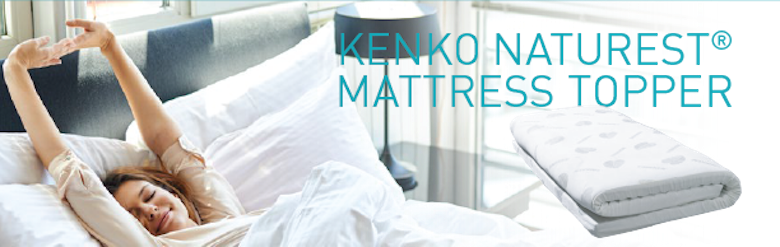
Solution: No matter what type of mattress you currently have, the Kenko Naturest® Fit is a topper that sits right under your fitted sheet, in twin, full, queen or king sizes. The Fit is made with sculptured rubberthane latex, which provides massaging effects while allowing for air circulation and ceramic reflective fibers that help regulate body temperatures. 800 gauss magnets create a magnetic field which cocoons the body for relaxation to help improve sleep. Tourmaline gives off electrons that help create calming effects when exposed to pressure, heat or motion, which is provided by your own body as it lays on top of the Fit.

2. Just as the Kenko Naturest® Fit supports your comfort, what your skin actually touches also can make a difference in how well you sleep. Choose linen that feels the most comfortable for you. Invest in natural fabrics, such as cotton, flannel, flax or even silk. Manmade fabrics do not allow air to circulate as freely and may even cause itchy or sweaty skin. Natural fabrics help regular temperatures—cools in hot months and warms in cold ones.

3. Do the breath test of your bedroom or wherever you want your sleep sanctuary to be. Inhale in and out slowly. What do you smell? Since you will be spending all night in the sleep sanctuary, you need to make sure the air is fresh. Stale or unpleasant odors are not conducive to restful sleep. If there is a window, make sure to keep it open at least for a few hours every day so the room has outside air flowing through. Indoor air often contains more contaminants than outdoor air! Dust, pet dander, pollen and odors are typically in household air. Mold, mildew and dust mites may be present. Even gases such as radon and carbon monoxide are found in measurable quantities in many homes.

Solution: Whether you have a window or not, the KenkoAir Purifier®provides multiple-stage HEPA filtration, is energy efficient and includes a deodorizing filter. It operates quietly, is ozone-free and has a negative-ion generator.

4. Many people enjoy the aroma of essential oils. Lavender and cedarwood are examples of essential oils that people choose to de-stress and relax for better sleep.

5. Is your sleep sanctuary dark? Sleep scientists agree that a cool, dark environment is ideal for sleep. You can use black out curtains or wear a sleep mask.

Solution: The Kenko Power Sleep Mask not only helps block out light like a typical eye mask. It also helps relax the entire eye area, using similar technologies to those found in the Kenko Naturest® Fit. The Power Sleep Mask is made with patented Dynaflux® magnetic technology, ceramic reflective fibers and tourmaline technology which helps produce a calming effect. When your eyes are relaxed, you have a much better chance at sleeping through the night.

6. A sleep sanctuary is for rest. Your best bet is to create an environment that is natural—you might want a few green plants, but try to limit the clutter. For example, you don’t need to keep piles of books or clothes in a sleep sanctuary. Instead, hang simple photos or art on the walls and limit the amount of unnecessary furniture or accessories. In other words, create a space that you look forward to retiring in every night!

From now through October 31st, take advantage of free ground shipping on any size Makura Sleep Pack and other select Kenko Sleep products!

Do You Know the Benefits of Self-Massage?

Who doesn’t have the occasional achy muscle? With most adults, achy muscles are something you learn to live with. Self-massage can be a cost-effective and safe solution, and anyone can do it. Even a little relief can help you feel better. You’re in control of the amount of pressure to exert and can stop it at any time. It may sound clichéd, but self-massage is a way to show yourself a little kindness rather than self-judgment.

Self-massage may ease minor aches in the head, neck, shoulders, abdomen, upper and lower back, glutes and hips.1 There are different types of self-massage, some using just your own hands and others, using some kind of massage tool. Some forms of self-massage include acupressure, Abhyanga from the Ayurvedic tradition, and trigger point.

In the Ayurvedic tradition, self-massage with oil is a way to help keep yourself in optimal health and balance via the skin. Since skin is the body’s largest organ, Ayurveda recognizes it as a vehicle to reach our internal organs.2 The skin acts as a protective shield as well as a gateway to nourishing the body through its pores. Self-massage also helps increase circulation and enhances the body’s ability to detox.3 The body tends to relax during massage and thereby helps reduce anxiety and improve sleep.4

Acupressure and trigger point massage work on the premise that certain spots throughout the body can be unlocked to release trapped energy or nerves. Acupressure works to release “chi” (vital energy as defined by Merriam Webster) or more widely understood as “breath” and “air” that is necessary for the clear flow of blood and therefore circulation. With acupressure, simply press on the pressure points directly and hold for a while (10–100 seconds). With trigger point massage, do the same or apply small kneading strokes, either circular or back and forth.5

 The goal of self-massage with acupressure or trigger points is to achieve a “release.” Release mostly refers to an easing of sensitivity of the pressure/trigger point, and/or a softening of the tissue texture. If you are successful, you may notice a reduction in symptoms within several hours, often the next morning.6

 Self-massage is an Active Wellness practice that can benefit everyone. Now through the end of July, you can get 20% off unlimited purchases of the KenkoTouch®, a state-of-the-art handheld massager with patented DynaFlux® magnetic technology and three speeds that you control. Discover It. Live It. Share It.


1 https://www.healthline.com/health/self-massage#types

2,3,4 https://www.jasminehemsley.com/la-vida-veda/2018/9/28/why-self-massage-is-part-of-my-weekly-routine#:~:text=Self%2Dmassage%20brings%20you%20back,your%20skin%20or%20preventing%20injury.

5 https://www.painscience.com/articles/self-massage.php


Get Your Stress Under Control

In these uncertain times, even the most stoic of us have our moments of doubt and anxiety. We get stressed out and it only makes things worse. But how do we control our stress levels when the world seems to be devolving?

When we take a hike on a nature trail, go camping or simply take a barefoot walk along the beach, we are doing something called grounding. We’re using all our senses to experience a piece of nature. In other words, communing with Mother Nature can actually help us de-stress by getting us out of our daily box and helping to lower our escalating cortisol levels.

According to Anchorage social worker and counselor Deborah Gonzales, the solution to panic and anxiety is grounding through our senses. This consists of making use of the environment. She clarifies, “Find five things you can see, four things you can touch, three things you can hear, two things you can smell and one thing you can taste.”1 After going through this process, it has a similar effect as taking slow deep breaths or counting to 10 when feeling anxious.

Grounding is not a new concept, but as our contemporary lives ricochet between overwork at “work” and being stretched too thin at home with multi-generational responsibilities, grounding is a necessity for Active Wellness.

But what about those of us who are confined at home? There is nothing to perfectly replicate the feeling of soil underneath our feet, but there is something that comes close in its effect. At Nikken, we call it KenkoGround®—it serves as an indoor and portable way to reconnect with Mother Nature.

Feeling grounded is the opposite of feeling stressed or anxious. Realizing that every living creature is bioelectrical in nature, Nikken created the KenkoGround which made with 20% silver, one of the best known conductors of electricity. KenkoGroundKenkoGround is a lightweight, three-layered rectangular cloth that can be placed under your feet or draped around your shoulders to impart a feeling of balance and calm—it is a wonderful example of technology culled from our knowledge of Mother Nature.

Another known de-stressor is massage. Can’t leave the house to visit your favorite massage therapist? No problem. The KenkoTouch® is a handheld self-massage unit with patented DynaFlux® magnetic technology. KenkoTouchWith three settings, you control the amount of pressure.
No matter where you are, Nikken is committed to supporting you through thick and thin. Inhale slowly, exhale slowly. We are together.


1 deboramgonzales.com

Relax, Renew and Regenerate this Spring Season!

In North America the official start of spring this year is on March 20. Even as the spring season is physically a time of rebirth and renewal, it’s also a challenging time for both the body and the mind.

Noted psychiatrist and substance abuse specialist Dr. McCance-Katz points out that researchers have discovered a greater incidence of depression and anxiety in the spring months. As it turns out, lengthening daylight may discombobulate people’s chemical regulatory system. “There are these different neurotransmitters that have been implicated in mood disorders,” she says. “It could be that people also have imbalances in serotonin, in melatonin, that are affected by day length and can also affect mood.”1 These imbalances are also suspected to cause that general feeling of lethargy, commonly referred to as spring fever.

In fact, “the suicide rate goes up in the spring.”2 Not only are taxes due, final exams take place in many universities and secondary schools, certain sports resume intense practice and stress levels increase during the season for filing taxes. Spring presents specific challenges, so here are a few tips for combating the basic three:

  1. As much as you look forward to the warmer spring weather, you also have to cope with the accompanying winds and sporadic rain, which can wreak havoc on the skin. Your skin may get dehydrated, itchy and red. Be particularly gentle while cleansing and conscientiously hydrate throughout the day and especially at night, because skin cells renew best during rest. Antioxidant-rich vitamins E, A and C are particularly helpful in regenerating the skin. 3
  2. Spring fever begone! Use your diet to help obtain that extra boost you need. Eat seasonal foods. They are fresher and therefore have higher nutritional value. 4 To make sure you aren’t eating or drinking anything that may cause inflammation (pesticides, artificial coloring, chemical preservatives), stay with organic fruits and vegetables.
  3. Stress can virtually be a killer, so exercise both physical and mental health care. Make sure to incorporate exercise into your busy spring days, as physical activity is a known stress reliever. Massage is also a way to practice Active Wellness as the muscles are coaxed into relaxation for sense of overall well-being.

Nikken can help you combat the three basic challenges of spring, so you can relax, renew and regenerate. KenkoTouch®  takes the “ouch” out of expensive massage sessions with a convenient hand-held device that is designed with patented DynaFlux® magnetic technology. Kenzen Ten4® Energy Drink Mix gives you 80 mg of natural caffeine from superior quality matcha green tea powder to supercharge your body and to keep your mind alert.  Since it is so important to keep skin moisturized during the spring season, we recommend using True Elements® Youthful Face Cream, as it may help all skin types replenish moisture.


1 https://www.washingtonpost.com/news/wonk/wp/2014/12/03/the-google-misery-index-the-times-of-year-were-most-depressed-anxious-and-stressed/?noredirect=on&utm_term=.1b1a48c48b1f

2 http://www.mharockland.org/springtime-challenge/

3 https://www.hl-labs.com/pro-info/springtime-challenges-for-our-skin.html

4 https://www.earthbalancenatural.com/lifestyle/6-tips-springtime-stress-relief/


Keep Alert as We Transition to Daylight Saving Time

Daylight Saving Time (DST) starts on March 10 in most of the United States, parts of Canada and some areas of Mexico. In the European countries that adopt DST, many will make the transition on March 31 this year. Many countries around the world have chosen not to have DST in 2019. When DST is not observed, it is called standard time, normal time or winter time.

Although changing to DST only involves an hour’s difference (losing an hour in the spring and gaining one in the fall), there can be a wide range of responses. Some of us don’t feel a difference at all, while others may experience a few days of fatigue from a change in sleep patterns due to having to reset our 24-hour natural cycle known as “circadian rhythm.”1 Internally generated, our circadian rhythm may be influenced by the environment, behavior and medications.2

In general, losing an hour in the spring is more difficult to adjust to than gaining an hour in the fall.3 It is similar to airplane travel; traveling east we lose time and may experience difficulty falling asleep at the “earlier” time. Going west, we may fall asleep easily at the “later” hour but have a difficult time waking.

If you have the foresight to plan ahead for losing that hour of sleep, you can go to bed 15 to 20 minutes earlier than usual for a few nights leading up to the time change. This may help your brain and body make the transition more smoothly.4 You can also expose yourself to sunlight as early in the morning as you can. This tells your internal clock that it’s time to get moving. If sunlight is unavailable where you live, use bright lights to simulate natural light to enhance mental and physical alertness.5

For some people, it can take as long as a week for their circadian and sleep rhythms to adjust to the time change. Regular exercise at the same time daily may help you get back on track, as well as going to bed and rising on a schedule. 6

In more extreme cases, the time change is linked to changes in health, diet and even the tendency to get into an accident. Sleep expert Chris Winter, M.D. explains, “Our bodies function on an internal schedule, from hormone release to body temperature to cognition—sleep is linked to them all. Your body receives signals from hormones, like ghrelin and leptin.”7 Dr. Winter further explains that these two hormones are related to cravings for food and feelings of being full, but are also “intimately associated with sleep, which is part of why when we’re not sleeping well, we tend to overeat.”8

Research published in 2009 showed the Monday after switching to DST saw a 5.7% jump in workplace injuries and nearly 68% more workdays lost to injuries, meaning they were more severe. 9 These conclusions were reached by analyzing U.S. Department of Labor and Mine Safety and Health Administration injury data from 1983 to 2006.

To prepare for an easy transition into DST, sleep a little earlier on the days before and wake a little earlier as well. Expose yourself to natural light (or simulated natural light) as early as possible upon waking. Eat a healthy breakfast to notify your body the day has begun.

To help block out light for better sleep, wear the Kenko PowerSleep Mask with patented DynaFlux® magnetic technology. Place the KenkoGround on top of your Kenko Naturest® Mattress Topper and sleep with some part of your skin touching it to help you stay grounded and connected to Nature even while in bed! You can practice Active Wellness 24/7!


1,2,3 https://www.webmd.com/sleep-disorders/features/coping-with-time-changes

4, 5 https://www.sleepfoundation.org/articles/reason-daylight-savings-time-can-give-you-jet-lag

6 https://www.health.harvard.edu/blog/daylight-saving-time-fall-back-doesnt-equal-sleep-gain-201311016836

7, 8, 9 https://www.nbcnews.com/know-your-value/feature/daylight-saving-time-4-surprising-health-effects-falling-back-ncna929546


A Young Champion and his Nikken Products

Jack Turner is a young British athlete who has won an impressive number of awards. Jack became the English Schools under-17 2017 Octathlon champion when he won Gold in Boston, UK. He went on to represent England at the Schools International Athletics Board (SIAB) Home Internationals in Glasgow, Scotland where he won Silver for the indoor Pentathlon.

This year Jack won the under-18 British Standards decathlon competition, exceeding the European entry standard. This led to him being selected to represent Great Britain at the European Championships in Hungary, where he set a new British record. A few months later he went on to compete in his first under-20 Decathlon and achieved the gold medal and another national title. At the end of the 2018 outdoor season Jack is ranked 6th in Europe, 6th in the world for under-18 Decathlon and 4th in the UK for under-20s Decathlon. He’s aiming high for the championships next year!

A big fan of Nikken products, Jack uses them before, during and after competitions. He explains, “I found the KenkoTherm® Knee Wrap really supportive, especially since I hyperextended my knee last year long jumping. Wearing it helps me both physically and mentally. The tight yet comfortable fit meant that for a long period of time I could compete with it on.

“I found myself using the Kenko MagDuo® a lot. In preparation for the European Championships, I would use it on small muscles and joints for some release. I used the KenkoTouch® on my inflamed tendon, that I picked up during a decathlon, days before another competition. I used it at night just before I went to bed and felt that it really helped me to perform well the following day.

“I have a PiMag Waterfall® at home, so to be able to carry around PiMag filtered water in the PiMag® Sport Bottle when I compete was reassuring, especially when competing abroad.”

The young champion is clearly adhering to tried and true Active Wellness practices.

  • He keeps hydrated and drinks PiMag® alkaline water.
  • He keeps his muscles and tendons warm and supported with form fitting KenkoTherm wraps.
  • He takes advantage of patented DynaFlux® magnetic technology to massage himself with the handheld KenkoTouch® and the Kenko MagDuo®.

We look forward to hearing more about Jack Turner’s brilliant athletic accomplishments over the coming years!

Sleeping Like a Baby is Good for Health

Have you ever wondered why most babies sleep so much? Deep sleep triggers the body to release the hormone that promotes normal growth in children and teens. This growth hormone also boosts muscle mass and helps repair cells and tissues in children, teens, and adults.

Sleep plays an important role in our health throughout our lives. For example, sleep is involved in the healing and repair of the heart and blood vessels. Ongoing sleep deficiency is linked to an increased risk of heart disease, kidney disease, high blood pressure, diabetes, and stroke. 1 There’s nothing fair about it: losing sleep can feel like punishment but to add insult to injury, it even puts us at a higher risk for obesity!

According to the National Heart, Lung and Blood Institute, one study of teenagers showed that with each hour of sleep lost, the odds of becoming obese increased. Sleep deficiency increases the risk of obesity in other age groups as well. Sleep helps maintain a healthy balance of the hormones that make us feel hungry (ghrelin) or full (leptin). When we don’t get enough sleep, our level of ghrelin goes up and our level of leptin goes down. This makes us feel hungrier than when we’re well rested.

Sleep is one of the many topics covered by the National Institutes of Health. Their archives contain multiple studies that attribute weight gain to lack of sleep. For example, a study in the American Journal of Clinical Nutrition revealed that when people were sleep-deprived, late-night snacking increased, and they were more likely to choose high-carb snacks. In another study done at the University of Chicago, sleep-deprived participants chose snacks with twice as much fat as those who slept at least eight hours. Yet another study found that sleeping too little is a trigger to eat bigger portions of all foods, increasing weight gain. And in a review of 18 studies, researchers found that a lack of sleep led to increased cravings for energy-dense, high-carbohydrate foods.

As if that’s not bad enough, the stress hormone known as cortisol spikes when we get too little sleep. Cortisol signals our bodies to conserve energy for later use, which tends to make us hold on to fat rather than burn it!

Sleep also affects how the body reacts to insulin, the hormone that controls blood glucose (sugar) levels. Sleep deficiency results in a higher than normal blood sugar level, which may increase the risk for diabetes. When the body doesn’t respond properly to insulin, processing fats from the bloodstream becomes difficult, and it ends up being stored as fat. In a nutshell, not enough sleep slows down the metabolism and contributes to weight gain.

Kenko Sleep Products are an integral component of Active Wellness lifestyle. From the Kenko Naturest® Mattress Topper and Custom Pillow to our comforters and KenkoTherm® Cocoon, once you try them, you’ll never want to give them up!

1 https://www.nhlbi.nih.gov/health/health-topics/topics/sdd/why