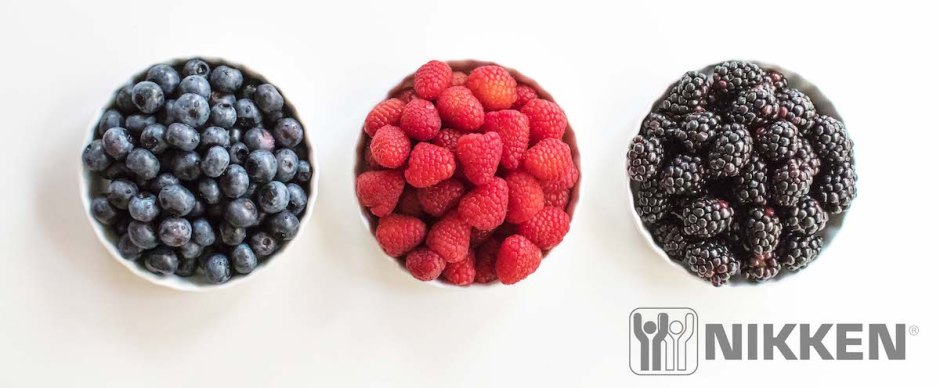
What’s the Big Deal with Berries?

Within our bodies millions of processes occur every day, such as turning the foods we eat into energy. These processes require oxygen. Byproducts of using oxygen are called oxidants, often referred to as “free radicals”. Free radicals can also be introduced to our bodies through external sources such as tobacco smoke, pollution, and exposure to the sun. In the same way that oxidation can cause rust on the surface of some objects, free radicals can cause damage to cell walls, cell structures and even the genetic material of a cell. If the genetic material of a cell is attacked, this can lead to changes in the body’s DNA “genetic blue print” and has been linked to a number of diseases, including cardiovascular disease.1

Antioxidants work to deactivate free radicals by binding to oxidants, which prevents the damage from occurring. Diets high in antioxidant-rich foods, that is, foods containing vitamin C, vitamin E, selenium and carotenoids, such as beta-carotene, lycopene, lutein, and zeaxanthin, have been linked to a reduced risk of developing heart disease. As a result, current national guidelines on the prevention of cardiovascular disease recommend choosing foods rich in antioxidants.2

Berries contain a variety of antioxidants, which help keep free radicals under control. Anthocyanins, ellagic acid and resveratrol are types of antioxidants found in an assortment of berries. One study showed that blueberries, blackberries and raspberries have the highest antioxidant activity of commonly consumed fruits, next to pomegranates.3

Studies suggest that the antioxidants in berries may help lower inflammation. Long-term inflammation arising from chronic stress, sedentary lifestyles and unhealthy food choices can lead to diabetes, heart disease and obesity,4 so berries are really a big deal in counteracting those negative effects! But that’s not all that berries can help do.

Test-tube and human studies suggest that berries may protect cells from high blood sugar levels, help increase insulin sensitivity, and reduce blood sugar and insulin response to high-carb meals. Importantly, these effects appear to occur in both healthy people and those with insulin resistance.5

In one study of healthy women, eating 5 ounces (150 grams) of puréed strawberries or mixed berries with bread led to a 24–26% reduction in insulin levels, compared to consuming the bread alone.6 Moreover, in a six-week study, obese people with insulin resistance who drank a blueberry smoothie twice per day experienced greater improvements in insulin sensitivity than those who consumed berry-free smoothies.7

Berries are also an excellent source of soluble fiber, which is known to be important for slowing down the movement of food through the digestive tract. This slower movement helps us feel full for a longer period of time. Ideally, this may help us eat less and make weight management easier. One study found that doubling fiber intake could help absorb up to 130 fewer calories per day.8

Unsurprisingly, berries are considered heart-healthy food that may help lower LDL levels and help protect the bad cholesterol from becoming oxidized, which may reduce the risk of heart disease. In a controlled study of obese people, those eating 1.5 ounces (50 grams) of freeze-dried blueberries for 8 weeks noticed a 28% reduction in their oxidized LDL levels.9

Berries are highly nutritious, may provide a variety of health benefits, and are easy to incorporate into an Active Wellness nutritional plan! Kenzen® Super Ciaga® powder makes it even simpler if you find it hard to access fresh berries. Simply combine it with PiMag® water or blend into smoothies for an energy and antioxidant boost!

To celebrate love, friendship and Valentine’s Day, Nikken has three “Heart of Nikken” packs available through February 28. Each pack contains three extraordinary heart-healthy nutritional supplements—Kenzen® Bergisterol®, Kenzen® Super Ciaga® and Kenzen® Omega Green + DHA — plus one piece of magnetic jewelry, exclusive to Nikken. You have your choice of the pack with a silver Kenko Perfect Link II necklace, a gold tone Kenko Perfect Link II necklace or a Kenko Heart Set.

1, 2 https://my.clevelandclinic.org/health/articles/16739-antioxidants–heart-health

3, 4, 5, 6, 7, 8, 9  https://www.healthline.com/nutrition/11-reasons-to-eat-berries#:~:text=Berries%20are%20some%20of%20the,cholesterol%2C%20while%20reducing%20oxidative%20stress

New Research on Cholesterol and Heart-Health

Within our bodies millions of processes occur every day, such as turning the foods we eat into energy. These processes require oxygen. Byproducts of using oxygen are called oxidants, often referred to as “free radicals”. Free radicals can also be introduced to our bodies through external sources such as tobacco smoke, pollution, and exposure to the sun. In the same way that oxidation can cause rust on the surface of some objects, free radicals can cause damage to cell walls, cell structures and even the genetic material of a cell. If the genetic material of a cell is attacked, this can lead to changes in the body’s DNA “genetic blue print” and has been linked to a number of diseases, including cardiovascular disease.1

Antioxidants work to deactivate free radicals by binding to oxidants, which prevents the damage from occurring. Diets high in antioxidant-rich foods, that is, foods containing vitamin C, vitamin E, selenium and carotenoids, such as beta-carotene, lycopene, lutein, and zeaxanthin, have been linked to a reduced risk of developing heart disease. As a result, current national guidelines on the prevention of cardiovascular disease recommend choosing foods rich in antioxidants.2

Berries contain a variety of antioxidants, which help keep free radicals under control. Anthocyanins, ellagic acid and resveratrol are types of antioxidants found in an assortment of berries. One study showed that blueberries, blackberries and raspberries have the highest antioxidant activity of commonly consumed fruits, next to pomegranates.3

Studies suggest that the antioxidants in berries may help lower inflammation. Long-term inflammation arising from chronic stress, sedentary lifestyles and unhealthy food choices can lead to diabetes, heart disease and obesity,4 so berries are really a big deal in counteracting those negative effects! But that’s not all that berries can help do.

Test-tube and human studies suggest that berries may protect cells from high blood sugar levels, help increase insulin sensitivity, and reduce blood sugar and insulin response to high-carb meals. Importantly, these effects appear to occur in both healthy people and those with insulin resistance.5

In one study of healthy women, eating 5 ounces (150 grams) of puréed strawberries or mixed berries with bread led to a 24–26% reduction in insulin levels, compared to consuming the bread alone.6 Moreover, in a six-week study, obese people with insulin resistance who drank a blueberry smoothie twice per day experienced greater improvements in insulin sensitivity than those who consumed berry-free smoothies.7

Berries are also an excellent source of soluble fiber, which is known to be important for slowing down the movement of food through the digestive tract. This slower movement helps us feel full for a longer period of time. Ideally, this may help us eat less and make weight management easier. One study found that doubling fiber intake could help absorb up to 130 fewer calories per day.8

Unsurprisingly, berries are considered heart-healthy food that may help lower LDL levels and help protect the bad cholesterol from becoming oxidized, which may reduce the risk of heart disease. In a controlled study of obese people, those eating 1.5 ounces (50 grams) of freeze-dried blueberries for 8 weeks noticed a 28% reduction in their oxidized LDL levels.9

Berries are highly nutritious, may provide a variety of health benefits, and are easy to incorporate into an Active Wellness nutritional plan! Kenzen® Super Ciaga® powder makes it even simpler if you find it hard to access fresh berries. Simply combine it with PiMag® water or blend into smoothies for an energy and antioxidant boost!

To celebrate love, friendship and Valentine’s Day, Nikken has three “Heart of Nikken” packs available through February 28. Each pack contains three extraordinary heart-healthy nutritional supplements—Kenzen® Bergisterol®, Kenzen® Super Ciaga® and Kenzen® Omega Green + DHA — plus one piece of magnetic jewelry, exclusive to Nikken. You have your choice of the pack with a silver Kenko Perfect Link II necklace, a gold tone Kenko Perfect Link II necklace or a Kenko Heart Set.

1, 2 https://my.clevelandclinic.org/health/articles/16739-antioxidants–heart-health

3, 4, 5, 6, 7, 8, 9  https://www.healthline.com/nutrition/11-reasons-to-eat-berries#:~:text=Berries%20are%20some%20of%20the,cholesterol%2C%20while%20reducing%20oxidative%20stress

Getting Ready for Valentine’s Day

Valentine’s Day is not only a day to profess your love for a romantic partner, but it’s also a day to show your love or kindness toward friends, relatives, and even acquaintances. Young children make valentine cards for their family members and friends, and even for everyone in their classes. It’s a day to express inclusiveness and love to all.

Whether you’re showing your love and gratitude to parents or that special someone in your life, Valentine’s Day can be stressful. The day might be full of expectations for both givers and recipients, and the intent is for the gift or grand gesture to be perfect. Special celebrations at restaurants and other indoor venues may take on an element of risk during these exceptional times. According to data compiled by a social media platform called “We Heart It,” about 65% of people have said they feel stressed about Valentine’s Day.1

Focusing on what you can give rather than on what you might receive will naturally decrease stress levels.2 Nikken has the perfect gifts for the valentines in your life! There’s no better way to show your love and care than to give the gift of health! Designed specially to celebrate love and friendship, the three “Heart of Nikken” packs each contain three extraordinary heart-health nutritional supplements—Kenzen® Bergisterol®, Kenzen® Super Ciaga® and Kenzen® Omega Green + DHA — plus one piece of magnetic jewelry, exclusive to Nikken. You have your choice of the pack with a silver Kenko Perfect Link II necklace, a gold tone Kenko Perfect Link II necklace or a Kenko Heart Set.

These packs make great gifts for your loved ones, and that includes yourself! Available from January 24 through February 28, you can purchase multiples to give as future birthday, anniversary and graduation gifts! Spread kindness and the gift of Active Wellness all year round.

1 https://yourdost.com/blog/2017/02/what-to-do-about-valentines-day-stress.html?q=/blog/2017/02/what-to-do-about-valentines-day-stress.html&

2 https://www.yourlifeyourvoice.org/pages/tip-valentines-day-stress.asp

Resolve to Reuse, Reduce & Recyle to Restore our Oceans

As members of the Global Wellness Community, each of us is aware of plastic waste. Fortunately, we are capable of decreasing our personal plastic waste. If each one of us committed to less consumption of plastic packaging, imagine the cumulative outcome for the world! One of the simplest ways is to stop buying and drinking water sold in plastic bottles. Here’s why that is so important.

One component of ocean pollution that’s especially threatening to not only ocean life forms but human life, is micro-plastics. When plastic pollution enters the ocean, large pieces are broken down over time by exposure to sea elements and become tiny particles. These particles, the estimated size of a 5mm sesame seed, break loose from the large “garbage patch” and spread throughout the ocean.

Depending on its density, some sink, some float, and some just hover in the water column. Because the plastic resembles food, it is eaten by a huge range of animals throughout the food chain, including fish, birds, turtles, whales, and even microscopic plankton, eventually working their way up to humans.1

Micro-plastics are extremely difficult to clean out of the ocean, and since they are so tiny, they travel far and wide, basically making their way to every ocean in the world. This is why most ocean anti-pollution projects, such as The Ocean Cleanup, focus on removing larger pieces of trash, before they can degrade.2

Remarkably, in 2019 a then 18-year-old named Fionn Ferreira, invented an effective new method for removing micro-plastics from the oceans. Ferreira was kayaking along the coast in Ballydehob, his hometown in West Cork, Ireland, when he came upon a rock coated in oil. Ferreira noticed that small bits of plastic were sticking to the oil-coated-rock. “In chemistry, like attracts like,” Ferreira noted.  He decided to combine vegetable oil and magnetite powder to create a nontoxic ferrofluid, a “magnetic liquid,” or liquid that acts as a carrier for tiny magnetic particles—since ferrofluids and plastics attract when in the presence of water. Ferreira would add his ferrofluid to water samples full of micro-plastics, then remove the ferrofluid using a magnet, taking the micro-plastics with it. After hundreds of tests, Ferreira’s ferrofluid was able to successfully remove at least 87% of micro-plastics from the water samples.3

Since then, while pursuing a Chemistry degree at the University of Groningen in the Netherlands, Fionn has established a company focused on micro-plastic removal technology. Early tests on ferrofluids as a tool for cleaning up oil spills have been promising, but Ferreira believes that the only true way to solve the massive problem of ocean pollution is to change our consumption habits.3

Fionn is part of the new generation of scientists that has never known life without plastic pollution. He and other innovative young scientists, such as Miranda Wang and Jeanny Yao who developed bacterium to transform plastic into carbon dioxide and water, are committed to restoring our oceans.

The KenkoAir Purifier®, PiMag Waterfall® and PiMag® Sport Bottle are durable filtration systems that can help us reuse, reduce and recycle. The filters are recyclable and help decrease our carbon footprint. For the remainder of January, you can take advantage of four special filter packs that give you a bonus item when you purchase a PiMag Waterfall® filter cartridge and a KenkoAir Purifier® HEPA filter in the same order.

1 https://www.good.is/articles/end-plastic-pollution-pick-it-up-bin-it-take-three-for-the-sea

2, 3 https://www.good.is/microplastics-magnet-removal

Health Trends for 2022

It’s no surprise that staying as healthy as possible will continue to be top priority this year. That priority has been the premise for each Nikken product in every category, whether it’s nutrition, magnetic support, PiMag® water or clean air, since the company began more than 46 years ago.

What are some of the health areas that people may focus on in the year 2022?

• According to the international health insurance company BUPA, Google searches for “gut health” are up by 83% and they predict more people will focus on it in 2022.1 The Nikken organic nutritional supplements that address this are Kenzen Lactoferrin® 2.0, Kenzen® Cleanse & Detox and Kenzen Vital Balance®. All three contain prebiotics and/or probiotics that enhance gut health.

• Some health experts predict that people will pay closer attention to their mental health in 2022. Mental health affects how the brain functions, and is also a byproduct of our individual ways of responding to stress. Relaxing strategies such as spending more time in green spaces or practicing self-care to reduce stress will continue to be a priority in 2022.2 You can also take nutritional supplements that support brain health such as Kenzen® Clarity, a fermented blend of 100% organic ingredients formulated to help you stay focused and mentally sharp, designed to help maximize your cognitive function.*

• The “green generation” of healthcare is growing. Green health professionals blend healthcare with an understanding of the environmental changes that affect people’s health in different parts of the world. They provide healthcare while advocating for the environment.3 Everyone understands the need for clean air and water for optimal health, and Nikken provides the stellar KenkoAir Purifier®, PiMag Waterfall® and PiMag® Sport Bottle that help us decrease our carbon footprint by minimizing plastic waste. Replacing the filters of these components keeps them in top shape for years. Through January 31st, check out our filters replacement promotion where you can get a bonus item whenever you purchase one KenkoAir HEPA filter and one PiMag Waterfall filter together.

• Plant-based-eating articles and meal plans were up 31% in 2021 and it is expected to grow even more as more people choose to eat healthier and more sustainably.4

• Perennial (as opposed to annual) grains like kernza (a new type of wheat) will explode. That is a good thing when it comes to fighting climate change, because perennial grains develop deeper root systems than annuals, and these deep roots help prevent soil erosion and trap harmful greenhouse gases underground, keeping them out of the atmosphere.5

• Kelp and seaweed will make their way into all kinds of products, not just food. Although common to many cultures, farming kelp has been found to pull carbon out of the atmosphere.6 Known as a great source of minerals, such as potassium, iron, calcium, and magnesium, seaweed is also rich in antioxidants and vitamins. A great example of using seaweed not just as food is the improved line of True Elements® Marine Organic Skin Care. A variety of seaweeds are ingredients in these advanced formulations.

• A “new school” of vitamins and supplements will evolve in 2022. Known as “smart” and “forward-thinking” supplements, they not only effectively address nutritional sufficiency but also nurture specific areas of health, from our cells to the whole body. The advancements range from delivery format and options that consider our personalized genetic makeup to strategic ingredient combinations, environmental sustainability, and more.7 Nikken began using this smart, forward-thinking approach in formulating nutritional supplements years ago. Examples include the smart use of fermented ingredients in Kenzen Clarity, the natural stress relievers such as the adaptogen Ashwagandha, turmeric extract and Shisandra in Kenzen® Cleanse & Detox and the “bone buddies” delivery system of Kenzen Calcium Complex and Kenzen BDZ for optimal calcium absorption.

In essence, 2022 is the year that asks each of us how to become healthier and stronger personally while respecting and working together with the environment. At Nikken, we pledge to use and share what we learn to build a bigger, healthier and environmentally-conscious Global Wellness Community!

*This statement has not been evaluated by the Food and Drug Administration. This product is not intended to diagnose, treat, cure or prevent any disease.

1, 2 https://www.phillyvoice.com/2022-health-trends-diet-alcohol-reduction-male-fertility-sound-healing/

3 https://www.mindbodygreen.com/articles/doctors-are-becoming-leaders-in-environmental-movement

4, 5, 6 https://www.eatingwell.com/article/7935948/top-10-food-nutrition-trends-2022/

7 https://www.mindbodygreen.com/articles/new-generation-of-vitamins

Why We Wear Jewelry

Jewelry was an early form of decorative art. The study of some primitive cultures shows that organic materials were used in the past. It was not until a later stage of human development that people chose precious and possibly scarce materials from far away to create jewelry.1

In many cases, jewelry was used as personal adornment, and also to convey the wearer’s social roles. Jewelry was also used to ward off disease and other evils, and sometimes even to work “magic” against opponents. In religious rituals, jewelry enhanced acts and signs of prayer and devotion to divinities.2

Jewelry that was made out of precious materials surfaced 5,000 years ago. In Mesopotamia, jewelry was fashioned from metals designed as leaves, spirals, and bunches of grapes and inlaid with brightly colored stones. The Ancient Chinese had high regard for jade and silver. Brooches made of precious metals were used in Ancient Greece and Rome to clasp clothes together. Mayan jewelry was generally made from jade, gold, bronze, silver, and copper. Gold was highly coveted in Ancient Egypt such as was displayed in artifacts from King Tut’s tomb. These ancient cultures considered jewelry as a status symbol and only the affluent wore it. In the Middle Ages, royalty and nobility wore jewelry made from gold, silver, and precious gems, while those from the lower classes wore ornaments made from base metals like copper and pewter.3

As times and traditions changed, the mindset about jewelry has also transformed. It has become a mode of self-expression and creativity that’s not limited to costly metals and stones. Jewelry can now also be made from textiles, leather, plastic, glass, or crystal. Fashionable and luxury jewelry is worn by people from all walks of life. These days, people wear jewelry to reflect their mood, style, and individuality.

Kenko Jewelry is the Nikken line, and whether it’s a pair of earrings, a necklace or a bracelet, each piece incorporates magnetic technology, comfort and style. Kenko means health or healthy in Japanese, and as with every Nikken product, our jewelry is made with the purpose of enhancing the Active Wellness lifestyle. Through the end of the year, there is special holiday jewelry, ideal for gifting, in addition to our regular year-round items. Check out the Holiday Gift Guide and get them while they last!

1, 2 https://fashion-history.lovetoknow.com/fashion-accessories/history-jewelry-fashion

3 http://www.historyisnowmagazine.com/blog/2021/9/20/a-brief-history-of-jewelry

Restful Sleep is So Sweet

Scientists don’t yet understand exactly why we need sleep so badly.  They believe it restores us physically and helps us organize things in our brain.1 We do know, however, that we can’t live an Active Wellness lifestyle without it. We cannot force ourselves to fall asleep, just as we can’t force ourselves to digest food more quickly or to eat as much as we want without gaining weight. In other words, we can’t control our sleep patterns; however, we can create the right conditions for sleep, both mentally and physically. That is, we can create good sleep habits for a pleasant sleep experience.

The study of sleep makes for fascinating science. Here are some interesting facts about other species:

• English bulldogs are the only canines known to experience sleep apnea, a breathing disorder. Their unusual airway anatomy (short snouts and underbites is the likely reason.2

• Sea otters hold hands when they sleep so they don’t drift away from each other.3

• Whales and dolphins literally fall half asleep. Each side of their brain takes turns so they can come up for air.4

• Trees go to sleep at night by relaxing their branches and perk them up in the morning.5

• Snails can sleep for three years.6

• Giraffes can get by on an average of 30 minutes of sleep each night.7

There are also intriguing facts about humans and our sleep patterns:

• We are the only mammals that willingly delay sleep.8

• Thirty minutes of exercise each day correlates with 14 minutes of extra sleep per night.9

• Parents of newborns lose about six months’ worth of sleep in their child’s first two years of life. Each additional child increases the mother’s loss of sleep by 46%.10

• Sleepwalking is most likely to occur between the ages of three and 17, with 15% of people thought to be sleepwalkers.11

• Women sleep longer than men. The reason is that women tend to multitask more than men; therefore, their brains work harder and take longer to recover.12

• We can dream in color or in black and white. About 12% are believed to dream exclusively in black and white.13 Today about 75% dream in color, while only 15% did before color television became available.14

Scientists used to think that everything shut down when we sleep, but over the last 60 years, they’ve discovered that our brains are very active while we sleep. In fact, some parts of the brain use more oxygen and glucose while asleep than when awake. The timing of our need for sleep is based on how long we have been awake and our body clock. For example, if we stay awake all night, we will feel more tired at 4 am than at 10 am.  Recent breakthroughs may have identified the gene that makes some people cope more easily with a lack of sleep.15

Have you tried Kenko Sleep Technology to help you get a great night’s sleep? For the entire month of November, Nikken Registered Customers will receive cash back in the form of Nikken Reward Points on the purchase of any Kenko Naturest® Fit or any Kenko Sleep Pack. There’s nothing else like the Kenko Naturest® Fit anywhere—it’s only from Nikken. Designed with natural latex nodules to massage you while you sleep, the reflective fibers help keep you warm while promoting air circulation. Tourmaline interspersed between 800 gauss magnets help create a calming effect, to help you get your best night’s sleep, every night! The Kenko Naturest® Fit transforms any mattress into a Kenko Sleep System that supports your body’s natural abilities to recuperate while sleeping!

1, 15 https://www.sleephealthfoundation.org.au/facts-about-sleep.html

2, 3,4, 8, 14 https://health.clevelandclinic.org/22-facts-about-sleep-that-will-surprise-you/

5, 6, 7, 10, 12 https://www.thegoodbody.com/sleep-facts/

11, 13 https://www.thinktank.org.uk/blog/1363-30-fun-facts-about-sleep.php

Sleep Can Be Your Superpower

To maintain an optimal level of Active Wellness, we can eat right, exercise regularly, use a good air filter and drink hydrogen water. Even more importantly, we need to sleep well and sleep enough! According to sleep and brain scientist Matt Walker, “Sleep is a non-negotiable biological necessity. Sleep is the Swiss army knife of health.” 1 Humans are the only species who intentionally deprive ourselves of sleep, creating the public health challenge of the century.

What are some of the benefits of getting a good eight hours of restful sleep? Matt Walker states that in studies of restful sleepers vs. sleep-deprived participants, the hippocampus in the brain shows significant memory signals in the good sleepers but not in the sleep-deprived. Here’s why:

  • Sleep prepares the brain for learning activities.
  • Sleep helps create permanent memories after learning.
  • Deep sleep acts like a transfer system for memories and learning.
  • Gene activities are impacted by sleep. Good sleep increases immune system activities, while poor sleep is associated with an increase in genetic stress activities and chronic inflammation.

Disruptions of deep sleep can impact brain functions, leading to certain dysfunctions. The good news is that scientists can now research ways to rectify this situation, as it is believed that sleep loss leaks into every aspect of physiology. Here are some tips for good sleep:

  1. Go to bed at the same time and wake up at the same time as regularly as possible. The body likes regularity and a fixed schedule. (This is why new mothers who are sleep-deprived or those who are on a split shift and can no longer adhere to a regular sleep schedule say they have “fuzzy” brains or “can’t think.”)
  2. Keep it cool. It takes a two to three degree drop in body temperature to fall asleep and stay asleep. 65º F or 18 Cº is generally ideal for most people.
  3. When you can’t sleep, get out of bed and preferably go to another room. The bed should be associated with sleep, not with tossing and turning.
  4. Go to bed only when sleepy.
  5. Turn off all electronic devices. In other words, don’t fall asleep with the TV on. Don’t have your mobile phone on and blinking and buzzing throughout the night.
  6. Stay away from alcoholic or caffeinated beverages before bedtime, preferably hours beforehand.
  7. Don’t take sleeping pills, unless prescribed by your physician. It’s easy to form a dependence on sleep aids, but it is not a natural way to go to sleep. We can retrain our bodies to rest naturally, but like any activity, it takes practice and patience.
  8. Invest in comfortable bedding. Make sure your mattress has the firmness that supports your comfort level.

For the entire month of November, any Nikken Registered Customer will receive cash back in the form of Nikken Reward Points on the purchase of any Kenko Naturest® Fit or any Kenko Sleep Pack. There’s nothing else like the Kenko Naturest® Fit anywhere—it’s only from Nikken. Designed with natural latex nodules to massage you while you sleep, the reflective fibers help keep you warm while promoting air circulation. Tourmaline interspersed between 800 gauss magnets help create a calming effect, to help you get your best night’s sleep, every night! The Kenko Naturest® Fit transforms any mattress into a Kenko Sleep System that supports your body’s natural abilities to recuperate while sleeping!

1 http://t.ted.com/NKWxqbD

Technologies That Augment Natural Energies

Our guest blogger Dave Balzer is a Technology Consultant and International Advisor in Product Development, Design Engineering, Prototype, Manufacturing, and Regulatory compliance of new devices. He has worked with Nikken on many projects over the past three decades. Since 2012, he has guided his own medical device company that produces specialized diagnostic kits.

All of the Nikken technologies take their cue from the natural world. Whether it is magnetic energy, warming energy, or negative ions, Nikken has keenly observed nature and created ways to support the benefits that it offers.

Nothing could be more natural than magnetism. In fact, the earth itself is a giant dipole magnet that imparts its flux energy to every living creature on the planet. This flux energy forms a shield over the globe known as the magnetosphere. The magnetosphere protects the surface of the planet from being irradiated with harmful solar energy. In essence, the shield itself acts as a filter, which permits biocompatible light energy to pass through. Without the protection offered by the earth’s magnetic flux, life as we know it would be destroyed. 

Many animals are able to sense the earth’s magnetic field. This is true for birds, insects, plants and even humans. All of the creatures sensitive to the earth’s magnetic energy possess a protein known as a cryptochrome. It is this molecule that reacts to magnetic energy. Unfortunately, NASA has reported that the earth’s magnetic field is weakening and even developing irregularities. Nikken has chosen to utilize permanent dipole magnets in many of its products as a way of buttressing and supporting the degradation of the earth’s natural magnetic energy.

The energy from the sun that reaches the surface of the planet is made up by visible, ultraviolet and infrared light. The visible wavelengths of light are the ones humans can detect with their eyes. They comprise 40% of the light energy reaching the earth’s surface. Ultraviolet light cannot be seen by mammals and makes up 7% of the total. This leaves infrared light energy representing 53% or the majority of the sun’s energy that reaches the earth’s surface. Infrared light is fundamentally important to human life. Tissues and cells found in the body are in tune with infrared energy. They absorb, utilize and even emit infrared energy.

Nikken produces several products that incorporate special ceramic reflective fibers. These fibers have the ability to absorb light energy and reflect it back to the user as infrared energy. In doing so, Nikken is able to support and balance the natural warming energy found in the environment.

Negative ions are all around us. Nature provides them in abundance in forests and near waterfalls. They are a key component to inducing the feeling of wellness and relaxation that is experienced during a nature walk. It is ironic to understand that negative ions have a positive impact on wellness while positive ions have the opposite effect. Appliances, electronics and other fixtures of city dwelling emit positive ions and can cause feelings of fatigue and depression. Consequently, the environment needs to be buttressed with new sources of negative ions in order to counteract the ill effects of the positive ones. Nikken offers an advanced air filtration system known as the KenkoAir Purifier® that utilizes negative ion technology.

Some examples of Nikken magnetic products with patented DynaFlux® technology are the insoles (Kenko mSteps® and mStrides®) and the KenkoTouch® handheld massage system. Ceramic reflective fibers are found throughout the Kenko Sleep system, including the Kenko Naturest® Fit, comforters and pillows. 

Activate Your Breathing Power

To breathe is to live, but how can we breathe better to live better in our pursuit of Active Wellness? We know the use of a Kenko Air Purifier® can help improve indoor air quality in multiple ways, but there are ways to physically enhance our lung capacity.

Good breathing techniques may not only help our bodies get the oxygen needed but also keep our lungs healthy and strong. One particular exercise that helps the lungs intake oxygen is called diaphragmatic breathing.1 In layman’s terms, this type of exercise is called “belly breathing.” Follow these steps:

  1. Relax your shoulders and sit back or lie down.
  2. Place one hand on your belly and one on your chest.
  3. Inhale through your nose for two seconds, feeling the air move into your abdomen and feeling your stomach move out. Your stomach should move more than your chest does.
  4. Breathe out for two seconds through pursed lips while pressing on your abdomen.
  5. Repeat.

Another exercise helps keep our airways open longer, which helps reduce the “work” of breathing. It’s called pursed-lips breathing and helps improve the lung’s function of inhaling oxygen and exhaling carbon dioxide.2 Pursed-lips breathing is simpler than diaphragmatic breathing and can be practiced at any time. Follow these steps:

  1. Inhale slowly through your nose.
  2. Purse your lips, as if pouting or about to blow on something.
  3. Breathe out as slowly as possible through pursed lips. This should take at least twice as long as it did to breathe in.
  4. Repeat.

To help increase lung capacity, the British Lung Foundation advises deep breathing in general. It’s believed that deep breathing can help clear mucous from the lungs, which allows more air to circulate.3 Simply inhale deeply through the nose, 5-10 times, then cough a couple of times and repeat.

In addition to breathing exercises, do the following for healthy lung maintenance:

  • Stop smoking, and avoid secondhand smoke or environmental irritants.
  • Eat foods rich in antioxidants. 
  • Exercise more frequently, which can help your lungs function properly. Swimming is especially helpful for increasing lung power.
  • Improve indoor air quality. We highly recommend our KenkoAir Purifier.

For the entire of month of September, you save significantly when you purchase the September Exclusive Pack (Item 4445) by receiving the KenkoAir Purifier® and HEPA replacement filter for the price of the KenkoAir Purifier. In addition, all KAP HEPA filter replacements (Item 1445) are 20% off.

1, 2 https://www.healthline.com/health/how-to-increase-lung-capacity

3 https://www.medicalnewstoday.com/articles/323787#when-do-they-work